






Arthur Lynch | Wed Jan 21 2026
A Business Owner's Guide: Sourcing Alloy vs. Stainless Steel Jewelry
As a jewelry business owner, the materials you source define your brand, price points, and customer satisfaction. When choosing between alloy and stainless steel, the decision isn't just about metal—it's about business strategy. The fundamental difference between alloy and stainless steel for a sourcing professional is this: alloy jewelry is your key to the fast-paced, trend-driven world of affordable fashion accessories, while stainless steel is the foundation for a durable, high-quality collection that builds brand trust.
Sourcing Alloy vs. Stainless Steel Jewelry
A smart sourcing strategy means understanding where each material fits into your inventory and business model. Think of alloy as your tool for capturing fleeting trends and offering highly accessible price points that drive volume. Stainless steel, on the other hand, is what you use to build a loyal customer base with high-quality, durable pieces made to last. This guide breaks down the practical differences that directly impact your sourcing decisions, profit margins, and bottom line.
A Quick Sourcing Comparison
Viewing these materials through the strategic lens of a business owner is what separates successful jewelry brands from the rest. Each one plays a unique role in creating a balanced, profitable, and appealing product catalog.
The global imitation jewelry market, which relies heavily on alloys like brass and other base metals, has already surpassed $18.4 billion in value. With a commanding 42% revenue share, alloys are the undisputed engine of the fast-fashion accessories sector. You can dig deeper into these imitation jewelry market trends to see just how big this opportunity is for businesses.
At its core, the choice isn't about which material is "better," but which is better for a specific business goal. Alloy drives volume and trend adoption; stainless steel builds trust and lifetime customer value.
For a quick look at the business trade-offs, here’s a high-level comparison to guide your sourcing decisions.
Quick Sourcing Comparison: Alloy vs Stainless Steel
| Business Attribute | Alloy Jewelry | Stainless Steel Jewelry |
|---|---|---|
| Primary Market | Fast-fashion, seasonal trends, impulse buys | Everyday wear, core collections, gift items |
| Unit Cost | Very low, ideal for maximizing markup | Moderate, higher initial investment |
| Perceived Value | Lower, positioned as affordable accessories | Higher, marketed as durable and premium |
| Durability & Longevity | Lower; prone to tarnish and wear over time | High; resistant to tarnish, rust, and water |
| Hypoallergenic | Varies widely; often contains nickel | Generally hypoallergenic, especially 316L grade |
| Design Flexibility | Excellent; highly malleable for intricate designs | Good; best for sleek, classic, and modern styles |
This table is your starting point for making smarter inventory choices. As we dive deeper into the specific properties of each material, you'll gain the nuanced understanding you need to source with confidence, build a catalog your customers will love, and maximize your profitability.
Understanding Material Composition and Performance
To make smart sourcing decisions for your business, you must understand the core differences between alloy and stainless steel. It’s not just technical jargon; these material distinctions directly impact how your jewelry looks, feels, and performs. Ultimately, this affects your brand’s reputation, customer satisfaction, and the number of returns you have to process.
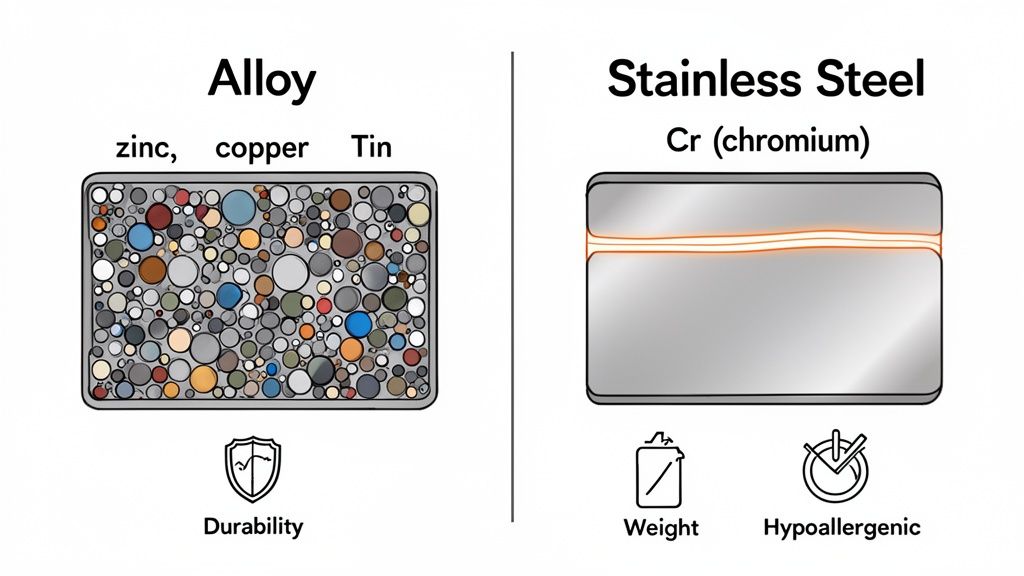
In the fashion jewelry business, "alloy" is a broad term for a mixture of base metals like zinc, copper, and tin. The primary goal of using alloy is to create an inexpensive material that is easy to shape, making it the perfect choice for producing intricate, trend-focused designs at an affordable price point.
Stainless steel is also an alloy, but it's a specific, high-performance one. For an iron-based metal to be called "stainless," it must contain at least 10.5% chromium. That single ingredient is its secret weapon for durability.
The Power of Chromium in Stainless Steel
So what makes chromium so important for jewelry sourcing? When exposed to air, it forms a thin, invisible layer of chromium oxide on the metal’s surface. This passive film acts as a protective shield, giving stainless steel its renowned resistance to rust, tarnish, and corrosion.
Even better, this shield is self-healing. If a piece of jewelry gets scratched, the newly exposed chromium instantly reacts with oxygen to repair the protective layer. This is a game-changing feature when sourcing products intended for long-term wear.
For a jewelry business, this means stainless steel pieces can withstand daily life—sweat, lotion, water—without degrading. This built-in durability creates a higher perceived value and leads to fewer customer complaints about tarnishing.
In contrast, most fashion alloys lack this protective feature. They are reactive and oxidize when exposed to air and moisture, leading to the green or black tarnish that can stain skin and ruin the product's appearance. This makes alloy jewelry best suited for short-term, occasional wear.
Durability and Weight Considerations
The physical feel and sturdiness of a material heavily influence the customer experience. Stainless steel is strong and scratch-resistant, making it an excellent choice for items that see a lot of daily use, like rings and bracelets. It also has a satisfying weight that many customers associate with higher quality.
Alloy, however, can be less durable. Its malleability is great for design versatility, but it often results in a softer product that is more prone to scratching, bending, or breaking. While its lighter weight is ideal for large statement earrings, it can feel "cheap" or flimsy in pieces where customers expect more substance.
Market data supports sourcing a mix of both materials. The stainless steel jewelry market is projected to hit $3.901 billion by 2035, indicating strong consumer demand for its durability. While generic alloys make up a massive 42% of the $18.4 billion imitation jewelry market, stainless steel’s technical superiority gives it a distinct advantage, with a >50% longer wear life in humid conditions compared to plated alloys. You can review the complete analysis of the stainless steel jewelry market growth to see the numbers for yourself.
The Hypoallergenic Factor
One of the most critical differences from a business perspective is how each material interacts with skin. Many low-cost alloys contain nickel, a common allergen that can cause rashes and irritation for a significant portion of customers, leading to returns and negative reviews.
This is where specific grades of stainless steel shine. 316L stainless steel, often marketed as "surgical steel," is widely considered hypoallergenic. It's a safe choice for the vast majority of people, even those with sensitive skin. This is a powerful selling point you can use in your product listings to build trust and appeal to a broader, health-conscious customer base. You can dive deeper into the specifics by reading our guide on what makes stainless steel jewelry a great choice.
5. A Strategic Look at Cost, Quality, and Profit Margins
When you're sourcing jewelry, you're not just choosing a metal—you're making a strategic business decision. The choice between alloy and stainless steel directly impacts your cost of goods, pricing strategy, perceived brand value, and ultimately, your profit margins.
The Alloy Advantage: Maximizing Volume and Cash Flow
From a sourcing perspective, alloy is the king of fast fashion because it is incredibly cheap. This low unit cost allows you to stock up on trendy, high-turnover pieces without a significant upfront investment. This means you can achieve higher markup percentages, which is essential for any volume-driven business model.
This cost advantage makes alloy the perfect material for attracting impulse buyers and experimenting with new styles with minimal financial risk. You can offer an eye-catching necklace at a price point that encourages immediate purchase, tapping into the demand for new and seasonal accessories.
Alloy's low cost is ideal for a high-volume strategy. Aggressive pricing on these items can be a powerful customer acquisition tool. A trendy pair of alloy earrings can be the "gateway" purchase that introduces a new shopper to your brand. The trade-off, however, is that the shorter lifespan means customer loyalty is often tied to your prices rather than the product, leading to a more transactional customer base.
For a business owner, alloy jewelry is a powerful tool for cash flow and market responsiveness. It enables you to quickly adapt to changing styles, clear out inventory through sales, and maintain a constant stream of new arrivals that keeps your audience engaged.
Before committing to one material, it's crucial to understand your financial goals. Analyzing material costs must happen alongside broader business planning and effective strategies for managing profit margins.
Stainless Steel: An Investment in Brand Equity
Sourcing stainless steel is a different financial game. The initial cost per unit is higher, meaning you invest more capital in each piece. This naturally results in a lower percentage-based markup compared to an ultra-cheap alloy item.
However, the payoff with stainless steel comes from its ability to command a higher retail price and build long-term brand equity. Customers perceive it as a premium material—it’s durable, tarnish-proof, and hypoallergenic. This higher perceived value justifies a higher price tag.
Here, the focus shifts from percentage markup to dollar profit per item. An alloy piece might have a 500% markup on a low cost, but a stainless steel piece with a 200% markup can easily generate a much larger actual dollar profit with every sale. If you need to sharpen your pencil on this, check out our guide on how to calculate profit margins for your jewelry business.
The global market data tells the same story. The massive alloy market is projected to grow from $334.9 billion in 2025 to $430.55 billion by 2029, a behemoth fueled by fast fashion. In sharp contrast, the jewelry-specific stainless steel market is growing at a steady 4.1% CAGR—a clear sign that it's a stable, quality-focused niche, not a volume play.
Ultimately, the smartest sourcing strategy for many businesses is a balanced one. Use alloy to capture trends, drive traffic, and acquire new customers. Then, focus on upselling those customers to your core collection of stainless steel jewelry to build lasting loyalty and increase the lifetime value of each buyer.
Finishes, Design Flexibility, and What Catches a Customer's Eye
Aesthetics drive sales. The look, feel, and design of a piece are what convince a customer to make a purchase. For a business owner, understanding how alloy and stainless steel translate into final products is key to appealing to different market segments and managing customer expectations.
Think of alloy as your go-to material for fast fashion. It's incredibly malleable, allowing you to create the intricate, bold, and complex shapes that define current trends. This makes it perfect for sourcing of-the-moment statement pieces that would be too expensive or difficult to produce with a tougher metal.
The Power and Pitfalls of Plating
Since the base metals in most alloys are not visually appealing on their own, they are almost always plated to achieve a gold, silver, or rose gold finish. This process allows you to offer the look of precious metals at a price point that budget-conscious shoppers find irresistible.
However, from a business perspective, that plating is a critical sourcing consideration. The bond between plating and a base alloy is often less durable than with stainless steel. Friction from clothing, lotions, and skin oils can wear it down, revealing the duller base metal underneath and leading to customer dissatisfaction.
The bottom line for sellers? Alloy's incredible design versatility comes at the cost of finish longevity. You need to be transparent about this in product descriptions and care instructions to manage customer expectations and prevent returns.
This reality directly influences how you should position alloy jewelry. It's best marketed for its style and affordability—ideal for occasional wear or for shoppers who love to refresh their accessory collection frequently without a large financial commitment.
Stainless Steel: The Sleek, Modern Staple
Stainless steel possesses a natural, lasting beauty. Its inherent luster is sleek and modern, a cool-toned, silvery finish that looks premium without any plating. This raw finish is incredibly durable and won't chip or fade, making it an ideal choice for minimalist and classic designs intended for everyday wear.
When stainless steel is plated, it's a different story. The process, typically PVD (Physical Vapor Deposition), creates an exceptionally strong bond for gold or rose gold tones. This modern plating technique results in a finish that is far more resistant to scratches and tarnishing than the traditional electroplating used on alloys.
This durability means you can confidently market these pieces as long-lasting staples. A gold-plated stainless steel chain will maintain its color through daily showers and workouts, justifying a higher price point and building trust in your brand's quality. A gold-plated alloy chain might look similar initially, but it serves a different customer—one who prioritizes a trendy look for a season over a piece that lasts for years. Ultimately, the difference between alloy and stainless steel in their finish directly shapes customer appeal and the quality promises you can make as a business.
How to Choose the Right Material for Your Product Line
This is where your material knowledge translates directly into profit. Making the right sourcing decision between alloy and stainless steel isn't about picking a "better" metal—it's about strategically matching the material to the product, the target customer, and your business goals. Get this right, and you'll build a profitable and well-balanced catalog.
The core principle for sourcing is simple: Alloy is your ticket to mastering fast-moving trends and offering affordable options, while stainless steel is how you build a reliable, premium core collection. Understanding this distinction is key to creating a product line that attracts new customers and keeps them coming back.
Aligning Material With Market Demand
Think of your product catalog like an investment portfolio. Alloy jewelry is your high-growth, fast-moving stock—it’s affordable, captures what’s trending now, and drives volume. Stainless steel is your blue-chip investment—it's stable, dependable, and builds long-term brand value. A smart business knows how to balance both to appeal to different shoppers and price points.
This flowchart breaks down the sourcing decision process. Are you catering to a customer chasing a trend, or one looking for a timeless staple?
The key takeaway for any business owner is that customer intent should drive your sourcing. Choose the material that best delivers on their expectation, whether that’s fleeting style or lasting quality.
When to Source Alloy Jewelry
For the fast-fashion market, alloy is the undisputed champion. Its low cost and design flexibility make it the perfect choice for specific product categories where style and an attractive price are the main purchase drivers.
Choose alloy when sourcing:
- Seasonal Statement Earrings: Big, bold, colorful designs that capture a specific season's trend. Customers want these to be affordable and don't expect them to last forever.
- Trendy Layering Necklaces: Delicate, multi-layered chains reflecting a current fashion moment are perfect for alloy. The low price encourages shoppers to experiment.
- Fashion Rings and Costume Pieces: For chunky cocktail rings or elaborate pieces for special occasions, alloy delivers the "wow" factor without the high cost.
The business case for alloy is all about volume and velocity. These products are designed to sell quickly, spark impulse buys, and keep your inventory fresh, giving customers a reason to visit your store often for new arrivals.
When to Invest in Stainless Steel
Stainless steel is your workhorse for building a foundational collection of evergreen bestsellers. These are the items customers rely on for daily wear, for gifting, and for building their personal jewelry collection. Its durability, water resistance, and hypoallergenic properties are major selling points.
Invest in stainless steel for:
- Everyday Rings and Bands: Pieces worn daily must withstand hand washing, lotions, and daily life. Stainless steel offers the resilience customers expect.
- Classic Chains and Bracelets: For foundational styles like Figaro or Cuban link chains, stainless steel provides a premium feel and lasting shine that justifies a higher price.
- Pendants and Charms: Small, meaningful items worn constantly benefit from stainless steel's resistance to tarnish and scratches, keeping them looking great over time.
Strategically sourcing stainless steel for these categories builds trust and cements your brand's reputation for quality. These are the products that earn glowing reviews and turn one-time buyers into loyal customers.
To help you map this out for your own business, here’s a quick guide matching common jewelry types with the right material for specific business goals.
Strategic Material Selection by Jewelry Category
| Jewelry Category | Recommended Material | Business Rationale |
|---|---|---|
| Trendy, Seasonal Items | Alloy | Low cost allows for rapid inventory turnover and experimentation with fleeting trends. Maximizes appeal to price-conscious, fashion-forward shoppers. |
| Everyday Essentials | Stainless Steel | Builds a reputation for quality and durability. Higher perceived value supports better margins and encourages repeat purchases from customers seeking longevity. |
| Gift-Oriented Products | Stainless Steel | The hypoallergenic and tarnish-resistant qualities make it a safe, reliable choice for gifting, reducing the risk of returns or complaints. |
| Kids' or Teen Jewelry | Alloy | Perfect for this market segment, which is highly trend-driven and has a lower budget. The affordability encourages frequent, small purchases. |
| Core Men's Collection | Stainless Steel | Appeals to the demand for low-maintenance, rugged, and durable jewelry. Its masculine aesthetic and resilience are key selling points. |
| High-Volume Impulse Buys | Alloy | Ideal for low-priced items placed near checkout or featured in flash sales. The low cost of goods sold (COGS) makes it profitable even at a low price. |
Ultimately, the most effective sourcing strategy often involves a thoughtful blend of both. Use alloy to attract new customers with trendy, low-risk purchases. Then, use your high-quality stainless steel collection to convert them into loyal, long-term fans of your brand.
Sourcing and Selling The Smart Way
Knowing the technical difference between alloy and stainless steel is just the first step. Turning that knowledge into a successful business requires mastering your sourcing, crafting effective sales strategies, and building a trustworthy brand. Getting this right means meeting customer expectations, reducing returns, and fostering loyalty.
Your product descriptions are your front line. They must be honest, clear, and sell the specific value of each material.
Crafting Compelling Product Listings
When selling alloy jewelry, celebrate what it is: fun, trendy, and affordable. Don't mislead customers by making it sound like something it isn't.
- Highlight the Style: Use energetic language. "Capture this season's hottest look" or "The perfect trendy accessory to update your wardrobe" resonates with fashion-focused buyers.
- Emphasize Affordability: Frame the low price as a benefit. Phrases like "Experiment with new styles without the commitment" or "An affordable way to stay on-trend" appeal to budget-conscious shoppers.
- Be Transparent About Care: This is crucial for managing expectations. Include a simple, upfront care guide: "To protect the finish, keep away from water, lotions, and perfumes." This simple step reduces complaints and shows you are an honest seller.
For stainless steel, your sales approach should pivot entirely. Here, you are selling durability, quality, and long-term value to justify a higher price point.
- Showcase Durability: Use strong, confident language like "Built for everyday wear," "Water-resistant and tarnish-proof," or "A durable piece for your core collection."
- Promote Hypoallergenic Qualities: This is a major selling point. If a piece is made from 316L surgical steel, state it clearly. "Perfect for sensitive skin" is a powerful conversion driver.
- Frame it as an Investment: Position stainless steel as a smart purchase. "A timeless staple you'll wear for years" or "The quality and longevity you've been looking for" builds confidence. For a deeper dive into marketing these benefits, our guide on wholesale stainless steel jewelry offers more valuable insights.
A common mistake is using the same generic sales pitch for both materials. Pitching an alloy piece as a "forever" item is a recipe for returns and bad reviews. Conversely, not highlighting the premium, wear-it-anywhere qualities of stainless steel is leaving money on the table.
Turning Knowledge into Customer Loyalty
Your goal isn't just a single sale; it's to become a trusted source for your customers. By educating them, you empower them to make confident purchasing decisions. This transforms a simple transaction into a lasting relationship.
Always include clear care instructions tailored to the material with every order. For an alloy piece, a small card advising against moisture is essential. For stainless steel, you can proudly state that it requires minimal care, which reinforces its value.
This attention to detail demonstrates your expertise and commitment to the customer's experience long after the purchase. It reduces post-sale issues, keeps your return rate low, and encourages glowing reviews—all of which are vital for building a brand that customers trust and return to.
Your Top Sourcing Questions Answered
When stocking your jewelry business, the practical details separating alloy and stainless steel can make or break your inventory choices. Answering these common questions will help you build a solid product line, keep customers happy, and source with confidence.
Is All Stainless Steel Jewelry Hypoallergenic?
Not always, and this is a critical detail for any business. While stainless steel has a strong reputation for being skin-friendly, the key term to look for is 316L. This specific grade, often called "surgical steel," contains a negligible amount of nickel, making it the safest choice for customers with sensitive skin.
Cheaper grades may contain enough nickel to cause a reaction. If you plan to build your brand on being hypoallergenic and skin-safe, you must confirm with your supplier that you are sourcing genuine 316L steel. This allows you to market your pieces confidently and significantly reduce complaints related to skin irritation.
Key Takeaway: "Hypoallergenic" is a powerful selling point. Sourcing verified 316L steel enables you to stand behind that claim, build trust, and minimize returns.
How Should I Market Gold-Plated Alloy Jewelry?
Transparency is your best strategy. Position your gold-plated alloy jewelry as fun, affordable, and on-trend fashion accessories. They are perfect for customers who want to try a new style without a significant financial commitment. Clearly state in your product descriptions that it is a plating over a base metal.
You also need to manage expectations regarding longevity. In your product details and care instructions, advise customers to keep the jewelry away from water, lotions, and perfumes to preserve the finish. The plating can last anywhere from a few months to over a year depending on wear. Being upfront about this prevents disappointment and protects your brand's reputation.
Which Material Delivers Better Profit Margins?
This depends entirely on your business model, as each material offers a different path to profitability.
- Alloy: The cost per unit is extremely low, allowing for a much higher percentage markup. This is ideal for a high-volume sales strategy, running promotions, and testing new trends with minimal financial risk.
- Stainless Steel: The initial cost is higher, but so is the retail price it can command. This typically results in a larger dollar profit per item sold, helping you build a brand associated with quality and value.
The most effective strategy is often a blend of both. Use affordable alloy pieces to attract new customers and drive traffic. Then, use your high-quality stainless steel collection to increase your average order value and build a loyal base of repeat buyers.
Can I Build a Premium Brand Using Alloy Pieces?
It is very challenging. A "premium" brand identity is built on longevity, quality, and durability—all of which are inherent weaknesses in most plated alloy jewelry. You can certainly build a successful and profitable brand around unique designs and a fast-fashion model, but this is different from positioning yourself as a premium, long-lasting brand.
If your goal is to be known for high-quality jewelry that stands the test of time, you must build your core collection with more durable materials like stainless steel, 925 sterling silver, or other precious metals. This creates the foundation necessary for a truly premium reputation.
Ready to build a profitable, trend-forward inventory with high-quality materials? JewelryBuyDirect offers over 120,000 styles in both stainless steel and alloy, with factory-direct pricing to maximize your margins. Explore our wholesale catalog today and get 15% off your first three orders.