






Arthur Lynch | Tue Dec 16 2025
Your Guide to Sourcing High-Quality, Affordable Wholesale Stainless Steel Jewelry
If you're a boutique owner or online seller, your goal is simple: find beautiful, high-quality jewelry that won't break the bank—pieces your customers will love and come back for. Sourcing wholesale jewelry stainless steel is one of the smartest strategies for your business, offering a powerful mix of modern style, incredible durability, and healthy profit margins.
This guide is your complete roadmap for sourcing affordable, high-quality fashion accessories. We'll walk through everything you need to know to find amazing pieces that tick all the boxes for today's shopper: hypoallergenic, waterproof, and tarnish-resistant.
Building Your Business with Stainless Steel Jewelry
For any jewelry business, the fundamental challenge is always the same: you need products that look great, hold up over time, and offer a price point that makes sense for both you and your customers. Stainless steel has quickly become a go-to material for savvy business owners because it nails all three.
This isn't your grandma's costume jewelry. Stainless steel solves the most common frustrations people have with everyday accessories. It’s tough, resists scratches, and, most importantly, it doesn’t tarnish. That means your inventory looks pristine, and your customers get a piece they can wear for years without it turning their skin green.
The Growing Market Opportunity
The demand for stainless steel jewelry isn't just a fleeting trend—it's a stable, growing market you can build a business on. This steady growth means you can invest in inventory with confidence, knowing you're not just chasing a fad. The market's consistent upward climb points to real, sustained consumer interest, making it less risky to plan larger wholesale orders and long-term collections.
In fact, one industry report projects the stainless-steel jewelry market will climb from USD 6.79 billion in 2024 to a staggering USD 10.8 billion by 2035. That's a compound annual growth rate (CAGR) of nearly 4.3%, signaling healthy, predictable demand for years to come. You can dive deeper into the 2025 jewelry market outlook on lefengjewelry.com.
For a business owner, this steady market growth means less risk. Investing in wholesale stainless steel jewelry isn't a shot in the dark; it's a strategic move based on proven consumer demand for quality and value.
What This Guide Covers
Think of this guide as your personal sourcing mentor for your business. We’re going to walk you through the entire journey, from understanding the raw material to selling the final product. By the end, you'll be an informed buyer who knows exactly what to look for when sourcing affordable, high-quality fashion accessories.
Here’s a peek at what we'll cover:
- Understanding Steel Grades: We'll break down the real difference between common types like 304 and 316L surgical steel so you can source quality products.
- Evaluating Suppliers: You'll learn the secrets to finding and vetting wholesale partners you can actually trust for your business.
- Mastering Logistics: Get a solid handle on pricing, placing orders, and ensuring quality control doesn't become a headache.
- Marketing Your Collection: Discover practical tips for merchandising and selling your new pieces, both online and in-store.
Let's get you sourcing with confidence and building a business that truly shines.
Understanding What Makes Stainless Steel Great for Jewelry
To succeed in sourcing great jewelry, you have to know your materials. Let’s talk stainless steel. It’s not just one thing; think of it more like a family of different recipes. Each “recipe,” which we call a grade, is a metal alloy made mostly of iron and chromium, with a few other ingredients tossed in to create specific qualities, like extra strength or tarnish resistance.
For your business, this isn't just nerdy science—it’s the secret to sourcing products that actually live up to your brand's promise of quality. In the world of wholesale jewelry stainless steel, you'll constantly run into two main players: 304 and 316L. Knowing what sets them apart is what lets you ask suppliers the right questions and pick the perfect pieces for your customers.
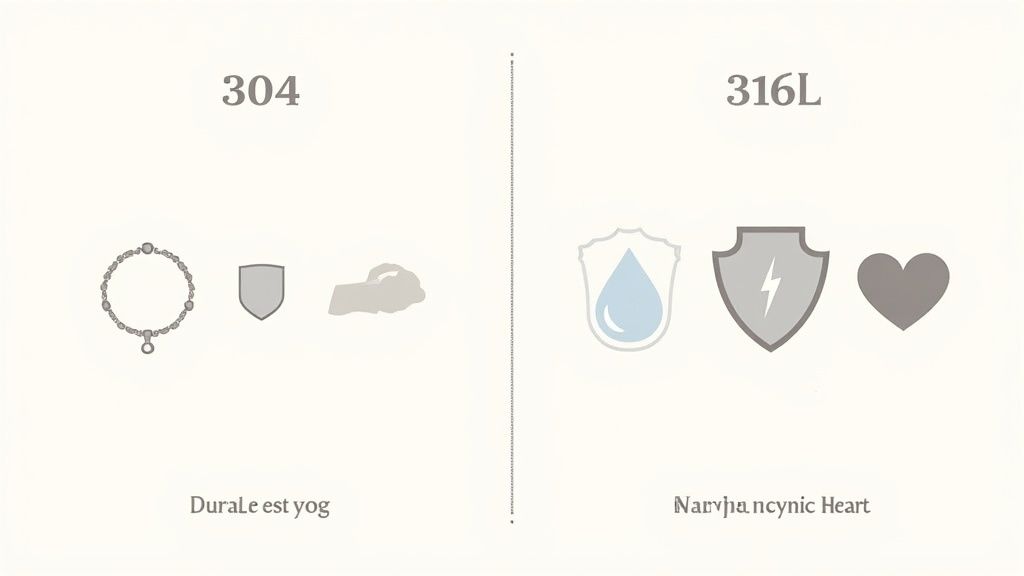
Grade 304: The Everyday Workhorse
You've seen 304 stainless steel everywhere. It’s the most common grade on the planet, used in everything from your kitchen sink to shiny architectural trim. It’s made with about 18% chromium and 8% nickel, a combo that gives it solid durability and a good defense against everyday rust and tarnish.
For a business focused on affordable fashion jewelry, 304 is a fantastic, budget-friendly option. It’s tough, holds a polish beautifully, and is ideal for creating those trendy, affordable pieces that fly off the shelves. The only catch? Its higher nickel content can sometimes cause a reaction in people with very sensitive skin.
Grade 316L: The Hypoallergenic Champion
This is the good stuff. Grade 316L is often called “surgical steel” for a reason—it’s the same grade trusted for medical implants. What makes it special is the addition of a little something called molybdenum. This one ingredient dramatically boosts its ability to fight off corrosion, especially from things like saltwater and sweat.
That's why 316L is the hands-down winner for high-quality jewelry meant to be worn all day, every day. The "L" in 316L stands for "low carbon," which makes it even more tarnish-resistant and incredibly hypoallergenic. It’s the gold standard for anyone with skin sensitivities. While it costs a bit more than 304, the peace of mind you get from its durability and skin-safe properties is worth every penny for building a reputable brand. For a deeper dive, check out our guide on what 316L means on jewelry.
Choosing 316L stainless steel isn't just a material choice; it's an investment in your customers' trust. You can confidently market your pieces as high-quality, hypoallergenic, and tarnish-proof, knowing the metal will back up those claims and keep them coming back.
To make this crystal clear, here’s a side-by-side look at how these two popular grades stack up for your business.
Comparing Common Stainless Steel Grades for Jewelry
| Feature | 304 Stainless Steel | 316L Stainless Steel (Surgical Steel) |
|---|---|---|
| Common Use | Fashion jewelry, kitchenware | Medical implants, high-end watches, everyday jewelry |
| Corrosion Resistance | Good | Excellent (resists salt, sweat, chlorine) |
| Hypoallergenic | Generally safe, but can affect highly sensitive skin | Superior; ideal for sensitive skin |
| Cost | More affordable | Slightly higher price point |
| Best For | Trendy, seasonal pieces | Core collections, rings, pieces for daily wear |
Ultimately, choosing between these two comes down to matching the right material to your product's purpose and your brand's promise of quality and affordability.
Why This Distinction Matters For Your Business
Knowing the difference between these grades has a direct impact on your sourcing strategy, your marketing, and your reputation. When you can talk confidently about 304 vs. 316L, you can make smarter purchasing decisions that perfectly balance cost, quality, and what your customers are looking for.
Here’s a quick cheat sheet to help you decide which to source for your business:
-
Choose 304 Stainless Steel for:
- Cost-Effective Fashion Pieces: Perfect for trendy items where an affordable price is the main draw.
- Broad Appeal Collections: A solid choice for general accessories not designed for constant, 24/7 wear.
- Testing New Styles: Its lower cost reduces the risk when you're trying out a new design for your business.
-
Choose 316L Stainless Steel for:
- Premium & Core Collections: The foundation for a high-quality, durable product line that builds your brand.
- "Hypoallergenic" Marketing: A must-have if you want to advertise your jewelry as safe for sensitive skin.
- Everyday Essentials: The best pick for rings, bracelets, and necklaces meant to be lived in—showering, swimming, and all.
By simply specifying the grade you want from a supplier, you take command of your quality control. This one piece of knowledge elevates you from a simple buyer to a strategic sourcer, ensuring the wholesale jewelry stainless steel you bring in is safe, durable, and a perfect fit for your brand.
How to Find and Vet Your Wholesale Suppliers
Finding the right supplier is the most critical decision you'll make for your jewelry business. A great partner ensures a smooth supply chain, while a bad one guarantees turbulence. Your supplier directly affects your product quality, your pricing, and ultimately, your brand's reputation. This isn't just about finding the cheapest option—it’s about building a partnership that provides high-quality, affordable accessories you can count on.
The first step is simply knowing where to look. Today, you've got more options than ever, from massive online platforms to exclusive industry events. The trick is to explore a few different channels to find a partner that truly matches your business size, quality standards, and growth goals.
Where to Source Wholesale Stainless Steel Jewelry
Your best bet is a sourcing strategy that mixes online research with, if possible, some real-world networking. Each path offers something different, from the convenience of online marketplaces to the hands-on quality inspection at a trade show.
Here are the main places businesses find their suppliers:
- Global B2B Marketplaces: Platforms like Alibaba are the titans of wholesale sourcing. They give you an incredible selection from thousands of manufacturers, making it easy to compare styles and prices. The downside? The sheer volume can be overwhelming, which means you have to be extra careful with your vetting.
- Specialized Jewelry Directories: Websites like JewelryBund and FashionGo are focused squarely on fashion accessories. These platforms tend to be more curated, so you'll often find a more focused, and sometimes higher-quality, selection than on the giant generalist sites.
- Industry Trade Shows: Events like JCK Las Vegas or local fashion accessory expos are invaluable. They let you meet suppliers face-to-face, physically inspect the jewelry, and build real relationships. Nothing beats checking the polish, weight, and clasp strength of a piece in your own hands.
- Direct Factory Outreach: If you're ready to scale, reaching out directly to manufacturers can unlock better pricing and even custom designs. This takes more legwork, but it can lead to exclusive pieces and a much stronger partnership in the long run.
Having a handle on the global manufacturing landscape is a huge advantage. Most of the world's stainless steel jewelry comes from a few key regions, which impacts everything from production times to the styles you'll see. For more guidance, you can check out our detailed list of the best wholesale jewelry suppliers to get a head start.
The Global Hub of Stainless Steel Jewelry Production
It’s no secret that the Asia-Pacific region, especially China, is the engine room for global stainless steel jewelry. This reality shapes the entire wholesale market. Industry reports show this region accounts for a massive 40–46% of all stainless steel jewelry shipments worldwide. This means many of the suppliers you find will have manufacturing ties there, which is something to keep in mind for shipping and production schedules. You can dig into more insights about the stainless steel jewelry market on businessresearchinsights.com.
A supplier’s location isn’t just a logistical detail. It influences communication styles, cultural business practices, shipping times, and potential tariffs. Knowing this helps you set realistic expectations for your business from the get-go.
Vetting Suppliers Beyond the Catalog
Once you have a shortlist of potential suppliers, the real work begins. A beautiful online catalog is meaningless if the products are low-quality or the service is unreliable. Vetting is a systematic process to protect your investment and ensure you receive consistent, high-quality fashion accessories.
Think of it like hiring a key employee. You wouldn't hire someone just from their resume, right? You'd interview them, check their references, and maybe even give them a trial project. The same logic applies here.
Start by checking their business credentials:
- Verify Business Legitimacy: Look for a business license, a physical address, and real contact information. Any reputable supplier will have this easily available.
- Request Certifications: Ask about quality management certifications like ISO 9001 or social compliance audits like BSCI. These aren't just acronyms; they show a real commitment to professional standards.
- Read Reviews and Testimonials: See what other business owners are saying. Pay close attention to comments about product quality, shipping speed, and how they handle problems.
- Evaluate Communication: Send an initial email. How quickly and professionally do they reply? Clear, prompt communication is one of the best signs of a reliable partner.
The Ultimate Test: Ordering Samples
Never place a large order without getting samples first. This is a non-negotiable step for any business. It's the only way to physically inspect the quality and make sure the products are everything the supplier claimed they would be. If a supplier is hesitant to send samples, consider that a major red flag.
When the samples arrive, don't just give them a quick glance. Put on your detective hat. Scrutinize every single detail. It helps to use a checklist to keep your evaluation consistent across different suppliers.
Your Sample Evaluation Checklist:
- Weight and Feel: Does the piece feel substantial and high-quality, or cheap and flimsy? Good stainless steel has a satisfying heft.
- Polish and Finish: Is the surface smooth and shiny all over? Look for scratches, dull spots, or rough patches, especially in small crevices.
- Clasps and Closures: Open and close the clasps a dozen times. Do they feel secure? Do they operate smoothly? This is a common failure point.
- Welds and Joints: Check where different parts are joined together. Are the welds clean and strong, or do they look sloppy and weak?
- Plating Consistency (if applicable): For gold or rose gold plated items, check for an even color and full coverage. See any signs of chipping or discoloration?
This detailed vetting process separates professional buyers from amateurs. It takes time, but it’s the best way to build a supply chain you can trust, ensuring the wholesale jewelry stainless steel you sell is high-quality, affordable, and something your business can be proud of.
Choosing Between Solid and Plated Jewelry
When sourcing wholesale jewelry stainless steel for your business, one of the biggest decisions is whether to stock solid or plated pieces. This defines your product's quality, durability, and price point, shaping how you position your brand and the value you promise your customers.
Solid stainless steel is like a block of granite—the same tough, consistent material all the way through. Its color can't chip or wear off. Plated jewelry is like a beautifully glazed ceramic tile—a strong steel base with a brilliant layer of color on top.
Both have a place in a well-rounded collection. The key is knowing the pros and cons of each so you can build a lineup that perfectly balances style, longevity, and cost for your ideal customer.
The Case for Solid Stainless Steel
Solid stainless steel is the workhorse of the jewelry world—durability personified. Because the material is uniform, its color can't flake or wear off. Scratches can even be buffed out to restore the original finish.
This makes it the clear winner for everyday essentials like rings, chains, and bracelets that will see a lot of wear. From a sourcing perspective, it's wonderfully straightforward. What you see is what you get, with fewer manufacturing variables. If your brand is all about long-lasting, low-maintenance, high-quality jewelry, solid steel is your go-to.
Understanding Plated Stainless Steel Jewelry
Plated jewelry offers the best of both worlds: the rugged strength of steel combined with the luxe look of gold, rose gold, or black rhodium. This technique lets your business offer a variety of on-trend colors without the high cost of solid precious metals, making high-fashion looks affordable.
But here’s the crucial part: not all plating is created equal. The quality and lifespan of a plated piece hinge entirely on how that thin outer layer is applied. This is where your expertise as a business owner gives you a massive advantage.
The most significant factor in the longevity of plated jewelry isn't the thickness of the plating, but the method used to bond it to the steel. A superior bonding process creates a finish that can last for years, even with daily wear.
Finding the right partner is everything. The process below gives you a roadmap for discovering and vetting suppliers who have the technical chops to deliver the quality you need, whether for solid or plated items.
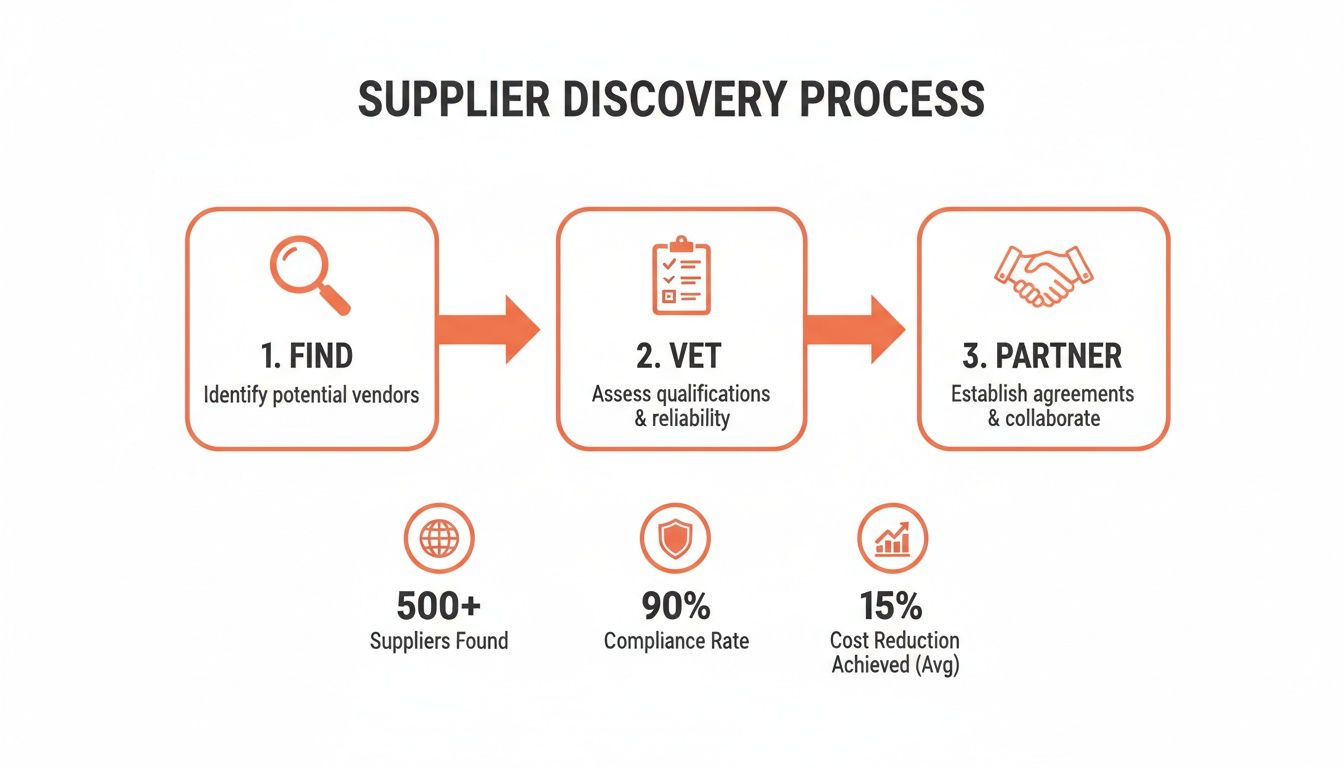
As you can see, vetting a supplier's technical capabilities—like their specific plating methods—is just as important as looking at their catalog.
PVD Plating: The Gold Standard
When discussing plated jewelry with suppliers, you'll hear the acronym PVD. It stands for Physical Vapor Deposition, and you need to know it. This modern technique is miles ahead of old-school electroplating and is now considered the industry's gold standard for durable, high-quality finishes.
Instead of just dipping the piece in a chemical solution, the PVD process is far more advanced. It all happens inside a high-tech vacuum chamber where the plating material (like gold) is vaporized. Those vaporized molecules are then bonded directly to the surface of the stainless steel on a molecular level.
The result is a finish that is dramatically harder, more resistant to corrosion, and far less likely to chip or fade. In fact, studies have shown that a PVD coating can be up to 10 times more durable than traditional gold plating. To see just how stunning and high-quality modern plating can be, check out the examples in our guide to the gold stainless steel necklace.
Quick Comparison: Solid vs. PVD Plated
| Feature | Solid Stainless Steel | PVD Plated Stainless Steel |
|---|---|---|
| Durability | Extremely high; cannot wear off | Very high; resistant to scratches and fading |
| Color Options | Silver-tone only | Gold, rose gold, black, etc. |
| Cost | Generally lower | Slightly higher due to the plating process |
| Best For | Everyday rings, minimalist pieces | Trendy, colorful fashion jewelry |
When sourcing for your business, make it a point to ask potential suppliers specifically about their PVD capabilities. It’s the single best way to ensure you're getting high-quality plated jewelry that will live up to your brand's promise and keep your customers happy.
Getting Your Order Right: Logistics and Quality Control
You’ve vetted your suppliers and selected your materials. Now comes the make-or-break part: turning your vision into actual, sellable inventory. This is where the business-critical details of sourcing wholesale jewelry stainless steel really begin.
Getting the financial and logistical details right is what separates a smooth, profitable launch from a total nightmare. It’s all about being precise and thinking ahead. A little extra time spent here will save you from major headaches and unexpected costs later on.
Understanding How Wholesale Pricing Really Works
When a supplier sends you a quote, that per-piece price is almost never a flat rate. Wholesale pricing is built to reward bigger orders, and if you don't understand the structure, you can't manage your budget or negotiate effectively for your business.
There are two main concepts you’ll run into every single time:
- Minimum Order Quantity (MOQ): This is the smallest order a supplier will accept for an item or a total purchase. It’s how they ensure their production runs are profitable. For a small boutique, a high MOQ can be a deal-breaker, so finding a partner with a low or no-MOQ policy can be a massive win for your business.
- Tiered Pricing: Think of this as a volume discount. The more you buy, the cheaper each piece gets. For example, a supplier might quote you $5 per necklace for an order of 50, but that price could drop to $4 if you order 200. Always ask for their tiered pricing chart to see exactly where those price breaks are.
Don't Get Blindsided: Calculate Your True "Landed Cost"
The price on your supplier's invoice is just one part of the story. To figure out your real profit margin, you must calculate your landed cost—the final, all-in price you pay to get each item from their factory into your hands, ready to sell.
Your landed cost is the only number that matters for profitability. Forgetting about shipping, duties, and taxes is a classic rookie mistake that can crush your margins before you even start selling.
Calculating it is simple. Just add up every single expense related to the order, then divide that total by the number of units you bought.
The Landed Cost Formula:(Product Cost + Shipping + Customs/Duties + Taxes + Other Fees) / Total Number of Units = Landed Cost Per Item
Let's say you order 200 bracelets at $3 each ($600 total). Shipping costs you $80, and you pay $40 in import duties. Your total outlay is $720. Your true cost per bracelet isn't $3; it's $3.60 ($720 / 200). That's the number you need to use when you set your retail price.
Your Ultimate Order and Quality Control Checklist
A painfully detailed purchase order and a systematic quality check are your two best weapons against mistakes. Before you send any money, create a document that leaves absolutely zero room for misinterpretation. Then, when the boxes arrive, use a checklist to confirm you got exactly what you paid for.
Pre-Order Placement Checklist
- Item Details: Don’t just name the item. Use their SKUs or model numbers and include photos. Be ridiculously specific.
- Material Specs: Clearly state the steel grade (e.g., 316L Surgical Steel) and the exact plating (e.g., 18k Gold PVD Plating, 1 micron).
- Dimensions & Weight: List the exact measurements for everything—chain length and width, pendant size, and even clasp style.
- Packaging Needs: Spell out how you want items packed. Individual poly bags? Branded backing cards? Gift boxes? Don’t assume anything.
- Payment Terms: Confirm the deposit, the final payment schedule, and the methods they accept (e.g., PayPal, wire transfer).
Post-Delivery Quality Assurance (QA) Checklist
- Count Everything: The moment the shipment arrives, do a full count to make sure the quantity on the packing slip matches what’s in the box.
- Compare to Your Sample: Pull a few random pieces and hold them right next to the pre-production sample you approved. Do they match perfectly?
- Test the Moving Parts: Open and close every single clasp. Check any hinges or adjustable components to make sure they feel secure and work smoothly.
- Inspect the Finish: Under a bright light, look for scratches, blotchy polishing, or any defects in the plating. Be picky!
- Spot-Check the Specs: Grab a pair of digital calipers and measure a few pieces. Do the dimensions line up with what you ordered?
By taking control of these logistical steps, you’re not just buying jewelry—you’re protecting your investment and building a reputation for high-quality products.
How to Market and Sell Your Stainless Steel Jewelry
Sourcing beautiful, affordable wholesale stainless steel jewelry is a great start. But the real growth for your business happens when you market and sell those pieces effectively. It’s all about great merchandising and storytelling; that’s what turns inventory into profit and builds a brand people truly connect with.
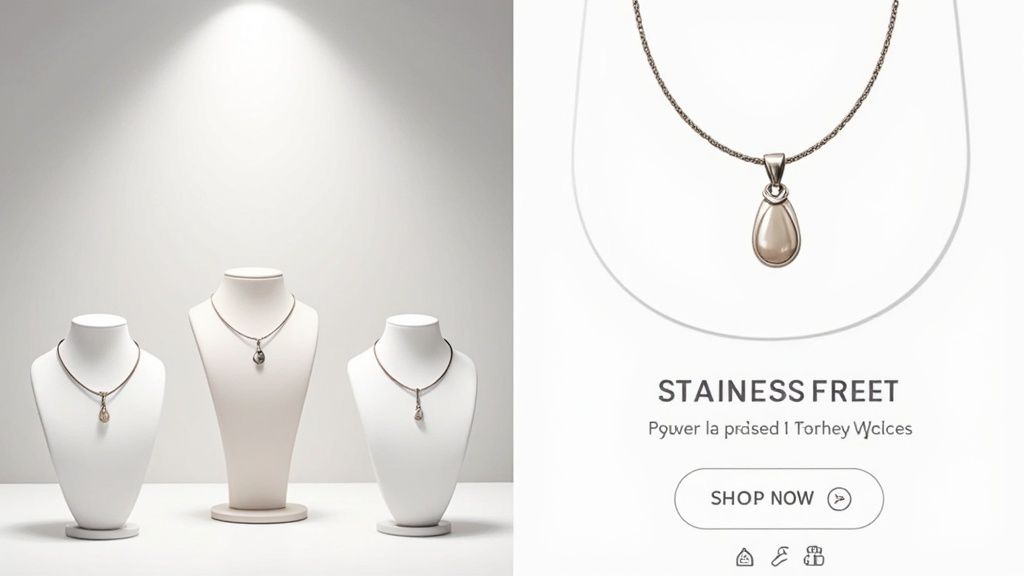
Whether you run a physical boutique or an online shop, the core idea is exactly the same: sell the solution, not just the product. Customers aren't just buying "stainless steel." They're buying gorgeous, high-quality, durable accessories that make their lives easier.
E-Commerce Strategies That Convert
If you're selling online, your product page is everything. Great photos aren't optional; they're essential. You have to capture that sleek, metallic shine and all the tiny, intricate details. I always recommend a mix of clean, white-background shots for clarity and lifestyle photos with a model so customers can instantly imagine the piece on themselves.
Then you have your product descriptions. This is your sales pitch! Don't just list specs. Weave in the keywords that speak directly to what your customers are looking for.
Keywords to Weave into Your Descriptions and Ads:
- Hypoallergenic: This is a huge deal for the 30% of people with metal allergies. It's an instant problem-solver and a massive selling point.
- Tarnish-Proof: Don't just say it's tarnish-proof. Frame it as "effortless style" or "jewelry that looks brand new for years." This really clicks with busy customers.
- Water-Resistant: This sells a lifestyle. Tell them it's the perfect piece for the gym, a beach day, or even just the daily shower. No fuss, no worry.
- Durable & Scratch-Resistant: This language signals long-term value. It makes the purchase feel less like a splurge and more like a smart investment in a high-quality accessory.
When you focus your marketing on these real-world benefits, the conversation automatically shifts from price to value. You’re no longer just selling a necklace; you’re selling a worry-free, long-lasting accessory they’ll love.
To help close the deal and answer questions on the spot, you might also look into implementing chatbots for e-commerce sales. They can provide quick support and guide shoppers right to checkout.
Merchandising for Brick-and-Mortar Stores
In a physical shop, your displays have to do the heavy lifting. The cool, modern vibe of stainless steel jewelry really comes alive with the right presentation. Think clean, minimalist displays and great lighting—anything that makes the metal pop.
Try creating little visual stories with your products. You could set up a "Vacation-Proof Jewelry" collection with your most durable, water-resistant pieces. Use small, elegant signs to call out the benefits right on the display, like "Tarnish-Free" or "Hypoallergenic." It catches the eye and answers questions before they're even asked.
Building Trust Through Customer Education
One of the most powerful marketing tools is also one of the simplest: education. Pop a small, well-designed care card into every purchase. It's a tiny detail that immediately makes your products feel more premium and shows you're thinking about the customer long after the sale.
This little gesture quietly reinforces how easy stainless steel is to care for. Instructions as simple as, "Just wipe with a soft cloth to maintain its shine," build confidence. It shows you stand by your quality, which is exactly what brings customers back and gets you those glowing reviews.
Common Questions About Sourcing Stainless Steel Jewelry
As you get ready to dive into the world of wholesale stainless steel jewelry, a few last-minute questions are bound to pop up. Let's tackle some of the most common things I hear from other business owners so you can move forward and make smart buying decisions with confidence.
Is All Stainless Steel Jewelry Hypoallergenic?
Not necessarily, but the high-quality jewelry is. The secret is to stick with pieces made from 316L stainless steel, often called surgical steel. It has an incredibly low nickel content, making it a safe bet for even the most sensitive skin.
While you might see 304 grade out there—and it’s perfectly durable—316L is what your business needs if you want to confidently market your pieces as high-quality and hypoallergenic.
Can Stainless Steel Jewelry Get Wet?
Yes, and this is one of its biggest perks. High-quality stainless steel is fantastic in water. The chromium in the metal creates a passive, protective layer that wards off rust and tarnish.
Your customers can wear it in the shower, at the pool, or during a workout without a second thought. It's the definition of low-maintenance, which makes it an easy sell for everyday wear.
This water-resistant quality is a huge marketing win. Frame it as "life-proof" jewelry. Tell your customers it's perfect for the gym, beach days, and everything in between. That kind of practicality adds a ton of value.
What Is The Best Type Of Plating For Longevity?
When it comes to plated pieces, PVD (Physical Vapor Deposition) is the top of the line, no question. It’s a modern technique that actually bonds a thin layer of gold (or another color) to the steel at a molecular level.
The result? A finish that is way more durable, scratch-resistant, and fade-proof than older, traditional electroplating methods. Make it a point to ask your suppliers if they use PVD when sourcing plated fashion accessories for your business.
How Can I Ensure I Receive High-Quality Products?
This is the most important part: always order samples before you commit to a big purchase. This is the one step you just can't skip for your business.
Getting your hands on a physical sample lets you feel the weight, check the finish, test the clasps, and really scrutinize the craftsmanship up close. Combining this hands-on check with a thorough review of your supplier's certifications and past client feedback is your best defense against quality issues.
Ready to build a stunning, durable, and profitable collection for your business? JewelryBuyDirect offers over 120,000 styles of high-quality stainless steel and fashion jewelry at factory-direct prices. With no minimum orders, fast worldwide shipping, and new arrivals daily, we make it easy to source affordable accessories your customers will love.
Explore our full catalog and start sourcing with confidence at https://www.jewelrybuydirect.com.