






Arthur Lynch | Sun Jan 04 2026
Sourcing Guide: What is Stainless Steel Jewelry?
Let's get right to it: stainless steel jewelry is a modern metal alloy that has become a go-to for savvy businesses sourcing fashion accessories. Why? It's incredibly durable, hypoallergenic, and comes at a price point that makes sense for both you and your customers. For a business owner, it's a high-value, low-maintenance product that sidesteps common customer complaints, making it a brilliant choice for your inventory.
Your Essential Sourcing Guide to Stainless Steel Jewelry

If you're in the business of selling jewelry and fashion accessories, you know that understanding your materials is everything. When you're sourcing inventory that needs to be both high-quality and profitable, stainless steel stands out as a true workhorse. It offers the perfect balance of durability for everyday wear with a polished, high-end look.
This unique combination is what makes it such a strategic pick for your business. Forget the headaches of sterling silver that tarnishes or cheap plated alloys that trigger skin reactions in customers. Sourcing stainless steel offers a reliable, worry-free product. That translates directly into happier shoppers, fewer returns, and a brand people trust.
The Business Case for Stainless Steel
So, what is stainless steel, really? At its heart, it's an iron-based alloy mixed with chromium. That chromium is the secret sauce—it forms a microscopic, passive layer on the surface that gives the metal its legendary resistance to rust, tarnish, and corrosion. This built-in durability is a huge selling point you can confidently pass on to your customers.
And the market reflects this. Stainless steel jewelry is no longer a niche; its market was valued at $6.79 billion USD and is on track to hit $10.8 billion. This surge is fueled by shoppers who want affordable luxury that lasts. This trend presents a massive opportunity for businesses to source high-demand products, which you can read more about in detailed market trend reports.
When you add stainless steel pieces to your collection, you’re doing more than just selling an accessory—you're providing a solution. You're offering your customers the elegant look of precious metals without the hefty price tag or the fussy upkeep.
For business owners sourcing new products, here's a quick breakdown of why stainless steel is a smart inventory choice.
Stainless Steel Jewelry At a Glance
| Attribute | Benefit for Your Business | What It Means for Your Customers |
|---|---|---|
| Exceptional Durability | Fewer returns and complaints about damage. Products maintain their value and appearance over time. | A long-lasting piece that resists scratches and dents from daily wear. |
| Hypoallergenic | Expands your customer base to include those with sensitive skin. Reduces liability and issues. | A safe, comfortable option that won't cause irritation, redness, or allergic reactions. |
| Affordable Sourcing | Higher profit margins compared to silver or gold. Lower initial investment to build inventory. | The look of luxury and precious metal without the high cost. More style for their budget. |
| Low Maintenance | Simplifies your sales pitch—no complex care instructions. Builds customer satisfaction. | No tarnishing, no polishing. It’s a "wear-it-and-forget-it" accessory that always looks good. |
This table shows how the core features of stainless steel create a win-win scenario, addressing key pain points for both your business and your customers.
Core Benefits for Your Inventory
Stocking stainless steel jewelry gives your business clear advantages that directly boost your bottom line and build customer loyalty. It’s one of those rare product categories that solves problems for both the seller and the buyer.
Here are the key takeaways for your business:
- Built to Last: It holds up against scratches, dings, and corrosion, ensuring your products look great long after the sale.
- Safe for Sensitive Skin: High-quality grades are hypoallergenic, opening your doors to a wider audience.
- Smart Economics: The lower cost of sourcing allows for much healthier profit margins than you’d get with traditional precious metals.
- Effortlessly Easy: Customers love that it's tarnish-free. No polishing cloths, no special chemicals, no hassle.
Ultimately, offering stainless steel jewelry lets your business deliver lasting quality and modern style without the financial barriers of gold or silver. It’s a true cornerstone for building a profitable, customer-focused accessories brand.
Choosing the Right Grade: 316L vs. 304 Steel
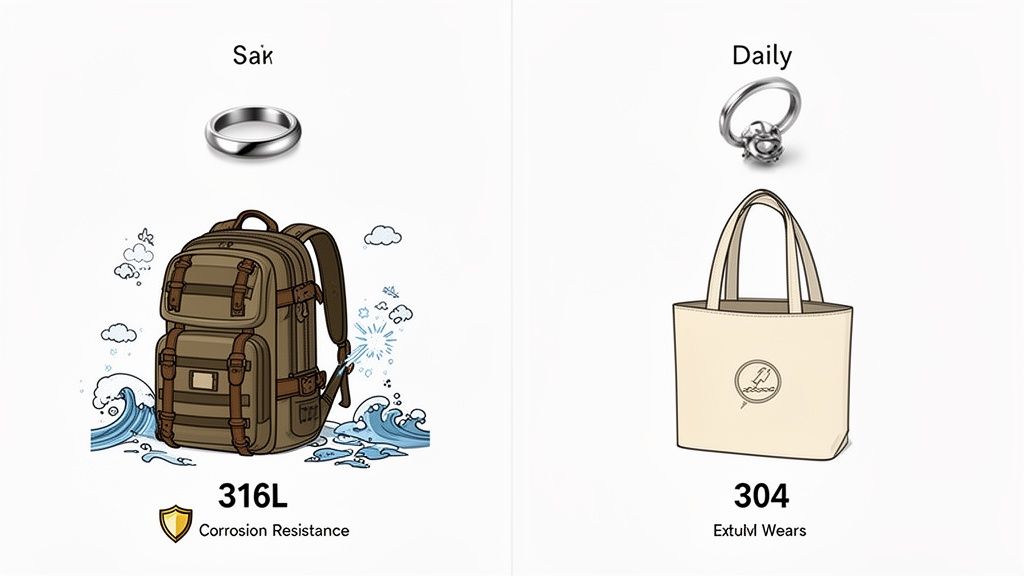
When you're sourcing your inventory, it's tempting to think all stainless steel is created equal. But the specific grade you choose can make or break your customers' experience and, in turn, your brand’s reputation. For fashion jewelry, the decision almost always comes down to two grades: 304 and 316L. Knowing the difference is critical for sourcing quality products.
Let’s use an analogy. Think of 304 stainless steel as a reliable tote bag. It's strong and gets the job done for most everyday needs, but it isn't designed for constant exposure to harsh conditions like moisture or chemicals.
Then you have 316L stainless steel—this is your expedition-grade, waterproof backpack. It’s engineered for tougher environments. That superior performance is precisely why it’s become the non-negotiable standard for sourcing high-quality fashion jewelry.
Why 316L Steel Is the Industry Standard
So, what gives 316L its edge for jewelry businesses? It all comes down to one key ingredient: molybdenum. This element is added to the alloy, dramatically boosting its resistance to corrosion, especially from chlorides found in things like sweat, saltwater, and cleaning products.
This extra resilience makes it the ideal material for any accessory that lives on the skin.
- Rings and Bracelets: Worn all day, these pieces are constantly exposed to hand-washing and lotions. 316L steel ensures they won’t tarnish or degrade.
- Earrings and Body Jewelry: For any kind of piercing, biocompatibility is everything. 316L is also known as surgical steel for a reason—it’s non-reactive and incredibly safe for sensitive skin, drastically reducing the risk of irritation.
- Necklaces: Resting against the skin means constant contact with sweat and perfume. 316L holds its own, maintaining its integrity and shine without causing a reaction.
For a business owner, sourcing 316L jewelry isn't just a product choice; it's a strategic move. It directly translates to happier customers and far fewer returns from tarnishing or skin reactions. It’s the foundation for building a reputation for durable, high-quality pieces. To get a closer look at its properties, you can explore our guide on what 316L means for your jewelry collection.
The Business Impact of Sourcing Superior Steel
Opting for 316L grade steel isn't just about offering a better product—it’s about protecting your bottom line and building a brand people trust. When you prioritize sourcing this superior grade, you're making a direct investment in customer loyalty.
Just look at the market. Search interest for hypoallergenic, tarnish-proof jewelry is through the roof, and 316L is the material that delivers on those promises. In fact, the market for jewelry made with 316L is projected to hit $6.9 billion, making it a massive, high-demand category for any retailer looking to grow. You can find more insights about this powerful trend in the 316L jewelry market.
Choosing 316L steel is a proactive quality control measure for your business. It significantly minimizes customer complaints related to allergic reactions, which often stem from the higher nickel release rate in lower-grade alloys like 304 steel.
Sure, 304 steel is cheaper to source upfront. But those initial cost savings can vanish when you factor in the cost of returns, the damage from negative reviews, and the long-term harm to your brand's reputation. Investing in 316L builds a loyal customer base that knows your products are safe, durable, and reliable. In the competitive fashion accessories world, that trust is everything.
Finishes, Plating, and Why They Matter for Your Business
The real magic of stainless steel jewelry, especially for a business, isn't just its strength—it's how easily it can be transformed. The final look of any piece comes down to its finish and, if it's colored, its plating. These two elements are what give you the power to curate a collection that appeals to a huge range of customer styles.
First, let's talk about the steel itself. An unplated piece can have different textures. A high-polish finish creates that bright, mirror-like gleam that looks incredibly similar to sterling silver. It's a classic choice. Then you have a matte or brushed finish, which offers a softer, more subtle look perfect for modern, minimalist, or masculine designs.
Because these finishes are part of the actual steel, they won’t just chip off or wear away. That built-in durability is a massive selling point you can share with your customers.
The Game-Changer: PVD Plating
While the natural silver tone of steel is great, adding color—especially the ever-popular gold and rose gold—is what opens up the market. This is where Physical Vapor Deposition (PVD) plating comes in, and for any business sourcing affordable, quality fashion jewelry, it is essential to understand.
PVD isn't traditional plating. Forget old-school electroplating, which just sticks a thin layer of color on top that's prone to flaking off. PVD is a high-tech vacuum-coating process where the plating material (like gold) is vaporized and then molecularly fused to the surface of the stainless steel.
This creates a bond that is worlds stronger and more durable than older methods.
PVD is not just a coating; it's a fusion. By bonding color to the steel at a microscopic level, it produces a finish that is incredibly resistant to scratches and fading. This is the technology that makes "waterproof" and "tarnish-proof" claims possible.
For your business, this is a marketing goldmine. You can confidently source and sell PVD-coated jewelry as a durable, everyday luxury that truly holds its color.
How Durability Creates Happy Customers
This incredible resilience from PVD plating solves the biggest customer complaints with fashion jewelry. When someone buys a gold-toned necklace, their number one fear is that it's going to fade, chip, or turn their skin green. PVD technology eliminates those worries.
This allows you to build your marketing around features that resonate with customers:
- Tarnish-Resistant: The combination of the PVD layer and non-reactive 316L steel means the piece simply won't tarnish. We go into more detail on why stainless steel rings resist tarnishing in our detailed guide.
- Waterproof and Sweat-Proof: Your customers can wear the items daily—shower, swim, gym—without worrying about the color fading or rubbing off.
- Long-Lasting Color: That gorgeous gold, rose gold, or black finish stays vibrant far longer than with traditional plating.
When you source stainless steel jewelry made with high-quality PVD plating, you're not just buying a product; you're investing in customer satisfaction. This means fewer returns, glowing reviews, and loyal customers who come back because they trust the quality you provide. It gives you the confidence to position your products as a step above cheap, throwaway accessories, boosting both your reputation and your profit margins.
How Stainless Steel Stacks Up Against Other Metals
To understand the business value of stainless steel jewelry, you have to see how it performs against the competition. When sourcing for your store, every metal comes with its own trade-offs—cost, durability, and customer perception. Knowing where stainless steel fits in helps you make smart buying decisions and explain its value to customers.
Let's put stainless steel head-to-head with three other big players: sterling silver, gold-plated alloys, and titanium. This showdown will show you why stainless steel often hits that perfect sweet spot of quality, price, and style for a modern fashion accessories business.
Sterling Silver: A Classic with a Catch
Sterling silver has a timeless, bright shine. But if you’re building a brand around affordable, low-maintenance pieces, silver has a major weakness: tarnish. It reacts with sulfur in the air, darkens over time, and needs constant polishing.
This upkeep is a pain point for customers. Beyond that, sterling silver is much softer, making it an easy target for scratches and dents. From a business perspective, its price is tied directly to the volatile precious metals market, so it’s a more expensive and less predictable material to source.
Gold-Plated Alloys: The Fast Fashion Trap
Gold-plated brass and other base metal alloys are the backbone of fast-fashion jewelry because they are extremely cheap to produce. This makes it easy to pump out trendy, low-cost designs, but the quality is often poor. The gold layer is often thin and rubs off quickly, exposing the metal underneath—which can cause skin irritation or that dreaded green tint.
This is exactly where stainless steel, especially with a quality PVD coating, becomes a superior choice for your business. While the initial wholesale cost might be slightly higher than the cheapest alloys, the durability and hypoallergenic nature of 316L steel deliver incredible long-term value. You're not just selling a piece that looks good for a week; you're offering something durable and skin-safe that builds trust in your brand.
The core difference here is the customer experience. Cheap plating often ends in frustration and bad reviews. Stainless steel with PVD plating delivers on the promise of lasting color and quality, which is what brings people back.
The finish you choose for stainless steel can completely change its vibe, from a classic polished look to something more modern.
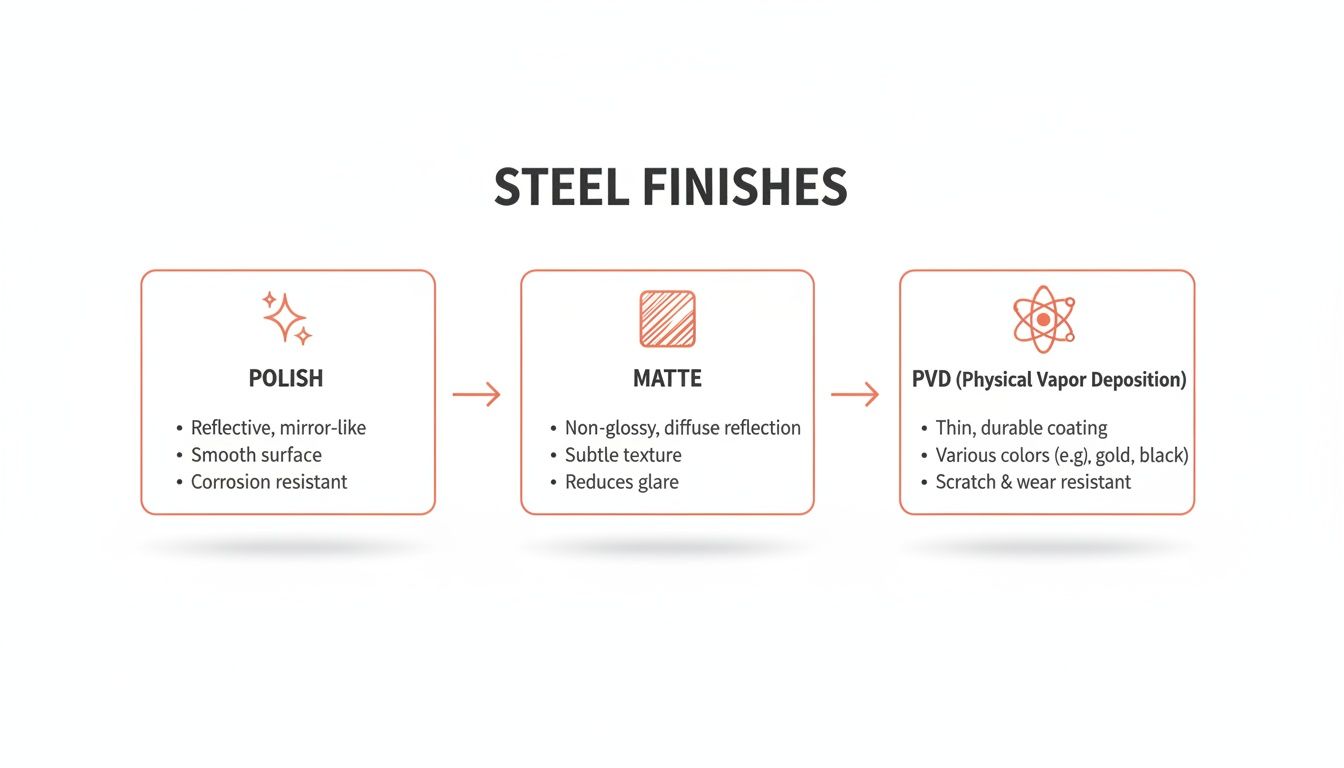
This versatility shows how you can source diverse styles—from high-shine classic jewelry to subtle matte textures—without ever sacrificing the underlying strength of the steel.
Titanium: The High-Performance Contender
Titanium is another fantastic choice—it's hypoallergenic, won't rust, and is unbelievably strong. The kicker is that it's also feather-light, making it a favorite for wedding bands or minimalist designs. So, what's the downside for a fashion accessories business?
The main hurdles are cost and workability. Titanium is more expensive to source and much harder to shape into complex, detailed designs. This naturally limits the styles you can offer and bumps up the final retail price. Stainless steel gives you similar high-performance benefits at a much more manageable price point, letting you stock a wider variety of designs without tying up all your capital.
Jewelry Metal Showdown: A Buyer's Comparison
Seeing it all laid out is the best way to make a sourcing decision. This table breaks down the key factors that matter most to you as a business owner and to your customers.
| Feature | Stainless Steel | Sterling Silver | Gold-Plated Alloy | Titanium |
|---|---|---|---|---|
| Wholesale Cost | Low to Moderate | High | Very Low | High |
| Durability | Very High | Low to Moderate | Very Low | Very High |
| Hypoallergenic | Excellent (316L) | Good | Poor | Excellent |
| Maintenance | Very Low | High (tarnishes) | Low (but degrades) | Very Low |
In the end, stainless steel delivers the most compelling all-around package for a business that wants to sell stylish, high-quality, and affordable fashion accessories. It gives you the power to meet customer demand for both trends and durability, all without the headaches and high costs that come with other materials.
How to Source High-Quality Stainless Steel Jewelry
Alright, you know what stainless steel jewelry is and why it's a smart move for your business. Now for the make-or-break part: sourcing your inventory. Finding the right partners who deliver consistent quality isn't just another box to check—it’s the absolute foundation of your business and your brand's reputation.
Let's walk through how to build a supply chain you can actually count on. This is your playbook for vetting suppliers and ensuring every piece you sell is something you can stand behind.
Vetting Suppliers: A Checklist for Quality
Not all suppliers are created equal. To protect your investment and your brand's good name, you need a solid checklist to separate the pros from the pretenders. Think of it as your quality control inspection before a single dollar is spent.
Your vetting process needs to be thorough, with a few non-negotiables. The goal here is to find suppliers who are transparent, reliable, and committed to making jewelry that lasts.
Here's what to lock in on:
- Material Certification: This is your number one priority. Always ask for documentation certifying the use of 316L stainless steel. This is your proof that you're sourcing genuine surgical steel that’s safe for sensitive skin—a huge selling point.
- Plating Quality Verification: If you're sourcing gold or rose gold pieces, get specific about their plating process. Suppliers who use PVD (Physical Vapor Deposition) are in a different league, creating a finish that is far more durable and fade-resistant.
- Finishing Details: You can tell a lot about a manufacturer by looking at the small stuff. Are the clasps secure? Is the polish consistent? Are the edges smooth? Poorly finished items look and feel cheap, no matter how good the design is.
When you demand certifications and ask about production methods, you're not being difficult—you're being a savvy business owner. A supplier who readily provides this info is confident in their product. That's the kind of long-term partner you want.
The No-MOQ Advantage for Your Business
For small businesses and growing brands, one of the biggest roadblocks is the Minimum Order Quantity, or MOQ. Most traditional wholesalers force you to buy hundreds of units of a single style, tying up your cash and leaving you with dead stock if a design doesn't sell.
Finding a factory-direct partner that offers no MOQ is a massive strategic advantage. It completely changes the game for how you manage inventory and cash flow.
A no-MOQ model lets you:
- Test New Styles with Minimal Risk: You can source a small batch of a trendy new necklace to see how your customers react without a large upfront investment.
- Offer Greater Variety: Instead of sinking your budget into a handful of SKUs, you can spread it across a much wider range of products, keeping your collection fresh.
- Improve Cash Flow: By buying only what you need when you need it, you keep more money in the bank for marketing, operations, or other growth projects.
This flexibility is crucial for staying nimble in the fast-paced fashion accessories market. For more on this, our guide on sourcing wholesale stainless steel jewelry takes a deeper dive into these benefits.
Identifying Trustworthy and Transparent Partners
Beyond the product itself, a great supplier relationship is built on clear communication and reliability. You need a partner who makes the sourcing process smooth. When importing, it's also crucial to understand things like import duties; for example, the new 25% tariffs on steel derivative products can affect your final cost. A good supplier will be upfront about these factors.
Look for these signs of a solid partner:
- Transparent Pricing: There shouldn't be any surprises or hidden fees. The price you see should be the price you pay, with shipping and any taxes laid out clearly.
- Reliable Logistics: They should offer efficient, trackable shipping options. Knowing when your inventory will arrive is essential for planning.
- Responsive Support: A trustworthy supplier will have a support team that answers your questions quickly and helps solve problems when they arise.
At the end of the day, you're building a business on a foundation of fantastic products. By carefully vetting suppliers, insisting on quality certifications, and using the flexibility of no-MOQ partners, you can source high-quality stainless steel jewelry that your customers will love and that will drive profitable growth for your brand.
Building a Profitable Stainless Steel Collection

Alright, you've found a solid supplier. Now for the fun part—building a collection. Curating a profitable inventory isn't about jumping on every trend. It’s about creating a smart mix of items that appeal to a wide audience while giving you the best return on your investment.
The secret is blending timeless staples with a dash of what's hot right now.
Think of your inventory like a portfolio. You need your blue-chip stocks—the "evergreen" products. These are classic, dependable bestsellers that form the backbone of your revenue. They're the pieces customers are always looking for, providing predictable income.
But you also need to capture the excitement of the moment. That’s where "trendy" pieces come in. These styles ride the wave of current fashion, driving impulse buys, bringing new visitors to your store, and keeping your brand looking fresh.
Curating a Balanced Inventory
A successful catalog strikes the perfect balance between these two worlds. This strategy ensures a steady stream of sales from your core items while also cashing in on fleeting trends.
-
Evergreen Staples: These are your bread and butter. Think classic gold-plated hoops, simple chain necklaces, minimalist stacking rings, and basic studs. They’re versatile, low-risk, and always in demand.
-
High-Rotation Trends: This is your playground. Think layered necklace sets, chunky charm bracelets, bold statement rings, or pieces with colorful enamel. Since you can source with no minimum order quantity, you have the freedom to test these styles without a huge financial gamble.
Of course, how you present your jewelry online is just as important as what you sell. Learning about creating high-converting product photography for Amazon can give you an edge, making both your timeless and trendy pieces look irresistible.
Exploring High-Margin Niches
Once your core collection is established, it's time to get strategic. Stainless steel's unique qualities open up some seriously profitable and often overlooked niches. Now that you understand what is stainless steel jewelry—tough, hypoallergenic, and affordable—you can target specific markets where those features are a huge advantage.
Real growth often lies in specialization. By focusing on a niche, you can become the go-to source for a specific customer type, building a loyal following that bigger, generalized stores often miss.
Here are a couple of high-potential areas to consider for your business:
- Men’s Jewelry: Stainless steel is perfectly suited for men's accessories. Its rugged strength, masculine look, and ability to handle daily wear make it perfect for chains, bracelets, and rings.
- Body Jewelry: This one is a no-brainer. The hypoallergenic properties of 316L surgical steel are absolutely essential for body jewelry. If you can source certified 316L pieces for belly rings, nose studs, and cartilage earrings, you can tap into a market where safety and quality are everything.
By mixing timeless bestsellers with trend-forward items and exploring specialized niches, you’ll build a dynamic and profitable collection that keeps customers coming back for more.
Common Customer Questions, Answered for Retailers
As a business owner, your confidence in the product is contagious. When customers ask questions, having clear, straightforward answers builds trust and helps you make the sale. Let's cover the most common questions you'll get about stainless steel jewelry so you can answer them like an expert.
Is It Really Waterproof?
This is probably the number one question you'll hear. The short answer is yes, high-quality 316L stainless steel is incredibly water-resistant. Customers can wear it in the shower, while washing their hands, or if they get caught in the rain. It won't tarnish or rust.
That said, it's good practice to advise against prolonged exposure to harsh chemicals, like in a chlorinated pool or hot tub. For PVD-plated jewelry, that tough coating offers another layer of defense, making these pieces a perfect "wear-it-and-forget-it" option.
Will It Irritate Sensitive Skin?
For customers with metal allergies, this is a critical question. The best way to put their minds at ease is to source and specifically advertise 316L grade stainless steel. You can also refer to it by its other name: surgical steel.
This grade is biocompatible, meaning the human body doesn't react to it. It’s the same material used in medical implants for a reason!
A pro tip for your business: Always get material certifications from your supplier. Using phrases like "316L Surgical Steel" and "Hypoallergenic" in your product descriptions isn't just marketing—it's a powerful way to build instant trust with shoppers.
How Do I Tell Customers to Clean It?
Here’s the beauty of stainless steel: its low-maintenance nature is a huge selling point. You can tell your customers with a smile that keeping their new jewelry beautiful is incredibly easy.
All it takes is a simple wipe-down:
- Use a soft cloth, a little warm water, and a drop of mild soap.
- Gently clean off any fingerprints or daily grime.
- Rinse it, pat it dry, and its original shine is back.
That’s it. No special polishing cloths or chemical dips are needed. You're selling an effortless, everyday luxury that fits into a busy life—and that’s a product anyone can feel good about buying.
Ready to build a profitable collection with high-quality, affordable fashion accessories? JewelryBuyDirect offers over 120,000 factory-direct styles with no minimum order, empowering your business to test trends and scale with confidence. Explore our catalog and see why thousands of retailers trust us for their inventory needs.