






Arthur Lynch | Mon Jan 26 2026
When Silicon Valley Met Fifth Avenue: The Fashion-First Revolution in Tech Jewelry
What if a classic gold ring could monitor your sleep, or a delicate silver bracelet could discreetly notify you of an important call? This is the new reality of tech jewelry, a market where the boundaries between timeless adornment and cutting-edge technology have dissolved. We've moved beyond clunky gadgets strapped to our wrists. This is a cultural and aesthetic evolution, birthing a category that is fast becoming an essential component of any modern jewelry offering.
This isn't just a story about smaller chips and better batteries. It's about a fundamental shift in design philosophy, a collision of two worlds: the relentless innovation of Silicon Valley and the curated elegance of Fifth Avenue. What started as a niche for early adopters has matured into a sophisticated market, driven by a simple yet profound realization: for technology to be truly wearable, it must first be desirable.
The Market's Metamorphosis: From Gadget to Glamour
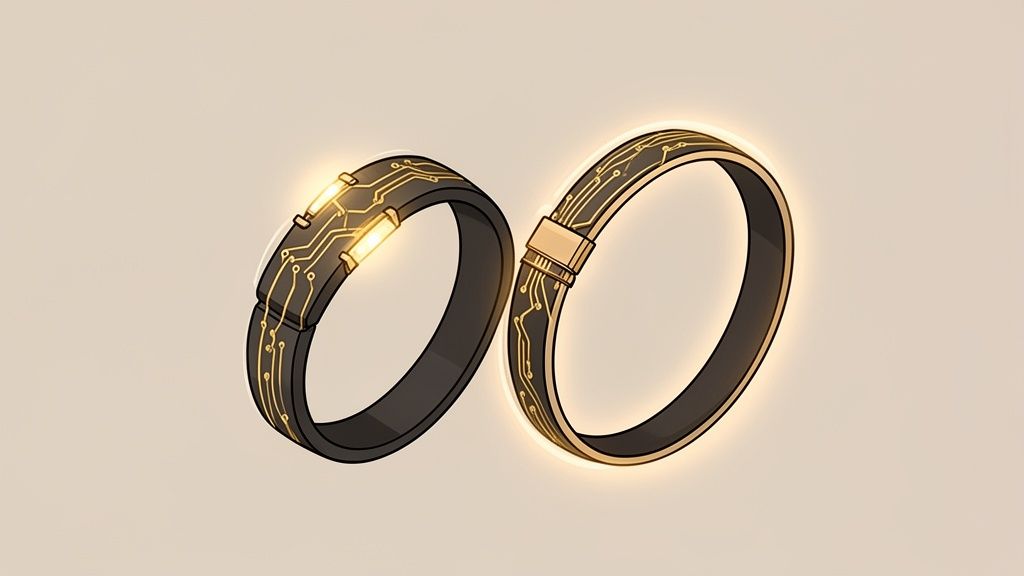
The journey of tech jewelry wasn't always a stylish one. The first wearables were born in engineering labs, not fashion studios, and it showed. They were utilitarian, often bulky, and screamed "gadget," focusing entirely on technological prowess over the subtle elegance required of a personal accessory. Think of the first-generation fitness trackers—functional, yes, but rarely beautiful.
These early products were built for a specific audience: tech enthusiasts willing to overlook awkward design for novel features. The conversation was about capability, not aesthetics. This "tech-first" approach created a significant barrier, preventing wearables from becoming mainstream fashion accessories.
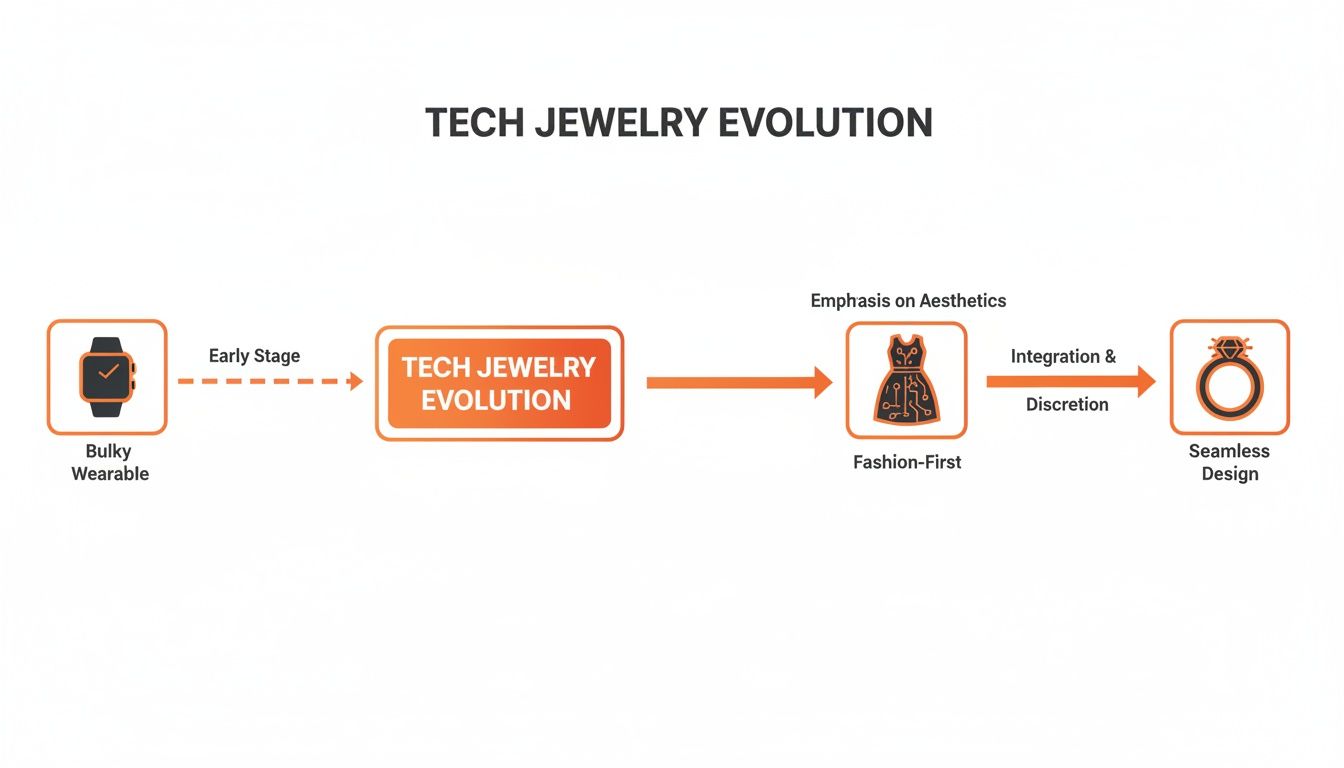
The market couldn't achieve critical mass until a pivotal shift occurred. Brands finally understood that for a device to earn a permanent place on someone's body, it had to be something they wanted to wear. It needed to be a gorgeous piece of jewelry first, with the technology acting as a delightful, hidden secret. This change in thinking, from tech-forward to fashion-first, was the catalyst that reshaped the industry. Designers began leading product development, focusing on materials, form, and comfort before determining how to integrate the electronics. The goal was no longer to strap a circuit board to a wrist but to invisibly weave intelligence into a classic, beautiful design.
The New Design Principles: Aesthetics as the Operating System
This new philosophy gave rise to a wave of tech jewelry where the technology itself is so well-integrated it practically disappears. This was made possible by several key developments:
- Miniaturization of Components: As sensors, batteries, and Bluetooth chips shrank, designers were freed from the constraints of clunky hardware. Ultra-thin batteries, some just 1.6mm thick, enabled delicate rings and pendants that were once unimaginable.
- Adoption of Traditional Materials: Plastic and silicone gave way to sterling silver, gold plating, and polished titanium. This immediately elevated the perceived value and aesthetic appeal, aligning these products with consumer expectations for fine jewelry.
- Emphasis on Classic Silhouettes: The new generation of smart accessories embraced timeless forms—the signet ring, the chain bracelet, the elegant pendant. This familiarity made the technology feel more approachable and less intimidating.
The turning point for tech jewelry came when the industry stopped trying to make technology wearable and started making jewelry intelligent. The aesthetic had to lead, and the function had to follow seamlessly.
The numbers confirm this successful pivot. The global smart jewelry market has skyrocketed from $256.3 million in 2022 and is projected to hit an incredible $890.8 million by 2030, reflecting a compound annual growth rate (CAGR) of 16.8%. This explosive growth is a direct result of fashion leading the charge.
Fashion's Embrace: From Runway Collaborations to Retail Mainstays
As tech jewelry shed its gadgety skin, it migrated from the shelves of electronics stores to the velvet-lined displays of fashion boutiques. This migration was accelerated by strategic collaborations between tech companies and established fashion houses. Partnerships like Fitbit x Tory Burch and Apple x Hermès served as powerful endorsements, signaling to the fashion world that wearable tech was not just a fad but a legitimate new category of accessory.
These collaborations were mutually beneficial. Tech companies gained aesthetic credibility and access to a new, style-conscious consumer base. Fashion brands were able to project an image of innovation, demonstrating that they were in tune with the modern, connected lifestyle. This synergy has been crucial in normalizing the presence of technology within high-fashion contexts. For retailers, this unlocked a potent new category, allowing them to offer innovation without straying from their core identity as curators of beautiful, desirable objects.
Technology Integration: The Art of Invisibility
What truly sets modern tech jewelry apart is the delicate dance between form and function. To understand this category, one must look beneath the surface—at both the materials that create beauty and the miniaturized electronics that provide intelligence.
The Fashion Foundation: Materials That Matter
- Hypoallergenic Stainless Steel: The industry workhorse—durable, corrosion-resistant, and sleek.
- 925 Sterling Silver: For a classic, premium feel with a timeless luster.
- Durable Titanium: Incredibly strong yet lightweight, perfect for active-wear pieces like rings.
- PVD Coating: A superior process for creating durable gold, rose gold, or black finishes that far outlasts traditional plating. You can discover more about how PVD coating works here.
The Miniaturized Tech: The Brains of the Operation
The real magic lies in how impossibly small and efficient these components have become.
- Sensors: Accelerometers for movement, optical heart rate sensors for pulse, and more.
- Microcontroller (MCU): The tiny brain that processes sensor data.
- Bluetooth Chip: The wireless voice that communicates with a smartphone.
- Battery: Miniature rechargeable cells or tiny coin cells, some as thin as 1.6mm.
Some of the most innovative integrations use simple NFC chips for contactless payments or sharing digital information. Our guide on NFC jewelry and its potential is a great resource for understanding this accessible entry point into the market.
Future Forecast: The Era of Invisible Intelligence
Looking ahead, the evolution of tech jewelry is accelerating towards a single goal: making the technology completely invisible. The endgame is not to wear a smart gadget, but to wear a beautiful piece of jewelry that happens to be smart. This final step in the fashion-first revolution will be driven by several key innovations:
- Energy Harvesting: Imagine a ring recharged by body heat or a pendant powered by ambient light. Technologies like kinetic and thermoelectric harvesting will eventually eliminate charging cables, creating a truly seamless user experience.
- Flexible Electronics: Circuits and sensors printed on paper-thin, flexible materials will allow for more organic and intricate jewelry designs, unconstrained by rigid components.
- Advanced Biometric Sensors: The next generation of sensors will move beyond activity tracking to offer non-invasive glucose monitoring, hydration level analysis, and stress detection through subtle biometric cues.
The next great leap for tech jewelry won't be a new feature, but the complete disappearance of the technology itself. When a smart ring can last for months on its own and provides deep health insights without ever needing a charge, the category will have truly arrived.
As the technology becomes more refined and invisible, expect major luxury houses to move beyond collaborations and launch their own high-end smart collections. When a brand like Cartier or Bvlgari integrates proprietary tech into its iconic designs, it will signify the ultimate acceptance of tech jewelry within the fine jewelry world. For retailers, tracking these innovations is a strategic advantage. The increasing role of AI in design is also accelerating this trend; learn more about how AI is shaping the jewelry industry.
Brand Spotlight: Sourcing High-Quality Tech Jewelry
Finding the right source for tech jewelry requires a new level of diligence. You're not just evaluating metal quality; you're vetting consumer electronics. This demands a sharp focus on quality control, certifications (like FCC for the US and CE for Europe), and battery safety.
This complexity is why a specialized B2B platform like JewelryBuyDirect is a game-changer for businesses. A trusted platform acts as an expert filter, handling the critical vetting for you.
- Guaranteed Compliance: Platforms ensure that all products meet international safety and electronics standards, removing the guesswork and risk.
- Simplified Logistics: They consolidate international shipping and customs for sensitive electronics, a major headache for individual buyers.
- Verified Quality: Established platforms often have on-the-ground teams to audit factories and inspect quality, ensuring the product you receive matches your expectations.
By partnering with a B2B wholesale platform, retailers can confidently enter the tech jewelry market, knowing their inventory is safe, compliant, and well-made. This frees you to focus on the essential work: building a compelling collection and sharing its story with your customers.
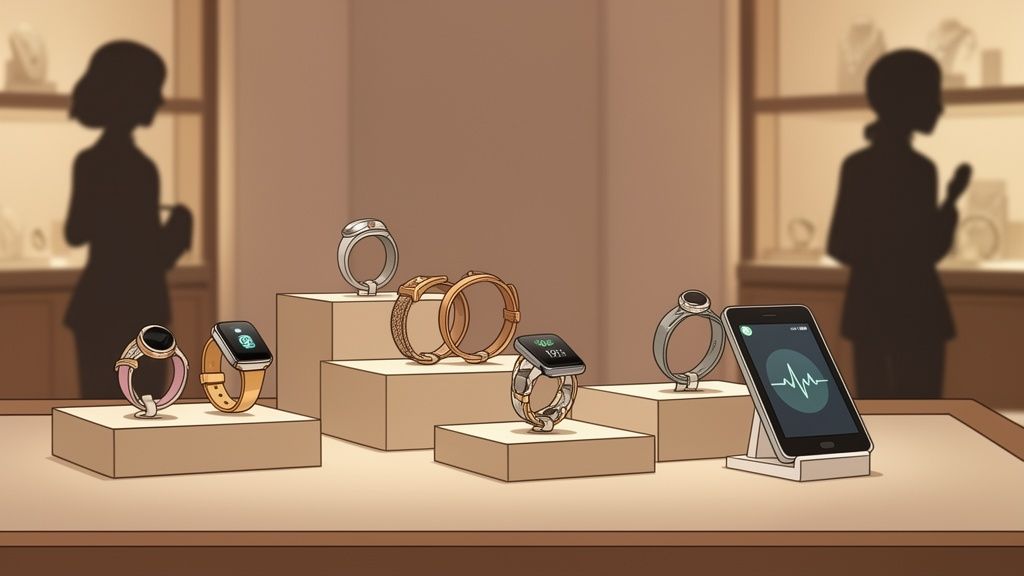
Selling this new category effectively is about storytelling. Your marketing must shift from traditional jewelry sales tactics to an approach that highlights both style and substance, grounded in modern ecommerce marketing principles. Frame the product not as an accessory, but as a lifestyle enhancement. Use live demos, videos, and benefit-driven displays to answer the customer's core question: "What can it do for me?" Once they envision how a piece can simplify their day or support their well-being, the technology transforms from a feature into an indispensable benefit.
Ready to curate a collection that will capture your customers' imagination? JewelryBuyDirect offers a vast, pre-vetted selection of high-quality and affordable tech jewelry, simplifying your sourcing so you can focus on growing your business. Explore our catalog and start building your smart collection today.