






Arthur Lynch | Fri Jan 23 2026
AI Jewelry: Your Intelligent Companion in a Smarter Market
Imagine an intelligent companion for your jewelry business—a partner that understands market whispers, learns your customers' unique tastes, and guides your sourcing decisions with uncanny foresight. This isn't a far-off concept; it's the reality of AI jewelry technology. It's more than a tool that collects data; it's an intelligent engine that understands it, transforming complex information into a clear, strategic advantage.
Unlocking the Power of AI: An Overview
Let's demystify AI in the context of sourcing high-quality, affordable jewelry. Think of it not as a cold algorithm but as the central brain of your operation. This brain connects disparate dots—runway trends, social media buzz, real-time sales data, and even global supply chain movements. Its purpose isn't just to gather information but to provide actionable insights, learning from every interaction to become a smarter, more effective partner over time.
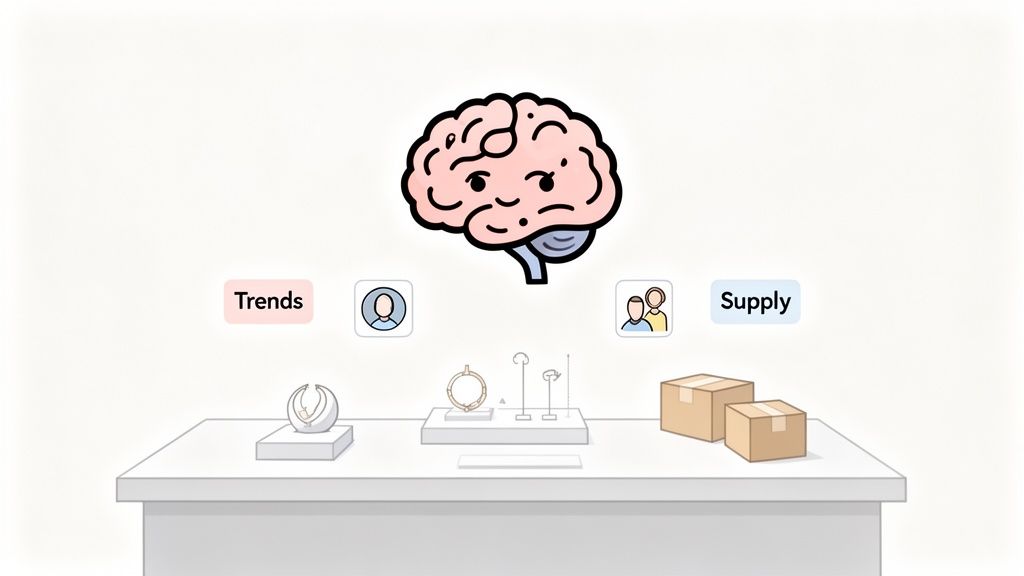
This intelligent companion doesn't just present data points; it tells you a story about where the market is headed. It helps you answer critical questions: Which earring style will be a bestseller next season? What price point will resonate most with your target audience? Which pieces in your current inventory need restocking now?
This forward-thinking approach is essential for thriving in a competitive market. By understanding the core principles of AI, you can better leverage its capabilities, a crucial step before diving into tactics like how to sell jewelry online. In this guide, we'll explore how this technology is becoming an indispensable ally, from initial design concepts to the final customer experience.
Current Applications: AI in Jewelry Design and Manufacturing
Today, AI is actively reshaping the creative and production landscape. It acts as a collaborator, amplifying human creativity and optimizing manufacturing with unprecedented efficiency. Learning algorithms are moving beyond simple automation and into the realm of true creative partnership.
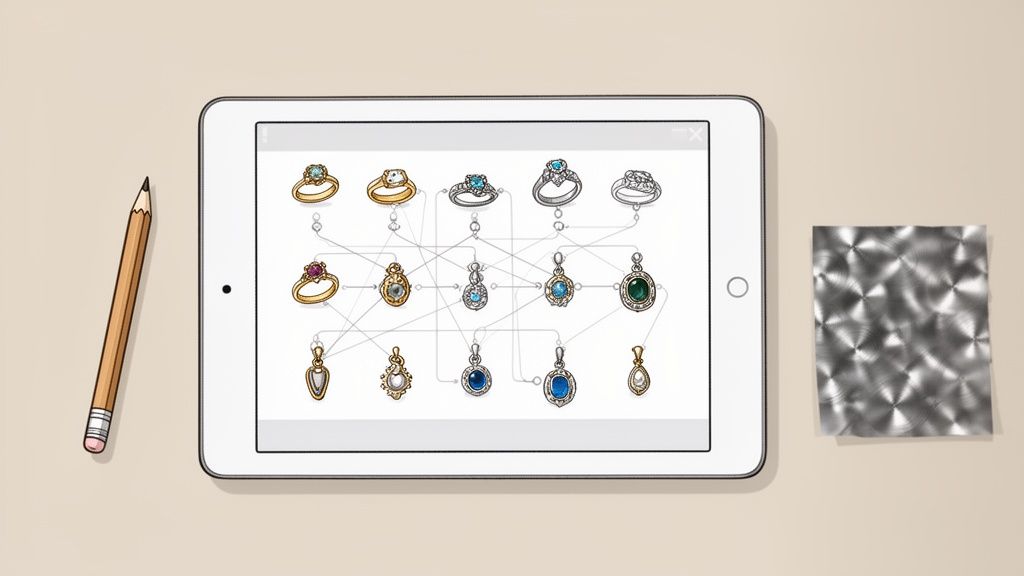
One of the most exciting applications is generative design. Here, designers provide AI with a set of parameters or a text prompt—like "Art Deco-inspired silver necklace with geometric motifs"—and the learning algorithms generate hundreds of unique design variations in seconds. This allows brands to explore a vast creative space, iterating on concepts at a speed impossible with traditional methods. The AI learns from feedback, refining its outputs to better match a brand’s aesthetic over time.
From Raw Ideas to Market-Ready Trends
Beyond creation, AI excels at identifying commercially viable trends. Its learning algorithms analyze:
- Social Media Patterns: Tracking influencer styles, viral content, and trending hashtags to spot emerging aesthetics.
- Runway Analysis: Deconstructing high-fashion collections to identify recurring motifs, colors, and silhouettes.
- Sales Velocity Data: Analyzing which product attributes (metals, stones, price points) are currently resonating with consumers.
This intelligent analysis transforms sourcing from a speculative bet into a data-informed decision. The artificial jewelry market, valued at USD 21.75 billion in 2024 and projected to reach USD 37.37 billion by 2035, heavily relies on such AI-driven forecasting. You can explore more data on the artificial jewelry market to see this growth firsthand.
AI also brings intelligence to the factory floor, optimizing cutting patterns for precious metals to minimize waste and reduce production costs. This efficiency translates into better wholesale prices, allowing you to source high-quality, on-trend pieces affordably.
The Personalization Engine: Crafting Unique Customer Journeys
The true power of AI as an intelligent companion shines in its ability to personalize the customer experience. It’s about moving beyond generic interactions to create a shopping journey that feels bespoke and intuitive for every individual. This is where AI’s learning algorithms create lasting customer loyalty.
AI personalization engines don't just track a single purchase. They build a dynamic profile of each customer, learning their style preferences, browsing habits, and even the times they are most likely to shop. It understands the difference between a user searching for "minimalist gold hoops" and one looking for "bohemian statement earrings" and tailors the entire experience accordingly.
From Browsing to Buying: Putting Personalization to Work
For a retailer, this capability drives tangible results. An AI-powered recommendation engine is the most visible example. It suggests complementary items based not just on what's in the cart, but on a deep understanding of the customer's aesthetic. This feels less like an upsell and more like a helpful styling suggestion from a trusted friend.
Virtual try-on technology is another game-changer. Using augmented reality, it allows customers to see how a piece of jewelry looks on them in real time. This interactive experience dramatically increases buyer confidence and reduces return rates—a significant win for any e-commerce business.
AI transforms retail by making every customer feel seen and understood. It offers a level of curated service that was once the exclusive domain of luxury boutiques, now made accessible through intelligent technology.
This hyper-personalization extends to marketing. Instead of mass email blasts, AI can curate newsletters featuring new arrivals that perfectly match a customer’s preferred style. It powers advertising systems like Dynamic Creative Optimization (DCO), ensuring that the right product is shown to the right person at the perfect moment.
The results are undeniable. The online jewelry market analysis shows that the market is projected to grow by USD 78 billion between 2024 and 2029, largely fueled by these personalized digital experiences.
Predictive Features: Forecasting Trends and Optimizing Inventory
For any jewelry business, inventory management is a high-wire act. Predictive analytics, powered by AI, provides the safety net. This is where AI transitions from a helpful assistant to a strategic partner, using its learning algorithms to forecast future demand and guide your sourcing decisions with remarkable accuracy.
Instead of relying on gut feelings, AI analyzes historical sales data, seasonal patterns, and real-time market signals to predict what your customers will want to buy next month or next season. It can identify that a particular style of celestial-themed necklace is gaining traction on social media and recommend you stock up before demand peaks.
From Guesswork to Strategic Sourcing
This predictive capability is transformative for retailers navigating vast wholesale catalogs with over 120,000 SKUs. Instead of being overwhelmed, you receive data-backed recommendations on the specific products most likely to succeed in your store. This process is detailed further in guides on jewelry inventory management software.
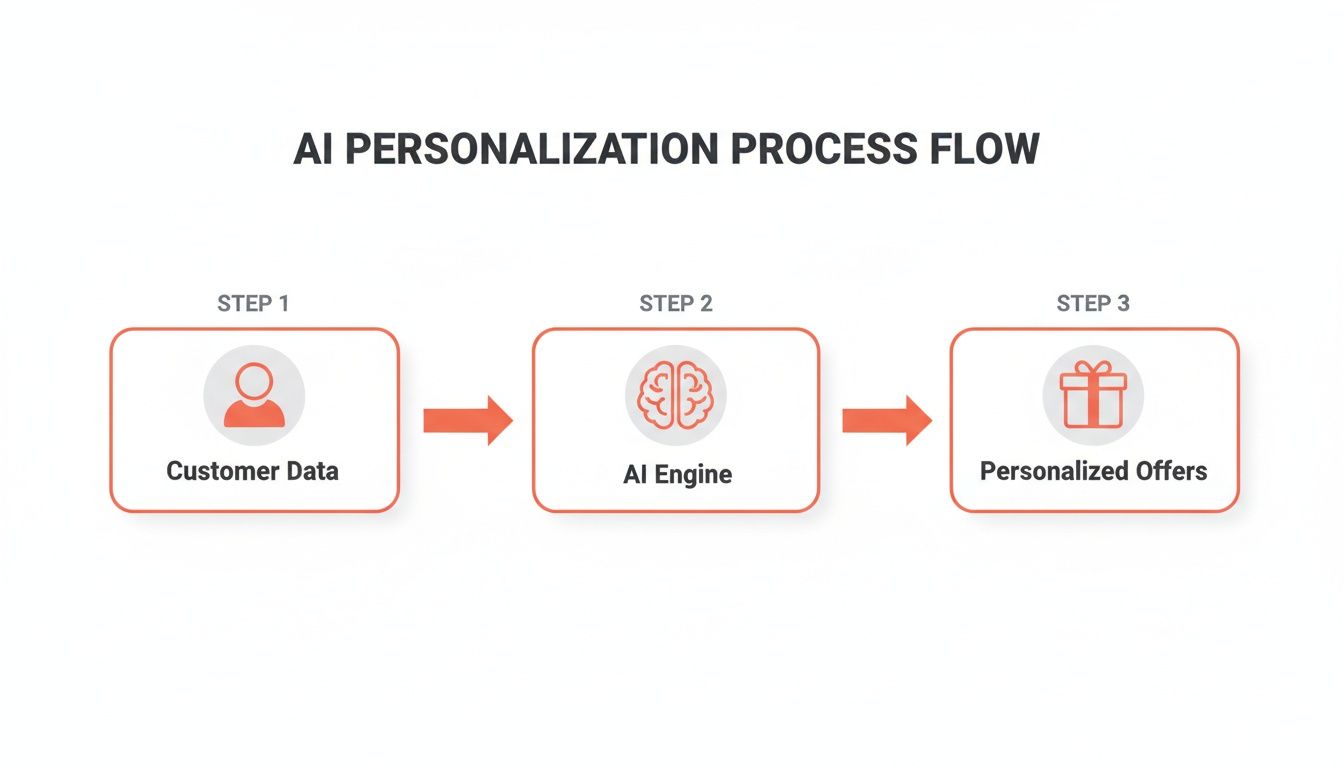
The flow is simple but powerful: customer data feeds into the AI engine, which learns patterns and generates predictive insights, leading to smarter inventory decisions.
This intelligent forecasting directly improves cash flow. The risk of overstocking a trend that fades or understocking a bestseller during a holiday rush is significantly reduced. AI recommends precise order quantities, suggesting a larger investment in evergreen items like classic chains while advising a smaller, test batch for a new, experimental design of ai jewelry.
Comparing Traditional vs. AI-Powered Jewelry Sourcing
This table highlights the fundamental shift AI brings to sourcing and inventory management.
| Aspect | Traditional Sourcing | AI-Powered Sourcing |
|---|---|---|
| Decision-Making | Based on gut feeling, past personal experience, and manual trend-spotting. | Based on real-time data analysis, sales history, and predictive forecasting. |
| Trend Identification | Slow and reactive; often relies on trade shows or industry publications. | Proactive and fast; identifies micro-trends as they emerge on social media. |
| Inventory Risk | High risk of overstocking unpopular items or understocking bestsellers. | Minimized risk through optimized order quantities and demand prediction. |
| Supplier Selection | Relies on existing relationships and manual catalog browsing. | Suggests suppliers and SKUs based on predicted success for your specific market. |
| Personalization | Limited to broad customer segments. | Hyper-personalized recommendations for individual customer profiles. |
| Efficiency | Time-consuming and labor-intensive manual analysis. | Automated, fast, and continuous analysis frees up your time for strategy. |
By embracing predictive features, you move from a reactive to a proactive business model, ensuring your investments are smarter and your profits are healthier.
Privacy and Ethics: Building Trust with Your Intelligent Companion
As AI becomes more integrated into your business, handling customer data becomes a paramount responsibility. An intelligent companion is only valuable if it is trusted. Therefore, addressing privacy considerations and ethical data use isn't just a legal requirement; it's the foundation of a strong, modern brand.
Transparency is the cornerstone of trust. Customers should clearly understand what data is being collected and, crucially, how it is being used to enhance their experience. Any ambiguity breeds suspicion. Open communication about your data practices is essential.
Protecting Customer Data is Non-Negotiable
Whether it's browsing history or biometric data from a smart ring, all customer information must be protected with robust security measures. This includes encrypted connections, secure storage, and strict adherence to data protection regulations like GDPR and CCPA.
Your privacy policy must be accessible and easy to understand. It should clearly outline:
- What you collect: Specify the types of data, from purchase history to website interactions.
- Why you need it: Explain that the goal is to provide a better, more personalized service.
- How you protect it: Reassure customers that their data is secure and will never be sold without their explicit consent.
Being transparent about data handling demonstrates respect for your customers. This ethical stance is a powerful differentiator that fosters long-term loyalty.
Proactively communicate your commitment to privacy. Don't wait for customers to ask. This builds your reputation as a trustworthy leader in the market. For more on this topic, the principles in Building Trust in the Age of AI provide a valuable framework for any business navigating this new landscape.
Future Innovations: The Next Generation of AI Jewelry
The evolution of AI in the jewelry industry is just beginning. Looking ahead, we can anticipate even more sophisticated and integrated concepts that will further blur the lines between fashion, technology, and personal identity.
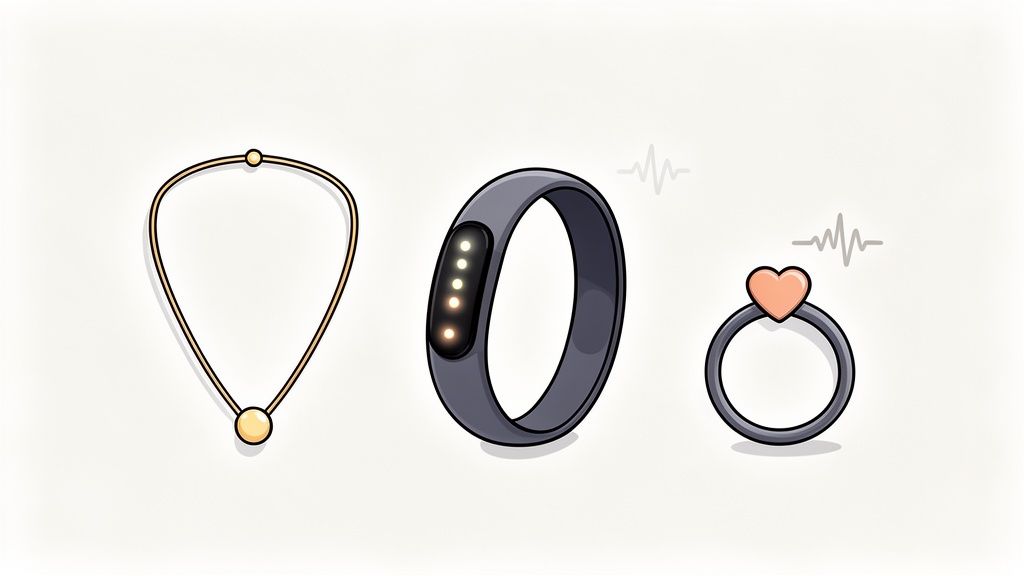
Future concepts include:
- Emotionally Responsive Jewelry: Imagine a pendant that subtly changes color based on biometric feedback, reflecting the wearer's mood or stress levels. These pieces will offer a new form of self-expression and mindfulness.
- Hyper-Contextual Recommendations: The AI companion will evolve to understand not just your style, but your daily context. It might suggest a different pair of earrings for an important business meeting versus a casual weekend brunch, based on your calendar.
- Sustainable Sourcing Intelligence: AI will play a critical role in verifying the ethical sourcing of materials, using blockchain and other technologies to create a transparent supply chain that customers can trust.
These future innovations will transform jewelry from a passive accessory into an active, intelligent partner in our daily lives, a market seen in products like NFC jewelry for access control.
Implementation Examples: Putting AI to Work in Your Business
Adopting AI doesn't require you to build a complex system from scratch. You can start by leveraging platforms and partners that have already integrated this intelligence into their services.
- E-commerce Platforms: Many platforms like Shopify offer apps and plugins that provide AI-powered product recommendations and personalized marketing automation. These are excellent, low-risk entry points.
- AI-Driven Wholesale Suppliers: Partner with a large-scale wholesaler that uses AI to curate its catalog. This gives you access to data-proven, on-trend products without needing your own analytics team. You effectively "rent" their intelligence to make smarter sourcing decisions.
- Private-Label Smart Jewelry: To enter the wearable tech market, consider sourcing private-label smart jewelry. This allows you to test the waters with a branded product line without the immense cost of developing proprietary technology.
The key is to start small, focusing on areas where AI can deliver the most immediate impact, such as improving inventory turnover or enhancing customer personalization.
Ready to tap into the power of AI-driven trends and smarter sourcing? JewelryBuyDirect uses market intelligence to stock over 120,000 on-trend SKUs, giving you access to factory-direct pricing and the latest styles. Explore our catalog and start building a more profitable inventory today.