






Arthur Lynch | Mon Jan 05 2026
A Business Owner's Guide on How to Care for Gold Plated Jewelry
Properly caring for your gold-plated jewelry really just comes down to a few simple habits. The golden rule is apply it last, keep it dry, give it a gentle cleaning with mild soap, and store it on its own to avoid scratches. That's it. Following these simple steps is the secret to making its shine and life last.
Your Foundation for Lasting Gold-Plated Jewelry
If you're a business owner sourcing high-quality and affordable jewelry, knowing the ins and outs of gold-plated jewelry care isn't just a nice-to-have—it's essential for your success. It's the critical link between sourcing an attractive, budget-friendly piece and building a loyal customer base that trusts your products.
Gold plating offers the luxurious look of solid gold at an accessible price point, making it a top choice for fashion-forward accessories. However, its longevity depends entirely on how it's treated. This guide is your toolkit for educating your customers, which in turn protects your brand's reputation and reduces returns.
The core principles are refreshingly simple. When you teach customers these easy routines, you empower them to keep their new favorite pieces beautiful for much longer. This proactive approach minimizes complaints and builds trust, positioning your business as a knowledgeable expert in the fashion accessories market.
Why Proper Care Is a Game Changer
Let's be honest: without your guidance, many customers will accidentally damage their plated jewelry. Did you know that a staggering 68% of gold-plated pieces show significant wear or tarnish within just six months of regular use? That figure highlights why providing proper care information is a must for any business sourcing these items.
But here’s the good news: a careful routine can extend that lifespan up to 5 times longer. We're talking 18-30 months or more, turning a trendy buy into a cherished accessory. This durability is a key selling point for your business.
This is especially true for more intricate items. Take a delicate pair of aquamarine sapphire gold plated earrings for example; dedicated care is absolutely crucial to keep them looking pristine and ensuring customer satisfaction.
The advice you provide is as valuable as the product itself. When you educate a customer on how to care for their jewelry, you're not just selling an item; you're ensuring a positive long-term experience with your brand.
Here's a quick cheat sheet you can share with your customers (or use for your own training!) to make these daily habits stick.
Daily Jewelry Care Cheat Sheet
| Action | Why It Matters | Frequency |
|---|---|---|
| Put Jewelry on Last | Avoids direct contact with lotions, perfumes, hairspray, and makeup, which contain chemicals that can tarnish the plating. | Every time you wear it |
| Take It Off First | The first thing to come off before you change, shower, or wash your hands. This prevents snags and exposure to water. | Every time you wear it |
| Keep It Dry | Moisture is the enemy of plating. Never wear it in the pool, shower, or during a sweaty workout. | Daily |
| Wipe It Down | Use a soft, lint-free cloth to gently wipe away skin oils and dirt after each wear. | After every use |
This simple table can be a game-changer for preserving the life of any plated piece.
Ultimately, your goal is to offer beautiful jewelry that people love to wear. By mastering and sharing these foundational care tips, you ensure that the high-quality, affordable pieces you've carefully sourced will continue to impress, fostering loyalty and keeping your business thriving.
Building a Simple Daily Care Routine
The secret to keeping gold-plated jewelry looking fantastic isn't a complex ritual; it's about small, consistent daily habits. For a business owner, teaching customers these simple steps is the best strategy to ensure satisfaction and product longevity. This proactive advice prevents the premature wear that can lead to returns and complaints.
The most important rule to communicate is: 'Last On, First Off'. It's a simple, memorable phrase that makes a massive difference in how long the plating holds up.
Think about a typical routine: getting ready involves lotions, makeup, hairspray, and perfume. All of these products contain chemicals that can degrade the delicate layer of gold. By putting jewelry on after all those products have been applied and have had a chance to dry, it becomes the final touch, safely avoiding a chemical bath.
This simple diagram nails the 'Last On' rule.
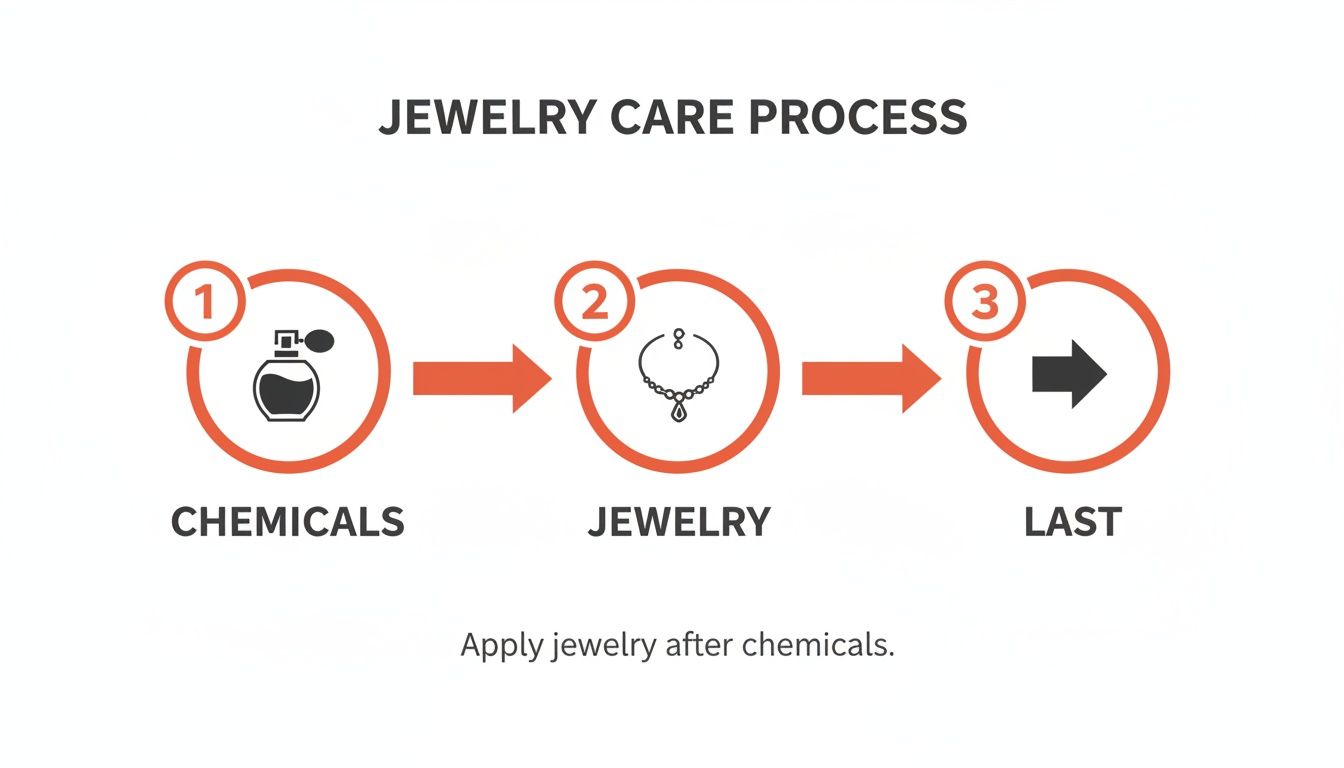
It’s a great visual reminder that chemicals always come first, jewelry second.
Keep Plated Jewelry Away From Moisture and Sweat
Just as important as when to put jewelry on is when to take it off. The 'First Off' part of the rule means removing pieces before any activity involving water, sweat, or chemicals. This is absolutely critical for keeping the affordable, quality pieces you source looking their best.
Here are the non-negotiables for when jewelry needs to come off:
- Before showering or swimming: Soaps and shampoos are harsh enough, but the chlorine in pools is a real killer for gold plating. Repeated exposure will speed up tarnishing and can strip the plating right off.
- Before a workout: Sweat is both acidic and salty, a combination that’s incredibly corrosive to that thin gold layer. Taking off rings, necklaces, and bracelets before hitting the gym is a must.
- Before cleaning the house: Household cleaners are packed with strong chemicals like ammonia and bleach. These can strip gold plating almost instantly.
Understanding the base metal is also crucial when sourcing products. Many popular styles use brass, which reacts differently to wear. You can dive deeper into this topic in our guide on gold-plated brass jewelry.
The Final Touch: A Quick Wipe-Down
Here’s one last pro-tip to pass along to your customers that makes a huge difference. After wearing their jewelry for the day, encourage them to give each piece a quick, gentle wipe with a soft, dry cloth. A microfiber cloth or a dedicated jewelry cloth is perfect for this.
This takes just a few seconds but removes the natural skin oils, lotions, and dust that build up over the day. If left on the surface, these residues can slowly tarnish and degrade the finish.
Think of a consistent wipe-down as preventative maintenance. It stops buildup before it becomes a real problem and keeps the jewelry looking bright and shiny for so much longer.
By making this a habit, your customers can dramatically extend the life of their favorite pieces. It’s an effortless step with impressive results, reinforcing the quality of the affordable accessories you provide and your expertise as a seller.
How to Clean Gold-Plated Jewelry Without Ruining It
Let's be honest, cleaning gold-plated jewelry can feel a little nerve-wracking. We've all heard horror stories of a beautiful piece turning dull or discolored after one wrong move. As a business owner, the last thing you want is a customer coming back with a piece they accidentally damaged based on your advice.
The good news? Safe, effective cleaning is actually quite simple. The key is to be gentle. You don't need harsh chemicals or fancy equipment—just a little know-how. This is the guide you can pass on to your customers with total confidence.
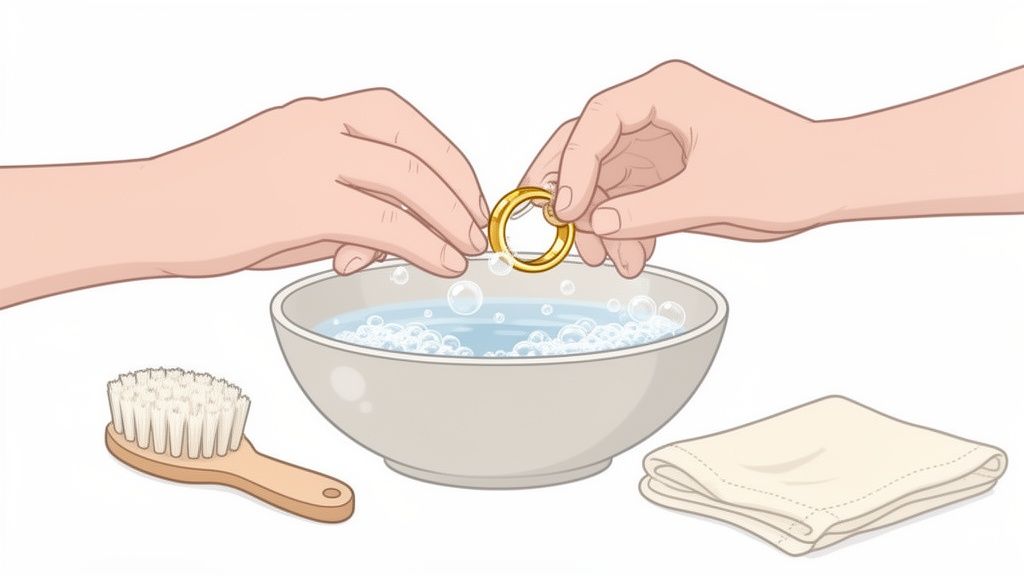
The Only At-Home Method You Need
For routine cleanups to get rid of everyday grime, oils, and dust, a simple soap-and-water bath is your best friend. This is the gold standard for at-home care because it works beautifully without putting the delicate gold layer at risk.
Here’s exactly what to do:
- Mix Your Solution: Grab a small bowl and fill it with warm water. Stay away from hot water, which can sometimes weaken the adhesives used in stone settings. Stir in just two or three drops of a gentle, phosphate-free dish soap.
- Give It a Quick Soak: Let the jewelry rest in the solution for about 5-10 minutes. This is the sweet spot—long enough to loosen up dirt but not so long that you’re overexposing the piece to moisture.
- Use a Soft Touch: If the piece has detailed areas like filigree or tiny crevices around a stone, you'll want to use an ultra-soft brush. A baby toothbrush or even a clean, soft makeup brush is perfect for this. The keyword here is gentleness. You're just nudging the dirt loose, not scrubbing the floor.
That's it. This quick, gentle process is all it takes to bring back that beautiful luster. Anything more aggressive is where you run into trouble.
Don't Skip This Step: Drying the Right Way
After a quick rinse under cool running water to wash away any soap, the drying process becomes the most critical part of the whole routine.
Gently pat the piece completely dry with a soft, lint-free cloth—a microfiber cloth or a dedicated jewelry polishing cloth is ideal. If you let it air-dry, you're guaranteed to get those annoying water spots. Worse, lingering moisture can get trapped against the base metal and speed up tarnishing from the inside out. Make sure every single part of the jewelry is dry before you put it away.
Proper drying is non-negotiable. It's the step that prevents water spots and protects the base metal from moisture-induced oxidation, preserving both the shine and the integrity of the jewelry.
What You Must Avoid: The Absolute "Don'ts" of Cleaning
Knowing what not to do is just as important as knowing what to do. Using the wrong products can strip the plating right off, leaving you with a discolored, damaged piece. Make sure your care instructions clearly list these off-limits items.
The following should never touch your gold-plated jewelry:
- Harsh Chemicals: Steer clear of any jewelry cleaners that contain alcohol, ammonia, or acids. These are formulated for solid gold and are far too aggressive for a thin plated layer.
- Abrasive Materials: Things like polishing pastes, baking soda, and even toothpaste are out. They're gritty and will literally scratch the gold finish away over time.
- Ultrasonic Cleaners: While fantastic for solid gold and diamonds, the powerful vibrations from these machines can cause the plating to flake or chip off.
The lifespan of a gold-plated piece is directly tied to how it’s cared for. There's a reason 14k gold-plated jewelry typically lasts 2-3 years with proper care, but premium 3-micron thick pieces can endure up to 5 years. It all comes down to maintenance. In fact, a simple weekly cleaning can boost shine retention by over 50% by preventing the buildup that dulls the surface. You can discover more insights about jewelry lifespan on Icecartel.com.
When you give your customers this straightforward advice, you're not just helping them keep their jewelry beautiful; you're building trust and showing that your brand stands for quality and lasting value.
Smart Storage Solutions That Prevent Damage
How your customers store their gold-plated jewelry is just as important as how they wear and clean it. Proper storage is the final step in a solid care routine, preventing common issues like scratches, tangles, and tarnish. Sharing these habits is crucial for maintaining the quality of the fashion accessories you sell.
The biggest mistake people make is tossing all their jewelry into a single dish or drawer. This is a recipe for disaster. Harder gemstones or even the sharp edges of other metal pieces can easily scrape the delicate gold layer, causing permanent damage and accelerated wear.
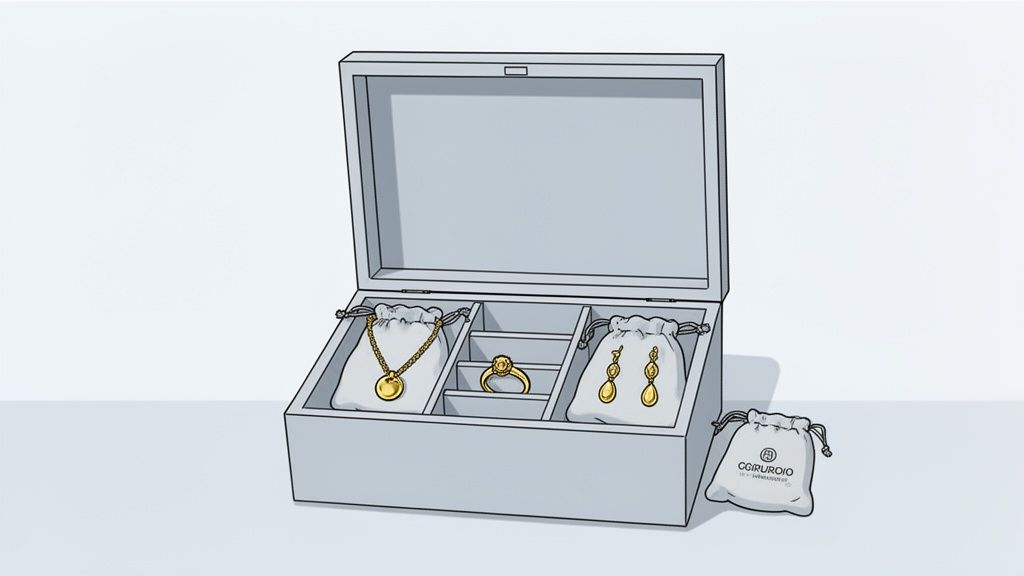
Why Individual Storage Is Non-Negotiable
The solution is wonderfully simple: keep each piece separate. This single step prevents items from rubbing against each other and chipping away at the plating, preserving the affordable yet high-quality finish.
Here are the best storage methods to recommend to your customers:
- Soft Fabric Pouches: Small, individual pouches made of microfiber or velvet are perfect. They create a soft, protective barrier around each piece.
- A Lined Jewelry Box: A good jewelry box with dedicated compartments for rings, earrings, and necklaces is a fantastic investment. The soft lining stops scratches, and the dividers keep chains from becoming a tangled mess.
- Anti-Tarnish Strips or Bags: For an extra layer of defense, especially in humid areas, suggest anti-tarnish strips. These little paper tabs absorb airborne pollutants that cause discoloration.
From a business perspective, this is a great value-add opportunity. Including a small, branded fabric pouch with every purchase is a low-cost, high-impact gesture. It adds a touch of luxury and immediately teaches your customer the right way to care for their new accessory, reinforcing your brand’s commitment to quality.
Proper storage isn't just about organization; it's about actively preventing the friction and environmental exposure that degrade gold plating over time. It’s the easiest way to protect the jewelry’s finish.
The Impact of Environment on Jewelry Health
Where jewelry is stored matters just as much as how it’s stored. The environment plays a massive role in how quickly oxidation and tarnishing happen.
The ideal spot is always a cool, dry place away from direct sunlight. Heat and sunlight can slowly cause discoloration. And the absolute worst place for jewelry? The bathroom. The constant humidity and steam from showers create a prime environment for the base metal to oxidize, which can tarnish the piece from the inside out.
For a deeper dive into effective organization methods, you can explore our complete guide on jewelry storage and organization solutions.
This advice isn’t just for storage at home, either. Knowing how to travel with jewelry without damaging it is key. You can find some essential travel tips for packing jewelry safely that are perfect for customers on the go. When you provide this comprehensive knowledge, you empower customers to protect their purchases, solidifying their trust in your brand.
Knowing When It's Time for a Touch-Up and Setting Expectations
Let's be honest: even the highest-quality gold-plated jewelry has a lifespan. As a business owner sourcing these items, the key to customer satisfaction isn't pretending it lasts forever, but being transparent about its lifecycle. This honesty builds incredible trust.
When you can confidently explain what normal wear and tear looks like, you shift the entire conversation. It’s no longer about a "defective" product, but an educational moment about getting the most out of a beautiful, affordable fashion accessory. This is what makes customers feel they're in good hands.
Spotting the First Signs of Fading
You can't teach your customers what to look for if you don't know yourself. Wear is a gradual process, and it always starts on the parts of the jewelry that see the most friction.
Here are the usual suspects where plating starts to thin out first:
- The Underside of a Ring: The shank is constantly rubbing against skin, desks, and everything you touch. It’s the first to go.
- Clasps and Jump Rings: Think about how often you fasten a necklace or bracelet. All that handling wears down the plating on the clasp and its connecting rings.
- Where Bracelet Links Meet: As you move, the links of a chain bracelet are always grinding against each other. Those contact points will show wear.
- A Pendant's Bail: The little loop that your pendant hangs from is always in motion, swinging and rubbing against the chain.
When you see the base metal peeking through, it’s not damage—it's just the plated layer wearing thin. Framing it this way helps customers understand it's a normal part of the jewelry's life, not a sign of poor quality.
The Power of a Quick Weekly Check-Up
A simple, regular once-over can make a world of difference. Catching issues early is the key to making a plated piece last. In fact, research shows that regular inspections catch 80% of potential failures early, which can extend the life of gold-plated jewelry by up to 2 years.
It's also worth knowing that 68% of early wear stems from undetected micro-scratches, often caused by friction while sleeping or working out. By telling customers to do a quick check for dull spots or an uneven shine each week, you're empowering them to preserve their pieces. For a truly beloved item, a professional clean and check-up every 6-12 months can restore up to 95% of its original glow. You can learn more about this in this comprehensive gold jewelry care guide.
Setting clear expectations is everything. When a customer understands that plated jewelry offers amazing style at a great price but has a finite lifespan, they appreciate the piece for what it is and trust you for being straight with them.
When Is Replating a Good Idea?
Sometimes, a customer will have a piece that means the world to them and they'll ask about restoring it. This is where professional replating comes into the picture. A jeweler can strip off the old, worn plating and apply a brand-new layer of gold.
But it’s important to be realistic about the cost. The replating process can often cost as much as the original piece, if not more.
- Great for Sentimental Pieces: Replating is the perfect solution for an item with deep personal value that’s irreplaceable.
- Not for Everything: For a trendy fashion piece, it’s almost always more practical and affordable to simply buy a new one.
By explaining these options, you show you're more than just a seller—you're a trusted resource. It turns a potential complaint into a positive, helpful conversation, and that’s how you build a loyal following that keeps coming back.
Turn Jewelry Care Into a Business Advantage
All the advice we've covered—from daily habits to smart storage—isn't just for your customers. As a business sourcing fashion accessories, this knowledge is your secret weapon for building a better brand, minimizing returns, and creating real customer loyalty.
When you teach someone how to care for gold plated jewelry, you’re doing more than just selling a product. You're turning a simple transaction into a lasting, positive experience that they'll associate with your brand.
This isn't just about good vibes; it directly helps your bottom line. An educated customer understands that proper care prevents tarnish and wear. They are far less likely to return an item for what they might otherwise think is a defect, saving you time, money, and protecting your reputation. Providing this guidance positions your business as a trustworthy expert, which is how you stand out in a competitive market.
Empowering Customers and Boosting Sales
Weaving care instructions into your sales process doesn't have to be complicated or expensive. The key is to make the information impossible to miss and easy to understand.
Here are a few simple ways to get started right now:
- Design a Simple Care Card: A small, well-designed card included in every package goes a long way. List your top three care tips and add a QR code linking to a full care guide on your website.
- Offer a Branded Care Kit: Put together a small kit with a soft polishing cloth and a velvet storage pouch. You can include it with high-value orders or sell it as a low-cost add-on at checkout. It's an easy way to add a new revenue stream.
- Create Digital Resources: A quick blog post or a short video showing how to clean a piece is incredibly valuable. Share these on social media or in your follow-up emails after a purchase.
By empowering your customers with knowledge, you're not just selling a product; you're providing a complete, high-value experience that encourages repeat business and positive reviews.
At the end of the day, success in the jewelry business comes down to sourcing high-quality products and managing customer expectations. To get a better handle on what to look for, our guide on wholesale gold-plated jewelry is packed with insights for sellers. This strategic thinking is how basic product care becomes a powerful cornerstone of your brand.
Answering Your Customers' Top Jewelry Care Questions
If you sell gold-plated jewelry, you'll start to hear the same questions over and over. Getting your answers straight not only helps your customers keep their pieces looking great, but it also builds trust and shows you really know your stuff.
Here are the most common questions that will likely land in your inbox, along with the best way to answer them.
"Can I Shower With My Gold-Plated Jewelry?"
This is probably the number one question you'll get, and the answer is always a hard no.
You need to be clear with customers: always take off gold-plated pieces before hopping in the shower, going for a swim, or even just washing your hands. It’s less about the water itself and more about the chemicals lurking within. Soaps, shampoos, and especially the chlorine in pools are the arch-enemies of gold plating. They’ll eat away at that delicate gold layer, causing it to tarnish and fade far too quickly.
"How Do I Get the Shine Back on My Dull Jewelry?"
When a favorite piece starts to look a little lackluster from skin oils and daily grime, the fix is usually pretty simple.
For a quick refresh, a gentle buff with a soft, lint-free cloth often does the trick. If it needs a little more TLC, guide them through a safe at-home cleaning. Just have them soak the jewelry for 5 to 10 minutes in a small bowl of warm water with a couple of drops of mild, phosphate-free dish soap. A super-soft baby toothbrush is perfect for getting into tiny crevices.
The most important part? Rinse it thoroughly with clean water and—this is key—make sure it's completely dry before they put it away.
"Is It Normal for the Gold Plating to Wear Off?"
Yes, and it's crucial to be upfront about this from the very beginning. Plating, by its nature, is not permanent.
Gently explain to your customers that gold plating is a micro-thin layer of gold (often less than 0.05% of the item's weight) bonded over a base metal like brass or sterling silver. Over time, friction from skin, clothing, and just general wear and tear will cause that thin layer to fade. They'll probably notice it first on high-contact spots, like the back of a ring or the clasp on a bracelet.
Good care habits can dramatically extend the life of the plating, but it's an inevitable part of owning and loving a plated piece. Setting this expectation early prevents disappointment later.
Ready to stock your store with high-quality, affordable jewelry that your customers will love? Explore over 120,000 on-trend styles at JewelryBuyDirect, where you'll find factory-direct pricing, no minimum orders, and fast worldwide shipping. Start sourcing with confidence today.