






Arthur Lynch | Sat Jan 03 2026
Your Business Guide to Sourcing 925 Sterling Silver Jewelry
For any business in the jewelry and fashion accessories market, understanding "925 sterling silver" is non-negotiable—it's your benchmark for quality. This number certifies that a piece contains 92.5% pure silver, with the remaining 7.5% consisting of other metals to ensure strength and durability. Mastering this standard is the first step to sourcing high-quality, affordable jewelry that builds customer trust and drives sales.
Your Foundational Guide to 925 Sterling Silver
For business owners sourcing jewelry, a deep understanding of your materials is crucial for making profitable decisions. When it comes to silver, 925 sterling is the industry standard. So, what does this actually mean for your inventory, your pricing strategy, and your customers?
Think of it as the optimal formula for commercial success. Pure silver, on its own, is visually stunning but far too soft for practical jewelry. It would scratch, bend, and warp easily—a surefire way to generate customer complaints and costly returns. This is where the strategic process of alloying comes into play.
By blending pure silver with more durable metals, manufacturers create 925 sterling silver: a robust alloy made of exactly 92.5% pure silver and 7.5% other metals, typically copper. This specific ratio is why pieces are stamped with '925'—it’s a guarantee of authenticity, signifying that 925 parts per thousand are pure silver. This globally recognized standard is a cornerstone of the jewelry industry, and you can discover more insights on its critical role.
The Importance of the 925 Standard
The '925' stamp isn't just a technical detail; it's a promise of quality and value that is recognized worldwide. From a business perspective, sourcing products that adhere to this standard is a strategic imperative for several key reasons:
- Durability: The added alloy metals make the silver significantly harder, ensuring the final product can withstand daily wear. This reduces the risk of damage-related returns.
- Value: It preserves the brilliant luster and intrinsic value of pure silver while enabling the creation of intricate designs that customers demand, justifying a premium price point.
- Trust: The '925' hallmark is a universal symbol of authenticity. It helps you build credibility with customers, making it easier to close sales and foster loyalty.
In major global markets, this composition is the definitive standard for quality, used by over 90% of fine jewelry manufacturers. By stocking 925 sterling silver, you are offering a product that meets international expectations and aligns your business with quality.
To provide a clear overview, here’s a breakdown of why 925 sterling silver is a smart choice for your inventory.
Sterling Silver At a Glance
| Attribute | Specification | Why It Matters for Your Business |
|---|---|---|
| Composition | 92.5% Pure Silver, 7.5% Alloy Metals (e.g., Copper) | This blend creates a durable product, minimizing returns from damage or defects. |
| Hallmark | Commonly stamped with "925," "STER," or "Sterling" | A clear sign of authenticity that builds customer trust and justifies your pricing. |
| Durability | Harder and more resilient than pure silver. | Ideal for everyday wear jewelry, expanding your product's market appeal. |
| Appearance | Bright, white metallic luster. | Offers a high-end look at an accessible price point, boosting perceived value. |
| Value | Precious metal with intrinsic worth. | Your inventory holds its value, making it a stable and sound investment. |
This table highlights the key business advantages, reinforcing why this material is a cornerstone of any successful jewelry retail strategy.
Why This Matters for Sourcing
Ultimately, choosing 925 sterling silver is a strategic business decision. It enables you to stock high-quality, affordable jewelry that strikes the perfect balance between beauty, durability, and price. A firm grasp of this material allows you to vet suppliers more effectively, articulate product value to customers, and build an inventory that reflects quality. This knowledge is your foundation for sourcing smarter and scaling your business.
Why That 7.5 Percent Alloy Is a Game Changer
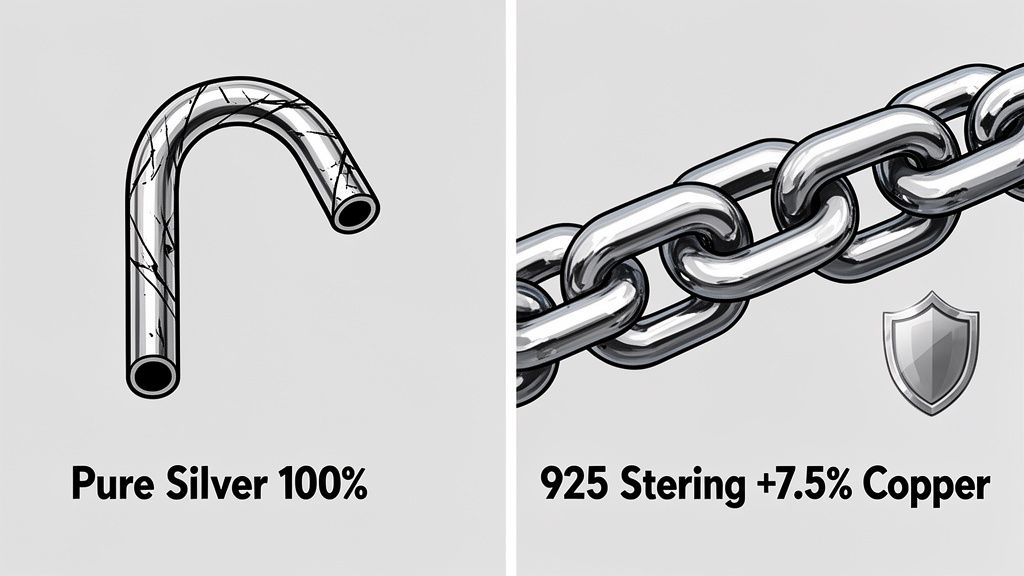
While the 92.5% pure silver provides the brilliance and value, it’s the other 7.5% that makes the jewelry commercially viable. This small addition of an alloy, usually copper, is the secret ingredient that transforms silver from a soft, delicate material into a durable, retail-ready product. For your business, this transformation is critical to your bottom line.
Imagine trying to sell a ring made of pure, fine silver. A customer could easily knock it on a hard surface and deform it. This leads to dissatisfied customers, negative reviews, and a high volume of returns—a logistical and financial drain for any retailer. The alloy is the strategic solution, creating a metal that is far more resilient.
This small percentage of copper provides the durability and longevity that customers expect from quality jewelry. It hardens the metal, making it significantly more resistant to scratches, dings, and bending. This means your inventory can withstand handling in a retail environment, and your customers can wear their purchases confidently every day.
The Science Behind the Strength
The difference in strength is not minor; it's substantial. The 7.5% copper alloy increases the hardness of sterling silver from pure silver's Vickers rating of about 25 HV to an impressive 75-100 HV, making it three to four times more durable. This alloying process also boosts the metal's tensile strength by approximately 40%, making it the ideal choice for jewelry designed for frequent wear. You can learn more about how this composition defines durable, wearable silver.
From a business standpoint, this enhanced durability directly protects your profits by minimizing costs associated with returns and replacements. It allows you to confidently stock high-demand items like rings, bracelets, and chains that are subject to constant use.
For a jewelry business, durability isn't just a feature; it's a direct measure of product quality and a cornerstone of customer satisfaction. Offering resilient products builds trust and encourages repeat purchases.
Durability as a Key Selling Point
When sourcing jewelry, you should view this added strength as a powerful selling point. It is what distinguishes high-quality sterling silver from cheaper, plated alternatives that can show wear within weeks. By choosing 925 sterling silver, you are investing in inventory that offers a longer lifespan and, therefore, greater customer value.
Consider the practical benefits for your business:
- Fewer Customer Complaints: Stronger jewelry leads to fewer issues with breakage or deformation, resulting in higher customer satisfaction.
- Lower Return Rates: A durable product is a reliable one, reducing the financial impact of returns and exchanges.
- Stronger Brand Reputation: Consistently selling high-quality, lasting pieces establishes your brand as a trusted source for fine accessories.
In conclusion, that small percentage of alloy is precisely what makes 925 sterling silver a smart and profitable choice for any jewelry business. It ensures the products you sell are not only beautiful but also built to last, providing tangible value to your customers and strengthening your brand’s reputation for quality.
Spotting Authentic Sterling Silver Like a Pro
When sourcing jewelry for your business, verifying authenticity is not just a quality control measure—it’s about protecting your investment and your brand's reputation. Knowing how to identify genuine 925 sterling silver is an essential skill. Fortunately, you don’t need a sophisticated lab; a few straightforward checks can help you authenticate your inventory and build a business that your customers trust.
Start with the Hallmark
The first and most reliable indicator is the quality mark, or hallmark. This small stamp is the manufacturer's certification of authenticity.
Using a magnifying glass or a jeweler's loupe, look for a stamp that reads "925," "STER," "Sterling," or ".925". Finding one of these marks is a strong indication that the piece is composed of at least 92.5% pure silver. Be aware that very small or delicate items may lack a hallmark due to space constraints. However, the absence of a mark on a larger piece should be a red flag that warrants further investigation.
Simple On-the-Spot Tests
While hallmarks are a great starting point, what if you remain uncertain? There are several quick, non-destructive tests you can perform to identify fakes. These are ideal for evaluating samples from new suppliers or conducting spot-checks on new shipments.
One of the easiest and most definitive is the magnet test.
- How it works: Hold a strong magnet (more powerful than a standard refrigerator magnet) near the jewelry.
- What to look for: Real silver is not magnetic. If the item is strongly attracted to the magnet, it is not sterling silver and is likely made from a base metal like iron or nickel. A slight pull from a clasp is normal, as it may contain a steel spring, but the main body of the jewelry should show no magnetic attraction.
You can also develop a feel for the material. Genuine sterling silver has a distinct density—it is heavier than aluminum but lighter than lead. With experience, you will be able to distinguish its weight and feel from that of cheap, silver-plated costume jewelry.
As a business owner, your ability to spot a counterfeit protects your bottom line. An item marked '925' that sticks to a magnet is a definitive fake, saving you from stocking worthless inventory.
The Ultimate Guarantee: Third-Party Certification
While personal inspections are valuable, the most effective way to guarantee authenticity across your supply chain is to partner with suppliers who provide third-party certifications. This eliminates guesswork and places the burden of verification on the manufacturer.
Request reports from reputable testing agencies like SGS (Société Générale de Surveillance). An SGS report offers independent, unbiased confirmation that the jewelry meets the claimed purity standards. Sourcing from certified partners is the most reliable strategy to ensure every piece you sell is genuine 925 sterling silver, building unshakable customer trust.
Your Playbook for Sourcing High-Quality Silver Jewelry
In the jewelry business, your sourcing strategy is the engine of your profitability. Establishing a reliable supply chain for genuine sterling silver is not about finding the lowest price but about securing long-term partners who deliver consistent value. This requires a diligent approach to vetting suppliers and understanding how the right partnership can provide a significant financial advantage.
A smart sourcing strategy starts with a thorough vetting process. First, request certifications to confirm that a potential supplier adheres to international quality standards for 925 sterling silver. However, your due diligence doesn't stop there. Never commit to a large order without first evaluating physical samples.
When the sample arrives, it's your opportunity to assess qualities a photograph cannot convey. Examine the finish for smoothness and consistency. Feel the weight of the piece; it should feel substantial, not flimsy. Scrutinize the craftsmanship, paying close attention to clasps, stone settings, and soldering joints. This hands-on inspection is your best defense against investing in low-quality inventory.
Partnering with Factory-Direct Suppliers
For a significant competitive edge, source directly from the factory. Cutting out intermediaries gives you access to better pricing and more flexible terms, which can transform your cash flow management and operational efficiency.
Look for partners who offer these key benefits:
- No Minimum Order Quantities (MOQs): This is a game-changer for businesses of all sizes, allowing you to test new styles without tying up significant capital in unproven inventory.
- Dropshipping Capabilities: For e-commerce businesses, dropshipping eliminates the need for inventory storage and management. Your supplier ships directly to your customer, saving you time, space, and upfront investment.
- Flexible Payment Terms: A supplier offering options like "buy now, pay later" can greatly improve your cash flow, enabling you to stock up for peak seasons without an immediate financial burden.
This decision tree provides a clear, effective process for authenticating silver samples from any new supplier.

The key takeaway is to use a multi-faceted approach. The most reliable way to protect your business is to combine several verification methods: hallmarks, physical tests, and official certifications.
By sourcing directly from certified manufacturers, you can often secure prices 15–30% below market averages. This pricing advantage gives you the margin flexibility to run promotions, invest in marketing, and ultimately scale your business more effectively.
For a deeper dive into this topic, you can learn more about sourcing sterling silver jewelry wholesale and what to look for in a supplier here: https://www.jewelrybuydirect.com/blog/sterling-silver-925-jewelry-wholesale?articleId=611373842518
Choosing the right supplier is about more than the product; it's about building a partnership that supports your growth with reliable quality and favorable terms. For a broader perspective on product sourcing, you can explore articles on quality jewelry sourcing. Ultimately, a successful sourcing strategy combines diligent quality control with smart partnerships that give your business the financial agility to thrive.
Decoding the True Value and Price of Sterling Silver
To succeed in the jewelry business, you must understand how sterling silver is priced. A common misconception is that its value is tied solely to the daily spot price of silver. In reality, the final cost of a finished piece of jewelry is influenced by many factors beyond the raw material.
Consider the silver spot price as the starting point. From there, your supplier adds layers of cost and value that transform the metal into a desirable, retail-ready product.
What Drives the Final Price
The most significant factors influencing the final price often have little to do with the silver itself. Understanding these elements is key to managing your profit margins and communicating value to your customers.
- Intricate Design and Craftsmanship: A simple, machine-pressed charm will cost significantly less to produce than a handcrafted necklace with detailed filigree. The more time and skill a piece requires, the higher its cost.
- Gemstones and Embellishments: The addition of stones dramatically alters the price. The type, quality, and cut of any gems—whether cubic zirconia, pearls, or natural stones—can substantially increase the final cost.
- Brand Recognition: A piece from an established brand known for quality and unique designs will command a higher price than a generic item. The price reflects the brand's reputation and the trust it has built with consumers.
The Impact of Value-Added Finishes
Another critical component of pricing is the finish. While standard sterling silver is beautiful, many pieces feature special coatings that enhance their appearance and longevity.
Rhodium plating is a prime example. This premium finish involves coating the silver with a thin layer of rhodium—a rare, valuable metal from the platinum family. It provides a brilliant shine and, crucially, makes the piece highly resistant to tarnishing.
This added durability is a major selling point that justifies a higher price, as it solves a common customer concern: tarnish. When you understand these value drivers, you can confidently explain price differences to customers, framing their purchase as a smart investment. For a deeper dive into raw material costs, you can consult our guide on how much 925 silver is worth per gram.
At its core, the 92.5% purity of sterling silver ensures excellent value retention. Pieces have been observed to appreciate by 10-20% over 10 years, supported by silver's impressive 7.5% compound annual growth rate since 2000, which has outpaced inflation. Compared to cheap plated alloys that can degrade in months, the value proposition is clear. Finding a supplier who can provide these high-value pieces at below-market prices is a significant opportunity for your business.
Essential Care Tips That Build Customer Loyalty
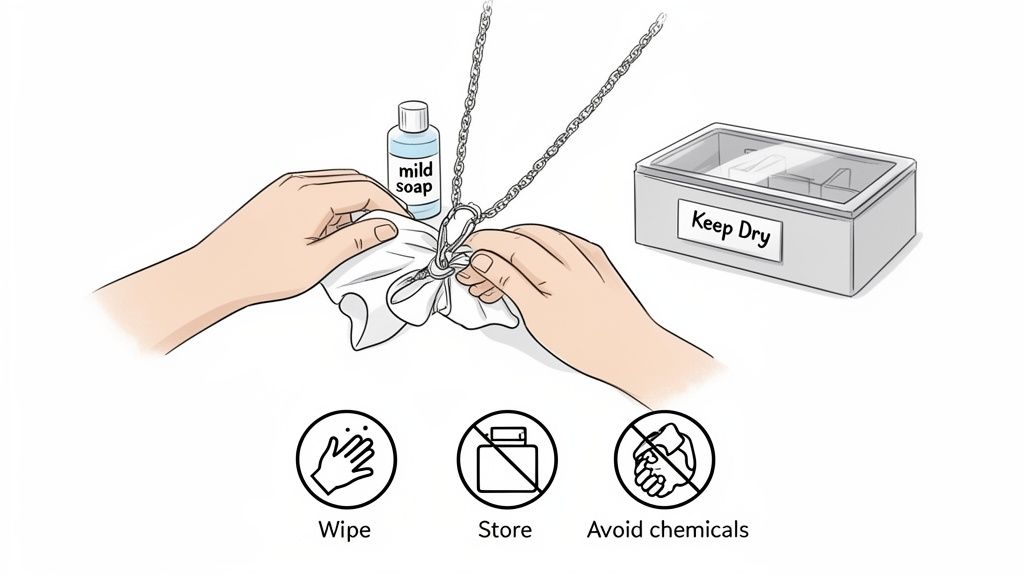
When a customer notices their silver jewelry darkening, their immediate concern may be, "Is this fake?" This moment presents a valuable opportunity for your business. By educating customers on proper silver care, you can reframe tarnish not as a defect, but as a natural characteristic of genuine sterling silver.
This proactive education empowers your customers, giving them the knowledge to maintain their purchase while deepening their appreciation for the material. It is a simple yet powerful strategy to build brand trust, reduce returns, and encourage repeat business.
Simple At-Home Cleaning Solutions
The good news about tarnish is that it is a surface-level reaction that is easy to manage. Share these simple, at-home cleaning methods with your customers to help them restore their jewelry's shine.
- Gentle Soap and Water: For routine cleaning, a few drops of mild dish soap in warm water are effective. A gentle scrub with a soft cloth or toothbrush, followed by a thorough rinse and pat dry, will remove daily grime.
- Polishing Cloths: A high-quality silver polishing cloth is an essential tool. These cloths are specially treated to remove tarnish with light buffing, restoring luster without scratching the surface.
When you frame tarnish as a normal trait of authentic silver, you’re not just selling a product—you're sharing expertise. This positions you as a trustworthy resource, manages customer expectations, and drastically cuts down on needless returns.
Preventative Care is Key
Teaching customers how to prevent tarnish is as important as teaching them how to clean it. Proactive care minimizes maintenance and keeps jewelry looking new for longer.
Consider including a small care card with every purchase that includes these tips:
- Last On, First Off: Jewelry should be the last item put on after applying cosmetics, lotions, and perfumes, and the first item taken off before showering or swimming.
- Avoid Harsh Chemicals: Remind customers that exposure to household cleaners, chlorine, and even sulfur-rich foods can accelerate tarnishing.
- Proper Storage: Storing silver in a cool, dry place is essential. An anti-tarnish pouch or a lined jewelry box will protect it from air and moisture.
Providing expert care advice is one of the most effective strategies for creating customer loyalty and can convert one-time buyers into lifelong advocates. For a more detailed explanation of why silver darkens, direct them to our comprehensive guide, which explains if sterling silver tarnishes and how to handle it.
Your Sterling Silver Questions, Answered
As a retailer, you are the expert your customers turn to. Answering their questions confidently not only helps you make sales but also solidifies your credibility. Here are clear, business-focused answers to common questions about 925 sterling silver.
Is Sterling Silver Actually Real Silver?
Yes, absolutely. Sterling silver is real silver, but it is an alloy, not pure silver.
Explain it this way: pure 99.9% silver is too soft and malleable for durable jewelry. To create a product that withstands daily wear, it is mixed with other metals for strength. Sterling silver is the industry-standard formula: 92.5% pure silver combined with 7.5% of a strengthening alloy like copper. This ensures both beauty and longevity.
Can You Wear Sterling Silver in the Shower?
While it is possible, you should advise customers against it.
Water itself does not damage silver, but the soaps, shampoos, and chemicals in tap water can accelerate the tarnishing process. By recommending that customers remove their jewelry before showering, you help them preserve its shine, which leads to greater long-term satisfaction with their purchase.
Is 925 Sterling Silver Hypoallergenic?
For the vast majority of people, yes, it is. The high percentage of pure silver makes it a safe choice for individuals with sensitive skin.
The potential allergen is in the 7.5% alloy. While this is typically copper (which is generally non-allergenic), it is crucial to source from suppliers who guarantee their alloys are nickel-free. Nickel is the most common cause of metal allergies, and ensuring your products are free of it is a key selling point.
The takeaway for your business: 925 sterling silver is one of the safest, most reliable precious metals for customers. It's a fantastic, broadly appealing choice for any jewelry collection.
Does 925 Sterling Silver Tarnish?
Yes, it does, and this should be communicated as a sign of authenticity, not a flaw.
Tarnishing is a natural chemical reaction that occurs when silver is exposed to oxygen and sulfur compounds in the air. The key message for your customers is that tarnish is a surface-level discoloration. It can be easily removed with a quick polish, restoring the jewelry’s original brilliance.
Ready to stock your store with high-quality, affordable sterling silver jewelry that your customers will love? JewelryBuyDirect offers over 120,000 SGS-certified styles with factory-direct pricing, no minimum orders, and fast, reliable shipping. Start sourcing smarter today at JewelryBuyDirect.com.