






Arthur Lynch | Sat Jan 10 2026
What Does Nickel Free Jewelry Mean for Your Business
For any business sourcing jewelry and fashion accessories, the term nickel-free is a critical quality indicator. It means the products are made without any intentionally added nickel, with a content so low it's legally considered insignificant.
Understanding this term is as crucial as knowing your profit margins. It's not just a product detail; it's a stamp of quality and safety that a large and growing customer segment actively seeks. Sourcing high-quality, affordable, and verifiably nickel-free jewelry is one of the most effective strategies to build customer trust, reduce returns, and create a loyal, repeat-buying clientele.
Getting the Language Right When Sourcing Jewelry
When you're sourcing high-quality, affordable accessories for your business, you have to know the lingo. Confusing terms like "nickel-free" and "hypoallergenic" can lead to costly inventory mistakes—stocking products that fail to meet customer expectations or, worse, cause allergic reactions. For a retailer, mastering this vocabulary is the first step toward curating a collection that is both trustworthy and profitable.
The need for safe jewelry isn't a niche concern; it's a mainstream market demand. Studies show that 10–20% of the global population has a nickel allergy, with women being more affected due to higher exposure to fashion jewelry. This sensitivity, called contact dermatitis, has created a permanent and growing market for reliable, skin-friendly alternatives that your business can serve.
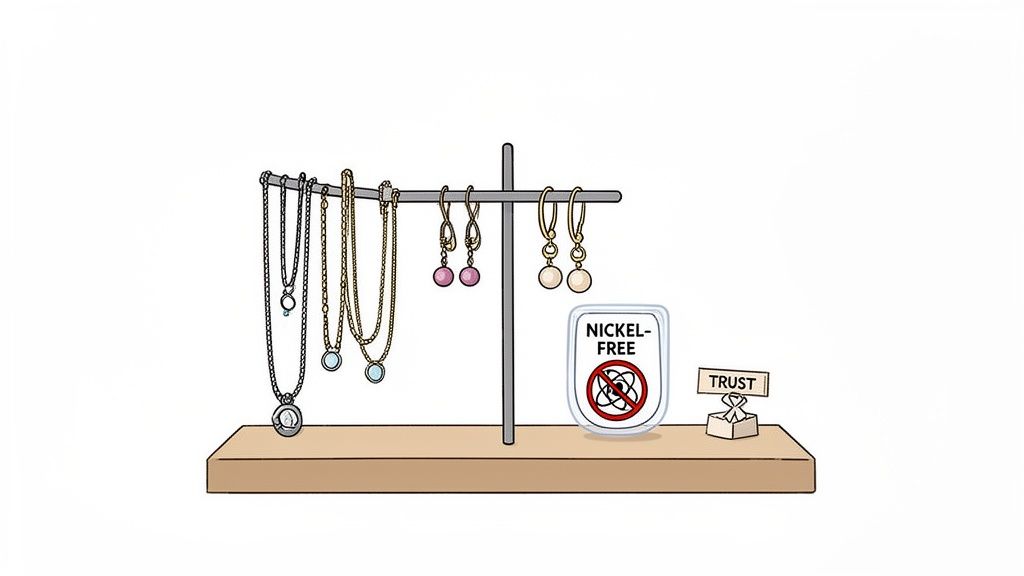
Decoding Common Jewelry Labels
To source products confidently, you must understand the difference between key terms that are often used interchangeably by suppliers. For instance, hypoallergenic is a broad marketing term. It simply means a piece is less likely to cause an allergic reaction, but there's no strict regulation behind it.
On the other hand, nickel-free is a much more specific—and therefore more reliable—claim for your business to make. You can dive deeper into this topic in our guide to hypoallergenic jewelry.
A Pro Tip for Retailers: Always prioritize sourcing products specifically labeled "nickel-free" over those with a vague "hypoallergenic" tag. This is the safest bet for your business, allowing you to cater to even the most sensitive customers and protect your brand’s hard-earned reputation for quality and care.
To help you make smarter buying decisions, here’s a quick breakdown of the common terms you'll see from suppliers. Getting these straight will help you source a high-quality, affordable collection that keeps both your customers and your bottom line happy.
A Retailer's Quick Guide to Safe Jewelry Terms
Use this reference table to quickly understand different labels and what they mean for your product quality and customer safety.
| Term | What It Means for Your Business | Common Materials |
|---|---|---|
| Nickel-Free | The most reliable claim for sensitive skin. Indicates the product is made without intentionally added nickel, minimizing allergy risks and building customer trust. | Titanium, Niobium, 316L Stainless Steel, Platinum, high-karat Gold |
| Hypoallergenic | A general marketing term meaning 'less likely' to cause an allergic reaction. This is not a regulated standard; use with caution. | Can include various metals, including some low-nickel stainless steel grades. |
| Surgical Grade | Refers specifically to 316L stainless steel. It contains minimal, tightly bound nickel, making it a safe and affordable option for most people. | 316L Stainless Steel |
Knowing these distinctions empowers you to ask suppliers the right questions and choose inventory that truly meets the needs of your customers.
Why Shoppers Actively Search for Nickel Free Jewelry
The demand for nickel-free jewelry isn't just a passing trend. It's a direct response to a widespread health issue affecting millions. For a significant portion of the population, wearing the wrong accessory triggers nickel contact dermatitis, and that’s precisely why "nickel free" has become such a powerful search term for online shoppers.
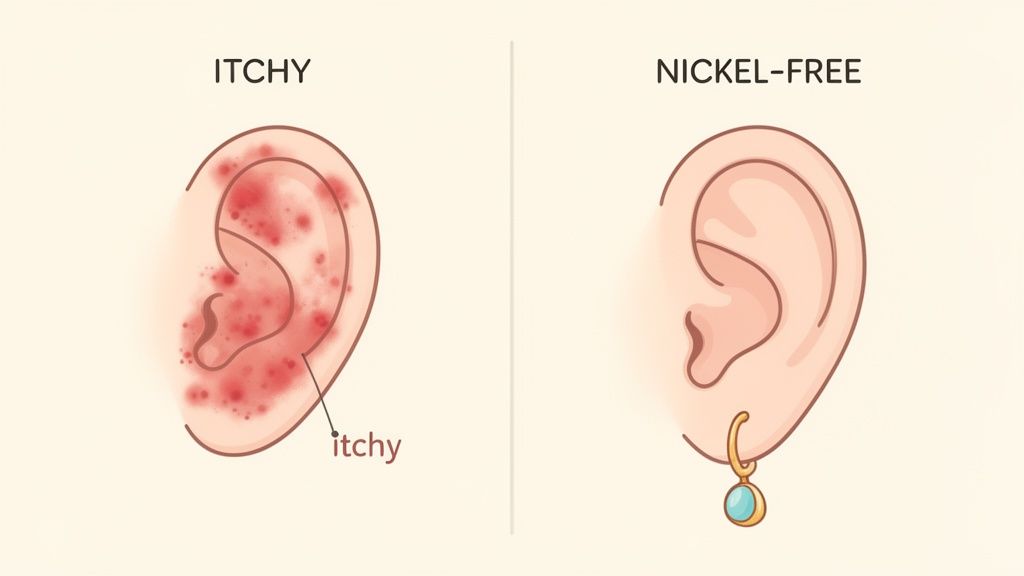
Think about it from your customer's perspective. They buy a beautiful pair of earrings, wear them for a few hours, and their earlobes become red, itchy, and swollen. This frustrating experience is directly linked to the product they bought from you. Experts estimate that up to 15-20% of people have a sensitivity to nickel, making it one of the most common skin allergies.
The Business Cost of Ignoring Nickel Allergies
When a customer has a bad reaction to one of your pieces, the fallout hits your business directly. You're looking at negative reviews, product returns, and a loss of customer trust that's incredibly difficult to win back. Sourcing high-quality, verified nickel-free jewelry isn't just good customer service; it's a smart business strategy that protects your bottom line and builds a loyal following.
When you deliberately stock and clearly label nickel-free options, you're not just selling a product—you're providing a solution. You tap into a dedicated market of shoppers who are actively looking for brands that prioritize their health and are ready to become repeat customers. For a deeper dive, check out our guide covering everything retailers need to know about nickel allergy jewelry.
By proactively addressing this common concern, you shift from simply selling products to offering a trusted solution. This builds a reputation for quality and care that sets your business apart from competitors who overlook this critical detail.
Global Standards and Your Brand Reputation
This isn't just a customer comfort issue; it's a global regulatory one. The problem is so widespread that strict rules are in place, particularly in Europe. The EU Nickel Directive, part of the REACH regulations, sets firm limits on the amount of nickel that can be released from products intended for prolonged skin contact.
- For pierced items (like earrings): The limit is extremely strict—no more than 0.2 micrograms per square centimeter per week.
- For other items (necklaces, bracelets): The limit is 0.5 micrograms per square centimeter per week.
Even if your business isn't based in the EU, adopting these international benchmarks is a smart move. It signals your commitment to high-quality sourcing, reduces potential liability, and solidifies your brand's reputation as a safe, trustworthy source for fashion accessories. Adhering to these standards ensures your inventory is appealing and safe for a global customer base.
Sourcing the Best Nickel Free Jewelry Materials
Choosing the right materials is crucial when building a collection of high-quality, affordable, and trustworthy nickel-free jewelry. As a business owner, understanding the pros and cons of each metal allows you to build an inventory that caters to different customer segments and price points. Let's get practical about the best metals for a profitable nickel-free lineup.
The demand for safer materials is a massive and growing part of the market. The nickel-free stainless steel market alone demonstrates this trend. Valued at USD 6.5 billion in 2024, it's projected to reach USD 10.1 billion by 2033, growing at a steady rate of 5.5% annually. This proves that investing in high-quality, safe materials is simply good business. For more insights, you can explore market trends and facts about nickel-free earrings.
Your Go-To Materials for Nickel Free Inventory
When sourcing jewelry, a few key materials offer excellent value, safety, and appeal. Each has distinct characteristics that can help you create a diverse and profitable collection.
Here are the top materials to look for from your suppliers:
-
316L Stainless Steel: Often marketed as "surgical steel," this is a top seller because it hits the sweet spot of being durable, affordable, and safe. While it contains a trace amount of nickel, the alloy is so stable that the nickel is tightly bound, preventing its release. It meets strict EU standards and is safe for most people, making it an excellent foundation for affordable, everyday fashion jewelry. We have a whole guide where you can learn more about what 316L means on jewelry.
-
Titanium: This is a premium, lightweight, and 100% nickel-free option. Titanium is incredibly strong, corrosion-resistant, and biocompatible—the same material used in medical implants. Its high-end feel attracts customers willing to invest more for top-tier quality, making it ideal for body jewelry, wedding bands, and minimalist designs.
-
Niobium: Like titanium, niobium is a pure element and naturally nickel-free. Its unique advantage is its ability to be anodized into a spectrum of brilliant, iridescent colors without any plating. This makes it a fantastic choice for creating unique, eye-catching pieces that stand out from the competition.
Sourcing Insight: Diversify your inventory to maximize appeal. Offering the workhorse reliability of 316L stainless steel alongside the unique, colorful allure of niobium allows you to capture sales from both budget-conscious shoppers and customers seeking artisanal, high-fashion pieces.
A Note on Sterling Silver
Sterling silver, marked with 925, is another popular choice in fashion accessories. It's composed of 92.5% pure silver, with the remaining 7.5% typically being copper. Based on this classic formula, traditional sterling silver is nickel-free.
However, the key is your supplier. Some manufacturers may add nickel to the alloy to cut costs or increase hardness. This is why partnering with reputable wholesale suppliers is absolutely critical for your business. You need a partner who can provide verifiable documentation of their sterling silver's composition, ensuring you can confidently sell genuine, nickel-free jewelry that your customers will love and trust.
How to Verify Claims from Wholesale Jewelry Suppliers
When sourcing inventory for your business, you need certainty that the products are what they claim to be. Taking a supplier’s word that their jewelry is nickel-free is a significant risk to your brand's reputation. An allergic reaction from a customer can lead to negative reviews, returns, and lost trust.
Fortunately, there are straightforward methods to verify these claims and protect your business.
The first and most direct step is to ask for documentation. Any reputable supplier should be able to provide material composition sheets or third-party certifications for their products. A supplier's inability or unwillingness to provide this proof is a major red flag. Transparency is non-negotiable when sourcing quality accessories.
Performing Your Own In-House Checks
While documentation is essential, conducting your own checks provides an extra layer of security. A Nickel Spot Test kit is an invaluable and affordable tool for any jewelry business. These kits are easy to use and provide immediate results.
Here’s how it works: apply a few drops of the solution to a cotton swab and rub it on an inconspicuous area of the jewelry for about 30 seconds. If the swab turns pink or red, nickel is present. If there's no color change, the item is clear.
Performing these quick tests on new inventory samples gives you confidence before a single piece reaches your customers.
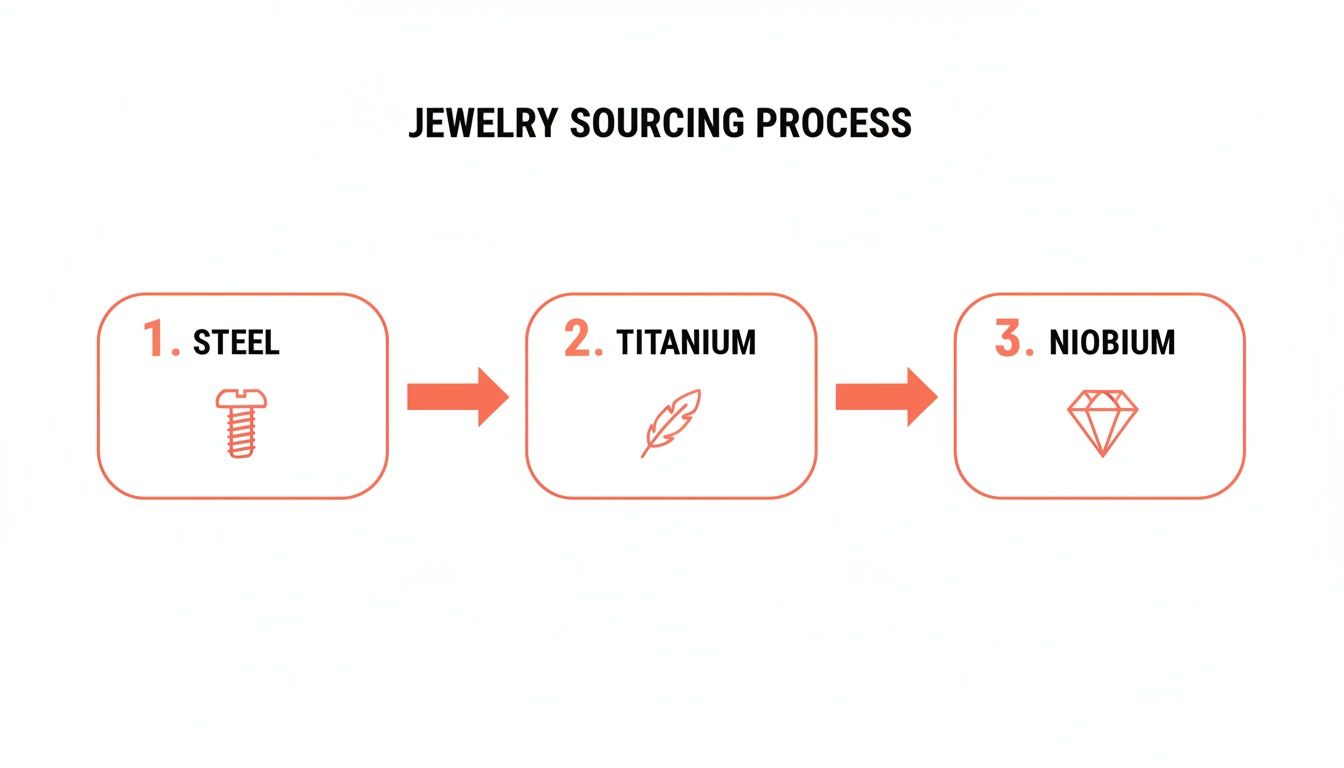
This process visualizes the ideal sourcing path: starting with genuinely safe metals like steel, titanium, and niobium to build an inventory you can confidently stand behind.
Essential Questions to Ask Every Supplier
Strong supplier relationships are built on trust that is earned through due diligence. For any business selling jewelry, offering certified nickel-free products is about protecting your customers and your brand.
Remember, 10–20% of women aged 18–45 have a nickel sensitivity. That's a huge market segment you can serve effectively by becoming a trusted source. You can dig deeper into this growing demand with Verified Market Reports on the nickel-free sector.
Before committing to a new supplier, ensure you get clear answers to these critical questions.
Key Supplier Questions Checklist
- Can you provide material composition data or third-party certifications for your nickel-free jewelry?
- What are your quality control processes to ensure material consistency between batches?
- Do you test finished products for nickel release, and can I see the results?
- What is your protocol if a product fails a nickel test after shipment?
Asking these questions upfront is not about being difficult; it's about being a professional business owner. It protects your customers, your brand, and helps you build solid, long-term partnerships with suppliers who are committed to quality.
Marketing Your Nickel-Free Jewelry to Boost Sales
Sourcing high-quality, affordable, and nickel-free jewelry is the first step. Now, you need to market it effectively. The key is to clearly communicate the value and benefits to your customers. When you explain the safety and quality behind your pieces, you're not just selling an accessory—you're building trust and justifying your price point.
Your customers aren't just browsing; many are actively looking for a solution to a painful, irritating problem. Your marketing should make it easy for them to see you have the answer. This requires clear, benefit-driven language in your product titles, descriptions, and overall online store organization.
Optimizing Your Product Listings
Simple adjustments to your online store can significantly impact sales. It's time to move beyond generic product names and highlight the features your target customers are searching for.
- Product Titles: Instead of "Gold Hoop Earrings," use a title like "18K Gold-Plated Nickel-Free Hoops | Safe for Sensitive Skin." This immediately addresses their primary concern and captures their attention.
- Collections: Simplify the shopping experience by creating dedicated collections, such as "Nickel-Free Jewelry" or "Sensitive Skin Collection." This helps high-intent buyers find exactly what they need without frustration.
- Descriptions: Use bullet points in your product details to highlight key features. Always include "Certified Nickel-Free" and specify the base metal, such as "Made from durable 316L Stainless Steel."
The demand is undeniable. The global stainless steel jewelry market was valued at USD 6.9 billion in 2025 and is growing at approximately 7.8% annually. Skin-friendly and customizable options are major drivers of this growth. In fact, 68% of retailers reported a significant sales increase for personalized stainless steel items.
Key Takeaway: Your marketing should position your business as a trusted source for a solution. When customers feel you genuinely care about their comfort and well-being, they transition from one-time buyers to loyal, repeat customers.
Content That Connects and Converts
Go beyond product pages to establish your brand as an authority. Create educational content like blog posts, social media updates, and short videos.
Consider an article on "The Top 3 Safest Metals for Earrings" or a short video showcasing the lightweight feel of your titanium collection. This type of content positions you as an expert. For fresh ideas on presenting your jewelry, exploring insights from fashion advertising creativity can be highly beneficial.
By tailoring your messaging to different customer needs, you can maximize your marketing impact.
Effective Marketing Angles for Nickel-Free Jewelry
Here’s a breakdown of how to communicate directly with different customer segments and their specific concerns:
| Customer Segment | Key Pain Point | Effective Marketing Message |
|---|---|---|
| The Allergy Sufferer | Constant skin irritation, redness, and itching from jewelry. | "Finally, wear the styles you love without the rash. Our jewelry is certified nickel-free for happy, healthy skin." |
| The New Parent | Worried about their baby having a reaction to their jewelry. | "Hold your little one close without a worry. Our jewelry is made from body-safe materials, gentle enough for you and your baby." |
| The Gift Giver | Afraid of buying a gift that will cause an allergic reaction. | "Give the perfect gift, worry-free. Our nickel-free pieces are a beautiful and thoughtful choice for anyone with sensitive skin." |
| The Quality-Conscious Buyer | Disappointed with cheap jewelry that tarnishes or flakes. | "Invest in style that lasts. Our jewelry is crafted from durable, high-quality materials that won’t tarnish, corrode, or irritate your skin." |
Ultimately, these targeted strategies do more than just attract a single sale. They help you build a real community around your brand, turning your smart sourcing decisions into a profitable, long-term business.
Common Questions About Sourcing Nickel-Free Jewelry
When building out your jewelry collection, practical questions about materials and labeling are inevitable. Understanding these details is crucial for sourcing affordable, high-quality pieces that keep your customers safe and protect your business's reputation. Let's address the most common questions to help you source your next collection with confidence.
Is Hypoallergenic Jewelry Always Nickel-Free?
No, this is a common and costly misconception for businesses. "Hypoallergenic" is a broad marketing term, not a regulated standard. It only suggests a product is less likely to cause an allergic reaction. While many hypoallergenic pieces use safer materials, it is not a guarantee that they are entirely free of nickel.
"Nickel-free," in contrast, is a specific and verifiable claim. To build maximum trust and ensure customer safety, always prioritize sourcing products that are clearly labeled and certified as nickel-free. It's a much more reliable claim for your business to stand behind.
Can Plated Jewelry Be Considered Nickel-Free?
This is a tricky area for retailers. A piece of jewelry can have a nickel core plated with a nickel-free metal like gold. This plating creates a temporary barrier between the nickel and the skin.
The business risk is that this protective layer can wear off over time, especially on high-contact items like rings and bracelets. Once the plating thins, the underlying nickel is exposed, leading to a delayed allergic reaction and an unhappy customer.
Truly nickel-free jewelry is made from a base metal that contains no nickel (like titanium) or has such a low nickel release rate that it’s considered safe (like 316L stainless steel). This ensures long-term safety, customer satisfaction, and fewer returns.
Sourcing Tip: When evaluating plated jewelry, always ask your supplier about both the plating and the base metal. A trustworthy partner will provide full composition details for the entire piece, not just the surface layer.
Are Surgical Steel and Stainless Steel the Same Thing?
They are related but not identical. "Stainless steel" is a very broad category with hundreds of different grades.
"Surgical steel" refers to a specific grade—316L stainless steel—that is valued for its excellent corrosion resistance and biocompatibility (its ability to be worn without causing a reaction).
While 316L stainless steel does contain a small amount of nickel, the alloy's structure is so stable that the nickel is chemically locked in. Its nickel release rate is far below the strictest international safety standards. When sourcing, always look for the "316L" designation. It is your assurance that you are getting a high-quality, body-safe, and affordable material that is perfect for customers with sensitive skin.
At JewelryBuyDirect, we make it easy to source certified, high-quality nickel-free jewelry at factory-direct prices. Explore our extensive catalog of over 120,000 styles and build a collection your customers will love and trust. Discover the difference at JewelryBuyDirect.