






Arthur Lynch | Thu Jan 01 2026
What Is Hypoallergenic Jewelry A Retailer's Sourcing Guide
Hypoallergenic jewelry is your answer for customers who love accessories but struggle with sensitive skin. Think of it as a promise of comfort and style, specifically designed to minimize the risk of allergic reactions. For you, the business owner, understanding this category is key to sourcing high-quality, affordable pieces that tap into a huge and loyal market.
What Is Hypoallergenic Jewelry, Really?
Let's get straight to the point. What does "hypoallergenic" actually mean for your business? In the simplest terms, it’s jewelry made from metals that are highly unlikely to cause a skin reaction. It's the 'sensitive skin' formula of the accessories world, and a crucial category for any modern jewelry business.
The number one troublemaker in jewelry is nickel. It's cheap, strong, and shiny, which is why manufacturers often mix it into metal alloys. Unfortunately, for a significant portion of the population, nickel is a major irritant that causes contact dermatitis—the redness, itching, and rashes that turn customers away from fashion jewelry.
When you stock hypoallergenic options, you're doing more than just selling another product. You're offering a genuine solution to a common and frustrating problem. This simple act builds immediate trust with shoppers who have been burned (sometimes literally) by irritating jewelry before.
By sourcing a collection of skin-friendly pieces, you shift from being just another store to becoming a trusted destination for quality and thoughtful accessories. It's a smart business move that shows you understand your customers' needs, which is a fantastic way to build a loyal following and secure repeat business.
Why This Matters for Your Business
-
Widen Your Reach: You immediately open your doors to the 10-15% of people who have metal allergies and are actively seeking safe, stylish options.
-
Build Instant Trust: Offering products that prioritize your customers' well-being shows you care. It’s a powerful way to build a strong, positive brand reputation and differentiate yourself from competitors.
-
Boost Perceived Value: Hypoallergenic jewelry is automatically viewed as being higher quality. This lets you position your collection as a premium, thoughtful choice, often justifying better margins without a huge price tag.
Here’s a quick-reference table that breaks down the essentials of adding hypoallergenic jewelry to your inventory.
Hypoallergenic Jewelry At A Glance
| Characteristic | What It Means for Customers | Why It Matters for Your Business |
|---|---|---|
| Minimized Irritants | Jewelry made from materials less likely to cause a reaction, like nickel-free alloys. | Reduces customer complaints and returns related to skin sensitivity. |
| Comfort & Safety | Customers can wear the pieces all day without fear of rashes, itching, or discomfort. | Builds trust and fosters loyalty, leading to repeat purchases. |
| Higher Quality Materials | Often uses purer metals or specific alloys known for being skin-friendly. | Positions your brand as a premium, thoughtful, and health-conscious choice. |
| Peace of Mind | Shoppers can buy confidently, knowing the product is safe for their sensitive skin. | Creates a strong selling point and a clear differentiator from competitors. |
Stocking hypoallergenic jewelry is a strategic decision that caters to a clear market need, ultimately enhancing your brand's reputation and driving customer loyalty.
The Best Hypoallergenic Metals To Stock In Your Store
Choosing the right materials is the single most important step in building a profitable hypoallergenic jewelry collection. It’s not just about dodging allergens; it's about curating a diverse inventory of high-quality, affordable fashion accessories that works for different tastes and budgets. The goal is to offer beautiful, safe pieces that build trust and keep shoppers coming back.
Making smart sourcing decisions begins with a solid understanding of the core metals that define hypoallergenic jewelry. This is really about connecting three key pillars: knowing the definition, recognizing the customer's need for skin-safe options, and seeing the business opportunity this creates.
As you can see, these elements all work together to build a successful retail strategy. With that in mind, let’s break down the best metals to source for your business.
Your Workhorse Affordable Metals
For your trendy, fast-moving fashion pieces, you need materials that are both affordable and dependable. Surgical stainless steel is the undisputed champion here, delivering serious durability and a premium look without the high price tag. Sourcing this material effectively is your key to offering high-quality fashion accessories at competitive prices.
- Surgical Stainless Steel: This is the perfect entry point into the hypoallergenic market. It’s tough, resists tarnish, and has a sleek, modern look that appeals to a huge audience. While most grades contain a small amount of nickel, it's chemically bound within the metal, which keeps it from leaching out and bothering the vast majority of people.
In the body jewelry sector alone, surgical stainless steel commands a 40-45% market share because of its reliability and low cost. If you want to dive deeper into the different grades, you can explore our guide on what 316L means on jewelry.
Premium and Specialty Metals
To round out your collection and attract customers looking for higher-end or specialized pieces, it's wise to include some premium options. These metals offer superior biocompatibility and can fetch a higher price point, boosting your overall profit margins.
-
Titanium: This is the gold standard for biocompatibility. It’s 100% nickel-free, incredibly strong, and so lightweight that you barely feel it. This makes it perfect for body jewelry, wedding bands, and minimalist designs. Its premium status absolutely justifies a higher retail price.
-
Niobium: Just like titanium, niobium is a pure, nickel-free element. What makes it so special is its ability to be anodized into a whole rainbow of vibrant colors. This opens up amazing creative possibilities for unique, eye-catching fashion accessories that stand out.
-
Platinum: As a dense, precious metal, platinum is naturally hypoallergenic and will never tarnish. It represents the peak of luxury for customers who want timeless, investment-quality jewelry. While the sourcing cost is significant, offering a few key platinum pieces can elevate the perception of your entire collection.
Why Nickel Is The #1 Enemy of Sensitive Skin
To effectively source and sell hypoallergenic jewelry, you must understand the core problem your customers face. The main culprit behind most jewelry-related skin reactions is nickel, a metal found in tons of affordable fashion accessories. Manufacturers use it because it's cheap and strengthens other metals, making it a common go-to for alloys.
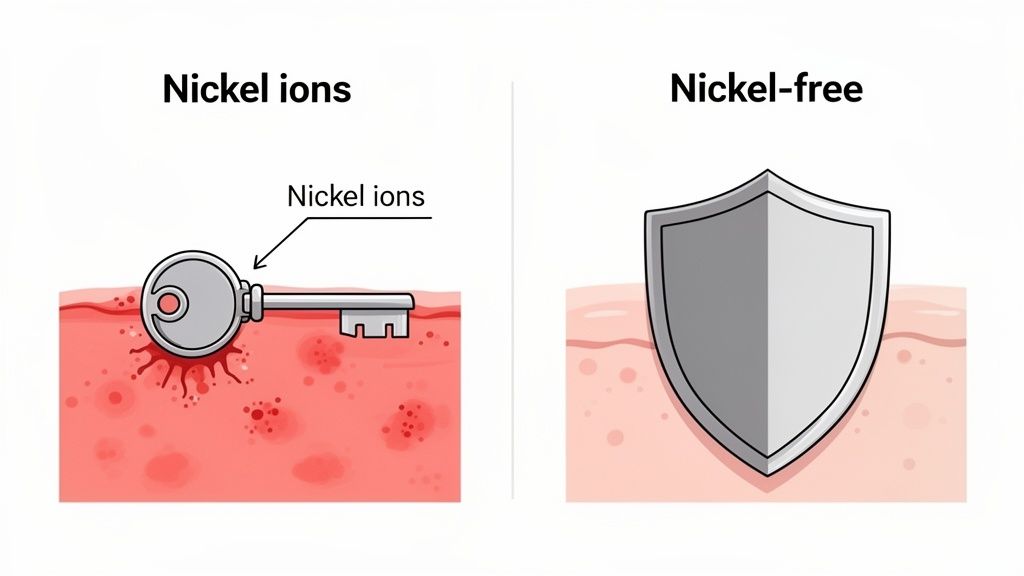
But for a huge number of people, nickel is a major allergen. You can think of it like a lock and key. For someone with a nickel sensitivity, their immune system has a specific 'lock' that recognizes nickel particles.
How The Allergic Reaction Kicks Off
So, how does it all start? When jewelry containing nickel touches the skin, moisture and sweat cause tiny nickel ions—the 'key'—to dissolve and get absorbed.
Once those ions slip through the skin, they fit perfectly into the immune system's 'lock,' sounding the alarm. This triggers an over-the-top defensive response from the body, which sees the nickel as a threat. The result? Contact dermatitis. That's the itchy, red, and often painful rash that makes so many people swear off fashion jewelry for good.
Understanding this reaction is your best sales tool. You're not just offering a "nickel-free" piece; you're selling the promise of comfort, peace of mind, and an end to a frustrating, persistent problem.
When you're armed with this knowledge, you can clearly explain to shoppers why your hypoallergenic jewelry is the smarter, safer choice. It’s how you turn their past frustrations into lasting loyalty for your brand.
How To Source And Market Your Hypoallergenic Collection
Alright, you understand what hypoallergenic jewelry is. Now, let's turn that knowledge into a real business advantage. This boils down to two things: sourcing smart and marketing even smarter. For business owners, it’s all about finding reliable suppliers for high-quality, affordable accessories and then telling a compelling story that connects with your target audience. This is where you go from just selling products to actually growing your brand.
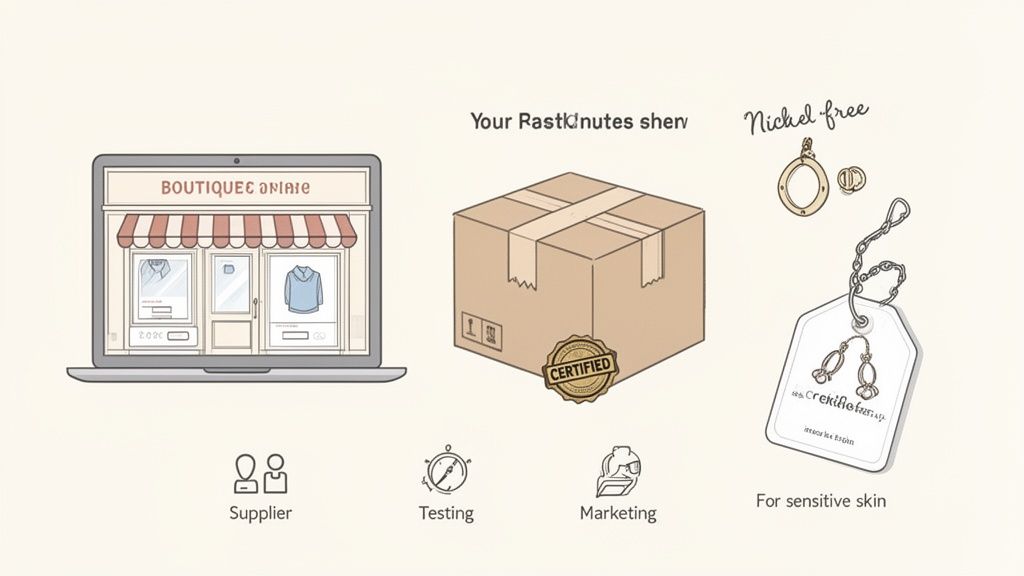
First, partner with the right wholesale supplier. You need a source who provides material certifications to back up their claims. A "nickel-free" label is great, but a certificate is a guarantee—a promise you can pass on to your customers. Look for suppliers with flexible order quantities, especially those with no minimum order quantity (MOQ). This lets you test new styles of fashion accessories without sinking a ton of cash into inventory.
Sourcing strategically isn't just about getting a good price. It's about building a reliable supply chain that reflects your brand's commitment to quality and customer well-being. Get this right, and you'll build the kind of trust that creates repeat business.
Finding The Right Wholesale Partner
A great supplier is more than a vendor; they're a partner in your success. They provide the high-quality, affordable jewelry that forms the foundation of your collection. When you're sourcing, here's what should be on your checklist:
- Material Certifications: This is non-negotiable. Always ask for documentation proving the metals are what they say they are and meet safety standards. It's the foundation of a trustworthy brand.
- Factory-Direct Pricing: Cutting out the middleman directly impacts your bottom line. Sourcing straight from the factory can dramatically improve your profit margins on every single piece.
- No MOQ: Flexibility is key in the fashion accessories business. A no-MOQ policy means you can react to trends quickly and test new designs without the risk of getting stuck with stock that won't sell.
- Wide Selection: Find a partner with a deep catalog. Access to everything from stainless steel staples to elegant precious metals lets you build a diverse collection that caters to a broad range of customers and price points.
Marketing Your Collection To Drive Sales
Once you've sourced your beautiful, skin-friendly inventory, you need to market it effectively. This means using specific, helpful language that resonates with shoppers who are tired of itchy, irritated skin.
Your marketing should focus on the solution you're providing. Weave keywords like "nickel-free," "jewelry for sensitive skin," and "tarnish-resistant earrings" into your product titles, descriptions, and social media posts. This simple tweak makes you visible to customers who are actively searching for what you offer. Take it a step further by creating content that explains why titanium is a great choice or how to care for sterling silver. This builds your authority and gives customers the confidence to buy.
For business owners, sourcing hypoallergenic items like surgical steel or titanium at factory-direct prices can slash costs by 15-30% below market rates. This is a huge win, especially when you consider that a whopping 60% of consumers now check for allergens before making a purchase. Adhering to standards, like those from the U.S. Consumer Product Safety Commission, not only ensures safety but also builds credibility. It empowers you to offer high-quality, affordable jewelry that earns customer loyalty.
By making your hypoallergenic pieces a hero of your collection—both online and in-store—you’ll attract a loyal following and establish your business as a go-to for safe and stylish fashion accessories.
Capitalizing On The Global Demand For Skin-Safe Jewelry
The surge in demand for hypoallergenic jewelry isn't just a passing fad. We're seeing a massive, long-term shift in how people shop for fashion accessories, driven by health-conscious consumers who now put quality and safety first. This change opens up a huge opportunity for any jewelry business ready to source smarter.
This whole movement is being powered by a greater awareness of metal allergies, with social media and online stores fanning the flames. As shoppers get smarter about what hypoallergenic jewelry actually is, they're actively hunting for brands that promise skin-safe, nickel-free pieces.
This isn't just about selling another product; it's about solving a real problem for people. When you offer a thoughtfully sourced hypoallergenic collection, you're not just a store—you're a trusted resource for a loyal and growing group of customers.
The Market Is Booming
And the numbers don't lie. The body jewelry market alone hit a valuation of USD 7.5 billion in 2024 and is on track to reach USD 10.34 billion by 2030. This growth is a direct response to customer demand for higher quality, safer products, supercharged by ecommerce. If you want to dive deeper, you can review detailed market research insights on this trend.
We're also seeing a move toward "premiumization," where people are more than willing to pay a little extra for certified, biocompatible metals. With 10-15% of women in North America and Europe dealing with allergic reactions, the need for safe, high-quality accessories has never been clearer.
To make the most of this opportunity, you'll need solid ecommerce growth strategies for unstoppable scale. Investing in a hypoallergenic line isn't just a smart move for right now—it's a profitable, long-term sourcing strategy that shows your business is in tune with what today's consumers truly care about.
Your Customers' Top Questions, Answered
When you're running a jewelry business, your customers will have questions. Getting the answers right not only makes the sale but also builds the kind of trust that brings people back. Let's walk through some of the most common questions you'll get about hypoallergenic pieces so you and your team can answer them like pros.
What's The Real Difference Between Nickel-Free And Hypoallergenic?
This one comes up all the time, and it's a great chance to show your expertise. Explain it this way: "nickel-free" is a simple, black-and-white promise. The piece has absolutely no nickel in it. Easy.
"Hypoallergenic," on the other hand, is about significantly reducing the risk of a reaction. A great example is surgical stainless steel. It actually contains a tiny bit of nickel, but the nickel is so tightly bonded within the metal that it rarely causes a problem for most people. So, while titanium is both hypoallergenic and nickel-free, stainless steel is just hypoallergenic.
Is Sterling Silver A Safe Bet?
People often assume sterling silver is automatically hypoallergenic, but that’s not always true. By definition, sterling silver is 92.5% pure silver. Pure silver is way too soft to hold its shape in jewelry, so it has to be mixed with other metals to make it stronger.
That other 7.5% is usually copper, which is generally fine. The problem starts when some manufacturers mix in nickel to save money. That's why you have to be vigilant when sourcing. Always confirm with your supplier that their sterling silver is genuinely nickel-free.
How Should I Tell My Customers To Care For Their Jewelry?
Good care advice is a fantastic way to add value and show you care about the customer's purchase long after the sale. It reinforces the high-quality nature of your accessories.
Here are a few simple tips you can pass along:
- Clean Gently: A soft cloth, a bit of mild soap, and warm water are all you need. This works perfectly for tough materials like titanium and stainless steel without causing damage.
- Keep Chemicals Away: Remind them to take their jewelry off before putting on lotion, spraying perfume, or using harsh cleaning products. The residue can dull the finish or even harm the metal over time.
- Store It Smart: Suggest keeping pieces in their own soft pouch or a lined jewelry box. This prevents harder metals from scratching softer ones and keeps everything looking new.
Ready to build out your inventory with high-quality, affordable fashion accessories your customers will love? At JewelryBuyDirect, we offer certified, factory-direct hypoallergenic jewelry with no minimum order. We make it easy to source your store with beautiful pieces that sell. Explore our wholesale collection today.