






Jennifer Lopez | Fri Oct 02 2026
Sterling Silver Rings Bulk Buying Guide for Retailers
A bulk order of rings can look profitable on a supplier's quotation and still damage your margin the day it reaches your stockroom. The pieces may arrive with uneven weights, rough inner bands, missing 925 marks, weak settings, or a finish that starts changing before customers see the display. The price per piece was low, but the true cost was much higher.
That's why sourcing sterling silver rings bulk requires more than comparing supplier catalogs. You need a buying workflow that verifies the metal, tests samples, calculates landed cost, plans sizes and styles, controls tarnish, and screens suppliers before you commit cash. The right process turns sterling silver into dependable inventory. The wrong one leaves you discounting defects.
Why Bulk Ring Buying Trips Up Even Smart Retailers
A boutique owner usually makes the first mistake before contacting a supplier. They search for affordable wholesale rings, sort by the lowest piece price, and assume that a familiar product photo represents a consistent production standard. The order arrives, and the problems appear one by one. One size feels noticeably lighter than another. Several rings have no visible hallmark. A few polished surfaces show scratches, while a supposedly matching style has a different tone.
The supplier may offer a partial credit, but that doesn't restore lost selling time, customer trust, or the cost of inspecting and repackaging the shipment. A cheap order becomes expensive when you include returns, slow-moving sizes, replacement stock, and staff hours.
Why sterling silver remains worth buying
Sterling silver rings are still a strong wholesale category because shoppers understand the material. Sterling silver contains 92.5% pure silver and 7.5% other metals, usually copper, which gives the alloy more hardness for practical jewelry use. The familiar 925 mark has roots in 12th-century England, and the silver standard was formalized for wrought silver in 1300 through a legal system of assaying and hallmarking. That history helps explain why 925 remains a useful fineness indicator across markets, not merely a decorative sales claim. The history and commercial role of the 925 standard make the material easier for retailers to explain and customers to compare.
The category also has enough demand depth to support multiple designs, finishes, and sizes. Global silver jewelry sales reached USD 31.5 billion in 2025, while another forecast projects growth from USD 40.91 billion in 2024 to USD 53.77 billion by 2030 at a 4.66% CAGR. Those silver jewelry market estimates support the case for sterling silver rings as a meaningful bulk segment, although demand doesn't excuse weak purchasing discipline.
My buying rule: sterling silver is dependable inventory only when the supplier is dependable too.
The questions that protect your margin
Before you approve a large order, you should know whether the metal is genuine, whether the finish is repeatable, whether the supplier can replenish winning sizes, and what the shipment will cost after freight and duties. You also need a shelf-life plan because tarnish can turn attractive stock into a customer-service problem.
Retailers managing several suppliers can also study business use cases for purchase bots to understand how automated purchasing workflows can help organize supplier comparisons, reorder triggers, and routine procurement tasks. Automation won't replace physical QC, but it can reduce the administrative mistakes that cause buyers to reorder the wrong designs or overlook missing documentation.
The rest of your buying process should answer five practical questions:
- Is the ring 925 sterling silver?
- What will each sellable unit cost after every charge?
- Does the sample represent the bulk production run?
- Which styles and sizes deserve stock?
- Can the supplier ship, document, and support the order reliably?
Verifying 925 Quality Before You Spend a Dollar
Never negotiate a large order before verifying the sample lot. A low quote means nothing if the supplier has substituted plated, hollow, or assembled construction for solid sterling silver.
The 925 hallmark indicates an alloy containing 92.5% silver. It doesn't guarantee excellent polishing, accurate sizing, secure stones, or consistent production, but a missing or suspicious mark is a serious warning. Ask the supplier where the hallmark is applied and whether the same marking appears consistently across the sample. A stamp hidden on one piece doesn't prove that every ring in a bulk shipment meets the claim.
Use a layered inspection, not one quick test
Start with a clean, dry ring. Dirt, polishing compound, and moisture can obscure seams and surface defects.
- Inspect the complete ring visually. Use 20× to 100× magnification to examine the face, edges, underside, inner shank, prongs, and any soldered areas. Look for roughness, pinholes, color changes, sharp edges, visible seams, and uneven polishing.
- Take multi-spot portable XRF readings. Test 3 to 5 locations, including the face, edge, underside, and inside shank or clasp area where applicable. Consistent readings around 92% to 93% silver support a solid sterling construction. Large swings between spots suggest plating, solder variability, hollow sections, or an assembled piece.
- Record the weight. Use a precision balance with 0.001 g resolution. Weigh matching designs across several sizes and record the results beside the SKU, finish, and size. You're looking for sensible consistency, not identical weights across different geometries.
- Use specific gravity when the result still isn't clear. Solid 925 sterling is typically around 10.36 to 10.40 g/cm³, with approximately ±0.05 allowed for geometry and alloy variation. A density result that doesn't fit the construction deserves further investigation.
The measurements above form a practical non-destructive QC routine for sample lots. They're more useful than relying on color, magnet tests, or a single surface reading.
What surface checks miss
Surface-only inspection is where experienced buyers catch inexperienced buying. A ring can look correct on the face while its edge has worn through, its interior remains untested, or a solder seam contains a different composition. Hollow and assembled pieces can also pass a casual visual review.
| Check | What It Detects | Pass Criteria |
|---|---|---|
| Hallmark review | Missing or suspicious material claims | Clear, consistent 925 marking where applicable |
| Magnified inspection | Rough finishing, seams, pinholes, worn edges | Smooth construction with no unexplained defects |
| Multi-spot XRF | Plating, variable alloy, assembled construction | Readings remain around 92% to 93% silver |
| Precision weighing | Weight inconsistency between matching units | Results fit the design and size pattern |
| Specific gravity | Density that doesn't match solid sterling | Around 10.36 to 10.40 g/cm³, allowing for variation |
Request independent verification when the supplier makes a serious purity claim. Buyers can also review guidance on wholesale 925 jewelry verification for the role of visible hallmarks and third-party checks such as SGS or XRF testing.
Use this sterling silver wholesale inspection resource as a further reference when building your product and supplier checklist.
A supplier that resists reasonable sample testing is giving you useful information. Don't argue with the warning. Remove the supplier from the shortlist.
Negotiating Price in Landed-Cost Terms
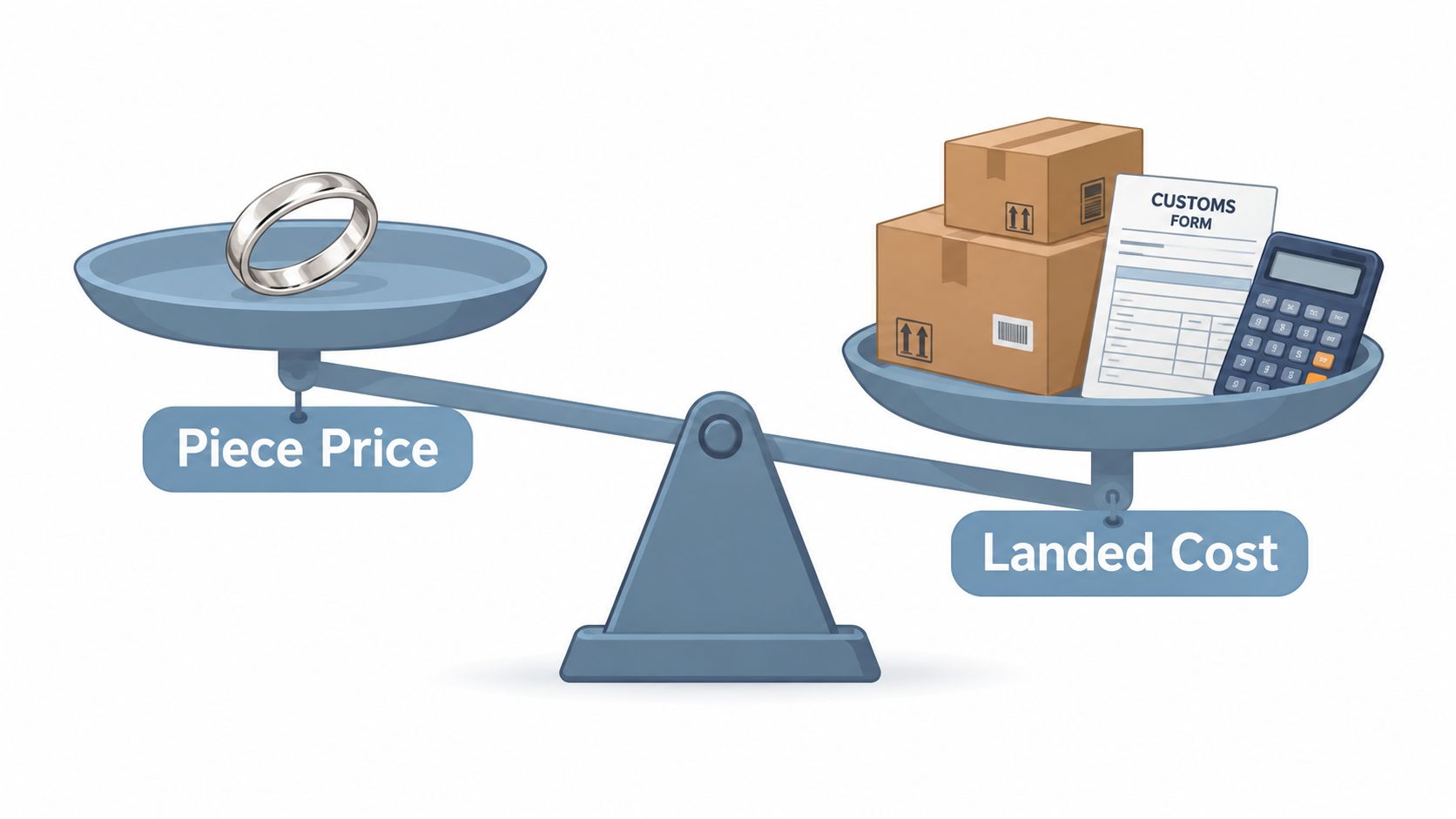
A supplier offers a ring at a low unit price, then adds freight, duties, packaging, and payment charges. Your margin disappears before the carton reaches your stockroom. Landed cost is the number your business has to survive, so make it the basis of every comparison and negotiation.
Build the calculation by SKU before you discuss a discount. Record the quoted ring price, shipping allocation, applicable duties and taxes, packaging, payment-processing charges, inspection, and expected loss from defects or unsellable units. Include anti-tarnish bags, cards, labels, and protective materials. Packaging is inventory protection, not a cosmetic extra. Poor storage materials can accelerate tarnishing and create markdowns that a small unit-price reduction will not cover.
A 2026 wholesale guide places sterling silver items broadly around $2.50 to $12.00 per piece, while many retailers target 3x landed cost pricing to preserve margin after shipping and duties. The wholesale price guidance and landed-cost discussion offers a starting benchmark, not a guaranteed fair price. A plain band near the lower end can still be expensive after freight and packaging. A detailed design can justify a higher quote when its finish is consistent and the intended retail price supports it.
Use this order in your worksheet:
- Unit cost: The supplier's quoted price for each ring.
- Freight allocation: Shipment cost divided across the units you expect to sell.
- Duties and taxes: The import treatment that applies at your destination.
- Packaging: Individual bags, cards, anti-tarnish materials, and labels.
- Payment overhead: Processing or financing charges.
- Quality cost: Inspection, testing, replacements, and units you cannot sell.
Compare the result with the retail price customers will accept. The 3x target leaves room for returns, markdowns, operating expenses, and delivery costs. Treat it as a margin check, not a rigid formula. A ring that cannot absorb ordinary retail costs has an unacceptable landed price, even if the supplier's quote looks attractive.
Negotiate the order structure as firmly as the headline figure. Ask for volume tiers across a mixed assortment, combine related styles, and divide the order between proven bands and test pieces. Request a better rate for repeat replenishment, anti-tarnish packaging at no extra charge, replacement units for documented defects, or a held price for the next approved reorder. These terms can protect more margin than a small reduction in the ring price.
Tell the supplier:
“I'm comparing landed cost, not unit price. Please quote the ring, freight, duties assumption, packaging, and any payment charges as separate lines.”
Review the practical value of 925 silver for retailers before approving a design at your target price. The right deal is documented, predictable, protected against tarnish-related waste, and profitable after delivery. It is not just the lowest number in a chat window.
Ordering Samples That Actually Tell You Something
A sample order should behave like a small production audit. If you order one attractive ring in one size, you're testing photography and first impressions. You aren't testing the supplier's ability to deliver a consistent assortment.
Ask for samples that expose variation. Order the same design in multiple sizes, request more than one finish, and include at least one style with stones or a detailed setting if those products will be part of your range. A supplier that performs well on a plain polished band may still produce weak prongs, uneven plating, or uncomfortable edges on a more complicated ring.
Design the sample to challenge the supplier
For each sample, record the SKU, size, finish, quoted weight, actual weight, hallmark location, and arrival condition. Take your own photographs in daylight and under store lighting. Supplier images don't show how the ring looks after handling, how reflective the polish is, or whether small surface marks become obvious in your product content.
Use a simple test matrix:
| Sample choice | Why it matters | What to record |
|---|---|---|
| Same design in multiple sizes | Reveals sizing and weight consistency | Weight, inner diameter, comfort |
| Polished and hammered finishes | Compares surface skill | Uniformity, scratches, texture |
| Stone-set design | Tests security and alignment | Loose stones, uneven settings |
| Adjustable or open ring | Tests construction strength | Flexing, cracking, sharp ends |
| Multiple units of one SKU | Tests repeatability | Finish, hallmark, weight, defects |
Run your fingers around the inner band and edges. Rough finishing isn't a minor cosmetic issue. It creates discomfort, increases returns, and often signals rushed craftsmanship. Check clasps where the design includes them, examine stone security, and inspect surface smoothness under magnification. Bulk sterling silver buying guidance specifically emphasizes finish quality, weight consistency, clasps, and smooth surfaces, as well as sampling before a larger commitment.
Turn sample results into purchasing leverage
Send the supplier a written approval sheet with photographs attached. Mark each issue as acceptable, requiring correction, or disqualifying. Ask the supplier to confirm that the bulk production will match the approved sample, including alloy claim, finish, dimensions, packaging, and stone setting.
A fixable failure is usually a minor polishing mark, incorrect packaging, or a labeling mistake that the supplier acknowledges and corrects in a replacement sample. Walk away when the supplier disputes clear evidence, refuses to explain inconsistent testing, changes the material description, or cannot reproduce an approved finish.
Keep the rejected samples. They document why you declined the order and give your team a reference standard for future suppliers. A good sample isn't just proof that one ring looks acceptable. It's evidence that the supplier can communicate, correct, document, and repeat.
Planning Sizes, Styles, and Shelf Life for Your First Order
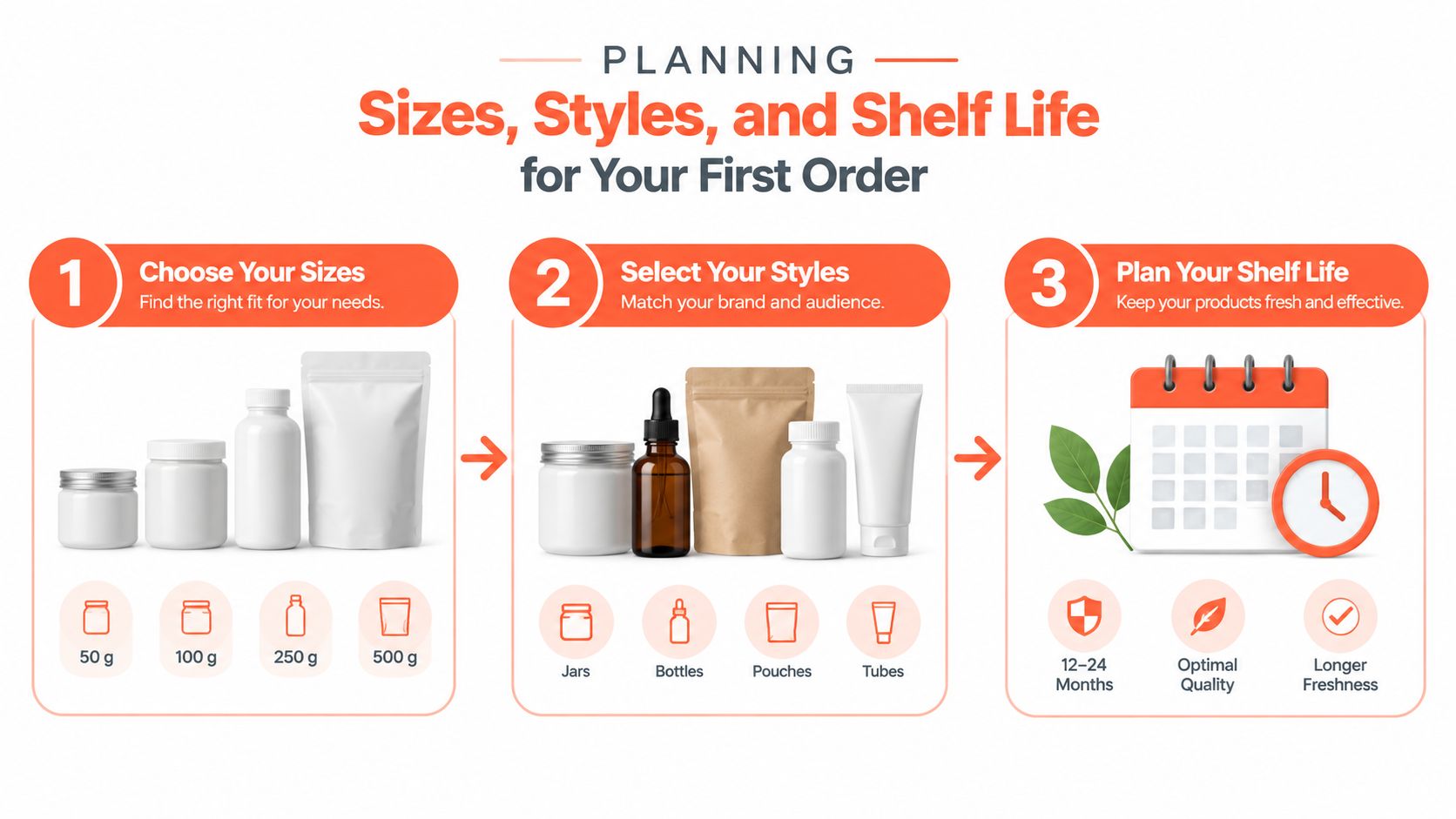
Your first order should test demand, not copy the supplier's catalog. Build a controlled assortment that gives customers meaningful choice while keeping storage, replenishment, and markdown risk under control.
Start with simple bands and stackable shapes, then add trend-led designs. Current wholesale interest favors bold, sculptural, organic, and textured rings, including hammered finishes, fluid waves, chunky forms, and curated-chaos styling. Use those pieces to create display interest, while keeping dependable shapes at the center of the order. A boutique should not fill its stockroom with fashion rings before its customer history supports them.
Build the assortment around proven use cases
Give each design a job. Core bands offer an easy entry point and support repeat purchases. Sculptural and textured rings create stronger visual impact in displays, social commerce videos, and seasonal edits. Giftable styles serve polished, stone-accented, or wedding-related purchases, while adjustable rings help when customer sizing is uncertain.
A practical mix includes:
- Core bands: Plain, stackable shapes that are easy to explain and replenish.
- Texture-led styles: Hammered or organic surfaces that catch light.
- Sculptural statements: Fluid waves and chunky silhouettes for display impact.
- Giftable designs: Polished, stone-accented, or wedding-ready options.
- Flexible styles: Adjustable rings for customers with uncertain sizing.
Do not offer every finish in every size. Give your strongest silhouettes sensible size coverage, then keep experimental designs in a narrower range until sales justify expansion. Ask which sizes the supplier can replenish consistently. Make the final decision from your own customer history, not a generic “best seller” claim.
Treat tarnish as an inventory cost
Sterling silver tarnish affects purchasing, packaging, and margin. Visible tarnish can appear in 3 to 10 days in coastal or high-pollution environments and 2 to 6 weeks in normal urban wear. Controlled low-humidity storage can delay visible change for 12 to 24 months. This tarnish guidance supports a straightforward buying rule: humid storage requires smaller stock quantities and faster replenishment.
Use individual anti-tarnish packaging where practical. Keep rings away from moisture and pollutants, and leave sealed units closed until they are needed. Add packaging to your landed-cost calculation, then compare it with cleaning labor, markdowns, and tarnish-related returns. Advice on sterling silver storage and tarnish planning can help your team write consistent care instructions.
Order depth must match your storage setup. With controlled humidity and protective packaging, you can hold more confidently. Without them, place smaller replenishable orders and prioritize designs that sell quickly.
Shipping, Documentation, and Supplier Onboarding
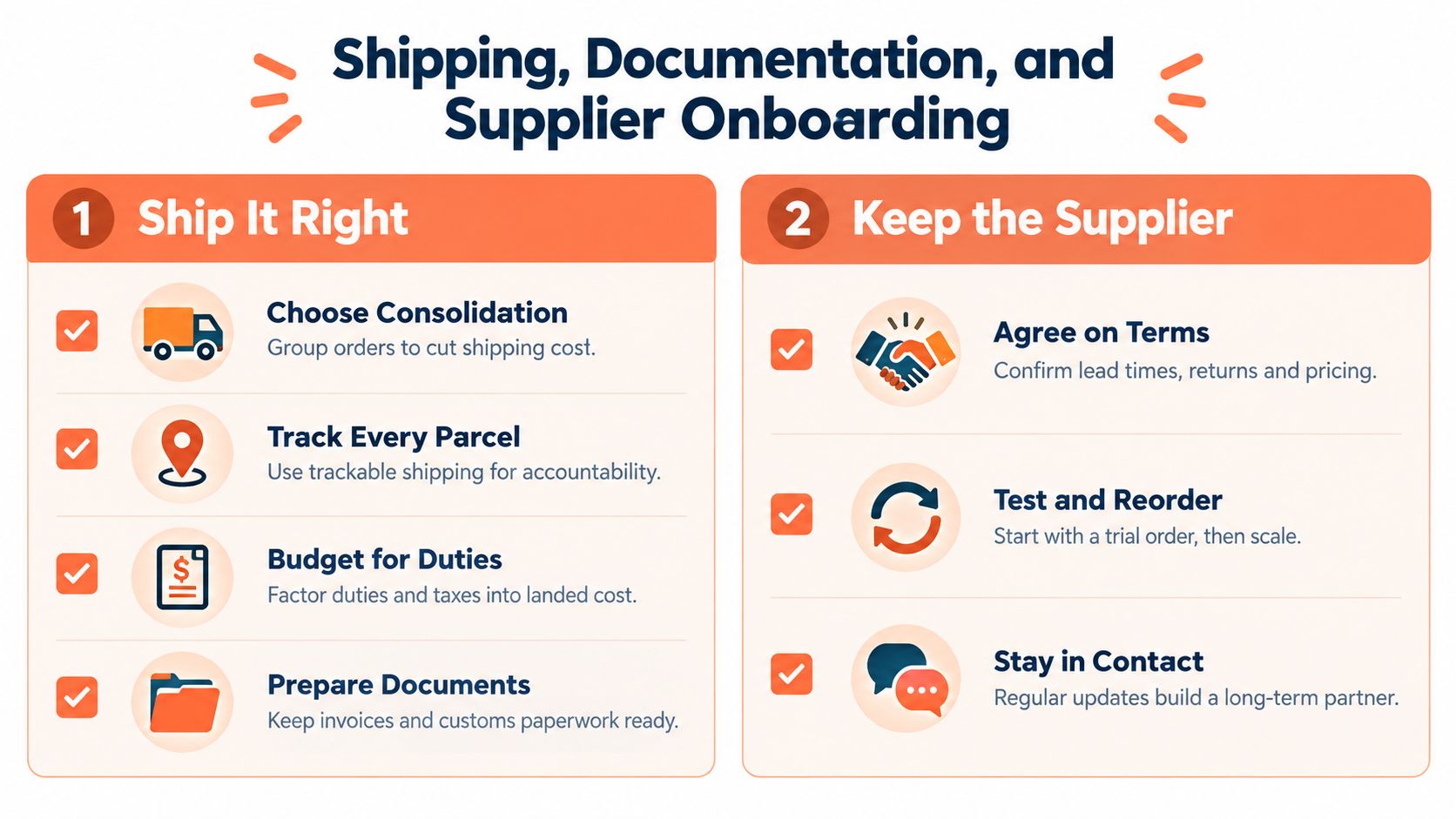
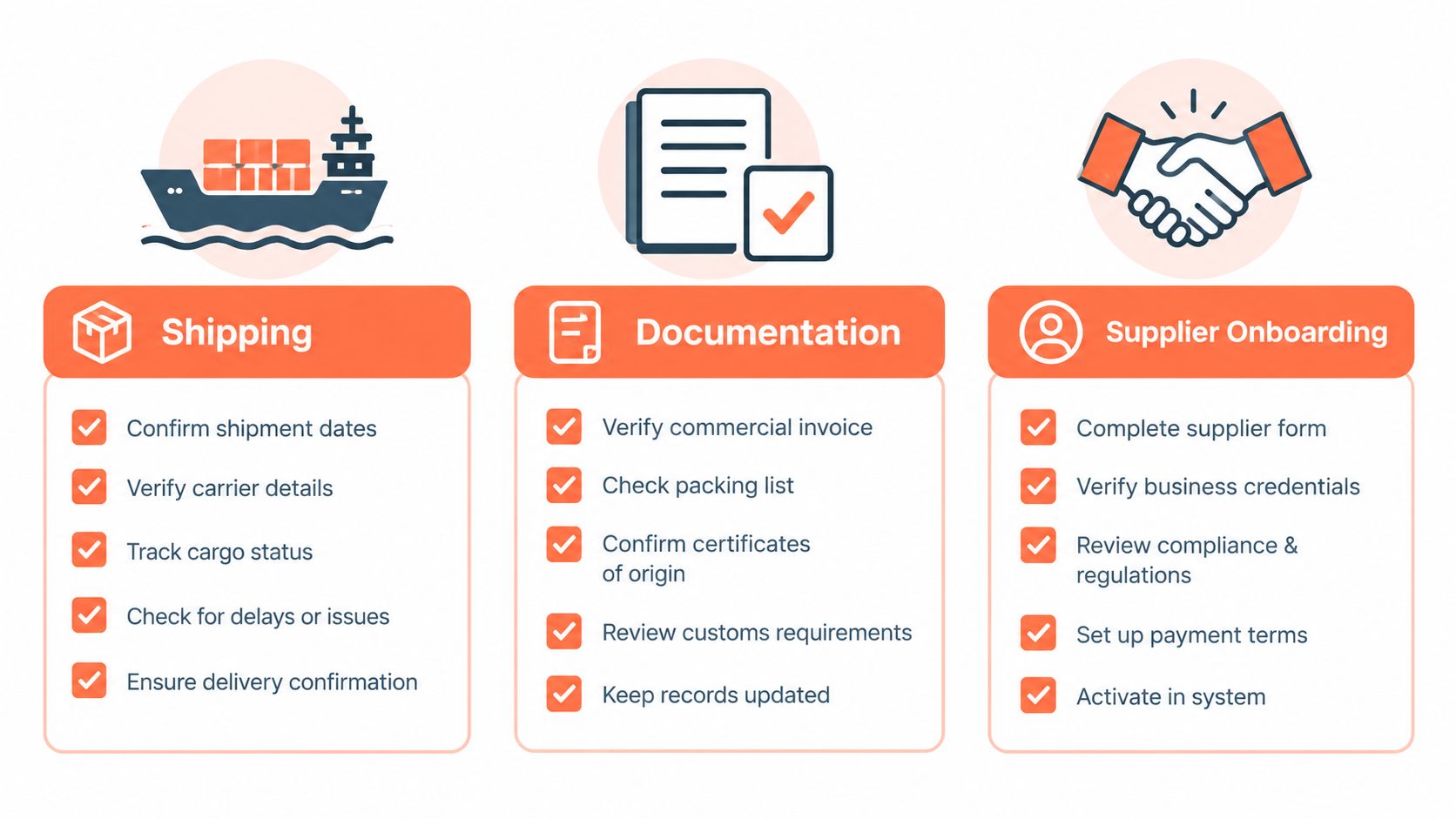
A carton of rings can leave the warehouse on time and still create a costly problem if the invoice, customs documents, or product description is wrong. Approve a supplier only after it proves four things: the goods match the sample, the shipment is trackable, the paperwork is complete, and the team resolves problems without reopening every agreed term.
Set shipping rules before you compare quotes. Ask whether orders can be consolidated, whether each parcel has tracking, how duties and taxes are assigned, and which documents travel with the shipment. A low freight quote is meaningless if the supplier splits the order, omits customs paperwork, or uses a service that gives you no useful delivery visibility. Calculate freight, duties, taxes, and handling together with the ring price so your landed-cost decision reflects the cash you will actually spend.
Build the supplier record before approval
Send every serious candidate the same request. Require Business identity, including company registration and legal trading information, plus an Operating location with a verifiable factory or business address. Request Metal evidence, such as purity records, assay reports, or relevant material documentation, and Testing support, including third-party verification such as SGS testing or XRF results where applicable.
Record the Commercial terms in writing: lead times, payment schedule, return handling, defect policy, and packaging options. Confirm Product continuity, including whether successful SKUs can be replenished and which sizes remain available. Wholesale sourcing risk guidance supports checking company registration, factory address, purity or assay reports, reviews, response times, and sample performance before scaling an order.
This file protects your margin. It gives you evidence of what the supplier promised before payment and lets you compare vendors on reliability, not just unit price. Keep the approved sample, quotation, packing agreement, and product documents together.
Control your exposure with a staged first order. Ask for a trial shipment, smaller opening commitment, or no minimum quantity for new designs. Buy-now-pay-later terms can preserve cash flow, but accept them only when the repayment schedule, fees, and order obligations are documented and fit your operating cycle.
Judge the first shipment against the record. Check that the approved rings arrived, the paperwork matches the goods, packaging protected the stock, the invoice is accurate, and the supplier stayed responsive after payment. Refuse to scale a vendor that withholds identity details, avoids testing questions, changes terms after approval, pressures you to skip samples, or will not answer in writing. Evasive onboarding usually leads to harder claims later.
Your Next Bulk Order Starts With Better Questions
Profitable bulk buying isn't a hunt for the cheapest quote. It's the purchase of predictability. You want metal that tests correctly, finishes that repeat, sizes that customers can wear, packaging that protects stock, and a supplier that answers when something goes wrong.
Put the workflow into your next buying email:
- Ask for assay documentation and the supplier's 925 verification process.
- Request sample pricing across sizes, finishes, and representative constructions.
- Require a complete landed-cost breakdown, not only a unit quotation.
- Confirm packaging, shelf storage, lead time, returns, and defect handling.
- Start with a documented test order, then scale only the SKUs that perform.
Your first order should teach you something. If it doesn't reveal quality, packaging, shipping, and supplier consistency, it was too small in scope even if it was large in quantity. Buy less blindly, test more intelligently, and let proven reorders earn their way into deeper inventory.
For a practical starting point, JewelryBuyDirect offers no-MOQ wholesale sourcing, daily new arrivals, trackable shipping, damage protection, and buy-now-pay-later options for retailers testing sterling silver rings and other fashion accessories. Visit the platform with your assay questions, sample requirements, and landed-cost worksheet ready, then compare approved products before placing your next bulk order.