






Arthur Lynch | Tue Jan 27 2026
The Ultimate Smart Ring Guide: A 24/7 Comfort Test
Ever wondered what a smart ring actually is? Imagine taking the core features of a bulky smartwatch—health tracking, contactless payments, phone notifications—and packing all that power into a sleek, comfortable ring you can wear 24/7. That's the magic of a smart ring. It’s a piece of high-tech jewelry designed to blend in, gathering valuable insights about your body without a distracting screen or clunky design.
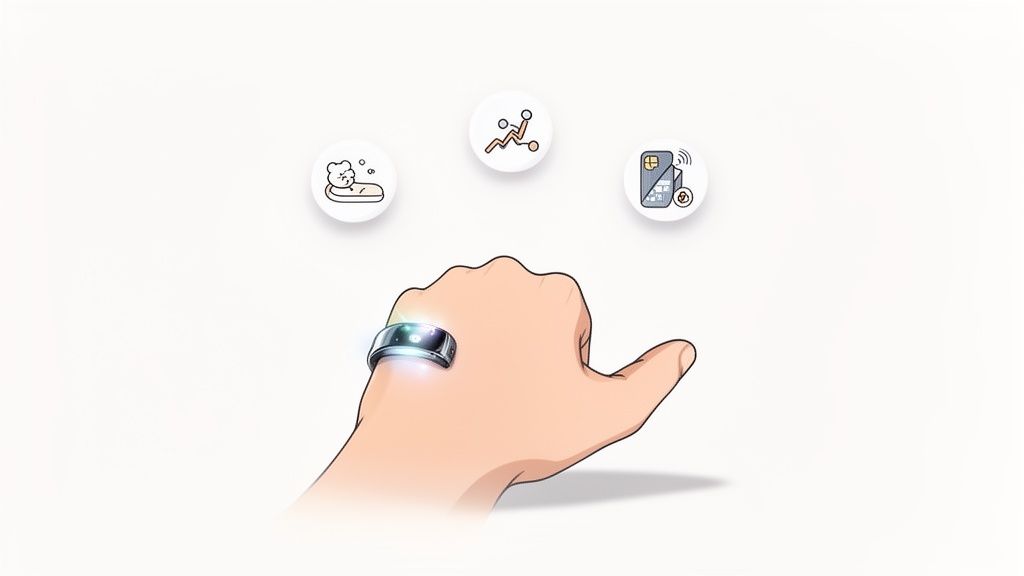
The idea is brilliantly simple: a wearable that works for you, not the other way around. While a smartwatch is constantly buzzing and lighting up, a smart ring operates silently in the background. It’s busy tracking your sleep quality, daily activity, heart rate, and even body temperature, then quietly syncing all that data to an app on your phone.
This fusion of high fashion and high function is fueling a massive surge in demand. The global smart ring market is absolutely exploding, leaping from $706.5 million in 2024 to an estimated $1,129 million in 2025. By 2032, it's projected to hit an incredible $7,353.1 million. Those numbers tell a clear story: consumers are ready for this new wave of wearables.
So, why are people flocking to rings when smartwatches are already so common? It really comes down to a few core advantages. The minimalist design is a huge win—it looks like a stylish piece of jewelry, not a tech gadget strapped to your wrist. That subtlety is perfect for anyone who values personal style or needs a more professional look.
But beyond aesthetics, the real test is comfort. Can you actually wear it all day, every day? Does it get in the way when you're typing, snag on your clothes, or feel weird when you're trying to sleep? This guide digs into those real-world questions to see if the smart ring truly delivers on its promise of being an invisible health companion.
The 24/7 Comfort Test: A Deep Dive into Fit and Feel
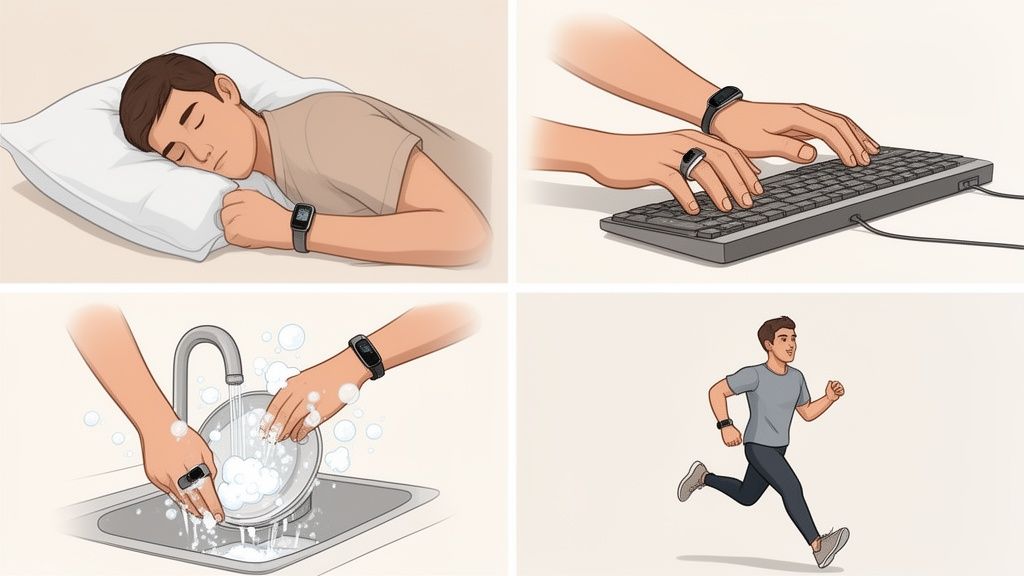
A smart ring’s spec sheet can promise the world, but none of those features matter if the device is a pain to wear. The real measure of a smart ring isn't its battery life in a lab—it's whether you can completely forget you have it on. This is the 24/7 comfort test, where wearable tech collides with the reality of daily life.
The whole point of a smart ring is to blend into your routine. Can you actually get a good night's sleep without it feeling clunky between your fingers? Does it snag on your sweaters or clatter against your keyboard all day? These are the make-or-break questions that decide if a smart ring becomes a trusted companion or just another gadget gathering dust in a drawer. Let’s be honest: skepticism about wearing a piece of tech 24/7 is valid, and this is where we address it head-on.
Material Matters: Thickness, Weight, and Feel
What you feel on your finger comes down to three things: the materials used, how thick it is, and how much it weighs. Each of these plays a huge part in how the ring feels when you're doing anything from a high-intensity workout to simply washing the dishes.
- Titanium: This is the go-to material for most high-end smart rings, and for good reason. It’s incredibly strong but surprisingly lightweight and hypoallergenic, making it perfect for something you’ll wear nonstop. It feels substantial without ever feeling heavy.
- Ceramic: Often used for the outer shell, ceramic gives the ring a sleek, polished look that resists scratches. It has a beautiful, glass-like finish but can be more prone to cracking than titanium if it takes a hard hit.
- Medical-Grade Polymers: Peek inside most smart rings and you'll find a smooth, non-porous polymer lining. This material ensures the sensors stay in close contact with your skin for accurate tracking, all without causing irritation. You’ll find similar skin-friendly qualities in jewelry made from 316L stainless steel, which is another great hypoallergenic option.
Thickness is another surprisingly critical detail. Most smart rings are between 2.5mm and 2.8mm thick. It doesn't sound like much, but a fraction of a millimeter can be the difference between a barely-there fit and a constant, bulky reminder that you’re wearing a piece of tech. A thicker ring might feel fine at first but become an annoyance when gripping a dumbbell or typing for hours.
What Smart Rings Actually Do: A Breakdown by Use Case
At the end of the day, a smart ring isn't just a piece of technology; it's a bundle of solutions for everyday life. The real magic isn't in the sensors or chips, but in what those tiny components let a person do. When we look at smart rings through the lens of their real-world uses, it becomes clear how this subtle wearable can seamlessly blend into anyone's routine.
For a retailer, thinking this way is crucial. Once you grasp the "why" behind each feature, you're better equipped to sell these gadgets. It also helps you spot trends, allowing you to source non-tech fashion rings from a supplier like JewelryBuyDirect that capture the same modern, minimalist aesthetic.
Use Case 1: Health & Wellness Tracking
Perhaps the biggest draw for most people is the smart ring's role as a silent health partner. Think about it: you wear a ring all day, every day. You sleep with it on. That gives it a massive advantage over a bulky fitness watch you might only wear for a workout. It’s capturing a full 24/7 picture of your body's rhythms, and that always-on comfort is where it truly shines.
Here’s what that looks like in practice:
- Serious Sleep Tracking: This goes way beyond just counting how many hours you were in bed. A good smart ring can tell the difference between light, deep, and REM sleep, giving you a real score on your sleep quality. This data shows you exactly how that late-afternoon espresso or evening gym session affects your recovery.
- All-Day Heart Rate Monitoring: By constantly tracking your heart rate, the ring establishes your personal baseline. It watches for changes in your resting heart rate (RHR) and heart rate variability (HRV), which are two of the best indicators of physical stress and how well you’re recovering.
- Body Temperature Sensing: The ring can pick up on tiny fluctuations in your skin temperature. These subtle shifts can give you a heads-up if you're about to get sick, show how well you've recovered from a tough workout, and even help with menstrual cycle tracking.
- Everyday Activity Tracking: While it won't replace a dedicated GPS watch for a marathon runner, it's perfect for capturing the big picture. It tracks your steps, general activity levels, and estimates your daily calorie burn, giving you that little nudge to stay active.
Use Case 2: Daily Life & Contactless Payments
A smart ring is also a fantastic little tool for cutting down on friction in your day. It’s all about making those small, repetitive tasks faster so you can pull out your phone a little less often. For businesses curious about this tech's potential, we explore this further in our guide on how NFC jewelry is used for access control.
A smart ring’s goal is to handle the small stuff with a simple tap or gesture, letting you stay focused on what’s in front of you. It’s less about adding another screen and more about taking back control from the ones you already have.
Some of the most popular convenience features include:
- Tap-to-Pay (NFC): This is a huge one. Being able to pay for coffee or groceries with just a tap of your finger is incredibly convenient. Using Near Field Communication (NFC), the ring links to your credit card, letting you leave your wallet or phone tucked away.
- Gesture Controls: Some of the more advanced rings let you manage your phone with simple hand movements. Imagine skipping a track on Spotify, pausing a YouTube video, or snapping a photo just by twisting the ring or tapping your finger a certain way.
- Silent Alerts: No screen, no problem. A smart ring can give you a gentle, discreet vibration for important notifications. You can often customize these alerts, so you only get a buzz for a call from your family, not for every single email that comes in.
Top Smart Ring Brands: Head-to-Head Comparison
Diving into the smart ring market can feel like picking a team in a serious tech showdown. Each brand has its own philosophy, its own angle, focusing on everything from minimalist design and deep data analytics to the overall cost of ownership. For both shoppers and the retailers stocking them, figuring out these differences is everything. It’s the only way to find the right match.
The competition is heating up, fast. Right now, North America is leading the pack, making up nearly 40% of the global smart ring market share in 2023. This surge is all thanks to a growing appetite for discreet, powerful health trackers. It’s a trend that’s projected to fuel a massive 21.7% growth rate in the U.S. market alone between 2026 and 2033. You can get a closer look at the numbers in this detailed smart ring market analysis.
This boom has kicked off a real battle for dominance, with the original players and fresh-faced newcomers all fighting for a spot on your finger.
Feature Comparison: The Big Three
When people talk about smart rings, the conversation almost always lands on three key brands: Oura, RingConn, and Ultrahuman. Each one brings something different to the table, especially regarding health tracking, payment functions, battery life, and compatibility.
| Feature Comparison | Oura Ring | RingConn | Ultrahuman |
|---|---|---|---|
| Health Tracking | Excellent sleep & readiness scores, period prediction, activity tracking. | Comprehensive sleep, stress, and activity data. Strong on HRV. | Deep metabolic health insights, workout tracking, stimulant window. |
| Payment Functions | Not available. | Not available. | Not available (some brands specialize in this). |
| Comfort Factors | Sleek, minimal design. 2.55mm thick. Lightweight (4-6g). | Unique squared-off design. 2.5mm thick. Very light (3-5g). | Thinner profile. 2.4-2.8mm thick. Extremely light (2.4-3.6g). |
| Battery Life | Up to 7 days. | Up to 7 days. | Up to 6 days. |
| Compatibility | iOS & Android. | iOS & Android. | iOS & Android. |
| Subscription | Yes, a monthly fee is required for full feature access. | No, one-time purchase. | No, one-time purchase. |
That pricing model really is the main dividing line. While Oura's subscription keeps a steady stream of updates coming, that monthly charge adds up. RingConn and Ultrahuman bake everything into the upfront cost, a straightforward approach that many people prefer.
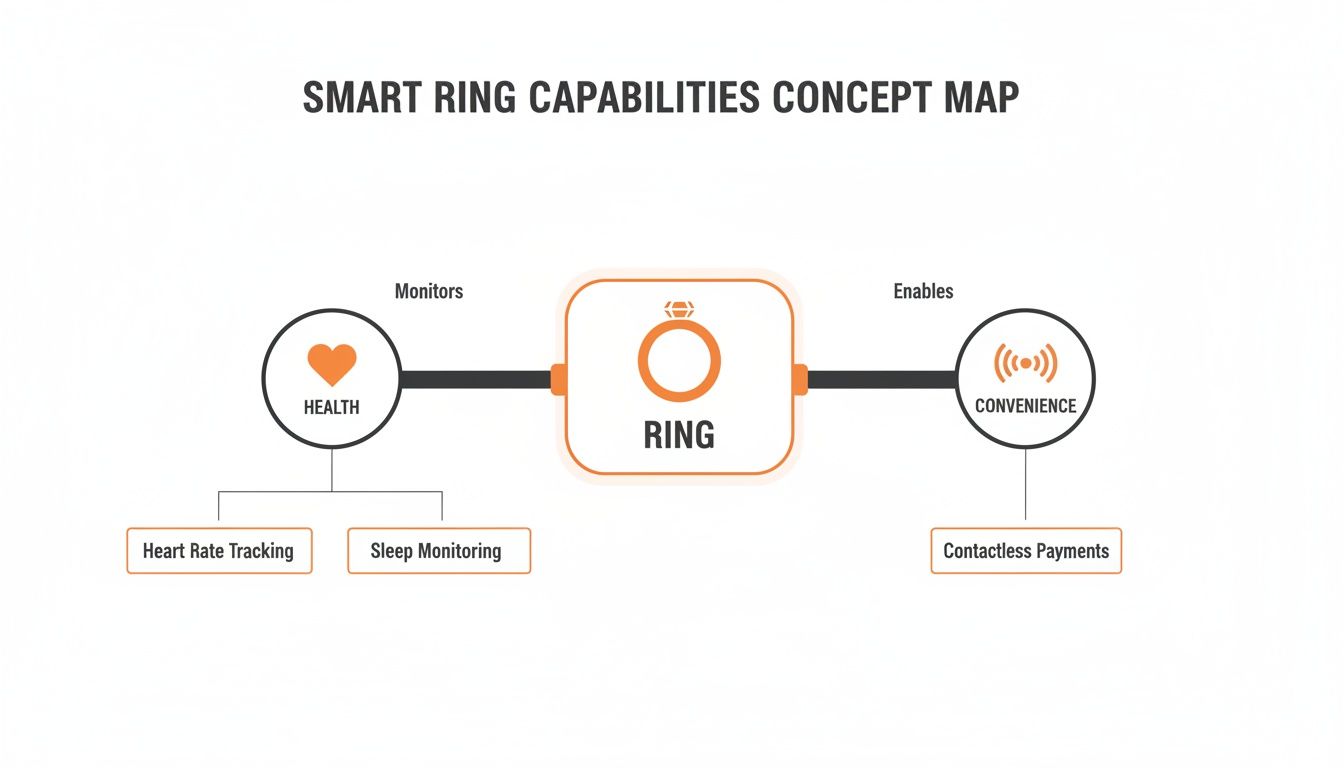
It’s a great visual for understanding how today's smart ring acts as a hybrid device: part personal health lab, part tool for making your day-to-day life a little easier.
A Day in the Life: Real-World Scenarios
Data is one thing, but how does a smart ring actually hold up when you’re out living your life? The goal is for it to feel like a part of you, not an intrusive gadget you have to accommodate. Here are some honest experiences with daily wear challenges.
- Sleeping: A well-designed ring should be completely unnoticeable. Lighter models with smoother edges really shine here, as they won't create that awkward pressure when you curl your fingers. The honest experience? You forget it's there until you check your sleep score in the morning.
- Working & Typing: A thicker ring might tap against your laptop or desk while you type. For some, this is a minor annoyance; for others, it's a dealbreaker. The reality is that lower-profile rings are far better for office work.
- At the Gym: Gripping weights or a pull-up bar can be uncomfortable with a bulkier ring. It might pinch your skin or get scratched. Many users take it off for heavy lifting but leave it on for cardio or general fitness.
- Daily Chores: Does it catch on clothing? Yes, sometimes. Rings with sharper edges can snag on delicate fabrics like sweaters or bedsheets. This is a key comfort factor to consider—smoother, more rounded designs minimize this issue significantly.
- Washing Hands: All major smart rings are water-resistant, so you don't have to take them off. However, soap and lotion can build up underneath, so a quick rinse and dry is a good habit.
The Litmus Test: The real test comes from activities that involve your hands—carrying groceries, gardening, or playing an instrument. A truly comfortable smart ring has smooth, rounded edges that prevent pinching and let you maintain a natural grip.
Ultimately, the best smart ring is the one that disappears. It works silently in the background, giving you valuable insights without ever demanding your attention or causing the slightest discomfort.
The Ultimate Smart Ring Sizing Guide
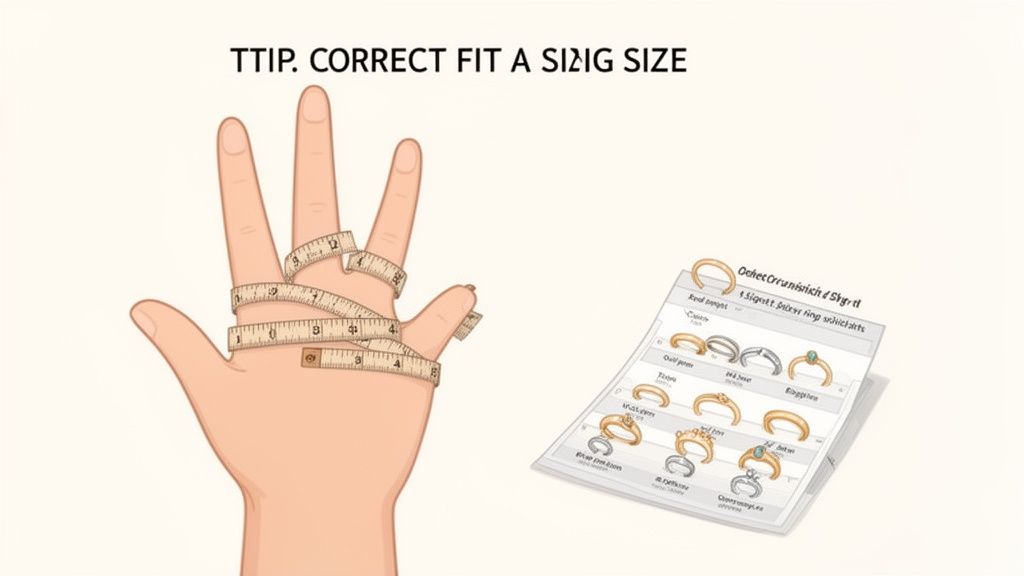
Let's talk about the single most important step in buying a smart ring: getting the size right. This isn't like buying a regular piece of jewelry. A poor fit isn't just uncomfortable—it can make every piece of data the ring collects, from sleep tracking to heart rate, completely unreliable.
For retailers, it's crucial to understand that sizing issues are the #1 reason for returns. Unlike a fashion ring that can be a little loose, a smart ring needs constant, gentle contact with the skin for its sensors to do their job. This guide will cover the essentials for finding a perfect fit that delivers both 24/7 comfort and peak performance.
Why You Must Use the Official Sizing Kit
I can't stress this enough: there is no substitute for the official sizing kit from the smart ring brand you're buying. Don't try to guess your size based on other rings you own, and please, put away the string and ruler. Smart ring sizes rarely line up perfectly with standard jewelry measurements.
These kits come with plastic replica rings designed to match the exact width and feel of the real thing. The best way to know for sure is to wear one of these testers for a full 24 hours. This lets you see how it feels during your daily routine and—most importantly—while you sleep.
Finding Your Perfect Fit
Your finger size isn't static. It actually changes throughout the day based on your body temperature, how much water you've had, and your activity level.
- Time Your Test: Fingers tend to be a bit smaller in the morning and swell as the day goes on. The ideal time to check the fit is midday when your body is most stable.
- The Comfort Check: A good fit is snug enough that it won't fly off when your hands are cold or wet, but you can still slide it over your knuckle with a little twist.
- The Overnight Test: This is the real decider. Wear the tester ring to bed. If you wake up with a deep indentation or your finger feels squeezed, it’s too tight.
Your perfect smart ring size is the one you completely forget you're wearing. It should never feel restrictive or spin freely on your finger.
Nailing the fit is everything for both your comfort and the ring's data accuracy. While this guide is specific to rings, you can find helpful resources that explain how to measure for a perfect fit for other wearables, as many of the core principles are the same.
The Best Finger for Your Smart Ring
For the best possible sensor accuracy, most brands will point you toward your index finger. The arteries there are often easier for the internal PPG sensors to get a clear reading from. Your middle and ring fingers are solid backup choices.
But at the end of the day, comfort is king. Pick the finger where the ring feels the most natural and unobtrusive. Just make sure it's a snug fit, no matter which finger you choose, to guarantee you're getting the best data possible.
Top Recommendations & Final Thoughts
Jumping into the world of smart rings can feel a bit like exploring new tech—exciting, but with a lot of questions. We've covered the comfort test, the features, and the top brands. So, which one is right for you?
- For the Data-Driven User Who Wants the Best App: The Oura Ring is still the top contender if you don't mind the monthly subscription. Its app is polished, insightful, and sets the standard for user experience.
- For the Smart Buyer Seeking Value Without Fees: RingConn is the clear winner. It offers robust health tracking and a comfortable fit with zero ongoing costs, making it a fantastic long-term investment.
- For the Biohacker and Early Adopter: Ultrahuman appeals to those who want the latest features and the deepest metabolic insights. Its lightweight design and commitment to innovation make it a compelling choice.
Ultimately, the smart ring's promise is simple: to provide powerful health insights without disrupting your life. By focusing on the 24/7 comfort test—how it feels when you sleep, work, and live—you can find a device that truly becomes an invisible, invaluable part of your daily routine.
Ready to explore the latest trends in fashion-forward accessories that capture the sleek, modern aesthetic of smart rings? At JewelryBuyDirect, we offer an extensive wholesale catalog of high-quality, affordable jewelry perfect for your business. Discover styles that resonate with today's tech-savvy consumer and enjoy factory-direct pricing to boost your margins.
Start sourcing your next bestsellers at JewelryBuyDirect today!