






Arthur Lynch | Sun Feb 08 2026
A Business Owner's Guide to Sourcing Inspired Designer Jewelry
Inspired designer jewelry offers a golden ticket for businesses: a way to stock high-demand, high-margin products that capture a luxury look without the luxury price tag. The strategy is to tap into a style or trend sparked by a famous fashion house, not to create illegal knockoffs. For your business, this means offering gorgeous, on-trend fashion accessories that your customers will love, all while operating ethically and legally.
Why Inspired Jewelry is a Smart Sourcing Strategy for Your Business
If you run a boutique, an e-commerce store, or even a dropshipping business, inspired designer jewelry isn't just another product category—it's a massive opportunity. You're tapping into a core consumer desire: to feel stylish and on-trend without spending a fortune. This isn't about fooling anyone; it's about giving your customers access to a look they admire at an affordable price point.
Think of it like runway fashion. A top designer showcases a new silhouette, and soon, other brands release their own takes on that style. They aren't stealing the designer's exact print or logo; they're participating in a trend. Sourcing inspired jewelry for your business works the exact same way.
Riding a Wave of Growth
The demand for these trend-driven pieces is real, and the numbers back it up. The global jewelry market, with a huge boost from inspired designs, was valued at around USD 348 billion in 2025 and is expected to rocket to USD 450 billion by 2030. What's fueling this? Mostly, it's the affordable, stylish pieces that let everyday shoppers participate in the latest trends. For a deeper dive, you can explore the full report on global jewelry trends.
This growth is a clear signal for any business that sources fashion accessories. By adding high-quality inspired pieces to your collection, you can:
- Attract a wider audience: Customers are actively searching online for affordable alternatives to luxury styles. Be the business they find.
- Boost your profit margins: Sourcing smart from wholesale platforms means you can price your items competitively and still achieve excellent returns on each sale.
- Stay relevant: Keeping your inventory fresh with the latest inspired styles turns your store into the go-to destination for what's trending right now.
Ultimately, sourcing inspired designer jewelry is a powerful business strategy. It lets you align your brand with major fashion movements, give customers the accessible style they crave, and build a profitable, sustainable business. The key is to source high-quality, affordable pieces, market them honestly, and always respect the line between inspiration and imitation.
Navigating the Legal Side of Sourcing Inspired Jewelry
Let’s talk about the legal tightrope for businesses sourcing designer-inspired jewelry. This isn't about finding loopholes; it’s about confidently building an inventory that nods to popular styles without stepping into illegal territory. Getting this right is crucial—it protects your brand, your finances, and your business's reputation.
The entire strategy hinges on one key difference: inspiration versus infringement. A famous brand’s interlocking logo or signature monogram is their protected intellectual property, and copying it is illegal. But a general style—like a minimalist gold hoop or a chunky rope chain—is considered a fashion trend, fair game for any business to interpret and sell.
Understanding Key Legal Concepts for Your Business
Before you start sourcing, you need a firm grasp of intellectual property protection. Knowing what makes a design original versus what makes it a copy is your first and best line of defense as a business owner.
In the world of fashion accessories, two concepts are absolutely critical:
- Trademark: This is the big one. It protects brand identifiers—names, logos, and unique symbols. Selling a piece with a copied logo or even a slightly tweaked brand name is a clear case of trademark infringement.
- Trade Dress: This is more subtle. It protects the total look and feel of a product when that aesthetic has become unmistakably linked to a specific brand. This can include the design itself and its packaging.
The safest approach for your business is to focus on the aesthetic, not the identity. Ask yourself: "Does this piece capture a popular style, or is it actively trying to pass itself off as another brand?" If it's the latter, do not add it to your inventory.
This decision tree can help you determine if this business model aligns with your goals.
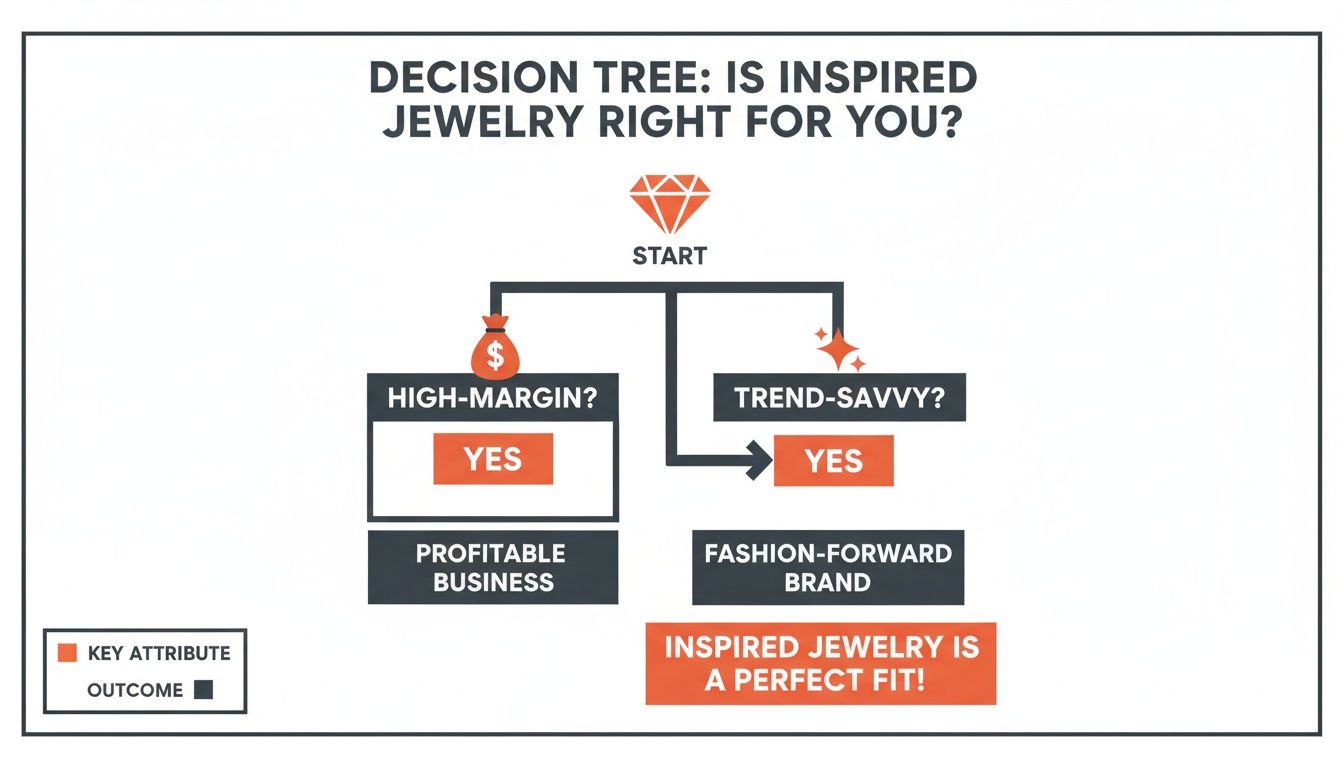
As the chart shows, success in this niche for your business comes down to finding high-margin opportunities and having a sharp eye for current trends.
Safe Sourcing Guidelines for Your Business
So, how do you find high-quality, affordable pieces that echo a popular look without crossing the line? It’s all about knowing which elements are safe to source and which are off-limits.
Safe Design Elements to Source for Your Inventory:
- General Motifs: Think classic themes. Clovers, snakes, or Roman numerals are part of the broader design lexicon and are generally safe to source.
- Color Palettes: Combining colors like turquoise and gold is a style choice, not something a brand can own.
- Popular Silhouettes: Widespread trends like the classic tennis bracelet or the paperclip chain are fair game for any business.
- Common Materials: No one can claim exclusive rights to using sterling silver, gold plating, or popular gemstones.
Protected Design Elements to Avoid Sourcing:
- Brand Names and Logos: This is non-negotiable. Never source or sell products using a brand's name, initials, or signature logo.
- Patented Mechanisms: Some high-end brands patent their unique clasps or other functional parts. Copying these can lead to serious legal issues for your business.
- Unique, Signature Designs: If a design is so distinct that it's instantly associated with one brand, it is likely protected by trade dress. Avoid sourcing these items.
Building your collection with these rules in mind is the only way to operate a safe and successful business. If you’re looking to create a more exclusive line, explore working with private label jewelry manufacturers. This route gives you more control over the final design, ensuring your pieces are both unique and legally sound.
Finding High-Quality and Affordable Jewelry Suppliers for Your Business
Sourcing is the engine that drives your entire business. When it comes to inspired designer jewelry, finding the right supply partners is the key to building a loyal customer base and ensuring profitability.
This isn't a race to the bottom to find the cheapest product. The real win for your business is discovering that sweet spot where affordable pricing meets high quality and reliability. Your goal is to build a supply chain you can count on, one that consistently delivers stylish, well-made fashion accessories your customers will love.
Think of your supplier as a true business partner. You need one who is transparent, efficient, and committed to quality. A great supplier relationship frees you up to focus on marketing and selling, confident that your products live up to your brand's promise. It takes some research upfront, but the payoff in long-term stability and profitability is massive.
Where to Look for Wholesale Jewelry and Fashion Accessory Suppliers
The hunt for the perfect supplier often starts online. While a simple search is a start, dedicated B2B platforms are where the real opportunities lie. These marketplaces are built specifically to connect business owners like you directly with factories and large-scale distributors.
Sourcing directly from platforms with strong ties to Asian manufacturing hubs can be a game-changer for your business. There's a reason this region is a powerhouse in jewelry production. Asia Pacific's dominance—projected to capture 39.23% of the global market at USD 95.24 billion in 2025—highlights the importance of inspired designs. By tapping into efficient supply chains in places like China and India, businesses can often cut sourcing costs by 15-30%, creating a serious competitive edge. You can dig into more stats about the global jewelry market on Fortune Business Insights.
A direct line to the source doesn't just cut costs for your business. It unlocks a much wider variety of styles and gives you first access to new, trending pieces, helping you stay nimble and responsive to market demands.
The Supplier Vetting Checklist for Your Business
Once you have a shortlist of potential suppliers, it’s time to vet them thoroughly. Don't be swayed by a slick website alone. A genuinely reliable partner will be transparent and have policies that support a growing business.
Use this checklist to evaluate every potential supplier before placing a large order.
-
Material Transparency: This is non-negotiable. A good supplier will state exactly what each piece is made of. Look for specifics like "925 sterling silver," "stainless steel," or "brass with 18k gold plating." Vague terms like "metal alloy" are a red flag, as they tell you nothing about durability or potential skin irritation.
-
Minimum Order Quantities (MOQs): For a small or growing business, high MOQs kill cash flow by tying up capital in inventory. Seek out suppliers with no or low MOQs. This flexibility lets you test new styles of inspired jewelry without a huge financial risk.
-
Shipping and Logistics: How fast and reliable is their shipping? Look for clear details on processing times, shipping costs, and carriers. Solid tracking is essential. Also, look for suppliers offering free shipping thresholds (like free shipping on orders over $150), as this can significantly boost your profit margins.
-
Return and Damage Policies: What is their process for handling issues? A trustworthy supplier will have a clear, fair return policy. Look for a reasonable window (like 7 days) and a simple process for reporting damaged items.
Key Indicators of a Trustworthy Supplier
Beyond that checklist, certain business practices are green flags that signal a great long-term partner.
- Independent Certifications: Check if their manufacturers hold certifications from respected third-party organizations like SGS. This shows a real commitment to quality control.
- Positive Customer Reviews and High Repeat Business: Look for reviews from other business owners. A high repeat customer rate—85% or more—is a powerful sign that the supplier consistently delivers.
- Regularly Updated Inventory: A great supplier adds new arrivals frequently, ideally daily. This lets you keep your collection fresh and exciting for your customers.
- Flexible Payment Options: Services like "buy now, pay later" can be a lifesaver for managing your business's cash flow, especially when stocking up for a new season.
By carefully evaluating each potential partner, you can build a resilient, profitable supply chain. For a deeper dive, check out our guide on finding the best wholesale jewelry suppliers for your business. This strategic approach is the foundation for scaling your business.
How to Assess Jewelry Quality for Your Business Inventory
You don't need to be a gemologist to tell the difference between a high-quality piece and one that will disappoint your customers. When sourcing inspired designer jewelry, developing a keen eye for detail is crucial for your business. It’s the best way to reduce returns, earn positive reviews, and build a brand known for beautiful, durable fashion accessories.
Think of yourself as your business's chief quality officer. When samples arrive, your job is to put them through simple, hands-on checks. This helps you weed out subpar products before they ever reach your inventory, saving your business time and money while protecting its reputation. By focusing on materials, construction, and finishing, you can evaluate jewelry like a seasoned professional.
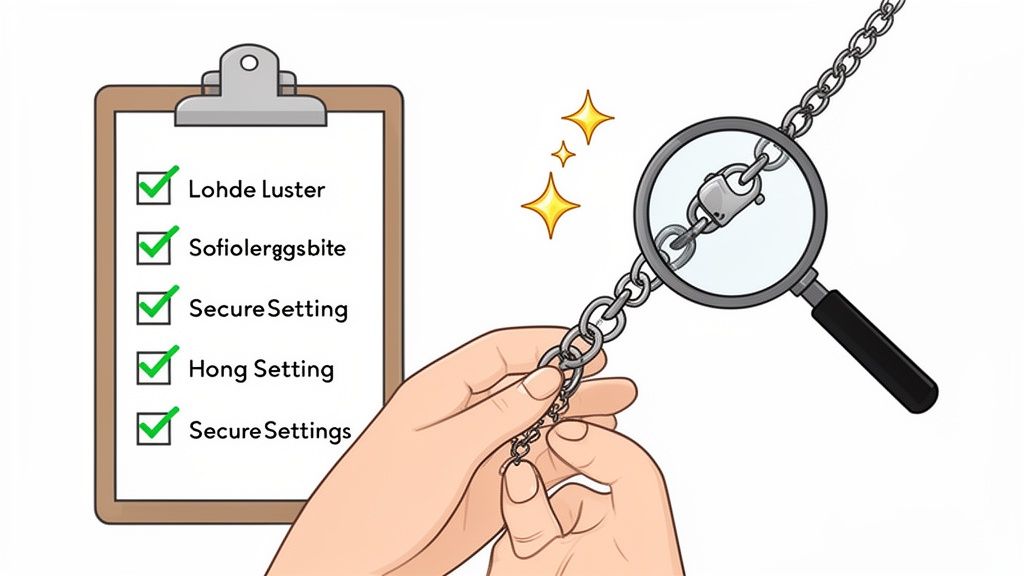
Start with the Foundation: Materials and Plating
The first clue to a piece's longevity is its base metal. Cheaper alloys with nickel or lead can tarnish quickly and cause skin irritation. Sourcing durable materials like stainless steel, titanium, and 925 sterling silver will provide a better customer experience and a longer product lifespan.
Next, examine the plating. A high-quality, affordable supplier will use a thicker layer of gold or rhodium, which gives the piece a rich, even luster.
Here’s a quick quality check for your business:
- Check for Uniformity: Hold the piece under bright light. The color and shine should be consistent. Watch out for dark spots, streaks, or faded areas, especially around joints.
- Examine the Finish: Do you see bubbling or flaking? High-quality plating should feel seamless, like it’s part of the metal itself.
- Feel the Weight: Quality base metals like stainless steel feel more substantial than cheap, lightweight alloys. If a piece feels surprisingly light for its size, it could be a red flag for quality.
Inspect the Construction and Hardware
Even a stunning design is worthless if it breaks. The small details—clasps, posts, and settings—are often the first to fail. This is where manufacturers may cut corners, so your inspection must be rigorous. A broken clasp is a fast track to a negative customer review.
A well-made piece of inspired designer jewelry should feel secure and thoughtfully assembled. Every functional part is an indicator of the manufacturer's commitment to quality.
A simple hands-on inspection can reveal almost everything you need to know about the overall craftsmanship.
Quick Visual and Physical Checks for Your Inventory:
- Clasps: Open and close the clasp several times. It should work smoothly without sticking or feeling flimsy. A lobster clasp should feel springy and snap back securely.
- Chain Links: Gently run the chain through your fingers. The links should feel smooth and uniform, not rough. They should be securely soldered or fully closed.
- Earring Posts: Are the posts straight and sturdy? They shouldn't bend easily. Ensure the earring backs fit snugly.
- Stone Settings: Check how stones are set. Prongs should be even and hold the stone securely. A gentle tap shouldn't produce any rattling, which indicates a loose stone.
By making these simple checks a routine part of your sourcing process, you empower your business to stock only high-quality, beautiful jewelry. This diligence is what separates successful retailers from the rest, ensuring your collection consistently impresses customers and builds a trustworthy brand.
Pricing and Marketing Your Collection for Maximum Profit
You’ve sourced incredible, high-quality inspired jewelry for your business. Now comes the crucial part: turning that inventory into sustainable profit. This requires a smart pricing strategy and a creative marketing approach that attracts customers without crossing legal or ethical lines.
Great pricing isn't just about marking up your cost. It’s about signaling value and style to your customer. Similarly, your marketing needs to weave a story around the aesthetic of your collection, making your business the go-to source for on-trend looks at an affordable price.
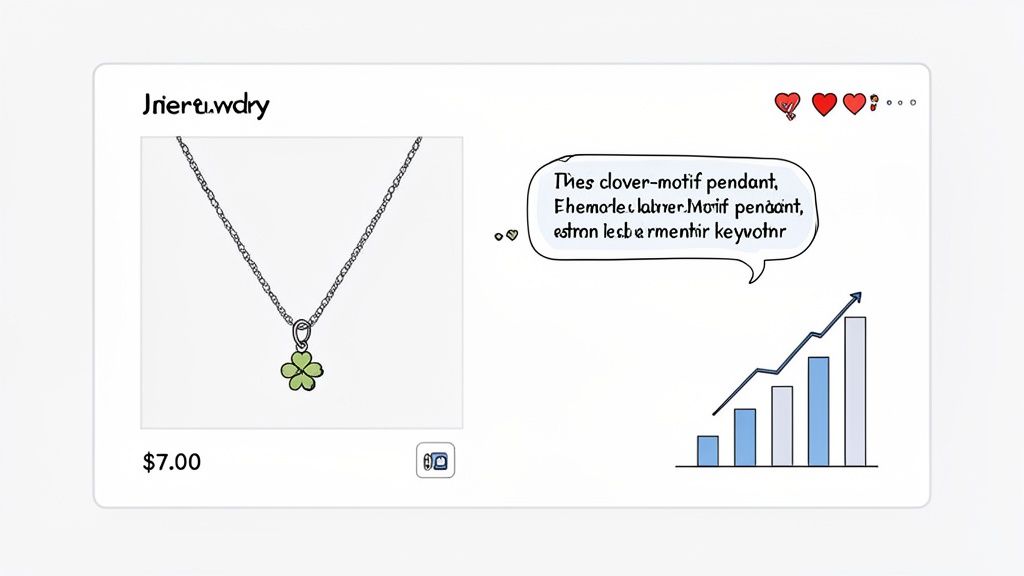
Setting Prices Based on Value and Quality
Instead of a simple cost-plus formula, price your inspired pieces based on their perceived value. The price should reflect not just your cost, but what the customer feels it's worth based on its quality, design, and trendiness. For example, a popular style crafted from 925 sterling silver can command a higher price than an identical design made from a basic metal alloy.
Consider these factors when setting prices for your business:
- Material Quality: Is it durable, hypoallergenic stainless steel or sterling silver? Price it higher than a standard alloy piece. Customers will pay more for higher quality.
- Design Intricacy: Pieces with detailed settings or complex elements require more work to create, adding to their perceived value.
- Trend Demand: If a particular style is trending, your business has more pricing power. High-demand items can support a healthier margin.
- Brand Positioning: If you are a curator of high-quality, stylish finds, your pricing should communicate that premium feel.
To dive deeper, our guide on how to price jewelry for your business is packed with detailed strategies for building a profitable pricing model.
Crafting Compelling and Ethical Product Descriptions
Your product descriptions are your 24/7 sales team. Focus on the beauty and style of the jewelry itself, using rich, descriptive language that sells the aesthetic, not an association. The goal is to shift the customer's focus from "who made it famous" to "how this piece will make me feel."
Using vivid, ethical keywords that describe design elements is a win-win. It keeps your business legally safe and dramatically improves your search engine optimization (SEO) by matching what customers are actually searching for.
The Golden Rule of Marketing Inspired Jewelry: Sell the style, not the brand. Your customer is buying a look, an aesthetic, a feeling. Your marketing language should focus entirely on that experience.
To get your business noticed online, understanding search engines is essential. Getting a handle on winning SEO for fashion brands can make all the difference.
Marketing Language Do's and Don'ts for Your Business
Navigating marketing requires finesse. Here’s a quick guide to keep your messaging sharp, effective, and ethical.
| Do's - Ethical and Effective Marketing | Don'ts - Risky and Ineffective Marketing |
|---|---|
| Do use descriptive keywords like "clover-motif pendant," "Roman numeral bangle," or "serpentine coil ring." | Don't use phrases like "Cartier-inspired" or "lookalike Van Cleef." |
| Do highlight quality materials, such as "crafted from durable stainless steel with 18k gold plating." | Don't ever use protected brand names or logos in your product titles, descriptions, or tags. |
| Do create social media content showing how to style the pieces with current fashion trends. | Don't make direct comparisons to luxury brand items in your advertising. |
| Do build a brand story around style, affordability, and being a trend-savvy destination. | Don't imply any association with the original designer or brand. |
Stick to these guidelines to build a powerful marketing engine that drives sales and builds a loyal customer base for your business. This honest, creative approach is the bedrock of long-term growth.
Turning Trends into a Lasting Business
Building a successful retail brand isn't about one-off sales; it's about creating a business that customers trust and return to. A thoughtfully sourced collection of high-quality, affordable designer-inspired jewelry can be your secret weapon for achieving this. By combining smart sourcing with a strong brand vision, you can transform popular, trend-driven pieces into a foundation for genuine customer loyalty and business growth.
The key to succeeding is agility. Fashion trends move at the speed of social media. This is why your supplier relationship is so critical. Working with a B2B platform that drops new arrivals daily gives your business the power to jump on emerging styles instantly, keeping your store’s collection fresh and relevant.
Embrace the Conscious Shopper
Modern customers want to know where their products come from and what they’re made of. This wave of conscious consumerism is a massive opportunity for your business to stand out. By deliberately sourcing from suppliers committed to ethical and sustainable production, you can build a brand people feel good about supporting.
Highlight these qualities in your marketing:
- Recycled Metals: Many suppliers now create stunning pieces from recycled sterling silver and stainless steel. This is a huge draw for eco-minded buyers.
- Ethical Sourcing: Partner with suppliers who are transparent about their materials. Knowing that components are sourced responsibly gives customers peace of mind.
This is a fundamental shift in consumer values. The market for luxury fine jewelry, which influences inspired designs, is expected to grow from USD 51.83 billion in 2025 to USD 92.83 billion by 2035. A key driver? A whopping 71% of millennial and Gen Z couples actively seek sustainable options. You can learn more about the luxury fine jewelry market trends on Future Market Insights.
When your products align with your customers' values, your business is selling more than just an accessory. You’re selling a story they want to be a part of, building a brand identity that’s about more than just good looks.
Evolve from Trend-Spotter to Trusted Source
Ultimately, designer-inspired jewelry is your foot in the door. A customer might find your business because you offer an affordable version of a trendy piece. But they will return because they remember the quality, the fair price, and the unique experience your store provides.
Each trendy piece is a stepping stone. It grabs attention and brings new customers to your business. As you consistently deliver on quality and value, you earn their trust. Soon, they'll return not just for a specific trend, but for the curated experience only your business can offer. That’s how you build a real, profitable business for the long haul.
Common Questions for Businesses Sourcing Inspired Jewelry
When sourcing designer-inspired jewelry for your business, a few questions always come up. Let's tackle them so you can stock high-quality, affordable fashion accessories with complete confidence.
Is It Legal for My Business to Sell Inspired Designer Jewelry?
Yes, it is legal—as long as you follow the rules. The key is that the jewelry must be inspired by a style, not a direct copy using trademarked names, logos, or patented designs.
It becomes illegal when it's a counterfeit intended to deceive a customer. For your business, it's about celebrating a trend versus committing fraud. Always stay on the right side of that line.
What Should My Business Look for to Guarantee Quality?
To ensure you're sourcing high-quality products, focus on three things. First, the material. Stick with durable options like sterling silver or stainless steel. Second, examine the plating. It should be thick and even to prevent tarnishing.
Finally, inspect the construction. Are stone settings secure? Do clasps feel sturdy? Is the finish smooth? Always get samples to evaluate in person before committing to a large inventory purchase for your business.
Here's a simple test for any business owner: handle the piece as a customer would. Open and close the clasp, run the chain through your fingers, and check the earring backs. If it feels cheap to you, it will to your customers too.
How Can I Market These Pieces Without Legal Risk for My Business?
The secret is to describe the style, not the brand. Use keywords your customers are already searching for, like "Italian horn necklace," "quatrefoil bracelet," or "serpent-motif ring."
Build your marketing around the aesthetic, the quality of the materials, and how the piece fits into current trends. This strategy positions your business as a style authority and keeps you legally safe.
What Kind of Profit Margin Can My Business Expect?
For inspired jewelry, profit margins can be excellent, typically ranging from 100% to 300% (a 2x to 4x markup). Your exact margin will depend on the piece's perceived value, material quality, and your brand's market positioning.
By sourcing directly from affordable wholesale suppliers, your business can often secure even better margins while offering competitive prices to your customers.
Ready to start sourcing high-quality, on-trend inspired jewelry for your business? At JewelryBuyDirect, we offer over 120,000 styles with no minimum orders and true factory-direct pricing. Start building your collection today.