






Arthur Lynch | Sun Feb 15 2026
Designer Inspired Jewelry: Sourcing High-Quality, Affordable Pieces for Your Business
For retailers and boutique owners, designer inspired jewelry is a strategic way to offer customers the high-end styles they crave at an accessible price point. The key to success lies in sourcing high-quality, affordable pieces that capture the vibe of a popular trend, allowing you to build a profitable and legally sound inventory for your business.
What Is Designer Inspired Jewelry for a Retail Business?
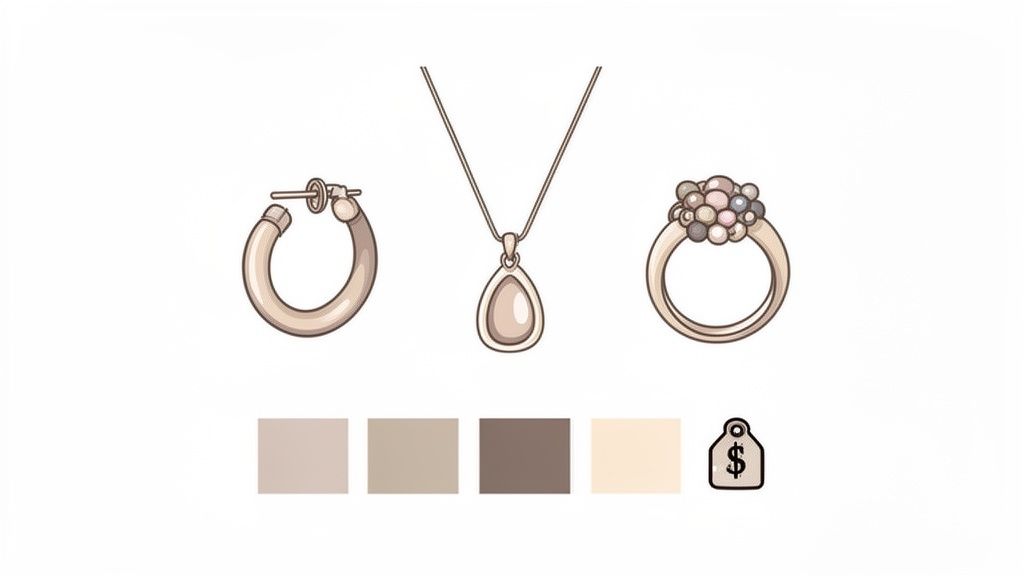
As a business owner, understanding the distinction between "inspired" and "counterfeit" is crucial for building a successful and ethical inventory. Designer inspired jewelry isn't trying to pass itself off as the original; it's about interpretation. It draws inspiration from recognizable motifs, shapes, and aesthetics—like the timeless clover motif or the edgy look of a thick chain necklace—and reimagines them into fresh, affordable pieces for your customers.
This approach allows your business to tap directly into massive market demand. Your customers see trending styles on celebrities and social media, but luxury price tags are often out of reach. By offering well-made, inspired alternatives, you fill a critical gap in the market, providing beautiful fashion accessories without the four or five-figure investment.
Trend Interpretation vs. Trademark Infringement
It is absolutely critical for your business to understand the line between "inspired" and "counterfeit." A counterfeit is an illegal replica that uses a brand's logo, name, or patented design. Selling counterfeit goods exposes your business to severe legal and financial penalties.
Legitimate designer inspired jewelry, on the other hand, focuses on the style. For instance, a handbag might capture the structured, elegant silhouette of a Birkin, which taps into a popular aesthetic. A bag with a fake Hermès logo stamped on it, however, is fraud.
By focusing on the inspiration behind a design—the colors, shapes, and overall feel—you can source pieces for your business that feel current and luxurious while building a reputable and legally sound brand.
A Smart Sourcing Strategy for Your Business
Incorporating these pieces into your collection is a savvy business move. It allows you to maintain a dynamic inventory, respond quickly to emerging trends, and appeal to a broader customer base.
You give your customers a low-risk way to experiment with new looks, which encourages repeat business. Understanding the differences between fine jewelry vs fashion jewelry is key to finding the right balance between price and quality for your inventory. Ultimately, this category is about delivering incredible style and value to your shoppers.
Staying Compliant When Sourcing Inspired Jewelry
Sourcing designer-inspired jewelry for your business requires a clear understanding of legal compliance to protect your brand and build customer trust. The goal is to find beautiful, affordable pieces that echo popular styles without infringing on intellectual property rights.
The critical distinction is between "inspired" and "infringing." Infringement, which can lead to legal action, occurs when a product violates a trademark or patent. Trademarks protect brand identifiers like logos and names, while patents protect unique, functional designs.
Trademark Infringement: The Biggest Risk to Your Business
Trademark issues are the most common pitfall for retailers. Selling an item that uses a protected logo—even a slightly altered one—is a direct violation of the law.
For example, a generic clover-motif necklace is perfectly acceptable as a classic symbol. However, if that necklace is stamped with a “VCA” logo or sold in packaging that mimics Van Cleef & Arpels, it crosses into illegal territory.
The same applies to a bracelet with a “CC” logo or a bag with a brand's signature monogram pattern. These are blatant infringements that can lead to significant fines and inventory seizure. The golden rule for your business is to avoid any protected brand names, logos, or signature marks on your products and in your marketing.
The core principle is simple: focus on the aesthetic, not the brand. Your product descriptions should highlight the style—"elegant gold-plated link bracelet"—rather than implying an association with a luxury name.
Understanding Patents and Copyright in Sourcing
Patents and copyrights protect unique designs. While a general style like a "tennis bracelet" is fair game, a highly specific, novel clasp mechanism or a truly original artistic design might be protected.
Fortunately for businesses sourcing fashion accessories, blatant patent infringement is less common, as most basic jewelry designs are not patentable.
When importing jewelry, it's also essential to understand your responsibilities as the Importer of Record to ensure all legal requirements are met. A reliable wholesale supplier should confirm that their products are free from intellectual property claims. As you source safe products, consider adding hypoallergenic items to your collection; our guide on what hypoallergenic jewelry is can be a major selling point.
Ultimately, compliant sourcing comes down to making informed decisions. By focusing on trends and aesthetics while strictly avoiding protected brand IP, you can build a stunning and profitable collection that enhances your business's reputation for style and integrity.
How to Spot Quality in Wholesale Jewelry for Your Business
In the world of designer-inspired jewelry, quality is what transforms a one-time purchase into a loyal customer for your business. You don't need to be a gemologist to source winning pieces; you just need to know what to look for in materials, craftsmanship, and finish when selecting inventory.
A great piece of jewelry starts with a solid base metal, which dictates its durability, weight, and suitability for sensitive skin. For sourcing affordable yet high-quality fashion accessories, two materials are standouts: stainless steel and 925 sterling silver.
Stainless steel, particularly 316L grade, is a top choice for retailers. It's durable, tarnish-resistant, and hypoallergenic, making it perfect for everyday wear. You can learn more about what 316L means on jewelry to understand why it’s a mark of quality. On the other hand, 925 sterling silver offers a classic, premium feel that customers recognize and value, though it requires more care to prevent tarnishing.
Evaluating Materials and Plating for Your Inventory
The plating is the first thing customers see—it’s the beautiful gold or silver finish that gives a piece its luxe look. Poor plating can chip, fade, or discolor skin, leading to negative reviews and damaging your brand's reputation.
For this reason, seek suppliers who use modern plating techniques like Physical Vapor Deposition (PVD). This process bonds a thin layer of metal (like gold) to the base in a vacuum, creating a finish that is far more durable and corrosion-resistant than traditional electroplating.
When inspecting samples, a well-made piece should feel substantial, not hollow or flimsy. The plating should be even, with no blotches or discoloration, especially around clasps and joints. These details signal a manufacturer committed to quality.
There is a huge market for quality. The U.S. jewelry market reached $78.40 billion in 2024, driven by consumers seeking beautiful, lasting pieces. As the market grows, so does customer savvy regarding quality.
This visual guide helps distinguish between good sourcing practices and red flags to avoid for your business.
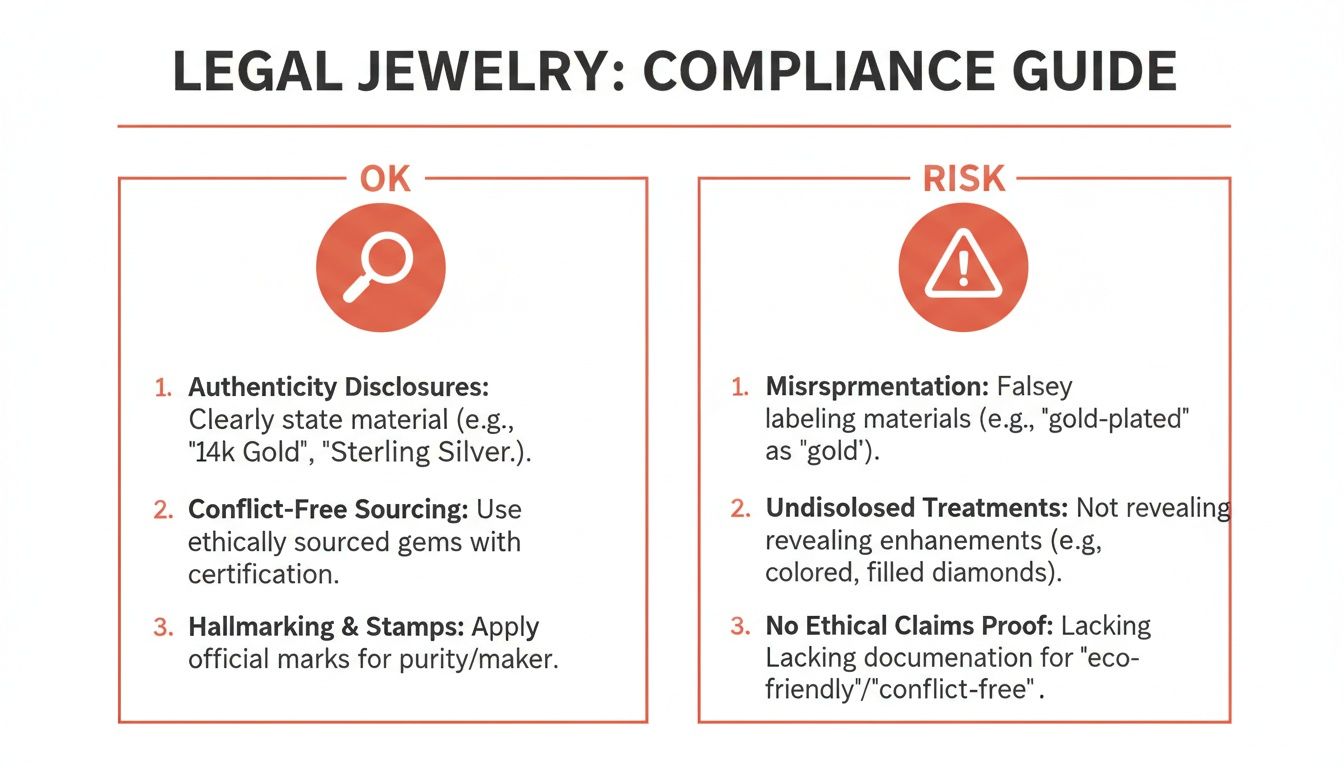
Focusing on authentic materials, transparent sourcing, and proper hallmarking builds trust. Cutting corners with misrepresentation directly risks your business's reputation.
To help you make informed sourcing decisions, here’s a quick-reference guide for evaluating common jewelry materials.
Jewelry Material Comparison for Retail Sourcing
| Material | Key Benefits for Retailers | Best For | Typical Wholesale Price Point |
|---|---|---|---|
| 316L Stainless Steel | Hypoallergenic, tarnish-proof, and extremely durable. A "set it and forget it" option for customers. | Everyday wear, waterproof designs, and modern, minimalist styles. | $ - $$ |
| 925 Sterling Silver | Classic, high-perceived value. Lightweight and versatile for intricate designs. | Timeless pieces, delicate necklaces, and gift-worthy items. | $$ - $$$ |
| Brass (Plated) | Very affordable, allowing for higher margins on trendy, fast-fashion pieces. | Statement jewelry, seasonal trends, and costume pieces. | $ |
| Titanium | Stronger and lighter than steel, completely hypoallergenic. Excellent for rings and men's jewelry. | Wedding bands, minimalist pieces, and customers with extreme metal sensitivities. | $$ - $$$ |
This table helps you match the right material to your target customer and price point, ensuring you build a collection that's not just beautiful, but also smart for your business.
A Practical Checklist for Evaluating Craftsmanship
Even the best materials are worthless without quality craftsmanship. When evaluating samples from a potential supplier, use this hands-on checklist:
- Stone Settings: Are stones secure? Gently push them with a fingernail; there should be no movement. Prongs should be smooth and uniform.
- Clasps and Closures: Operate the clasp multiple times. It should open and close smoothly and lock securely. A weak clasp is a common point of failure.
- Weight and Feel: The piece should have a satisfying weight. If it feels too light or plasticky, it likely has a cheap base metal and thin plating.
- Surface Finish: Inspect the entire surface for a consistent, polished finish. Look for pits, bumps, or scratches from production.
A final tip for your business: ask potential suppliers for third-party testing reports, such as from SGS. These certifications verify material composition and confirm the absence of harmful substances like lead and cadmium, providing an extra layer of confidence for you and a key selling point for your customers.
Sourcing Strategies to Maximize Your Business's Profit Margins
Finding the right supplier is the engine of profitability for your jewelry business. For designer inspired jewelry, smart sourcing allows you to offer on-trend pieces that sell quickly without sacrificing your margins. The objective is to build a supply chain that is both affordable and agile enough to keep up with the rapid pace of fashion.
One of the most effective strategies is to source directly from the factory or from a wholesale platform with direct factory connections. This approach eliminates middlemen—like distributors and importers—who each add their own markup. By sourcing closer to the origin, you significantly reduce your cost per piece.
Direct sourcing also provides a competitive advantage by giving you early access to new designs. You can stock the next trending item before it hits the mainstream market, positioning your business as a trendsetter.
Building an Agile and Low-Risk Inventory for Your Store
For any retail business, cash flow is king. Large bulk orders for untested styles can tie up capital and lead to dead stock. This is why a supplier's policy of no minimum order quantities (MOQs) is a game-changer for modern boutiques and e-commerce stores.
Flexibility in ordering allows you to experiment with new designer inspired jewelry without significant financial risk. You can order a small batch of a new earring style, assess customer response, and only commit to a larger order once you've confirmed it's a bestseller. This "test-and-invest" model keeps your inventory fresh, lean, and aligned with customer demand.
An ideal wholesale partner acts as an extension of your business, providing the tools to curate a unique collection without the pressure of high upfront costs or restrictive purchasing requirements.
Additionally, seek out suppliers with extensive and frequently updated catalogs. A large selection of SKUs gives you the creative freedom to curate a collection that is unique to your brand, helping you stand out from competitors.
The Bigger Picture: A Market Opportunity for Your Business
This agile sourcing approach is perfectly timed. The global jewelry market is booming, with significant growth in both luxury and accessible segments. According to Grand View Research, this expansion highlights a strong consumer appetite for stylish, affordable alternatives, particularly among online shoppers.
To capitalize on this market, build your sourcing strategy on these key pillars:
- Direct Factory Pricing: Partner with suppliers who eliminate unnecessary markups.
- No MOQs: Maintain the flexibility to test products with minimal capital investment.
- Extensive SKU Selection: Curate a unique collection that differentiates your brand.
- Rapid Trend Turnaround: Access and stock new styles as they emerge.
Focusing on these principles will help you build a more resilient and profitable business. You will be better equipped to manage cash flow, reduce the risk of unsold inventory, and consistently delight your customers with the fresh, exciting designer inspired jewelry they are looking for.
How to Market and Sell Your Jewelry Collection
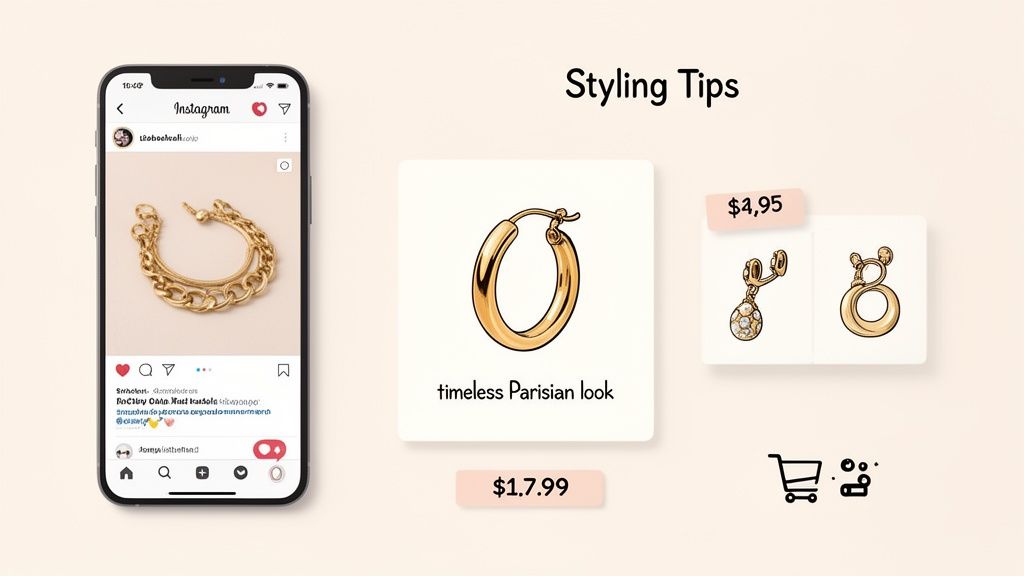
Sourcing high-quality pieces is the first step; effective marketing and merchandising are what drive sales and profits for your business. The key is to sell the feeling and the style of your designer-inspired jewelry, not a risky association with a luxury brand.
Your product descriptions are crucial. Instead of hinting at a famous designer, paint a vivid picture for your customer. Use language that evokes the desired aesthetic. For example, rather than saying a piece "looks like" a specific brand, try, "Achieve timeless Parisian chic with these elegant gold-plated hoops." This approach speaks to your customer's aspirations while keeping your business legally compliant.
This strategy is particularly effective for top-selling categories like necklaces and pendants, which make up an estimated 21.13% of the global jewelry market. By marketing the style and versatility of these items, your business can tap into a massive, engaged audience. For more details on market segments, you can review the global jewelry market share on mmrstatistics.com.
Creating an Irresistible Offer for Your Customers
How you present your collection can significantly impact sales. Bundling products is a proven retail strategy that increases average order value and provides customers with a coordinated look.
Consider these bundling ideas for your business:
- Themed Sets: Curate collections around a specific vibe, such as "The Minimalist Edit" or "The Vacation Glow Set," featuring a matching necklace, bracelet, and earrings.
- "Get the Look" Bundles: Recreate a popular celebrity or influencer look using your pieces and offer a small discount for purchasing the set.
- Gift-Ready Packages: Create beautifully packaged sets for birthdays, holidays, or other special occasions to simplify the gift-giving process for your customers.
Adding styling tips also provides incredible value and positions your brand as an authority. Create short videos or social media posts showing how to layer necklaces or stack bracelets. Demonstrating how a single piece can be styled for different occasions not only inspires purchases but also builds customer trust.
Showcasing Your Jewelry on Social Media
Visual platforms like Instagram and TikTok are essential for marketing jewelry. This is where you bring your brand's aesthetic to life. Move beyond static product shots on white backgrounds and show your jewelry in real-world contexts.
Your social media should tell a story. Showcase your pieces being worn at brunch, during a city adventure, or in a quiet moment with a coffee. This helps customers envision the jewelry as part of their own lives.
A powerful tool for building trust is incorporating authentic user-generated content (UGC) that converts into your feed. When potential buyers see real customers wearing and loving your jewelry, it serves as powerful social proof, fostering a sense of community and demonstrating that your products look as stunning in real life as they do in professional photos.
Top Questions About Sourcing Inspired Jewelry for Business
Entering the market for designer-inspired jewelry is a smart business move, but it often comes with questions. As a retailer, you need confidence in your sourcing decisions. This section provides clear, straightforward answers to the most common queries from business owners.
Use this as a quick-reference guide to address any uncertainties, so you can focus on curating a beautiful and profitable collection for your store.
Is Selling Inspired Jewelry Legal for My Business?
Yes, it is legal, provided you operate correctly. The critical legal boundary is trademark infringement. Your business must not use a brand's logos, names, or signature monograms on your jewelry, packaging, or in product descriptions.
Legitimate designer-inspired jewelry captures the essence of a trend—a specific silhouette, style, or motif. It does not attempt to deceive customers into believing they are purchasing an authentic luxury item. By focusing on selling the aesthetic rather than the brand name, your business will operate well within legal guidelines.
How Can I Ensure the Jewelry I Source Is High Quality?
High quality begins with a reliable supplier. Partner with a wholesaler who has direct factory relationships and prioritizes quality control. You should always be able to inquire about their base metals and plating processes.
Look for pieces made with durable materials like 316L stainless steel or 925 sterling silver. For the finish, ask about advanced plating methods like PVD, which provides a long-lasting, durable color.
The best suppliers are transparent about their materials and manufacturing. Always request samples to evaluate in person. Feel the weight, test the clasps, and inspect the stone settings before placing a large order for your business.
This hands-on inspection is the only way to ensure the products you sell align with your brand's reputation and will satisfy your customers.
What's the Best Way to Find a Reliable Supplier for My Business?
Finding a trustworthy supplier is foundational to your business's success. When searching for a B2B partner, prioritize platforms that offer a true competitive advantage.
Here’s what to look for in a wholesale supplier:
- Factory-Direct Pricing: This eliminates middlemen, increasing your profit margins.
- No Minimum Order Quantities (MOQs): This provides the flexibility to test new styles with minimal financial risk, keeping your inventory fresh.
- A Massive SKU Count: A diverse catalog allows you to curate a unique collection that sets your business apart.
- Quality Certifications: Look for suppliers who provide third-party testing reports (e.g., from SGS) to verify materials are safe and authentic.
When a supplier offers these benefits, it indicates they are structured to support the success of retail businesses like yours.
How Should I Price My Inspired Jewelry Collection?
Pricing involves balancing your costs, perceived value, and market rates. First, calculate your total cost per item, including shipping. The keystone markup (doubling your wholesale cost) is a common starting point, but it's just a guideline.
You can command a higher price for a piece made with stainless steel and PVD plating compared to a basic alloy item. Research your competitors' pricing, but ultimately, let your quality and brand story guide your strategy. The goal is to find the sweet spot of accessible luxury that offers fantastic value to your customers.
Ready to find a stunning collection of high-quality, affordable jewelry that will have your customers raving? Explore the extensive catalog at JewelryBuyDirect, where you get factory-direct pricing, no MOQs, and thousands of on-trend styles perfect for building your brand. Start curating your dream inventory by visiting JewelryBuyDirect.com.