






Arthur Lynch | Sat Oct 25 2025
A Practical Guide to Sourcing Wholesale Jewelry From Mexico
Bringing wholesale jewelry from Mexico into your collection is more than a smart business decision—it's an opportunity to offer customers authentic, handcrafted pieces that tell a compelling story. You're not just stocking inventory; you're curating artistry that resonates with consumers who value uniqueness, heritage, and quality. This guide provides actionable insights for navigating this vibrant market.
Why Source Wholesale Jewelry From Mexico
Sourcing jewelry from Mexico provides a distinct business advantage rooted in centuries of craftsmanship. Beyond cost-effectiveness, you're aligning your brand with a powerful legacy, particularly in silver artistry. This connection offers a rich, compelling narrative that modern shoppers actively seek, moving away from mass-produced trinkets toward pieces with genuine character and artisanal soul.
The Allure of Artisanal Craftsmanship
The prestige of Mexican jewelry stems from an unbroken lineage of artisans. Skills and techniques are passed down through generations, creating a living tradition of quality. The city of Taxco, for instance, isn't just a silver-working hub; it's the world's silver capital, where mastering sterling is deeply woven into the local culture.
This results in products that feel less like accessories and more like wearable art. Each piece often fuses pre-Hispanic designs, colonial-era flair, and contemporary style, creating a diverse inventory that appeals to a broad customer base.
Actionable Insight: Frame your marketing around this heritage. When you source from Mexico, you're not just buying products; you're curating a collection. You're giving customers a tangible piece of cultural history, an item with a soul that will always stand out.
Tapping into Global and Regional Trends
Mexican jewelry's signature aesthetic aligns perfectly with several major global fashion trends. The ongoing Western and bohemian revival in North America and Europe has fueled demand for the bold, rustic statement pieces that Mexican silversmiths are renowned for, such as chunky anchor chains and intricately stamped pendants.
Simultaneously, the global trend towards conscious consumerism makes Mexico an ideal sourcing location. Many suppliers are small family workshops or artisan cooperatives, offering a transparent and ethical supply chain. Highlighting that your brand supports local makers is a powerful selling point that builds customer loyalty.
Capitalize on these key global and regional trends:
- Layering and Stacking: Mexican artisans produce an abundance of minimalist silver rings, delicate beaded bracelets, and varied-length chains perfect for the global layering trend.
- Statement Pieces: Bold, oversized necklaces and earrings, often featuring large natural stones, cater to the maximalist aesthetic seen on runways worldwide.
- Authentic Cultural Motifs: Pieces inspired by Aztec, Mayan, or folk art offer unique visual stories that resonate with the growing consumer desire for authenticity and meaning.
- Sustainable & Ethical Fashion: The appeal of handcrafted goods made by real people in small workshops is undeniable. Use this story to connect with conscious consumers.
Sourcing wholesale jewelry from Mexico provides a competitive edge, allowing you to build an inventory that is not only profitable but also meaningful, on-trend, and connected to a world-renowned artistic heritage.
Getting to Know the Mexican Jewelry Scene
To successfully source wholesale jewelry from Mexico, you must understand its diverse landscape. The market isn't monolithic; it's a collection of specialized hubs, each with distinct strengths. Knowing which region excels in which product is key to making strategic buying decisions that align with your brand's vision.
The Mexican jewelry industry is a dynamic force, valued at USD 2.01 billion and projected to grow at a compound annual rate of 6.5% between 2025 and 2034. This growth trajectory is expected to elevate the market's value to USD 3.77 billion by 2034, solidifying Mexico's role as a global powerhouse. For detailed analysis, refer to this Mexico jewelry market report.
The Big Three: Where to Find What
Navigating the market starts with geography. Different cities are famous for specific materials and artistic traditions, making them go-to destinations for particular jewelry types.
- Taxco, Guerrero: The undisputed silver capital of Mexico. If sterling silver is your focus, Taxco is your destination. Artisans here are masters of their craft, producing everything from classic chains to bold, sculptural statement pieces.
- Guadalajara, Jalisco: The engine of Mexico's jewelry production. Known for its capacity to handle large-scale orders, especially in gold, Jalisco is responsible for 70% of all jewelry manufactured in Mexico. This is the hub for high-volume buys and commercially driven, modern designs.
- Mexico City: As the nation's capital, Mexico City is a melting pot of styles. Here you'll find high-end designers, contemporary artists, and suppliers offering a diverse mix of metals and materials. It's the ideal place to spot emerging trends and source avant-garde pieces.
Actionable Insight: Align your sourcing trips with these regional specialties. Sourcing silver directly from Taxco, gold from Guadalajara, and trend-forward designs from Mexico City means you're going straight to the experts, resulting in better quality, guaranteed authenticity, and more competitive pricing.
The Stars of the Show: Materials and Styles
Beyond geography, the jewelry itself reflects Mexico's rich natural resources and cultural heritage. The market is defined by several key categories that offer incredible variety.
Sterling Silver (.925)
Mexico's most famous export, known for world-class quality and craftsmanship. The range is vast, from sleek, minimalist designs to ornate pieces featuring intricate stamp work and cultural symbols. The ".925" stamp is your seal of authenticity.
Gold Jewelry
While silver often takes the spotlight, Mexico's gold market, centered in Guadalajara, is massive. Suppliers offer everything from delicate 10k gold chains to elaborate 14k and 18k pieces, often incorporating iconic religious symbols or classic filigree work.
Artisanal and Beaded Work
Beyond precious metals lies a world of breathtaking artisanal jewelry. Indigenous communities, such as the Huichol people, create vibrant, story-rich beaded pieces, while artisans in Chiapas are known for intricate designs using local amber. These items are conversation starters that appeal to customers seeking authentic, handmade goods.
By familiarizing yourself with these key cities and styles, you transition from a simple buyer to a skilled curator, ready to build a compelling collection of wholesale jewelry from Mexico.
How to Find and Vet Your Suppliers
You know what you're looking for and where to find it. The next crucial step is connecting with the creators. Finding the right wholesale supplier is the cornerstone of a successful jewelry business. This requires a strategic approach to building a reliable and trustworthy supply chain.
Think of it as building a team: you need skilled artisans, efficient manufacturers, and transparent partners. The goal is to find suppliers who not only produce beautiful jewelry but also align with your quality standards, production volume, and brand ethos.
The journey from discovering Mexico's rich artisan hubs to understanding the market's real value is a direct one.
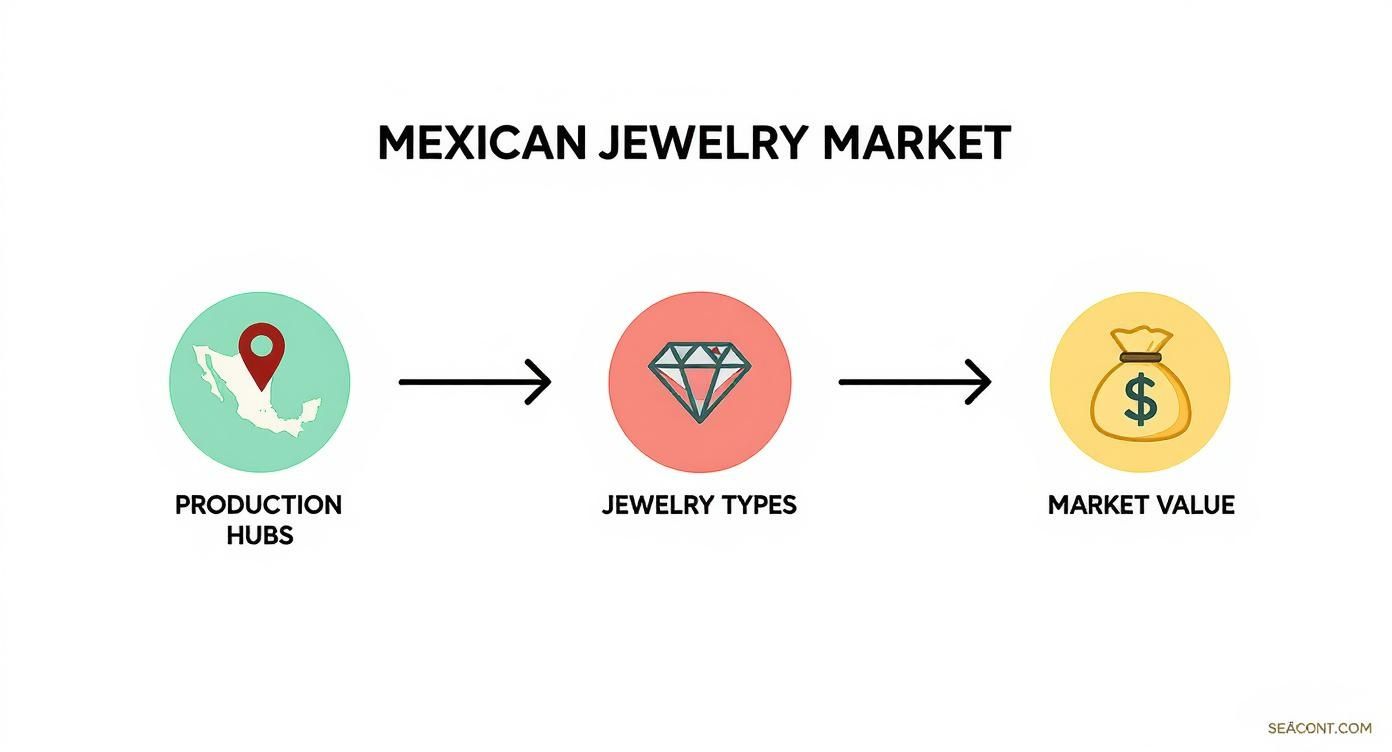
This visual roadmap shows you exactly how Mexico's regional craftsmanship connects to its growing power in the global jewelry world.
Mapping Out Your Sourcing Strategy
Your search for the perfect supplier should be multi-pronged. A hybrid approach allows you to cast a wide net while also exploring unique, niche opportunities. Diversifying your sourcing methods mitigates risk and helps you find partners that are a perfect fit for your brand.
Here are the three primary channels for discovering wholesale jewelry from Mexico:
- Hit the Major Trade Shows: Events like Expo Joya in Guadalajara are invaluable. They are industry hubs where you can meet hundreds of suppliers—from large manufacturers to small independent designers—all in one place. This allows for direct comparison and in-person quality assessment.
- Explore Online B2B Marketplaces: These digital platforms are an efficient way to browse numerous suppliers from your office. They are excellent for initial research, allowing you to shortlist potential partners based on their catalogs and price points before making contact.
- Go Direct to Artisan Cooperatives (Colectivos): For brands centered on unique, handcrafted pieces with a strong narrative, this is the ideal route. Connecting directly with artisan co-ops provides access to authentic, small-batch collections. It requires more effort but results in a highly differentiated product line.
Finding the right sourcing channel is the first step. To help you decide which path makes the most sense for your business, here's a quick breakdown of the pros and cons for each method.
Supplier Sourcing Method Comparison
| Sourcing Method | Pros | Cons | Best For |
|---|---|---|---|
| Trade Shows | Meet suppliers face-to-face, see product quality firsthand, network with industry insiders. | Requires travel budget and time investment, can be overwhelming for newcomers. | Buyers who want to build personal relationships and inspect products before committing. |
| Online B2B Marketplaces | Huge selection, convenient for initial research, easy to compare many suppliers quickly. | Difficult to verify quality online, risk of scams, less personal connection. | Businesses looking to cast a wide net for initial research and price comparison. |
| Artisan Cooperatives | Truly unique and authentic products, supports local communities, strong brand storytelling. | Harder to find, smaller production capacity, communication can sometimes be challenging. | Niche brands focused on ethical sourcing, handcrafted quality, and one-of-a-kind pieces. |
Each path offers a different set of advantages. Many successful businesses start with online research to get a feel for the market, then attend a trade show to solidify relationships and verify quality in person.
The Essential Vetting Checklist
Once you've shortlisted potential suppliers, the critical vetting process begins. This due diligence protects your investment and lays the foundation for a successful long-term partnership. Asking the right questions upfront prevents costly mistakes later.
Actionable Insight: Treat the supplier relationship as a partnership, not just a transaction. A transparent partner willing to answer your questions thoroughly is a strong indicator of a professional and reliable operation.
Use this checklist during your initial conversations:
- Minimum Order Quantities (MOQs): Ask, "What is your MOQ per style and for a total order?" This quickly determines if their business model aligns with yours.
- Production Capacity: Gauge their scalability. Ask, "What is your lead time for an order of 500 pieces?" This ensures they can support your growth.
- Authenticity and Hallmarks: For silver, ask: "Are all your sterling silver pieces stamped with the ‘.925’ hallmark?" A "yes" is non-negotiable for quality assurance.
- Sample Policy: Never place a bulk order without seeing a sample. Inquire about their policy; some charge a fee (often credited to your first order). Samples are your best tool for verifying craftsmanship. For more on this, explore the benefits of factory-direct jewelry sourcing.
- Payment Terms: Clarify their payment structure. A 30-50% deposit with the balance due before shipping is standard and safe. Be wary of suppliers demanding 100% upfront from a new client.
By systematically working through these channels and your vetting checklist, you build a strategic and reliable supply chain, allowing you to source authentic wholesale jewelry from Mexico with confidence.
Getting a Feel for Mexican Jewelry Design Trends
Stocking the right products is what separates a thriving business from a stagnant one. To successfully sell wholesale jewelry from Mexico, you must move beyond aesthetics and develop a keen sense of the design trends and cultural narratives that drive consumer desire.
Think of yourself as a curator. Your job is to blend timeless, story-rich Mexican designs with the clean, contemporary styles that today's global buyers are seeking. The magic lies in this balance.
The Enduring Power of Cultural Motifs
Some designs are timeless because they are deeply woven into Mexico's cultural identity. These motifs offer more than just beauty; they provide a connection to centuries of history and meaning.
- Frida Kahlo-Inspired Designs: Bold, colorful, and unapologetic. Pieces channeling this iconic artist often feature vibrant floral elements, sacred hearts (milagros), and chunky, statement forms that celebrate fearless individuality. This trend taps into global themes of maximalism and personal expression.
- Aztec and Mayan Symbolism: Ancient symbols like the Aztec sun stone, serpentine patterns, and sharp geometrics are perennially popular. These powerful icons tell stories of mythology and cosmology, resonating with consumers interested in history, spirituality, and unique design.
These classic motifs are the foundation of a strong Mexican jewelry collection, serving as evergreen best-sellers.
Keeping Your Finger on the Pulse of Modern Trends
While classics provide stability, staying attuned to modern trends keeps your inventory fresh and exciting. The Mexican jewelry scene is a dynamic fusion of heritage and global fashion. Monitoring these shifts gives you a significant competitive advantage.
The demand for Mexican jewelry is global and growing. Jewelry sales within Mexico surged by 11.5% in 2022, signaling strong domestic and international interest. This growth is underpinned by Mexico's status as a top global silver producer, with rings currently being the largest revenue-driving category. For a deeper look, you can find more insights on the Mexican jewelry market's growth on expertmarketresearch.com.
Actionable Insight: Strike a strategic balance in your inventory. By curating both timeless cultural symbols and contemporary looks, you broaden your appeal, attracting traditionalists who value heritage alongside modern minimalists seeking their next everyday piece.
Key Contemporary Trends to Watch
Staying ahead of the curve means identifying which trends are gaining momentum. Here are the key movements shaping the future of wholesale jewelry from Mexico that should be on your sourcing radar.
-
Elevated Minimalism: The global trend of "quiet luxury" translates into sleek, architectural silver pieces. Focus on sourcing clean-lined chokers, polished geometric earrings, and substantial yet simple cuffs. These versatile, high-quality items have massive commercial appeal for daily wear.
-
Color Through Natural Gemstones: While turquoise remains iconic, there is a growing global appetite for unique, colorful gemstones. Seek out designs featuring Mexican fire opals, rich amber from Chiapas, and vibrant agate. These stones add a unique pop of color and a strong sense of place, aligning with the trend of using natural, earthy materials.
-
The New Western: The global "cowboy core" trend has evolved. Look for modern interpretations of Western motifs: think sculptural bolo ties, abstract squash blossoms, and silver pieces with subtle, hand-stamped textures rather than overt Western symbols. This sophisticated take has broader appeal. For more ideas, explore our guide to the latest jewelry trends of 2024.
Getting Your Jewelry Home: A Guide to Shipping and Logistics
You've found a great supplier and selected a beautiful collection. Now, you need to get your products from Mexico to your warehouse efficiently and cost-effectively. A smart logistics strategy is just as crucial as your sourcing prowess.
Think of logistics as the final, critical bridge between your inventory and your customers. A well-laid plan ensures your wholesale jewelry from Mexico crosses that bridge smoothly, avoiding costly delays, unexpected fees, or damage.
First Things First: Nailing the Paperwork
Before anything ships, your documentation must be flawless. This isn't just bureaucracy; it's the key to preventing your shipment from getting stuck in customs, which can lead to expensive delays and storage fees.
For most major markets like the United States, trade agreements simplify the process. You will need:
- Commercial Invoice: Your primary document. It must clearly detail the buyer and seller, provide a precise description of each item, its quantity, value, and country of origin (Mexico).
- Packing List: A detailed inventory that specifies the contents of each box, helping customs officials quickly verify your shipment.
- Certificate of Origin: This document proves the jewelry was manufactured in Mexico and is essential for qualifying for reduced or zero import duties under agreements like the USMCA (United States-Mexico-Canada Agreement).
Actionable Insight: The golden rule of importing is 100% accuracy. A small error, like a vague product description, can trigger a full inspection and halt your shipment. Double-check every document with your supplier before shipping.
Choosing Your Shipping Partner
Your choice of shipping partner involves a trade-off between speed, cost, and security. The right choice depends on your order size and urgency.
International Couriers (DHL, FedEx, UPS)
For speed and convenience, couriers are unmatched. They offer door-to-door service, handle most customs clearance, and provide detailed tracking. This higher-cost option is best for small, high-value shipments or urgent sample orders.
Freight Forwarders
For bulk orders, freight forwarders are your best ally. They are logistics experts who consolidate shipments to secure better rates on air or sea freight. They navigate the complexities of international shipping, making them a cost-effective solution for growing businesses. As you scale, researching finding the most cost-effective parcel shipping methods is a worthwhile investment.
Don't Forget to Calculate Your Total Landed Cost
To ensure profitability, you must calculate your total landed cost—the true cost of getting a product from the factory to your warehouse. This goes far beyond the item's purchase price.
Your landed cost includes:
- Product Cost: The price paid to your supplier.
- Shipping Fees: The charge from your courier or freight forwarder.
- Customs Duties & Taxes: Tariffs levied by your country on imported goods.
- Insurance: Essential protection against damage or loss during transit.
- Brokerage Fees: The fee for a customs broker to manage the clearance process.
By managing paperwork diligently, choosing the right shipping partner, and understanding your total landed cost, you can master the logistics of importing wholesale jewelry from Mexico and build a predictable, profitable business.
Ensuring Quality Control and Authenticity

Your brand's reputation is built on the quality of your products. When sourcing wholesale jewelry from Mexico, a rigorous quality control (QC) process is non-negotiable. It protects your investment and ensures every piece you sell meets customer expectations.
A single batch of poorly finished silver or fake gemstones can destroy customer trust. Implementing a clear, consistent QC plan from the outset is fundamental to building a brand known for quality and authenticity.
Your Hands-On QC Checklist
Effective quality control requires knowing exactly what to look for. Establish a clear quality standard agreement with your supplier before placing a bulk order.
Here are the essentials to inspect:
- Authenticity Marks (Hallmarks): For sterling silver, the "925," "Sterling," or "MEXICO 925" stamp is mandatory. This mark guarantees the metal is 92.5% pure silver. Its absence is a major red flag.
- Craftsmanship and Finish: Examine the details closely. Look for weak solder joints, visible polishing marks, sharp edges, or insecure stone settings. A quality piece should feel substantial and appear flawless from all angles.
- Gemstone Quality: For pieces with stones like turquoise or amber, check for consistent color and clarity. Ensure they are set securely and free of cracks or significant flaws beyond the stone's natural characteristics.
Actionable Insight: Your most powerful QC tool is the sample order. It allows you to physically hold, wear, and test the jewelry against your standards before committing to a large inventory investment. Never skip this step; it is the ultimate test of a new supplier relationship.
Verifying Precious Metal Purity
While hallmarks are a crucial first step, understanding metal purity is essential, especially with gold. To price your products accurately and ensure their value, you must know the difference between 14k, 18k, and 24k gold.
This knowledge is vital when evaluating mixed-metal pieces or confirming a supplier's claims. For added certainty, it’s wise to learn how to test gold purity with simple, reliable methods.
By combining meticulous visual inspection with a solid understanding of material standards, you can source wholesale jewelry from Mexico with confidence, protecting your business and earning customer loyalty.
Frequently Asked Questions
Let's address some of the practical questions that arise when you begin sourcing jewelry from Mexico. Getting these details right will help you build your business efficiently and confidently.
This is your final checklist before you begin your sourcing journey.
What Are Typical Minimum Order Quantities in Mexico?
The Minimum Order Quantity (MOQ) varies significantly depending on the supplier type, so it should be one of your first questions.
Large-scale manufacturers, particularly in hubs like Guadalajara, are equipped for volume and typically require a minimum purchase between $500 to $2,000 USD. They cater to larger retailers with consistent bulk orders.
In contrast, smaller artisan workshops and colectivos, especially in towns like Taxco, offer greater flexibility. Their MOQs can be as low as $200 to $500 USD, providing an excellent entry point for new businesses or for testing new product lines without a large capital outlay.
What Is Required to Import Mexican Silver to the US?
A smooth import process hinges on accurate paperwork. To bring Mexican silver into the United States, you need several key documents for customs clearance.
- Commercial Invoice: The primary document listing the seller, buyer, detailed product descriptions, quantities, and total value.
- Packing List: A detailed inventory of each box's contents.
- Certificate of Origin: A critical document proving the jewelry was made in Mexico, which can qualify your shipment for duty-free status under the USMCA trade agreement.
Actionable Insight: For your first few shipments, engage a customs broker. These professionals are experts in import regulations and will ensure your shipment is correctly classified, valued, and cleared without costly delays, saving you time and money.
How Can I Safely Pay My Mexican Suppliers?
When working with new international suppliers, financial security is paramount. The golden rule is to never pay 100% upfront.
A standard and secure industry practice is to pay a 30-50% deposit to initiate production. The remaining balance is paid upon order completion, just before it ships. For smaller orders, platforms like PayPal offer good buyer protection. For larger transactions, international wire transfers are common. For significant, ongoing partnerships, a letter of credit provides the highest level of financial security for both parties.
Ready to start sourcing authentic, high-quality jewelry with total confidence? At JewelryBuyDirect, we bring the factory directly to you with over 120,000 styles, no minimum orders, and prices you won't find anywhere else. Explore our massive collection today and get a 15% discount on your first three orders. It’s time to build the inventory you’ve always dreamed of.