






Arthur Lynch | Tue Oct 28 2025
A Business Owner's Guide to Sourcing Wholesale 14K Gold Jewelry
When you're sourcing high-quality and affordable jewelry for your business, there's one option that consistently hits the mark for quality, durability, and value: wholesale 14k gold. It's the industry's sweet spot. It offers that perfect blend of pure gold's luxurious appeal and the everyday strength customers demand, making it the go-to choice for building a profitable and well-respected inventory of jewelry and fashion accessories.
Getting this balance right from the start is the first step to making smarter buying decisions for your business.
Why 14k Gold Is the Smart Choice for Your Business
The materials you choose are a direct reflection of your brand. When you stock 14k gold, you're telling your customers you value quality without making them overpay for something they can't wear every day. In today's market, where shoppers are savvy and do their homework, this choice is more important than ever for a successful jewelry business.
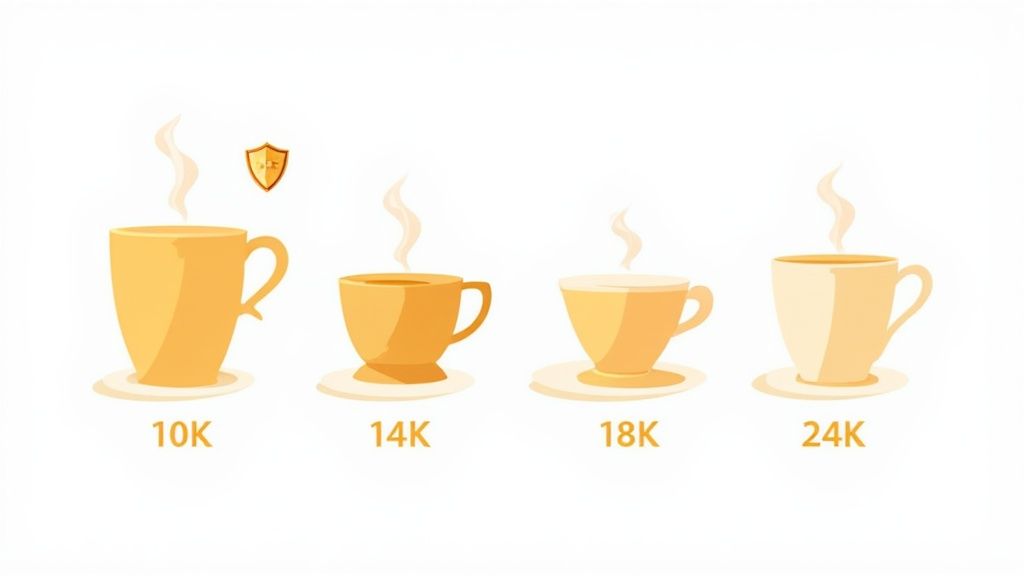
To really grasp why 14k gold works so well for sourcing, it helps to think of gold purity, or "karats," in terms of something familiar. Let's compare them to different strengths of coffee, where each one has a unique mix of rich flavor (purity) and a solid kick (durability).
- 24K Gold (The Espresso Shot): This is 99.9% pure gold. It’s intense, vibrant, and has that deep, buttery color everyone imagines. But just like a shot of pure espresso, it’s not for every situation. It's incredibly soft and scratches easily, making it impractical for jewelry that's meant to be lived in.
- 18K Gold (The Strong Americano): At 75% pure gold, 18k is still wonderfully rich in color but has other metals mixed in to give it some backbone. It's a fantastic luxury choice, but it can still pick up dents and dings from daily activities.
- 10K Gold (The Light Roast): Containing just 41.7% pure gold, this alloy is the toughest and most budget-friendly. The trade-off? The color is paler, and it has less of that inherent precious metal value.
And that brings us right back to the industry's workhorse, sitting perfectly in the middle.
The Unbeatable Balance of 14k Gold
14k gold is made of 58.3% pure gold blended with stronger alloys like copper, silver, and zinc. This recipe creates the perfect brew—it’s tough enough for constant wear while still glowing with that beautiful, rich gold hue customers love. It stands up to scratches, bending, and tarnishing much better than higher karats, which means happy customers and fewer returns for you.
As a business owner sourcing jewelry, this balance is your best friend. You aren't just buying a piece of metal; you're investing in high-quality inventory that promises longevity, holds its value, and connects with the widest range of customers seeking affordable luxury.
To help you quickly compare your options, here’s a simple reference guide.
Gold Karat Comparison for Wholesale Buyers
This table breaks down the most common gold karats, giving you an at-a-glance look at what each one offers your business.
| Karat | Gold Purity | Durability | Color Richness | Typical Use Case |
|---|---|---|---|---|
| 24K | 99.9% | Very Low | Deep, Rich Yellow | Investment Bullion, Ceremonial Pieces |
| 18K | 75% | Moderate | Rich Yellow | High-End Fine Jewelry, Engagement Rings |
| 14K | 58.3% | High | Bright, Classic Gold | Everyday Fine Jewelry, Chains, Rings |
| 10K | 41.7% | Very High | Pale Yellow | Durable Fashion Jewelry, Class Rings |
Ultimately, choosing 14k gold means you’re selecting the standard for quality jewelry that’s both beautiful and built to last.
This reliability is a huge reason why the fine jewelry segment—driven by accessible luxury like 14k gold—accounts for roughly 68% of the total market share. As the global demand for jewelry continues to climb, 14k gold remains front and center thanks to its winning combination of affordability and strength. You can find more insights about global jewelry trends and see how they might impact your business.
By choosing wholesale jewelry 14k gold, you're aligning your business with the proven industry standard. This knowledge gives you the confidence to explain your products' value, build trust with shoppers, and stock beautiful, high-quality fashion accessories that will become the foundation of your brand.
Mapping Out the Global Sourcing Landscape
Sourcing wholesale jewelry 14k gold isn't a one-size-fits-all game. It's more like picking a travel destination—where you go depends entirely on what you're after. Some regions are powerhouse manufacturers built for scale and affordability, while others are revered for their deep-rooted heritage in fine craftsmanship. Getting a handle on this global map is your first real step toward building a supply chain that actually works for your business, delivering on both high quality and affordable cost.
Think of it this way: the world's major jewelry hubs are like different kinds of workshops. On one hand, you have countries like China, which function like massive, humming factories. They are absolute masters of scalability, churning out huge volumes of trendy, well-priced fashion jewelry and accessories with impressive speed and consistency.
On the other hand, you have the European hubs, particularly places like Italy. These are much more like artisanal studios, where skills passed down through generations are poured into creating timeless, high-end pieces. Their focus is on masterful design and a flawless finish, and that level of artistry rightfully commands a higher price.
Key Manufacturing Hubs and Their Specialties
Knowing where to look is half the battle. You wouldn't go to a mass-production facility for a delicate, handcrafted heirloom, and you wouldn't ask a small artisan to produce thousands of trendy earrings on a tight deadline. Matching the source to your need for quality, affordability, and style is key.
Here’s a quick rundown of what the major players bring to the table:
- China and Southeast Asia: These regions are the undisputed champs of volume, variety, and affordability. If you need hot-ticket designs, fast turnarounds, and killer pricing for your fashion accessories business, this is your zone. To dig deeper, check out our guide on finding top-tier jewelry wholesalers in China.
- Europe (especially Italy and Turkey): Known for superior craftsmanship and classic, enduring designs. This is where you'll find those exceptional gold chains and intricate metalwork—high-quality pieces that feel like they have a story to tell.
- India: A true powerhouse in gemstone jewelry. Indian artisans offer incredible skill in setting stones and creating detailed, ornate metalwork, often with a unique cultural richness.
- United States: While not a mass-manufacturing giant, the U.S. holds its own in niche markets like custom design, high-end bridal jewelry, and brands that build their identity around made-in-the-USA quality.
Your sourcing strategy should be a mirror image of your brand. Are you a fast-fashion player chasing the next big trend with affordable accessories? Or are you a boutique curator of timeless, high-quality collections? The answer points you to the right corner of the globe.
Market Dynamics and Supply Chain Impact
The global jewelry market never sits still, and these shifts have a direct impact on your bottom line. The entire gold jewelry market is forecast to reach a staggering $130.3 billion by 2025, with the Asia-Pacific region leading the charge. In fact, that regional market is expected to jump from $51.403 billion in 2025 to $83.014 billion by 2033. You can explore more about this impressive market growth on cognitivemarketresearch.com.
What does this mean for you as a business owner? This explosive growth means Asian suppliers are constantly leveling up their tech and logistics to offer affordable quality. But it also means more competition for factory time. Juggling the moving parts of global sourcing requires a firm grasp of logistics, and this complete international supply chain management guide is a great resource for getting it right. Keeping your finger on the pulse of these trends helps you stay ahead of changes in pricing, lead times, and shipping, keeping your business sharp and competitive.
How to Find and Vet the Right Wholesale Suppliers
Sourcing wholesale jewelry 14k gold isn't just about finding a supplier; it's about finding a long-term partner. This relationship is the absolute backbone of your business. It directly impacts the quality of your products, the affordability of your inventory, and, ultimately, the reputation you build with your customers. A great partner delivers high-quality jewelry on time, communicates clearly, and helps your business grow.
You have to move beyond a simple Google search if you want to build a resilient supply chain. The real goal is to create a repeatable process for identifying, questioning, and validating potential suppliers to make sure they align with your standards for high quality, ethics, and affordable pricing. Think of it as protecting your investment and laying the groundwork for a profitable partnership.
Before you even start looking, you need to know who you are as a brand. Your core identity will point you toward the right type of supplier for your jewelry business.
This decision tree helps frame that first big choice: are you sourcing trendy, affordable fashion accessories or unique, artisanal pieces?
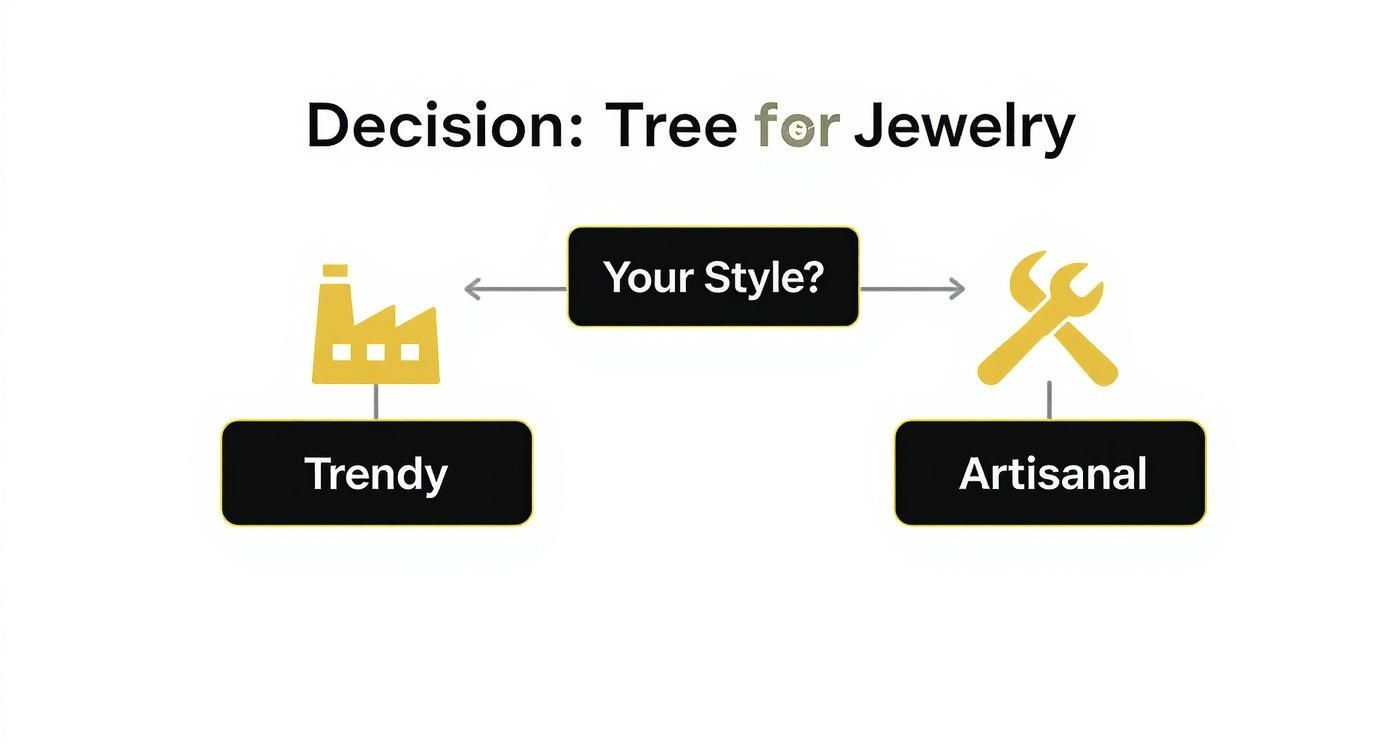
As the visual shows, a business that thrives on fast-moving, affordable fashion accessories will probably find a better match with large-scale factories. On the other hand, a brand built around one-of-a-kind, handcrafted designs should be looking for smaller, artisanal workshops.
Where to Discover Your Ideal Supplier
Finding the hidden gems in the wholesale world means knowing where to look. While search engines are an okay starting point, the truly valuable connections for sourcing high-quality, affordable jewelry are often made in more specialized places.
Here are the best avenues to explore:
- B2B Online Marketplaces: Platforms like Alibaba, JewelryBund, and Faire are built for this. They give you access to thousands of global suppliers, often with built-in buyer protections and reviews that do some of the initial vetting for you.
- Industry Trade Shows: Events like JCK Las Vegas or Vicenzaoro in Italy are pure gold. You get to meet suppliers face-to-face, hold the jewelry in your hands to feel the quality, and build personal relationships. Those connections can lead to much better terms and even exclusive designs down the road.
- Social Media and Professional Networks: Don't sleep on platforms like LinkedIn or even Instagram. Many manufacturers use them as a portfolio to showcase their work and new designs. Following industry hashtags and joining jewelry business groups can uncover suppliers you’d never find otherwise.
Vetting a supplier isn't a one-time checklist; it's an ongoing conversation. You need to confirm they can produce the quality you want, but also that they can do it reliably, ethically, and at a scale that keeps up with your business.
The Critical Vetting Checklist
Once you have a shortlist of potential suppliers, the real work begins. Asking sharp, specific questions is the only way to tell a reliable partner from a risky gamble. Use this checklist as your guide for those first conversations to ensure you source high-quality jewelry and fashion accessories. For an even deeper dive, check out our guide to vetting wholesale gold jewelry suppliers.
1. Production and Capacity
- What is your Minimum Order Quantity (MOQ)? Is there any flexibility for a first-time order?
- For an order of my typical size, what’s your average production lead time?
- Can you show me examples of custom work you’ve done for other brands?
2. Quality Control and Returns
- Walk me through your quality control process. How, specifically, do you test for gold purity?
- What’s your policy for damaged or defective items? How do you handle returns or credits?
- Can you provide a sample order before I place a bulk purchase? (This should be non-negotiable.)
3. Ethical Sourcing and Certifications
- Where do you source your gold and other raw materials from?
- Do you hold any certifications from industry bodies, like the Responsible Jewellery Council (RJC)?
- Can you provide documentation on your material sourcing and labor practices?
The global market for wholesale jewelry 14k gold in 2025 is a fascinating blend of traditional craft and modern efficiency. Suppliers in China, particularly in Guangdong province, are huge players thanks to their massive production capacity. To give you an idea, some of the larger factories there boast an annual output topping $100 million, serving businesses across the globe. For these operations, the ability to scale, customize, and meet international standards at an affordable price is everything.
Building a strong supply chain takes time and effort, but finding the right partner is one of the most powerful decisions you can make for your brand. It pays off in every single piece you sell.
Decoding Wholesale Prices and Protecting Your Margins
Profitability in the jewelry business isn't just about selling beautiful pieces—it's about mastering the numbers behind them. When you're sourcing wholesale jewelry 14k gold, getting a handle on the pricing structures is absolutely critical for protecting your margins and building a sustainable business. If you misread a quote or overlook a hidden cost, your potential earnings can vanish in an instant.
The world of wholesale gold pricing can feel a bit murky at first, but it really just boils down to two main models. Each one has its place, and knowing which one you're dealing with is the key to figuring out if you're getting a fair, affordable deal.
Pricing Models: Per Gram vs. Per Piece
The most straightforward model, especially for simple items like plain chains or basic bands, is pricing per gram. This method is refreshingly transparent because it’s tied directly to the daily market value of gold, often called the "spot price."
Think of it like buying produce at a farmer's market. You pay for the weight of the apples, not a set price for each one. It's the same idea here. Your cost is based on the actual weight of the 14k gold, plus a small premium the supplier adds to cover their manufacturing and overhead.
On the other hand, we have pricing per piece. This model is reserved for more intricate or design-heavy fashion accessories where the real value comes from the craftsmanship, not just the raw material. Imagine elaborate earrings with delicate filigree or rings with complex settings.
In this scenario, the labor is the biggest cost factor. The supplier calculates a fixed price that covers the designer's time, the complexity of the production process, and the other materials involved. This is less about the weight of the gold and more about the artistry that went into making it.
Understanding which pricing model is in play is your first step in any negotiation. For a simple gold chain, asking for the price per gram is standard. For a highly detailed fashion ring, the conversation will naturally be about a per-piece cost.
Calculating Your Total Landed Cost
That initial quote from your supplier? That's just the starting line. To really understand your costs and set retail prices that actually make you money, you have to calculate the total landed cost. This is the final, all-in price you pay to get a piece of jewelry from the factory floor into your inventory, ready to sell.
Forgetting these "extra" expenses is one of the most common pitfalls for new business owners. It creates a false sense of security about your profit margins and can lead to serious cash flow problems down the road.
Here’s a quick rundown of what you need to factor in:
- Product Cost: The base price from your supplier, whether it's per gram or per piece.
- Shipping Fees: The cost to get your order from their door to yours. This can vary wildly depending on the carrier, speed, and where it's coming from.
- Insurance: This is non-negotiable for high-value shipments like 14k gold. It protects your investment against loss, theft, or damage while it's in transit.
- Tariffs and Duties: These are taxes your country’s customs agency will charge on imported goods. The rates depend on the type of product and its country of origin.
When you add all these up, you get a crystal-clear picture of what you’ve truly invested in each item. This number becomes the bedrock of your entire retail pricing strategy. For more help, you can use our detailed guide to create a wholesale profit margin calculator tailored to your business. This data-driven approach will help you negotiate better, price smarter, and make sure every sale is a win for your bottom line.
Placing and Managing Orders Like a Pro
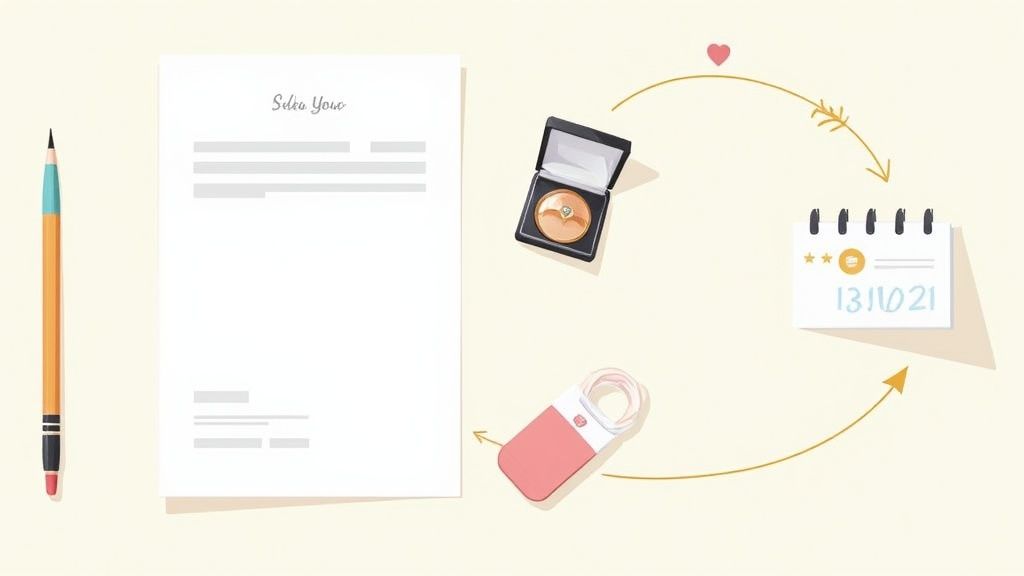
Okay, you've found a supplier you're excited about. The vetting process is done. Now the real work begins. Moving from strategy to execution is where many businesses stumble, but a solid ordering process is your best defense against costly mistakes, shipping delays, and inventory nightmares.
Think of it this way: you’re creating a precise blueprint for your jewelry. An architect would never let construction start without meticulously detailed plans, and you shouldn't place a bulk order without crystal-clear instructions. A well-managed process ensures the vision you have in your head is exactly what gets created, even if it's happening thousands of miles away.
Crafting the Perfect Purchase Order
A vague order is just asking for trouble. Your most important tool here is the purchase order (PO). This isn't just a simple request; it's a legally binding document that should leave zero room for interpretation. Get everything in writing to protect both yourself and your supplier.
A rock-solid PO for wholesale jewelry 14k gold absolutely must include:
- Itemized SKUs: List every single product with its unique identifier.
- Detailed Descriptions: Don't hold back. Note the style names, dimensions, weights, and any specific design elements.
- Material Specifications: Clearly state "14K Gold" or "585 Gold" and specify the exact color—yellow, white, or rose.
- Quantity and Price: Confirm the number of units for each SKU and lock in the agreed-upon price per piece or per gram.
- Delivery Timelines: Outline the expected date for production to be finished and the final shipment date.
This level of detail is what prevents common headaches, like receiving rose gold when you ordered yellow or discovering the dimensions are slightly off from the sample you approved.
The Non-Negotiable Sample Order
I can't stress this enough: before you commit thousands of dollars to a full production run, you must order a sample. It is the only way to physically inspect the quality, verify the material, and feel the craftsmanship. Photos can be edited and polished, but a physical sample tells the unvarnished truth.
Think of a sample as your quality insurance policy. The small upfront cost of ordering and testing one piece can save you from a catastrophic investment in inventory that doesn't meet your brand's standards.
When that sample arrives, put it through its paces. Check for the proper gold stamp ('14K' or '585'), verify its weight, test the clasp, and scrutinize the overall finish. This is your final quality control checkpoint before you give the green light.
Negotiating MOQs and Managing Inventory
Minimum Order Quantities (MOQs) often feel like a major hurdle, especially for new businesses. Suppliers set them to make sure a production run is profitable, but a high MOQ can easily tie up all your cash in slow-moving stock.
Don't be afraid to negotiate. Many suppliers are more flexible than you'd think, especially if it's your first order. They might agree to a lower MOQ as a trial run to build a relationship.
Once you’ve placed an order, you need a smart inventory strategy. You basically have two main paths:
- Holding Stock: This means you buy and store the inventory yourself. It gives you total control over fulfillment and shipping times, which is great for customer satisfaction. The downside? It requires a significant capital investment and you carry the risk of unsold products.
- Dropshipping: This model passes the shipping responsibility to your supplier, who sends items directly to your customer. It’s fantastic for cash flow because you don't buy anything until it's sold. However, you lose control over the customer experience and shipping quality—a major risk for high-value items like 14k gold.
For most businesses selling fine jewelry, a hybrid approach works best. Hold stock of your proven bestsellers and test new designs with smaller, more cautious orders. As your business grows, you'll need a system to manage the complexity. To keep your wholesale operations running smoothly, look into automated order processing to cut down on manual errors and free up your time. That kind of efficiency is what lets you scale without getting buried in logistics.
Common Questions About Sourcing 14K Gold Jewelry
When you're getting into the nitty-gritty of sourcing wholesale 14k gold jewelry, a lot of practical questions bubble to the surface. You can understand the big picture, but it’s often the small details that trip people up.
Let's cut through the noise and get straight to the answers you actually need. Think of this as a quick-reference guide for the real-world problems and questions that come up when you’re about to place a big order.
What Is the Difference Between Gold-Filled and Gold-Plated Jewelry?
This is a big one for businesses focused on affordability and quality. Getting it wrong can seriously impact your brand's reputation. Both use a layer of gold over a base metal, but how it's done—and how long it lasts—is night and day.
It's like comparing a high-quality wood veneer on a piece of furniture to a thin layer of contact paper. One is a durable, long-term solution, while the other is a temporary fix.
-
Gold-Plated Jewelry: Imagine a super-thin coat of gold, often just microns thick, electrically zapped onto a base metal like brass. It’s a fast, cheap way to get the look of gold, but it can wear off quickly, especially with daily use. This is best suited for trendy, fast-fashion pieces.
-
Gold-Filled Jewelry: This is a completely different animal. A thick, solid layer of 14k gold is permanently bonded to a base metal core using intense heat and pressure. To even be called "gold-filled," the item legally has to be at least 5% gold by weight. The result is a high-quality, affordable piece that looks, feels, and wears just like solid gold.
For a business that wants to be known for high-quality, affordable jewelry, gold-filled is the clear winner. It gives your customers that luxurious, lasting experience without the solid-gold price tag, meaning fewer complaints and more happy, repeat buyers.
How Do I Verify the Authenticity of 14K Gold?
Trust is good, but verification is just smart business. Especially when you're testing the waters with a new supplier, you need a solid process for making sure you’re getting exactly what you paid for.
The first step, always, is to order samples. Once they're in your hands, here’s what you do:
- Look for the Stamp: Every genuine piece should be stamped. You're looking for "14K," "14Kt," or the European mark "585," which signifies 58.3% pure gold content.
- Run an Acid Test: This is a classic, reliable method. You can buy a gold testing kit online, which involves making a tiny scratch on a testing stone and applying a drop of nitric acid. The way the metal streak reacts (or doesn't react) tells you its karat purity.
- Go to a Pro: For ultimate peace of mind, take your samples to a local, trusted jeweler. They have tools like an XRF spectrometer that can give you a precise breakdown of the metal composition without harming the piece.
Any supplier worth their salt will also provide documentation certifying the gold's purity. If they balk at sending samples or paperwork, that’s a huge red flag. Just walk away.
Are There Ethical Considerations When Sourcing Gold?
Absolutely, and they matter more than ever. Today’s shoppers care deeply about where their products come from, and ethical sourcing isn't just a buzzword—it's a core part of building a trustworthy brand.
When you're vetting potential suppliers, don't be shy about asking tough questions about their supply chain.
- Conflict-Free Gold: Make sure their gold isn't coming from mines that fund conflict. Look for suppliers who can prove they follow regulations designed to prevent this.
- Recycled Gold: This is a fantastic, sustainable option. Using recycled gold has a much smaller environmental footprint, and its quality and purity are identical to newly mined gold. It’s a win-win.
- Key Certifications: A big one to look for is the Responsible Jewellery Council (RJC) certification. The RJC is a major standards organization that audits its members to ensure they meet strict ethical and environmental criteria from the mine all the way to your door.
What Are Typical Payment Terms for International Orders?
Knowing how payments work is crucial for managing your cash flow, especially with international partners. You almost never pay the full amount upfront. The standard practice is a two-step payment process.
Typically, you'll pay a deposit of 30-50% before production starts. This gives the supplier the capital they need to buy the raw materials. The remaining balance is then due when your order is complete, right before it ships out.
Always, always get these terms in writing on a formal invoice before a single dollar leaves your account. For extra security with new suppliers, look into services like Alibaba Trade Assurance. It acts as an escrow service, holding your payment until you confirm you've received your order as expected. It's a simple layer of protection that can save you a world of headaches.
At JewelryBuyDirect, we remove the guesswork from sourcing by partnering with SGS-certified manufacturers who meet high standards for quality and ethics. With no MOQs and factory-direct pricing, you can build your inventory confidently. Discover over 120,000 on-trend styles and scale your business with a reliable partner. Explore our collections at https://www.jewelrybuydirect.com today.