





Arthur Lynch | Sun Sep 14 2025
Finding Wholesale Charms Suppliers for Your Business
Finding the right people to supply your wholesale charms is more than just a logistical step—it’s the very foundation of your jewelry business. These are the partners who will provide the raw materials that shape your brand's identity and ultimately delight your customers.
But before you even start Googling suppliers, you have to get a feel for the landscape. The charm market isn't a one-size-fits-all deal; it's a living, breathing ecosystem influenced by global fashion, a booming DIY culture, and the ever-fickle tastes of consumers.
Decoding the Modern Wholesale Charm Market
To find the perfect supplier, you first need to know what you’re looking for. The demand for charms is incredibly diverse, driven by some powerful trends that you can’t afford to ignore. Getting a handle on these forces will help you make smarter buying decisions, stock products people actually want, and find a wholesale partner who gets it.
At the heart of it all is personalization. Shoppers are over generic, mass-produced jewelry. They’re looking for pieces that tell their unique story, reflect their personality, or mark a meaningful moment in their lives.
This has thrown fuel on the fire of the DIY jewelry movement. We’re seeing a massive wave of independent creators and small businesses building entire brands by assembling unique pieces from individual components. Because of this, wholesale charms suppliers now cater not just to big retailers, but to an army of designers and hobbyists. This shift directly impacts the kinds of charms that are flying off the shelves.
Popular Materials and Emerging Styles
The materials you choose say everything about your jewelry's quality, price, and overall vibe. Suppliers typically offer a huge range, and each material serves a different corner of the market. An actionable strategy involves building a tiered inventory.
- Enamel and Resin: These are the MVPs of color and versatility. Enamel charms provide that classic, polished finish, while resin is a playground for creativity—think embedded glitter, dried flowers, or custom-molded shapes. Actionable Insight: Use these for trend-driven, seasonal collections with lower price points.
- Precious Metals: You can't go wrong with the classics. Sterling silver, gold-plated, and gold-filled charms are the backbone of higher-end jewelry lines. They communicate quality and longevity, which is exactly what customers looking to invest are after. Actionable Insight: Position these as your core, evergreen products for bridal, anniversary, or milestone jewelry.
- Stainless Steel: This is your workhorse material. It’s affordable, tough as nails, and hypoallergenic, making it perfect for trendy, everyday fashion jewelry that needs to withstand some wear and tear. Actionable Insight: Market this material to customers looking for durable, tarnish-resistant pieces for daily wear.
Style trends are just as important. Right now, global fashion is seeing a huge comeback of Y2K-inspired designs (butterflies and smiley faces are everywhere), a constant demand for celestial and nature themes, and a growing appreciation for sleek, minimalist geometric shapes. Regionally, you might see specific motifs trend; for instance, coastal grandmother aesthetics drive demand for seashell and pearl charms in North American markets, while bold, colorful enamel work is popular in Latin America. A great supplier is always one step ahead of these trends.
Actionable Insight: Your inventory needs diversity. Stock a mix of timeless symbols (hearts, crosses), globally trending motifs (celestial, Y2K), and customizable blanks (like engravable discs) to cater to a broader audience.
The charm market is constantly evolving, driven by broader trends in fashion, culture, and consumer behavior. Understanding these shifts is key to making sure your inventory stays fresh and relevant. The table below breaks down some of the biggest market drivers and shows how they translate directly into the types of charms you should be sourcing.
Global Jewelry Trends Shaping Charm Sourcing Decisions
| Market Trend | Impact on Charm Selection | Actionable Charm Examples |
|---|---|---|
| Hyper-Personalization | Customers want unique pieces that tell their story. This requires a supply of engravable, initial, and birthstone charms. | Engravable heart lockets, letter charms, zodiac sign pendants. |
| Dopamine Dressing & Y2K Revival | Fashion's obsession with bold, playful, and colorful motifs from the early 2000s is strong globally, especially in Europe and North America. | Brightly colored enamel butterflies, smiley faces, gummy bear charms. |
| Wellness & Spirituality | A growing global interest in mindfulness and holistic health has increased demand for symbolic jewelry. | Hamsa hands, evil eyes (especially in Mediterranean & Middle Eastern markets), crystals, lotus flowers, chakra symbols. |
| Sustainable & Ethical Sourcing | Eco-conscious consumers are seeking products made from recycled or responsibly sourced materials. This is a key purchasing driver in Western Europe. | Charms made from recycled sterling silver, lab-grown gemstones, or certified conflict-free metals. |
| Quiet Luxury & Minimalism | The "less is more" aesthetic continues to thrive, driving demand for simple, elegant, and geometric designs for layering. | Small, polished geometric shapes (circles, bars), tiny pearl drops, bezel-set gemstone charms. |
Staying on top of these trends isn't just about being fashionable; it's about connecting with your customers on a deeper level. By aligning your charm selection with these powerful market forces, you position your business for growth and build a brand that resonates.
The Global Supply Chain and Digital Revolution
The engine powering the wholesale charm industry is largely based in the Asia Pacific region, with China as the undisputed manufacturing heavyweight. This is thanks to their deep-rooted production infrastructure and highly competitive manufacturing costs. But what's really changed the game is how businesses like yours can now connect with these global suppliers.
Massive B2B marketplaces like Alibaba have torn down the old barriers. A small business owner in Ohio can now source charms directly from a factory in Guangdong with just a few clicks. While this direct access has opened up a world of opportunity, it also brings new challenges, especially when it comes to quality control and clear communication.
At the same time, the insatiable demand for unique, customizable items is fueling explosive growth in specific material niches. Take the resin jewelry market, for example. It's projected to see a compound annual growth rate (CAGR) of 16.55% and hit an estimated $15.19 billion by 2033. This boom is all about resin’s incredible adaptability for creating everything from bespoke pendants to seasonal keychains, perfectly mirroring the global consumer's desire for personalized, and often eco-friendly, products. You can explore more data on this trend to see how it might fit into your own sourcing strategy.
Where to Discover Reliable Wholesale Charms Suppliers
Finding the right wholesale partner isn't something you can wait around for—it requires an active search. Your journey starts with knowing where to look, whether that means diving into massive online B2B platforms or walking the aisles of a packed trade show. Honestly, the best approach is usually a mix of both, which helps you build a solid, well-rounded list of potential wholesale charms suppliers.
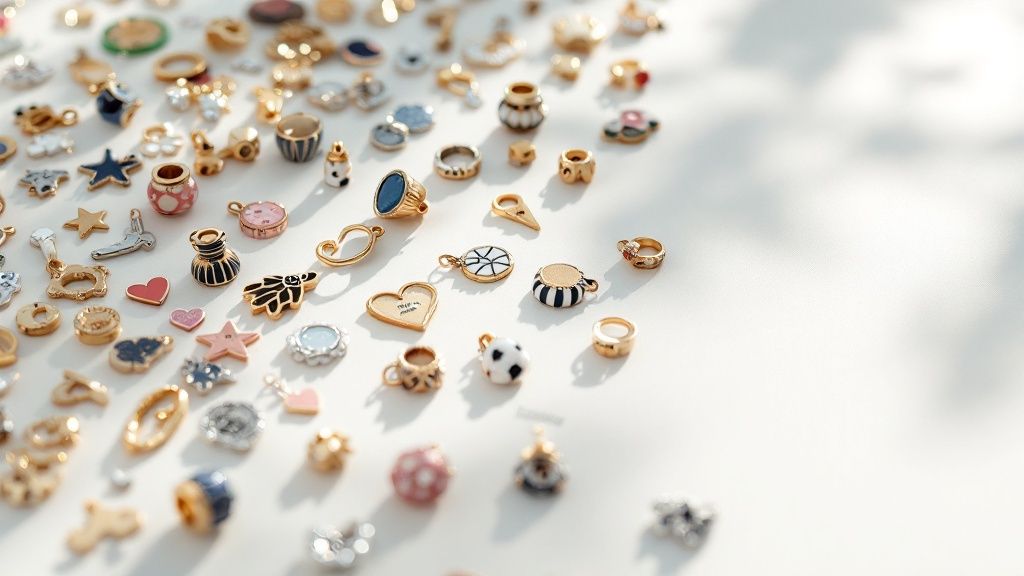
The quickest way to get started is online, where you have instant access to a global network of manufacturers. Huge B2B platforms are your main entry point for sourcing directly from factories, particularly those in major manufacturing hubs.
Navigating Global B2B Marketplaces
When it comes to sourcing directly from the factory floor, platforms like Alibaba and Made-in-China.com are the undisputed giants. They connect you with thousands of manufacturers, offering an almost endless selection at incredibly competitive prices. This is your go-to for volume and cost-efficiency.
But let's be real, the sheer scale can be overwhelming. The trick is to get smart with their filters. Instead of a generic search like "enamel charms," get specific. Try long-tail searches like "18k gold plated butterfly enamel charm" or "hypoallergenic stainless steel initial charms." This simple tweak weeds out irrelevant results and puts you in front of specialists.
As you browse, here's an actionable checklist to vet suppliers:
- Years in Business: A supplier with 5+ years on the platform is a good sign of stability and experience.
- Response Rate: Look for a response rate above 90%. This indicates a partner who communicates effectively.
- Verified Status: Prioritize suppliers marked as a "Gold Supplier" or "Verified Supplier," as they've undergone third-party vetting. Look for on-site inspection videos.
These platforms are fantastic, but working with international vendors has its own set of rules. For a deeper dive, check out our guide on finding https://www.jewelrybuydirect.com/articles/wholesalers-in-china-for-jewelry, which is packed with insights for navigating that specific market.
Exploring Curated Artisan Platforms
If your brand is all about unique, handcrafted, or small-batch charms, then curated marketplaces offer a completely different vibe. Think platforms like Faire or the wholesale section of Etsy. Here, you connect with independent makers and smaller brands.
The charms you'll find here often have a distinct, artisanal quality that can really make your jewelry line stand out. You’ll stumble upon designs you won't see anywhere else, tapping directly into niche craft trends. While the cost-per-unit is often higher, the lower Minimum Order Quantities (MOQs) are a huge plus for new businesses or for anyone testing out a new product line.
Actionable Insight: Use these platforms for unique "hero" pieces in your collection. The higher cost is justified by the exclusivity and story behind the charm, which you can use in your marketing to command a higher retail price.
The Power of In-Person Connections at Trade Shows
As efficient as online sourcing is, nothing beats a face-to-face conversation. Industry trade shows are priceless for building genuine, lasting relationships with suppliers. Attending events like JCK Las Vegas or the Hong Kong International Jewellery Show lets you do things you just can't do from behind a screen.
At a trade show, you can physically inspect the quality. You can feel the weight of a charm, see the finish up close, and spot imperfections instantly. It's also a chance to have real conversations with company reps, ask detailed questions about their production process, and even negotiate terms on the spot. That direct engagement builds a level of trust that’s tough to replicate over email.
To get the most out of a trade show, you need a game plan:
- Scout the Exhibitor List: Before you go, study the vendor list and highlight the suppliers that match your brand’s style and material needs.
- Schedule Appointments: Don't just show up. Reach out to your top-choice suppliers a few weeks in advance to schedule a quick meeting. This guarantees you’ll get their undivided attention.
- Bring Your Designs: If you have sketches or ideas for custom pieces, bring them. A trade show is the perfect place to talk about custom manufacturing.
By combining the massive reach of global platforms with the personal connections you forge at trade shows, you create a much stronger, multi-channel sourcing strategy. This approach helps you find not just any supplier, but the right partners to help your business thrive.
Analyzing Product Listings to Pinpoint Winning Charms
Once you have a shortlist of potential wholesale charms suppliers, the real work begins. It’s one thing to find a supplier; it’s another to know which of their thousands of charms will actually sell. This is where you put on your detective hat. Learning to dissect a product listing is a skill that will make or break your inventory decisions.
Think of a listing as more than just a picture and a price tag. It’s a treasure map filled with clues about the charm’s performance, quality, and the supplier's reliability. By getting good at reading these clues, you can build a collection that doesn't just sit there looking pretty—it flies off the shelves.
Decoding Sales Data and Reorder Rates
The clearest sign of a charm's popularity is its sales history. Many B2B platforms give you a peek into sales volume and reorder rates, and these numbers are gold. They tell you what's hot and what's consistent.
- Sales Volume: This is the obvious one—how many units have been sold. A high number suggests broad appeal, but always check it against how long the product has been listed. A brand-new item won't have the same history as a classic.
- Reorder Rate: This is the more telling metric. A high reorder rate means other businesses are coming back for more. That’s a huge vote of confidence. It signals strong customer satisfaction and proves the charm isn’t just a fleeting fad.
Let's look at some real-world examples. Data from major wholesale platforms shows that certain gold and stainless steel charms from Italy have hit sales volumes near 19,700 units with a solid 29.8% reorder rate. At the same time, some 18K gold-filled zircon charms have sold over 9,400 units but boast an even better reorder rate of 33.1%. These numbers don't lie; they confirm that quality, classic materials are always a safe bet.
Spotting Material and Thematic Trends
Beyond the raw data, the listings themselves tell a story about what’s clicking with customers right now. Look at a supplier’s bestseller list. What materials and themes pop up again and again? You'll start to see patterns that reflect global and regional fashion movements.
This is where you connect the dots between big-picture trends and what you stock on your own shelves.
- Durable Metals: Stainless steel and gold-filled charms are the bread and butter of the fashion jewelry world. They last, they look expensive (without the price tag), and customers trust them. Actionable Insight: Build your core, non-seasonal collections around these materials for consistent sales.
- Thematic Niches: Never, ever underestimate the power of a niche. The same data reveals that cartoon and sports-themed charms can have 40% higher reorder rates than generic designs. Why? Because they tap into passionate communities. Actionable Insight: Identify two or three niche communities that align with your brand (e.g., book lovers, gamers, specific dog breeds) and source charms specifically for them.
Tapping into a niche isn't just about selling a product; it's about connecting with a community. Whether it's a specific hobby, a pop culture fandom, or a regional sports team, themed charms build loyalty and drive sales.
Understanding these patterns lets you build a smarter, more targeted inventory. Anchor your offerings with proven sellers like gold-plated staples, then get creative with higher-margin, trend-driven pieces that give your brand a unique voice. Staying on top of what's next is key, and you can get a head start by checking out our guide to upcoming jewelry trends.
https://www.jewelrybuydirect.com/articles/jewelry-trends-2024
Uncovering Niche Opportunities and Pricing Structures
Stocking popular items is safe, but the real money is often in the niches that are just starting to bubble up. Scour supplier listings for charms that are gaining momentum but aren’t everywhere yet. Think about what’s happening in pop culture—a new movie, a viral social media challenge, a seasonal event.
Look for suppliers with a deep and varied catalog. Do they carry charms for gardeners, gamers, or bakers? Do they offer motifs celebrating different professions or cultural holidays? Finding these unique pieces is how you attract a loyal following that isn’t being served by the big-box retailers.
Finally, get granular with the pricing. Nearly every wholesale charms supplier uses a tiered pricing model—the more you buy, the cheaper each unit gets. Analyze these price breaks. A charm that costs you $0.15 per piece but can be part of a $25 bracelet offers a much healthier margin than a $2 charm that goes into a $30 necklace. Your goal is to find that perfect balance of quality, uniqueness, and profit potential.
Your Practical Guide to Vetting Potential Suppliers
So, you’ve done your research and have a shortlist of wholesale charms suppliers. This next part is where the real work begins: vetting. It’s where you move past the slick product photos and dig into whether a supplier can actually deliver the quality and reliability your business needs to thrive. Think of it as an audition—only the best partners will make the final cut.
This isn't just a quick check. It’s a deep dive to make sure their promises hold up under scrutiny. You need a solid game plan to check everything from the physical quality of the charms to their business ethics. Getting this right saves you from costly headaches down the road and helps you build a supply chain you can truly count on.
Get Your Hands on Samples
First rule of sourcing: never, ever place a bulk order without seeing and touching the product yourself. A supplier who is confident in their quality will have no problem sending samples. When they arrive, it's time to play detective.
Be meticulous with your inspection. Here’s an actionable checklist for sample review:
- Material Authenticity: Does that "sterling silver" actually look and feel like it? Is the gold plating rich and consistent, or does it look thin and cheap? A simple magnet test can quickly tell you if something is stainless steel or not.
- Finish and Durability: Get up close. Look for tiny bubbles in enamel, scratches, or uneven plating. Vigorously rub a plated charm with a soft cloth. If the finish starts to flake, that's a huge red flag. Quality plating should hold up.
- Consistency is Key: If you ordered several of the same charm, lay them all out. Are they identical? Tiny variations are expected in handmade pieces, but mass-produced charms should be uniform in size, color, and weight. Inconsistency points to sloppy quality control.
This visual breakdown shows how to approach a sample evaluation from start to finish.
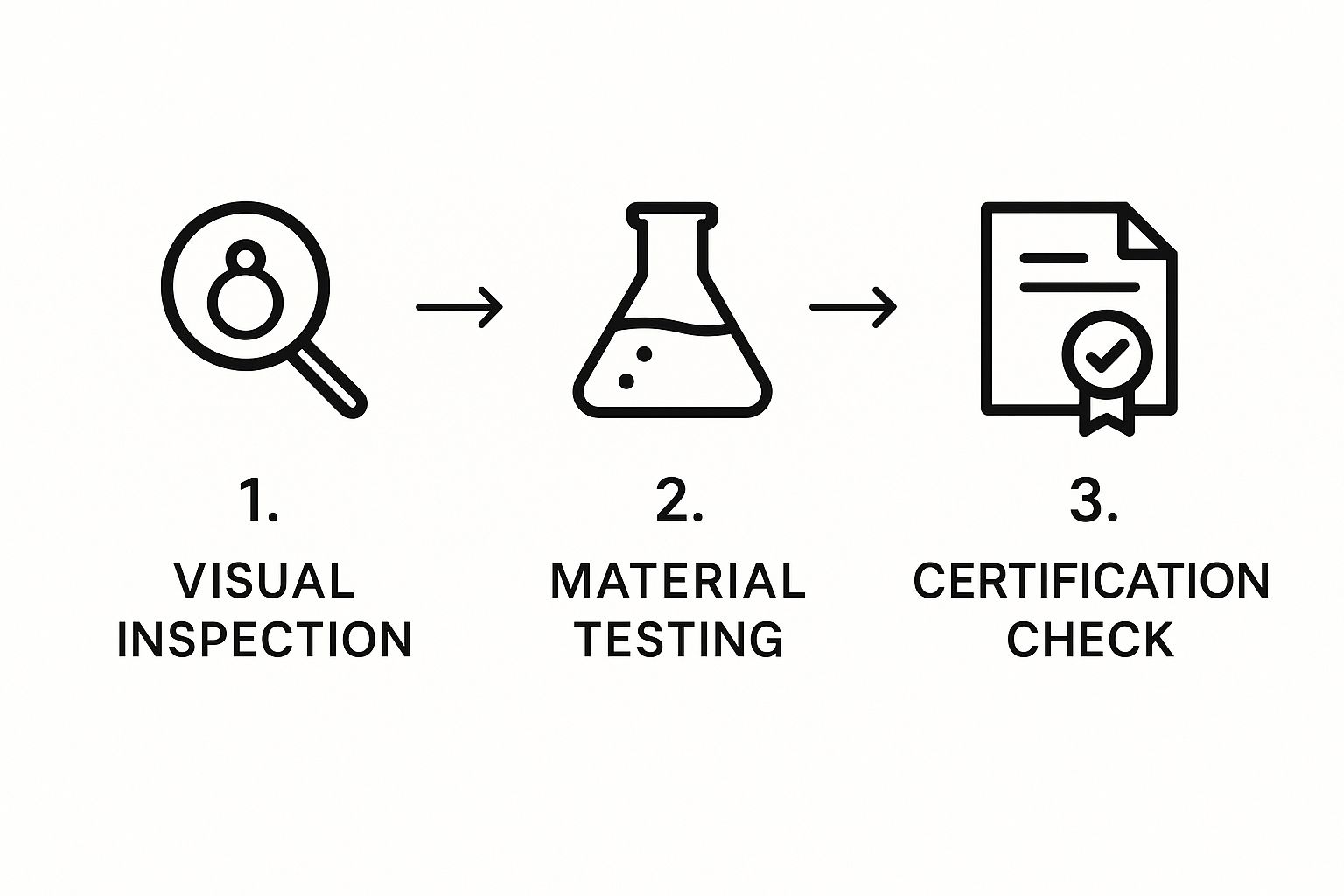
As you can see, a multi-step check—combining visual inspection, material tests, and a review of their certifications—is the only way to build a truly robust quality assurance process.
Ask the Tough Questions About Production
Your supplier isn't just a vendor; they're your manufacturing partner. You absolutely need to understand their capabilities before you commit. Don't be timid—asking direct questions now will save you from major issues later.
I always start with these essentials:
- Production Capacity: "What is your monthly output for this type of charm?" Can they actually handle your orders if you scale? What happens during peak season? You need a partner who can grow with you.
- Lead Times: "What is your exact lead time for a 1,000-unit order, from payment to shipment?" Get specifics. "A few weeks" is too vague.
- Quality Control Process: "Can you describe your QC process? At what stages do you inspect the products?" A multi-stage process is a hallmark of a professional operation.
- Customization Options: "What are your MOQs and tooling fees for a custom design?" Ask if they offer custom work or white-label services now. It’s good to know their capabilities for the future.
A supplier’s answers are just as telling as the quality of their samples. Clear, confident responses suggest they run a tight ship. If they're evasive or vague, consider it a warning sign.
Sourcing directly from a manufacturer often gives you more control and better insights. To learn more, check out our guide on the advantages of working with factory-direct jewelry suppliers.
Supplier Vetting Checklist
To make this process easier, use this checklist to objectively compare potential suppliers. It helps you stay organized and make a data-driven decision instead of just going with your gut.
| Vetting Criteria | What to Look For | Red Flags to Avoid |
|---|---|---|
| Sample Quality | High-quality materials, durable finish, consistency across all pieces. | Flaking plating, visible defects, inconsistencies in size or color. |
| Communication | Prompt, clear, and professional responses to all your questions. | Vague answers, long delays in communication, unwillingness to provide details. |
| Lead Times | Specific and realistic timelines for production and shipping. | Unusually long or undefined lead times; "it depends" without clarification. |
| Certifications | Verifiable certifications for material purity (e.g., sterling silver) and ethical sourcing. | No certifications or inability to provide proof when asked. |
| Reviews & Reputation | Positive feedback on industry forums, B2B platforms, and social media. | A consistent pattern of complaints about quality, shipping, or service. |
This table isn't just a to-do list; it’s a framework for building confidence in your choice. A supplier who ticks all the right boxes is one you can build a lasting partnership with.
Verify Their Credentials and Reputation
Finally, it's time to look for outside proof. Reputable suppliers are proud of their certifications, which validate their materials and ethical standards.
Look for credentials related to:
- Material Purity: Official verification for precious metals.
- Ethical Sourcing: Documentation showing materials are sourced responsibly.
- Factory Audits: Reports from third-party organizations like Sedex or BSCI that assess working conditions.
Beyond the official paperwork, do some digging online. Search for reviews on industry forums, in Facebook groups for jewelry makers, and on B2B platform ratings. A few bad reviews are one thing, but a consistent pattern of complaints about quality, missed deadlines, or poor communication is a clear signal to look elsewhere. This final layer of due diligence is what separates the amateurs from the pros and helps you lock in a partner you can trust.
Time to Talk Terms and Place That First Order
You’ve done the hard work, filtered through the possibilities, and found a supplier that feels right. That’s a huge win, but finding great wholesale charms suppliers is only half the journey. Now, it's time to shift from being a potential customer to becoming a valued partner by hashing out terms that work for both of you.
Remember, the goal here isn't to strong-arm them for every last cent. It’s about building a solid, mutually respectful relationship from day one. This negotiation phase sets the foundation for your entire supply chain. A fair approach now will pay dividends later in better service, flexibility, and maybe even a few favors when you're in a bind.
Talking MOQs and Price Breaks
Almost every supplier has a Minimum Order Quantity, or MOQ. It’s the smallest order they’ll bother to produce, and for a new business, a high MOQ can be a real killer. It can tie up a ton of your cash in inventory before you even know what sells. Don't be shy about tackling this issue.
If their standard MOQ makes you sweat, you’ve got a couple of moves:
- Propose a smaller "test" order. Pitch it as a way for you to gauge your customers' reaction to their quality before you go all-in. A smart supplier who sees your long-term potential will often agree.
- Ask about a mixed-item MOQ. Maybe you can't commit to 500 units of a single charm design. But could you order 100 units of five different designs? This lets you meet their threshold while giving you a much better variety to launch with.
While you're talking numbers, get a crystal-clear breakdown of their pricing tiers. The more you buy, the cheaper each charm gets—that's standard. Knowing exactly where those price breaks are is crucial for planning future inventory buys and figuring out how to scale your profit margins.
Getting Payment Terms That Don't Wreck Your Cash Flow
Payment terms can make or break a small business. Let's be real: for your first order, you'll almost certainly have to pay upfront. That's just how trust is built. But it’s smart to plant the seed for the future right away.
After you've got a few successful orders under your belt, it's time to revisit the conversation. The golden ticket for many businesses is "Net 30" terms, which means you have 30 days to pay after you receive the goods. This is a game-changer. It gives you a window to actually sell some of the charms before the invoice is due.
Building trust is your most valuable currency. A supplier who sees you as a reliable, long-term partner is far more likely to offer flexible payment terms and prioritize your orders during busy periods.
Nailing Down the Details for Your First Purchase Order
Once you’ve agreed on the big picture, it’s time to get your first official order in the system. This is where you need to be meticulously detailed. A vague purchase order is a recipe for disaster.
Here’s what you absolutely must have locked down in writing:
- A Confirmed Production Schedule: Don't accept a vague "in a few weeks." Get specific dates. When does production start? When will it be complete? You need these dates to plan your own marketing and launch.
- Clear Shipping Logistics: Who's arranging the shipping? What are the exact costs (Incoterms)? Insist on a tracking number the moment it ships so you aren't left guessing where your investment is.
- The Defect Policy: Things happen. No manufacturing run is 100% perfect. What's the plan if some items arrive damaged or flawed? A reputable supplier will have a straightforward process for replacements, returns, or account credits.
Get every single one of these points confirmed in an email or on the official purchase order before you send a dime. This creates a paper trail that protects everyone involved and starts your new partnership off on the right foot—professionally and without any nasty surprises.
Tapping into the Global Jewelry Boom
To build a business that lasts, you have to think beyond your next collection. It’s about seeing the bigger picture and understanding where your brand fits into the massive, ever-shifting global jewelry market. The wholesale charms suppliers you choose are your direct link to these powerful worldwide trends.
When you grasp these macro shifts, you can get ahead of what your customers want and keep your inventory fresh. Two of the biggest forces at play right now are the rise of disposable income worldwide and the unique tastes of younger buyers. Millennial and Gen Z shoppers, especially, are driving demand for charms because they crave personalized, unique pieces that tell a story.
Riding the Market Wave
The global jewelry market isn't just getting bigger; it's evolving. The industry is currently valued at around $242.79 billion and is on track to hit an incredible $343.90 billion by 2032. A huge chunk of that growth—39.28% of the market share, to be exact—is happening in the Asia Pacific region. This area is both a massive consumer base and the world’s manufacturing powerhouse for jewelry parts. You can dig deeper into this trend with these insights on the online jewelry market.
This is a massive opportunity staring you right in the face. Partnering with wholesale charms suppliers in this region gives you a direct line to the source of production and innovation. You can tap into a supply chain that’s already built for scale, variety, and reacting quickly to new trends.
Connecting with the Next Generation
Millennial and Gen Z shoppers are rewriting the rules. As digital natives, they care deeply about authenticity, customization, and where their products come from. They aren't just buying things; they're investing in brands that mirror their values and let them express their individuality.
Your charm selection is a direct conversation with your target audience. When you offer pieces that speak to niche interests, celebrate personal milestones, or tap into current cultural moments, you're not just gaining customers—you're building a loyal community.
This means your sourcing strategy needs to be nimble. You need to find suppliers with a deep catalog, offering everything from classic engravable blanks to quirky, pop-culture-inspired designs. By choosing partners who can pivot quickly when a new trend emerges, you ensure your business stays relevant and exciting in a market that's growing faster than ever.
Common Questions About Finding Wholesale Charm Suppliers
Diving into the world of wholesale charms can bring up a lot of questions, especially when you're trying to find that perfect supplier. It’s a common part of the process, so let's walk through some of the things jewelry makers often ask.
What's a Normal Minimum Order Quantity (MOQ)?
Honestly, there's no magic number here. It really runs the gamut. A huge factory overseas might not even talk to you unless you’re ordering 500-1,000 pieces of a single charm design.
On the flip side, you could find a smaller, independent designer on a platform like Faire who has a simple $100 minimum for an entire order. My advice for anyone starting out? Look for flexibility. A supplier who lets you mix and match different styles to hit their minimum is a fantastic find.
How Does International Shipping and Customs Work?
This sounds way more intimidating than it usually is. Any established international supplier has this process down to a science—they do it every single day.
They’ll typically give you a few shipping options, like DHL or FedEx, and they handle the customs paperwork. The most important thing you can do is get a clear breakdown of the shipping costs and responsibilities (look for the term Incoterms) before you place the order. This avoids any nasty surprises when your package arrives.
Actionable Tip: If you're new to importing, try to find suppliers that offer Delivered Duty Paid (DDP) shipping. It means they handle all import fees and customs hassles. The price they quote is the final price delivered to your door, simplifying your budgeting and logistics significantly.
Getting these details sorted out early on will make your search for the right wholesale charms suppliers so much smoother and less stressful.
Ready to skip the sourcing headaches and find beautiful, on-trend charms with factory-direct pricing? JewelryBuyDirect has over 120,000 designs with no minimums. Start building your perfect collection at https://www.jewelrybuydirect.com.