





Arthur Lynch | Sat Sep 13 2025
Buy Wholesale Charms for Necklaces - Top Trends & Suppliers
Customizable jewelry is all about telling a story, and that’s precisely why the market for wholesale charms for necklaces is such a golden opportunity. Whether you're a budding Etsy seller or a seasoned retailer, the secret to building a loyal following in this space is tapping into that deep-seated desire for personalization.
Why Charm Necklaces Are Such a Big Deal
The magic of a charm necklace is its ability to become a wearable diary. Each little charm is a chapter—a memory, a milestone, a passion—transforming a simple chain into something deeply personal. It's this emotional connection that keeps customers coming back for more.
For business owners, sourcing wholesale charms for necklaces is the smartest way to jump in. Buying in bulk drastically lowers your cost per piece, which means you can offer great prices to your customers while still protecting your profit margins. It's the perfect strategy for building a diverse, exciting collection without needing a massive budget right out of the gate.
Tapping Into a Growing Global Market
This isn't just a small, local trend; the hunger for personalized jewelry is a global movement. The entire jewelry market is on an upward swing, and the charm niche is riding that wave right to the top.
The global jewelry market was valued at around USD 232.94 billion and is expected to climb to an incredible USD 343.90 billion by 2032. That's a steady growth rate of about 5.1% a year, which shows just how much opportunity is out there. You can dig into more of the data on these global jewelry market trends to get the full picture.
This growth isn't happening evenly everywhere, though. The Asia Pacific region, for instance, holds the biggest piece of the pie at nearly 39.3%, thanks to huge demand in places like India and China where traditional gold jewelry and modern designs are both highly valued. Knowing these regional preferences can give you a real edge, helping you select styles that resonate with specific demographics.
Your Roadmap to Success
Think of this guide as your personal roadmap. We're going to walk through everything you need to know, from picking the right materials and spotting the next big trend to finding trustworthy suppliers and building a collection that practically sells itself.
Here’s a sneak peek at what’s coming up:
- Materials Matter: An actionable breakdown of metals to define your brand's quality and price point.
- Global Trendspotting: How to identify what styles are driving sales in different regions right now.
- Supplier Strategy: A no-nonsense guide to finding and building solid relationships with the right partners.
- Smart Pricing: Simple models to make sure your charm business is both profitable and built to last.
Choosing The Right Charm Materials and Quality
Picking the right materials for your wholesale charms for necklaces is a lot like choosing the foundation for a house. It sets the tone for everything that follows—the final look, how long it lasts, how it feels, and, of course, the price. This decision goes way beyond a simple line item on an invoice; it’s a direct reflection of your brand's identity.
Think of each material as having its own unique personality. Stainless steel is the reliable, everyday workhorse—it's tough, hypoallergenic, and won’t tarnish easily. Sterling silver, on the other hand, is its more elegant cousin, offering that touch of affordable luxury that customers instantly recognize and appreciate. Getting these nuances right is key to building a collection that delivers on your brand's promise and truly connects with what your customers are looking for.
This image below breaks down some of the core benefits you get when you source charms wholesale, showing how things like cost savings and a wider selection are crucial for building a profitable inventory.
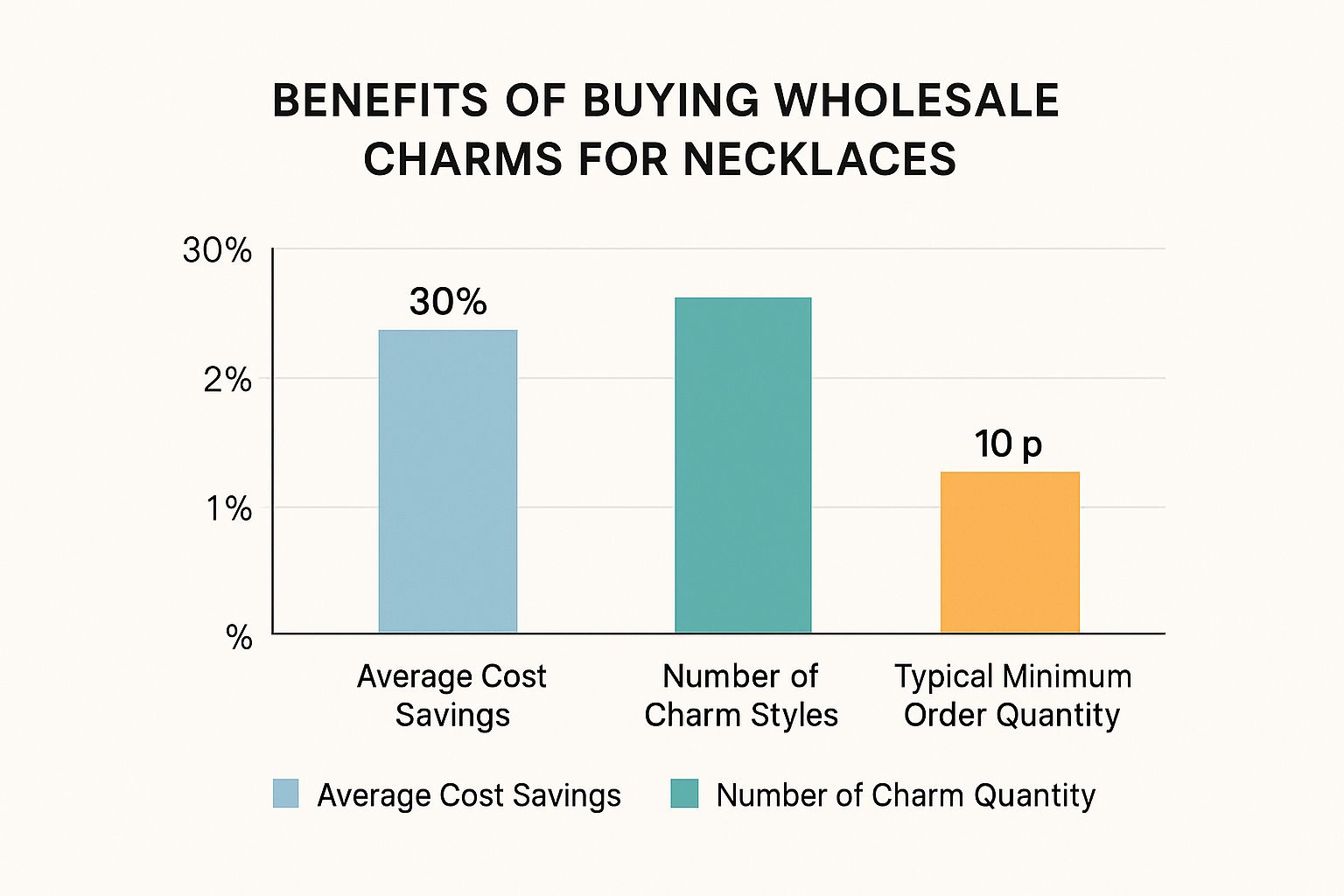
As you can see, the advantages are about more than just a lower price. It's a strategic mix of cost efficiency, a massive selection, and flexible order sizes that can really give small and growing businesses a leg up.
A Guide To Popular Charm Metals
When you start sourcing wholesale charms for necklaces, you'll quickly find a wide array of metals to choose from. Each one strikes a different balance between cost, look, and durability. Let's walk through the most common options to help you make a smart choice for your collection.
-
Stainless Steel: Incredibly strong and resistant to rust and tarnish, making it a fantastic choice for everyday jewelry. It's also hypoallergenic, which is a major selling point for customers with sensitive skin. This durability makes it a practical and very popular option.
-
Sterling Silver (.925): A true classic, sterling silver is 92.5% pure silver mixed with other metals for strength. It has a brilliant luster people love at a more accessible price point than pure precious metals. It's a cornerstone for countless mid- to high-end jewelry brands for a good reason.
-
Brass and Copper: These budget-friendly base metals are very versatile, often serving as the core for plated charms. They have a warm, vintage look on their own but will tarnish over time, requiring more care from the customer to maintain their appearance.
-
Titanium: A modern marvel, titanium is lighter than steel but even stronger. It's completely hypoallergenic and exceptionally resistant to corrosion, making it perfect for premium, long-lasting pieces built to endure.
-
Gold-Plated Charms: These charms feature a base metal (like brass or stainless steel) coated with a thin layer of real gold. This offers the luxurious look of gold without the hefty price tag. The durability directly depends on the thickness of the plating.
I've put together a quick comparison table to help you see how these materials stack up at a glance. It’s a great tool for figuring out where each one fits within your brand’s quality standards and pricing goals.
A Practical Comparison of Wholesale Charm Materials
| Material | Average Cost Per Unit (Wholesale) | Durability & Tarnish Resistance | Perceived Customer Value | Best For |
|---|---|---|---|---|
| Stainless Steel | $0.10 - $1.00 | High | Moderate-High | Durable, hypoallergenic, everyday jewelry. |
| Sterling Silver | $1.00 - $10.00 | Moderate (can tarnish but easily cleaned) | High | Fine-quality, classic jewelry collections. |
| Brass & Copper | $0.05 - $0.50 | Low (tarnishes over time) | Low-Moderate | Budget-friendly fashion lines, vintage-inspired looks. |
| Titanium | $2.00 - $15.00 | Very High | Very High | Premium, lightweight, and modern designs. |
| Gold-Plated | $0.50 - $5.00 | Varies (depends on plating thickness) | Moderate-High | Achieving a gold look at an affordable price. |
Ultimately, choosing between these materials is a balancing act between the price you want to hit and the quality you want to be known for. If you're looking to go even deeper, this guide on wholesale charms for jewelry is a fantastic resource for understanding how different metals perform.
How Manufacturing Methods Impact Your Final Product
Beyond the metal itself, the way a charm is actually made plays a huge role in its final appearance, level of detail, and cost. There are two main methods that dominate the world of wholesale charms for necklaces, and each has its own distinct pros and cons. Understanding them helps you appreciate the real craftsmanship behind every piece.
Actionable Insight: The manufacturing process isn't just a technical detail; it dictates your product's story. A simple stamped disc is perfect for personalization and minimalist brands, while an intricate, 3D cast figure appeals to customers seeking detailed, statement pieces. Choose the method that aligns with your brand's aesthetic and price point.
Think of it as the difference between a photograph and a sculpture. One is a flat representation, the other has real depth and dimension. Both can be beautiful, but they serve different artistic goals and come with different price tags.
Casting Vs Stamping: What You Need To Know
Casting is a process where molten metal is poured into a mold. This technique is absolutely perfect for creating complex, three-dimensional designs packed with tiny details and textures.
- Best For: Detailed figurines, elaborate shapes, and any charm with depth.
- Cost: Generally higher, since it's a multi-step process that requires more labor.
- Result: High-detail, sculptural pieces that have a premium, substantial feel.
Stamping, on the other hand, involves using a die to press a design into a flat sheet of metal. It's a fast, efficient method that's ideal for simpler, two-dimensional designs like initial discs, custom coins, or flat symbols.
- Best For: Simple logos, letters, numbers, and minimalist icons.
- Cost: Much more affordable, especially when you're producing a large number of them.
- Result: Clean, crisp designs on a flat surface, perfect for personalization and engraving.
Your choice between cast and stamped charms should really line up with your brand's overall vibe. If you’re focused on minimalist, engravable jewelry, you'll probably lean heavily on stamped pieces. But if your brand is all about whimsical, detailed storytelling, you'll find yourself drawn to cast designs. The most successful collections often feature a thoughtful mix of both, offering customers a great variety of styles and prices.
Spotting Profitable Global Jewelry Trends
Staying ahead in the jewelry world isn't just about having a good eye; it's about smart market intelligence. If you're sourcing wholesale charms for necklaces, understanding what customers want—sometimes before they do—is how you build a collection that flies off the shelves. This means looking beyond your local bubble and tapping into the global and regional styles that are really driving sales.
Think of trendspotting as listening to a global conversation. In North America and Europe, personalization remains king—initials, birthstones, and zodiac signs are evergreen sellers. In contrast, many Asian markets show a growing demand for charms that blend modern aesthetics with cultural symbolism, like stylized zodiac animals or intricate floral motifs representing prosperity. In Latin America, bold colors and religious iconography often perform very well.
This global view helps you build a much more interesting inventory. When you offer a mix of universally loved designs alongside unique, regional finds, you appeal to a much wider audience. It's about creating a collection that feels both personal and worldly.
The Unstoppable Power of Personalization
The desire for personalized jewelry isn't just a fleeting trend. It’s a major shift in how people think about accessories. They don't just want a pretty object anymore; they want something that tells their story, reflects their identity, or celebrates a relationship. This emotional connection is what makes personalized charms so profitable and always in demand.
And the data backs this up. The market for wholesale charms for necklaces has grown tremendously, and a huge part of that is this need for meaningful jewelry. One recent survey found that 68% of shoppers would rather buy a meaningful, personalized gift than a generic one. That statistic alone shows you the massive commercial power behind this emotional connection.
Actionable Insight: Personalization is your evergreen category. While other trends will come and go, charms that let people express themselves—initials, birthstones, meaningful symbols—will always have a loyal customer base. Dedicate at least half of your inventory to these core styles to ensure consistent sales.
Don't just stop at the basics, though. You can expand on this by offering engravable bars, lockets for photos, or even charms that represent hobbies and professions. Every new option is another way for a customer to tell their story with your products.
Dominant Themes and How to Spot Them
While personalization is your foundation, layering in other popular themes is what will make your collection feel fresh and exciting. Right now, a few key trends are capturing everyone's attention.
-
Celestial and Mystical Motifs: Stars, moons, suns, and zodiac signs are globally popular, tapping into a sense of wonder and cosmic connection that appeals to a huge audience.
-
Vintage and Nostalgic Revivals: Art Deco shapes, Victorian-style lockets, and 70s floral patterns are all making a comeback. These charms offer a bit of timeless elegance and a sense of history. This trend is particularly strong in European markets.
-
Minimalist and Geometric Shapes: For many modern customers, less is more. Simple circles, clean bars, hexagons, and other delicate forms are must-haves for layering and appeal to a clean, Scandinavian-inspired aesthetic.
So, how do you spot the next big thing? You have to become a bit of a digital detective. Platforms like Pinterest and Instagram are more than just social media—they're powerful, real-time market research tools.
Using Social Media for Trend Forecasting
Instead of just scrolling, use these platforms with a clear strategy. Of course, pay attention to what fashion influencers are wearing. But more importantly, read the comments. See what their followers are asking about. That’s direct feedback from your target market, right there for the taking.
On Pinterest, create "trend boards" for different styles like "celestial jewelry" or "minimalist charms." The platform's algorithm will start feeding you more of what's gaining traction. Over on Instagram, follow hashtags like #charmnecklace or #layerednecklaces to see what real people are actually creating and sharing.
To get a head start on what's shaping the market right now, check out our deep-dive into jewelry trends for 2024. When you combine solid research like this with your own observations, you can start anticipating demand instead of just reacting to it. That foresight is what will give you the confidence to invest in wholesale charms for necklaces that are not just beautiful, but incredibly sellable.
How to Find and Vet Reliable Suppliers
Let's be honest—your business is only as strong as your supply chain. When you're sourcing wholesale charms for necklaces, this isn't just a business cliché; it's the absolute truth. Finding a great supplier goes far beyond landing a good price. You're looking for a partner, someone who will back your brand's commitment to quality and help you grow. A reliable partner means your inventory shows up on time and consistently meets the standards your customers fell in love with.
Think of this process as a strategic hunt. The supplier world is vast, from massive B2B platforms like Alibaba, which offer an almost dizzying amount of variety, to smaller, specialized wholesalers who might have those truly unique, handcrafted pieces you can’t find anywhere else. Your job is to cut through the noise and find a partner whose business practices truly align with yours.
Mapping the Supplier Landscape
Before you start vetting, you need to know where to even look. Different suppliers serve different needs, whether you're focused on massive scale or niche specialization. Getting a handle on the main categories helps you zero in on the right fit much faster.
You’ll generally find three main avenues to explore:
-
Large B2B Marketplaces: Giants like Alibaba, Global Sources, and Made-in-China dominate the wholesale scene. They connect you with thousands of manufacturers, mostly in Asia, offering competitive pricing and a mind-boggling selection. The downside? The sheer volume can be overwhelming, and doing your due diligence is non-negotiable.
-
Specialized Jewelry Wholesalers: These are the suppliers who live and breathe jewelry. They often have curated collections, a sharp eye for trends, and much better quality control. Many, like us at JewelryBuyDirect, operate online to give you direct-from-factory pricing without demanding huge minimum orders.
-
Local and Niche Suppliers: Don't forget to look closer to home or for those who specialize in a particular aesthetic (like vintage-inspired or artisan charms). They can offer truly unique products, faster shipping, and much easier communication—though sometimes at a slightly higher cost.
A Framework for Vetting Potential Partners
Once you have a shortlist of potential suppliers, it’s time to put on your detective hat. A methodical vetting process is your best defense against poor quality, shipping nightmares, and hidden costs. Treat this like an interview for a key business partner, because that’s exactly what it is.
Start with the basics. A professional website, clear contact information, and accessible business registration details are the bare minimum. Hunt for customer reviews or testimonials, not just on their site but on third-party platforms, too. A long track record in the industry is usually a good sign of stability.
Next, you need to get into the nitty-gritty of their operations. This is what separates the average suppliers from the great ones.
Actionable Insight: Your supplier's capabilities directly affect how nimble your business can be. A partner with fast turnarounds and low MOQs lets you test new styles without a huge financial gamble, keeping your collection fresh and exciting. Prioritize suppliers who support this flexibility.
This is where a solid checklist becomes your secret weapon.
The Essential Supplier Checklist
Before you even dream of placing an order, get straight answers to these questions. Any supplier of wholesale charms for necklaces worth their salt will be transparent and ready to provide this information.
-
What is your Minimum Order Quantity (MOQ)? This is the smallest order they'll accept. Find a supplier whose MOQ fits your budget and storage space. A high MOQ can easily tie up your cash in products that aren't selling.
-
What are your production lead times? You need to know exactly how long it takes from order to shipment. This is critical for planning your inventory and marketing pushes. Unpredictable lead times are a recipe for stockouts and frustrated customers.
-
Can you provide quality certifications? Ask about any relevant certifications they hold, like ISO 9001 for quality management or compliance with material safety standards like REACH or RoHS. This shows they’re serious about professional standards.
-
What is your sample policy? Never skip this step. Always ask for samples before committing to a bulk purchase. Some suppliers offer them for free or at a discount. It’s the only real way to feel the weight, see the finish, and verify the quality of their charms for yourself.
-
What are your payment terms and shipping options? Get a clear understanding of their accepted payment methods and deposit requirements. Also, confirm which shipping carriers they work with and whether they provide tracking on all orders.
Building a list of the best wholesale jewelry suppliers is all about this kind of detailed investigation. By following this framework, you’re not just buying charms—you’re building a resilient sourcing strategy that will be the bedrock of your brand's success.
Smart Pricing for Your Charm Necklace Business
Great products deserve a price that actually makes you money. It sounds obvious, but setting the right price for your charm necklaces is one of the biggest hurdles for any new business owner. It’s so easy to just guess, but a thoughtful strategy is what separates a fun hobby from a sustainable business.
Think of your pricing as the engine of your business. It doesn't matter how beautiful the car is if the engine can't get you where you need to go. Your goal is to move beyond plucking a number out of thin air and instead create a simple formula that reflects your brand's value, covers every single cost, and feels right to your customers.
Calculating Your True Cost of Goods
First things first: you absolutely have to know your Cost of Goods Sold (COGS). This is the grand total of every direct cost that goes into making one finished necklace. So many sellers make the classic mistake of only counting the cost of the charm, but that’s just a tiny piece of the pie.
To get the real number, you need to add it all up:
- The Wholesale Charm: What you paid your supplier for each charm.
- The Chain: The cost of the necklace chain itself.
- Findings: Don’t forget the little things! This includes jump rings, clasps, and any other hardware.
- Packaging: Your boxes, bags, thank-you notes, and any branded materials are part of the product cost.
- Labor: Your time is worth money. Decide on a fair hourly rate for yourself and factor in how long it takes to assemble each piece.
Let's say a finished necklace costs you $4.50 in total materials and labor. That number is your starting line—the absolute rock-bottom price you must beat to avoid losing money.
Choosing Your Pricing Model
Once you have your COGS, you can start thinking about your retail price. There are a few tried-and-true methods, and the one you choose will really depend on your brand and how unique your jewelry is.
A really common starting point is the keystone markup. It's simple: you just double your COGS. In our example, a $4.50 cost becomes a $9.00 retail price. This is a great, straightforward way to ensure a 50% gross margin. The only downside? If your designs are really special, you might be selling yourself short.
That's where value-based pricing comes into play. Instead of just marking up your cost, you price your necklaces based on what your customer believes they are worth. If you've sourced a collection of rare wholesale charms for necklaces or offer amazing customization options, you can definitely charge more. This approach is all about what the final piece is worth to your audience, not just what it cost you to make.
Actionable Insight: Pricing is both a science and an art. Start with a solid formula like a 2.5x markup (COGS x 2.5 = Retail Price) to cover costs and generate profit. Then, adjust prices for specific high-value or highly unique charms based on their perceived value to the customer. Your brand’s story and the quality of your pieces are part of what customers are paying for.
The Psychology of Pricing
How you present your prices can make a huge difference. For example, using tiered pricing can be a game-changer. You could offer a "good, better, best" lineup: simple stamped charms at an entry-level price, more detailed cast charms as a mid-tier option, and premium sterling silver or custom pieces at the top. This way, you give every type of customer a way to buy from you.
Looking at the wholesale world gives us some great clues, too. B2B data shows that popular items like gold and stainless steel charms from Italy sold in massive quantities—nearly 19,700 units at around $0.25 each—and had an almost 30% reorder rate. That tells us there’s a strong, repeatable demand for good-quality charms at an accessible price point.
You can dive deeper into hot-selling charms for jewelry making to see how these trends are shaping the market. Understanding these dynamics will help you position your own necklaces for success.
Building a Cohesive and Profitable Collection
Alright, you've got the essentials down: you know your materials, you've got a handle on trends, you've found suppliers, and you've figured out your pricing. The next leap is moving from just selling individual charms to actually building a brand people remember. This is where curation and storytelling come into play.
Your goal is to put together collections of wholesale charms for necklaces that do more than just sit there. You want them to tell a story, to feel like something special.
Think of yourself as an editor or a curator. Instead of just throwing a random assortment of charms out there, you'll want to group them into themes that make sense and feel compelling. This simple shift doesn't just make your products look better; it actively guides your customers toward buying more, which is a fantastic way to boost your average order value.
Creating Themed Charm Sets
A great collection always feels intentional. It has a clear theme and a visual balance that just works. You can achieve this by playing with different sizes, shapes, and weights, layering them to create something that really catches the eye.
Need a little inspiration? Here are a few popular themes to get you started:
- The Celestial Explorer: Think stars, moons, and tiny planet charms all working together.
- The Seaside Wanderer: This one is all about mixing seashell, wave, and anchor motifs.
- The Personalized Story: A classic for a reason! Combine initial charms with birthstones and zodiac signs.
- The Vintage Romantic: Pull together some beautiful Victorian-style lockets and delicate floral charms.
When you package charms into themed sets like these, they immediately stop being just "charms" and become thoughtful, curated gifts or a meaningful treat for oneself.
Encouraging Repeat Business with Storytelling
Every collection you create is a chance to connect with your customers on a deeper level. Use your product descriptions, your emails, and your social media posts to share the story behind the theme. For example, a "Seaside Wanderer" collection isn't just a bunch of beach-themed charms—it's about the feeling of wanderlust, the call of adventure, and the memories we all make by the ocean.
Actionable Insight: By curating themed collections, you create an intuitive shopping experience. Customers aren't just buying a product; they are buying into a feeling or an identity. This narrative approach makes them far more likely to return to continue their story with new charms from future collections.
This narrative approach is what brings people back. They'll want to add to the story they've started with their first purchase. When you nail the curation and storytelling, you're not just selling wholesale charms for necklaces; you're building a business that people feel connected to, one that will thrive for years to come.
Frequently Asked Questions
Jumping into the world of wholesale charms for necklaces can feel like a lot at first. You’ve probably got a dozen questions swirling around. Let's tackle some of the most common ones I hear from new business owners to give you a clear path forward.
How Do I Know Which Charm Styles Will Sell Best?
Figuring out what will fly off the shelves is part art, part science. You need to keep an eye on what's trending, but also stay true to your brand's unique vibe.
Start by looking at the big picture. What's popular right now? Celestial themes like stars and moons have been huge for a while because they resonate with so many people. In Western markets, you'll also see a big demand for minimalist geometric shapes—they're perfect for layering, which is always in style.
But trends come and go. The real money is in the classics. Personalized charms—think initials, birthstones, and zodiac signs—are always top sellers because they create an instant personal connection. A smart way to build your inventory is to dedicate 70% to these evergreen sellers and use the remaining 30% to experiment with newer, trend-driven designs.
What Is a Reasonable Minimum Order Quantity (MOQ)?
There’s no magic number here; MOQs can be all over the map depending on the supplier. If you're just starting out or running a small shop, your best bet is to find suppliers with low MOQs, somewhere in the 50 to 100 unit range per charm style. This gives you the freedom to offer a wider variety without sinking all your cash into one or two designs.
Actionable Insight: Steer clear of suppliers demanding huge MOQs (like 500+ units per style) until you have solid proof that a design sells well. Flexibility is your friend in the beginning. It's much better to sell out and reorder than to be stuck with a mountain of charms nobody wants.
Can I Start a Charm Business with a Small Budget?
You absolutely can. In fact, starting a charm necklace business is one of the most budget-friendly ways to get into the jewelry game. Buying wholesale charms for necklaces dramatically cuts your per-item cost, letting you start small and scale up.
You don't need a massive catalog to get started. A carefully chosen micro-collection of just 10-15 high-potential charm styles is more than enough. To keep your initial investment low, focus on materials like stainless steel or high-quality gold-plated brass. They look great, they're durable, and they won't break the bank. Once you start turning a profit, you can reinvest in pricier materials like sterling silver.
How Can I Ensure the Quality of Wholesale Charms?
This is the one area where you can't afford to cut corners. Before you even think about placing a bulk order, you must get samples. It's the only way to physically see and feel the charm’s weight, check the finish, and inspect the little details. Look closely at the plating—is it even? Are the stamped designs crisp?
Beyond samples, partner with suppliers who are upfront about their materials and how they make their products. Look for quality certifications or, at the very least, a clear return policy. These are signs of a trustworthy partner who is confident in what they sell. Doing your homework here protects your money and, more importantly, your brand's reputation.
Ready to build a stunning collection that captures the latest trends and delights your customers? At JewelryBuyDirect, we offer over 120,000 unique styles with no minimum order requirements, giving you the ultimate flexibility to grow your business. Explore our massive selection of high-quality wholesale charms and enjoy factory-direct pricing today at https://www.jewelrybuydirect.com.