






Arthur Lynch | Mon Feb 09 2026
Sourcing the Perfect Vintage Necklace for Your Retail Business
A vintage necklace is so much more than a simple accessory. Think of it as a piece of history you can wear, typically something that's between 20 and 99 years old. These aren't just mass-produced items; they're wearable stories, each with a character all its own. For a retailer, that's a powerful thing to have in a market starving for authenticity.
The Timeless Appeal of Vintage Necklaces
In a world overflowing with fast fashion, there's a real hunger for things with a soul. A vintage necklace isn't just another SKU in your inventory. It's a tangible connection to a bygone era, complete with the craftsmanship and narrative of its time. This is exactly what’s drawing in a new wave of shoppers who are looking for something more.
For a business owner, bringing vintage jewelry into your collection is a brilliant strategic move. It instantly sets you apart from the crowd, giving your customers something they can’t just find anywhere. That kind of curated feel builds a loyal following—people who truly appreciate quality, sustainability, and the unique charm of a piece with a past.
Why Your Customers Want Vintage
So, what's driving this shift? It really boils down to a few key desires that you, as a smart retailer, can tap into.
- Individuality: People are tired of looking like everyone else. A vintage necklace is the ultimate statement of personal style, a way to stand out.
- Sustainability: More and more shoppers are thinking about their environmental footprint. Choosing a pre-loved piece is an easy, ethical way to reduce waste.
- Storytelling: This is the magic ingredient. Customers aren't just buying an object; they're buying the story that comes with it. That narrative is what creates an emotional connection.
When you tap into this market, you're not just selling a product. You're connecting with buyers who are investing in a piece with genuine character and lasting appeal.
Getting a handle on this appeal is the first real step to building a collection that sells. At JewelryBuyDirect, we help you meet this growing demand. Our store sells vintage jewelry at wholesale price, making it easy for you to source beautiful, story-rich pieces without breaking the bank.
You'll be able to delight your customers and build a brand that truly stands out. Take a look at our vintage product collection and start finding those timeless treasures for your store.
A Retailer's Guide to Vintage Necklace Styles
For retailers, knowing the difference between vintage eras is like being a style historian. Every vintage necklace tells a story, and learning to read that story—through its design, materials, and how it was made—is the key. When you can do that, you can build a collection that doesn't just look stunning but also connects with customers looking for something with meaning.
This timeline breaks down the powerful forces driving the vintage necklace boom: shopper demand, shifting style trends, and the personal stories that make these pieces so irresistible.
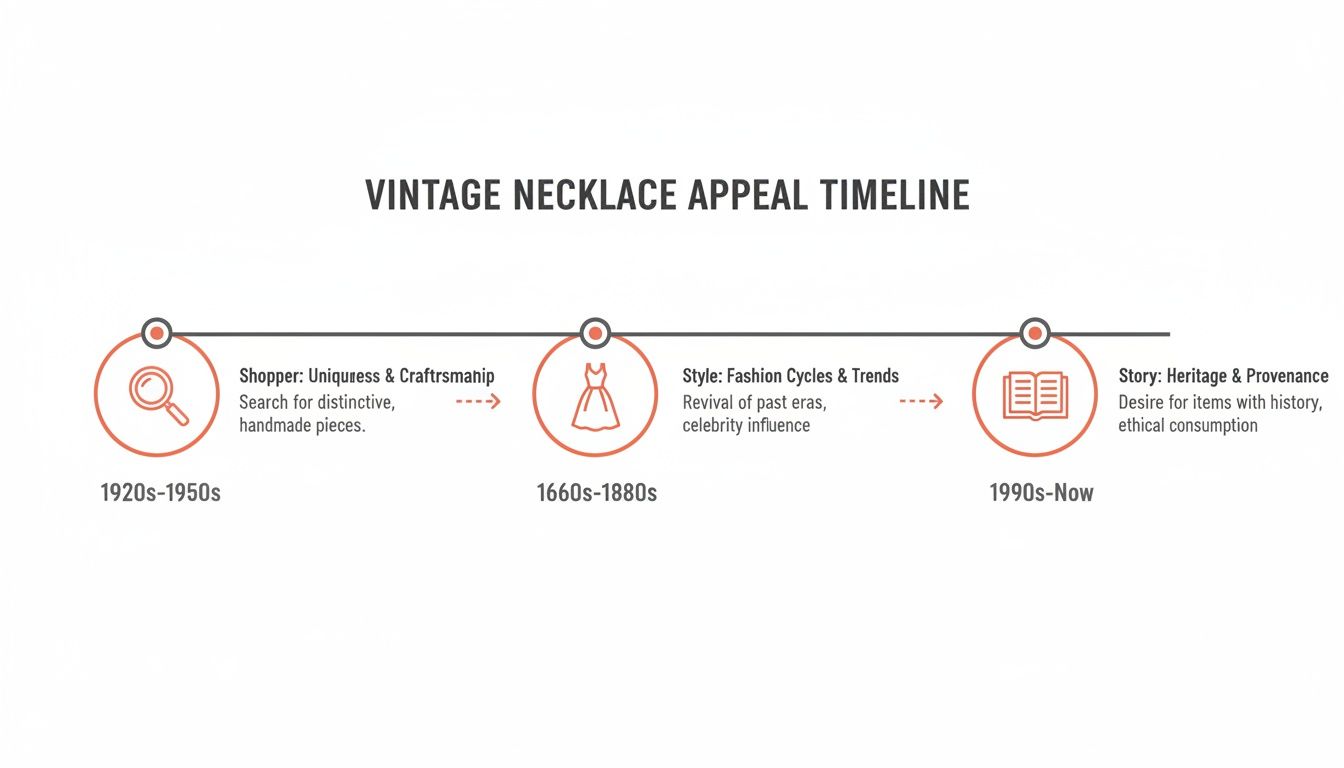
This visual journey shows how the modern shopper’s hunger for unique pieces and compelling histories keeps the market hot. The numbers don't lie. In 2026, global auction volumes for pre-1980 vintage necklaces shot up by a remarkable 22% year-over-year. Online, the jump was even bigger, with buyer engagement on resale platforms climbing by 37%. This surge is largely thanks to younger shoppers who want sustainable, one-of-a-kind jewelry that stands out from the crowd.
Journey Through the Eras
To really succeed in selling vintage necklaces, you've got to know the major design movements that shaped them. Each period has its own vibe that speaks to different customers.
- Edwardian (1901-1910): Think light, delicate, and almost dreamlike. Edwardian necklaces are known for their incredibly detailed filigree, milgrain edging, and patterns that mimic fine lace. Platinum was the metal of the moment, usually set with diamonds and pearls to create a soft, feminine look.
- Art Deco (1920-1939): This was a complete 180 from the gentle curves of the Edwardian era. Art Deco is all about sharp, geometric lines, bold symmetry, and high contrast. You'll see long sautoir necklaces, dramatic pendants, and colorful materials like onyx, jade, and enamel set right alongside brilliant diamonds.
- Retro (1940-1950s): With post-war Hollywood glamour as its muse, Retro jewelry is anything but shy. These necklaces are often chunky, three-dimensional, and designed to make a statement. Yellow and rose gold came roaring back into style, used for oversized links, intricate motifs like bows and flowers, and eye-catching bib necklaces.
Getting familiar with the little details, like the specific types of vintage necklace clasps, can also be a huge clue when trying to place a piece in its correct time period.
To make identifying these styles easier, here’s a quick-reference table that breaks down the defining characteristics of each major era.
Key Vintage Necklace Eras and Their Defining Features
| Era | Approximate Years | Key Characteristics | Common Materials |
|---|---|---|---|
| Edwardian | 1901–1910 | Light, airy, delicate, lace-like filigree, milgrain details. | Platinum, Diamonds, Pearls, Sapphires |
| Art Deco | 1920–1939 | Geometric shapes, bold lines, symmetry, strong color contrasts. | Platinum, White Gold, Onyx, Jade, Diamonds, Enamel |
| Retro | 1940–1950s | Chunky, three-dimensional, bold, Hollywood-inspired glamour. | Yellow Gold, Rose Gold, Rubies, Sapphires |
| Bohemian | 1960–1970s | Natural, free-spirited, layered chains, large pendants. | Sterling Silver, Turquoise, Wood, Beads |
This table can be a great starting point for you and your staff to quickly get a feel for the different personalities behind the necklaces you're stocking.
From Bohemian Chic to Modern Glam
As we move into the later half of the 20th century, the styles became much more eclectic and personal, giving us looks that are still incredibly popular today. These pieces are often more accessible and easy for anyone to wear.
Sourcing a diverse collection of high-quality, affordable vintage-style necklaces is a game-changer for any retailer. At JBD, we offer an extensive selection of vintage-inspired pieces at wholesale prices, allowing you to stock styles from every iconic era without the high overhead.
The 1960s and 1970s were all about a more natural, free-spirited vibe. This era gave us long beaded necklaces, layered chains, and big pendants featuring earthy stones like turquoise. These handcrafted, bold designs are perfect for customers who lean into a bohemian aesthetic. By stocking jewelry that captures these iconic looks, you can offer pieces with a rich story and timeless appeal that meets the modern demand for authenticity.
Separating Treasures from Trinkets
Curating a profitable vintage necklace collection for your shop takes a trained eye. You're not just buying old jewelry; you're learning to spot the genuine treasures among the charming but less valuable trinkets. This skill really boils down to reading the subtle clues—the story a piece tells through its construction, its materials, and the quiet marks left by time.
Your investigation always starts with the smallest details. Get out a loupe and look for hallmarks. These tiny stamps can tell you everything from the maker and country of origin to the exact metal content. Think of them as a passport, giving you a verified glimpse into the necklace's past and confirming its material value. If you're new to these marks, our guide can help you figure out if your 925 silver is worth anything.
Beyond the Hallmarks
But the story doesn't end with official stamps. The necklace’s construction speaks volumes. You'll want to pay close attention to the clasp, as different styles were popular in different decades. The overall craftsmanship—how the stones are set, the way the links are joined—is another dead giveaway of quality. And don't forget the patina, that soft, even tarnish that develops over many years. It's often a sign of true age and is something collectors actually look for.
For a business owner, knowing these details is a two-way street. It gives you the confidence to source authentic vintage pieces, but it also helps you spot high-quality, vintage-inspired reproductions that offer a similar look with modern durability at a better price point.
To get really good at telling the difference, you have to immerse yourself in the nuances of each era. This guide on how to identify vintage jewelry is a great resource, offering expert tips for decoding everything from hallmarks to clasps. That kind of knowledge is what separates a good collection from a great one.
Balancing Authenticity with Affordability
Let's be realistic. While everyone loves a true vintage find, building a consistent and affordable inventory of them is tough. That’s where high-quality, vintage-style reproductions become a retailer’s best friend. These pieces give you the design magic of iconic eras without the hefty price tag or the headache of hunting down rare originals.
When you're sourcing reproductions, here’s what to look for:
- Quality Materials: Look for modern alloys, durable plating, and well-cut stones that beautifully mimic the look of older pieces.
- Authentic Details: The best reproductions faithfully replicate the clasps, settings, and motifs of a specific period.
- Consistent Supply: Can you actually restock a popular style when it sells out? This is crucial for meeting customer demand.
For any retailer trying to build a diverse and profitable collection, this balanced approach is the secret sauce. Finding a reliable wholesaler gives you access to both worlds. At JewelryBuyDirect, our extensive vintage collection is offered at wholesale prices, giving you the high-quality, affordable options you need to build an inventory your customers will love.
Smart Sourcing for Your Vintage Collection
Building a killer inventory of vintage necklaces can feel like a treasure hunt. Scouring estate sales, flea markets, and auctions is exciting, and you might stumble upon some truly incredible, one-of-a-kind pieces. But for a growing retail business, this approach has a major drawback: it's unpredictable. Relying on chance finds can lead to empty shelves and missed sales, making it nearly impossible to keep up with customer demand.
If you want to scale your business and build a profitable brand, your sourcing strategy needs to be smarter and more sustainable. This is where modern wholesale suppliers completely change the game. Instead of spending hours chasing down individual items, you can tap into a steady, curated supply of high-quality pieces that are designed to sell.
This isn't just a small shift; it's about aligning with where the market is headed. The global necklace market, which includes both authentic vintage and inspired styles, is booming. It hit USD 52.32 billion in 2025 and is on track to reach an incredible USD 84.55 billion by 2034. A huge piece of that pie belongs to the Asia Pacific region, which commands a massive 40.9% market share. This tells us there's a serious global appetite for these timeless designs, as detailed in this comprehensive market analysis.
The Wholesale Advantage for Retailers
Finding the right wholesale partner is your secret weapon. It turns sourcing from a game of chance into a core business strategy. The trick is to find a supplier who gets what modern retailers need: flexibility, quality, and pricing that actually protects your margins.
A strategic wholesale partnership brings a ton to the table:
- Consistent Quality: Good suppliers have established relationships with certified manufacturers. This means every piece meets a certain standard, so you can say goodbye to the guesswork that comes with one-off buys.
- Predictable Inventory: Having access to a large, frequently updated catalog means you can restock your bestsellers and test new designs without worrying about supply chain nightmares.
- Cost-Effective Pricing: Buying directly from the source at wholesale prices dramatically lowers your cost per item. That translates directly to healthier profit margins.
At JewelryBuyDirect, we connect retailers directly with a huge collection of vintage jewelry at wholesale prices. Because of our factory-direct model, our prices are often 15-30% below the typical market rates, giving your business an instant leg up on the competition.
Lowering Risk and Maximizing Opportunity
For small and medium-sized businesses, one of the biggest headaches is the financial risk of buying inventory. Many traditional wholesalers slap you with a high minimum order quantity (MOQ), forcing you to sink a lot of cash into a single style. This ties up your money and makes it tough to experiment with new trends.
A more modern, retailer-friendly supplier gets rid of that barrier. When you find a partner with no MOQ, you have the freedom to test the waters. You can buy just a few Art Deco-inspired pendants or a handful of 70s-style chains to see what your customers gravitate toward. This flexibility lets you react quickly to what's popular, build a more diverse collection, and grow your business with confidence.
If you want to dive deeper into this, our guide on finding the best wholesale jewelry suppliers is a great place to start. Ultimately, this smarter approach helps you build a dynamic, profitable inventory that your customers will love.
Merchandising and Pricing for Profitability
Finding a stunning collection of vintage necklaces is a great first step, but the real magic happens in how you present and price them. This is where you turn gorgeous inventory into a thriving business. Think of strategic merchandising and smart pricing as the two engines that power your sales and build a brand that people fall in love with.
Let's be clear: the market for vintage is booming. Collectible vintage luxury jewelry is on a tear, with projections showing an explosive 17.50% CAGR between 2025 and 2033. This surge is expected to grow the market to an incredible USD 5.3 billion.
This isn't just speculation. We're seeing a massive jump in auction volumes for jewelry made before the 1980s, which points to a real, growing hunger for pieces with a past. You can dive deeper into the numbers with this in-depth market report.
Setting the Right Price
Pricing a vintage necklace is about so much more than just covering your costs; it’s about signaling its true value. A price tag that feels right makes an item feel special, justifying its place in a customer's collection while keeping your business healthy.
Here’s what you need to consider for every single necklace:
- Era and Rarity: A rare Art Deco piece from the 1920s will naturally be priced differently than a funky bohemian design from the 1970s. The harder it is to find, the higher its value.
- Condition: Give each piece a thorough once-over. Is there wear? Patina? Old repairs? While a bit of patina can add to the charm, significant damage will need to be reflected in the price.
- Materials: Precious metals, genuine gemstones, and unique materials like Bakelite all have their own inherent value that needs to be factored into your final cost.
- Brand or Maker: A signed piece from a famous designer or a well-known brand can fetch a much higher price than a beautiful but unsigned counterpart.
Crafting Compelling Product Stories
When you're selling vintage, you're not just selling an object—you're selling a story. Your product descriptions and store displays are your chance to bring that story to life. Move beyond a simple list of features and start weaving a narrative that captures your customer's imagination.
A great product description doesn't just describe the necklace—it transports the customer. Talk about the glamour of its era, the fine craftsmanship in its details, and how it will make the wearer feel utterly unique.
For instance, instead of just saying, "Gold-tone locket," try something like, "A darling 1950s locket, just waiting to hold a treasured memory close. Can't you just imagine the stories it could tell?" This approach builds an emotional connection that a dry, factual description never could.
To make sourcing these story-rich pieces easier, check out our huge collection of vintage jewelry at wholesale prices. You'll find high-quality, affordable styles from every era, all ready for you to merchandise and share with your customers.
Keeping Your Vintage Treasures Looking Their Best
Once you've built a stunning collection of vintage necklaces, the next step is protecting that investment. It’s not just about keeping the pieces beautiful; it’s about preserving their value and history. When you share proper care tips with your customers, you're doing more than just making a sale—you're building trust and positioning yourself as a true expert.
The golden rule for any vintage piece is gentle handling. Remind your customers that jewelry should always be the last thing they put on. Perfumes, lotions, and hairspray contain chemicals that can be surprisingly harsh on older, delicate materials. A quick, gentle wipe-down with a soft, dry microfiber cloth after each wear is often all it takes to remove body oils and keep a piece looking brilliant.
Smart Care and Storage for Lasting Beauty
You can’t treat every piece the same way. A one-size-fits-all cleaning approach is a recipe for disaster with vintage jewelry, so knowing the quirks of each material is absolutely essential.
-
Sterling Silver: We all know silver loves to tarnish. For minor dullness, a good silver polishing cloth is your best friend. If you're dealing with more serious discoloration, a professional silver dip can work, but always use it with caution and follow the instructions to the letter.
-
Pearls and Porous Stones: Think of pearls, opals, and turquoise as living materials—they're incredibly sensitive. Never, ever submerge them in water or expose them to harsh cleaners. A simple wipe with a soft, slightly damp cloth is all they need. Let them air dry completely before storing.
-
Hardy Gemstones: For tougher stones like diamonds, sapphires, or rubies set in gold or platinum, you can be a little more hands-on. A little bath in warm water with a drop of mild soap, followed by a gentle scrub with a baby-soft toothbrush, will bring back their sparkle.
Storage is just as crucial as cleaning. Tangled chains, chipped stones, and scratched metals are completely avoidable. Encourage storing each necklace separately, either in its own soft pouch or a fabric-lined jewelry box. This prevents pieces from rubbing against each other. Also, keep them out of direct sunlight and away from humid places like the bathroom to prevent fading and damage over time.
For a deeper dive, check out our guide on how to clean tarnished jewelry.
Your Top Vintage Necklace Sourcing Questions, Answered
Stepping into the world of vintage necklaces can feel a bit overwhelming, especially for retailers. You’ve got questions, and getting solid answers is the first step toward building a collection that not only wows your customers but also strengthens your bottom line. Let's tackle some of the most common queries we hear.
Getting the Language and Budget Right
What's the real difference between antique, vintage, and retro necklaces?
It’s all about timing. Think of antique as anything that’s hit the century mark—so, over 100 years old. Vintage is the sweet spot for items between 20 and 99 years old. Then you have retro, which are new pieces made to look like they're from a specific, more recent past style.
Getting these terms right isn't just about sounding like an expert; it's about marketing your pieces accurately so you connect with the right collectors and shoppers.
How can I start selling vintage style necklaces if my budget is tight?
This is a classic challenge, but the answer is to find a way to offer variety without taking on huge risks. That's where working with a wholesale supplier like JewelryBuyDirect really shines. They have no minimum order quantity (MOQ), which is a game-changer.
It means you can experiment with a wide range of styles—a few Art Deco pieces, some Victorian-inspired lockets, a handful of boho chains—without tying up a ton of cash. Plus, their factory-direct pricing gives your profit margins the breathing room they need, even on small buys.
Understanding the Market and Trends
Are vintage necklaces actually a smart investment for my store?
Without a doubt. We're seeing a huge shift in what customers want. They’re looking for jewelry that feels unique, has a story, and is more sustainable. Vintage and vintage-inspired necklaces tick all those boxes.
By curating a thoughtful collection, you set your store apart from the mass-market competition. You’ll attract a more passionate customer base and carve out a profitable space in a market that just keeps growing.
The secret is sourcing high-quality, beautiful pieces that are still affordable. A great wholesaler gives you access to the designs people are searching for, but with the consistency and reliability you just can't get from hunting for one-off finds. It keeps your inventory exciting and fresh.
What are the hottest vintage necklace styles right now?
We're seeing a few clear winners. Art Deco pendants are always in demand for their bold, geometric lines. Long, layer-friendly chains straight out of the 1970s are also incredibly popular. And of course, you can never go wrong with a classic locket.
Working with a supplier who keeps a finger on the pulse and constantly updates their catalog means you can stock these popular styles and pivot quickly when the next trend emerges.
At JewelryBuyDirect, our goal is to help your business thrive. Dive into our huge vintage jewelry collection at wholesale prices and see how easy it is to build an inventory that practically sells itself.