






Arthur Lynch | Tue Aug 26 2025
Stainless Steel vs Titanium Rings: Which Is Better for You?
So, you're trying to decide between a stainless steel and a titanium ring. The core of the debate really boils down to this: stainless steel gives you that classic, substantial feel on your finger at a great price, while titanium delivers incredible lightweight comfort and is completely hypoallergenic. The right choice for you depends on what you value more—a traditional, weighty presence and budget, or effortless all-day wearability and peace of mind for sensitive skin.
Choosing Your Modern Metal Ring
The jewelry world, for both men and women, has moved way beyond just gold and silver. Alternative metals like stainless steel and titanium have become massively popular, fueled by a collective move toward accessories that are practical, tough, and look sharp. It's all about finding pieces that can keep up with a modern, active lifestyle without compromising on style.
We see some interesting trends globally. In North America and Europe, there's a real love for minimalist and industrial aesthetics, where the sleek, often matte, finishes of titanium really shine. But over in the Asia-Pacific market, stainless steel reigns supreme. Its affordability and amazing versatility in design make it a consistent favorite.
This isn't just about picking a material; it's about matching a ring to your daily grind, your personal style, and even the fashion trends around you. Whether you're an athlete who needs a ring that won’t get destroyed during a workout or a professional looking for something sophisticated but low-key, getting to know the real differences is crucial.
The Bottom Line: It's a lifestyle call. If you're active or have sensitive skin, titanium is the clear winner. If you want a durable, classic-looking ring with a bit more heft and an easier-on-the-wallet price tag, stainless steel is a fantastic choice.
This guide will walk you through a clear, side-by-side comparison to help you pick the perfect metal with total confidence.
Quick Comparison: Stainless Steel vs. Titanium
| Feature | Stainless Steel Rings | Titanium Rings |
|---|---|---|
| Feel & Weight | Heavier, giving it a substantial presence on the finger. | So lightweight you might forget you're wearing it. |
| Hypoallergenic | Generally safe, but can contain small amounts of nickel. | 100% biocompatible and guaranteed nickel-free. |
| Durability | Very hard and resistant to deep scratches. | Incredibly strong but more prone to surface-level scuffs. |
| Price Point | Extremely affordable and budget-friendly. | Moderately priced—more than steel but less than precious metals. |
A Head-to-Head Material Comparison
When you’re weighing stainless steel against titanium for a ring, you’re looking at differences that go way beyond just how they look. Each metal has its own distinct personality, and understanding their core properties is the key to picking a ring that fits your lifestyle, not just your finger.
The first thing you’ll notice is the weight. It's a dead giveaway. Titanium is roughly 45% lighter than stainless steel, giving it a barely-there feel that a lot of people absolutely love for everyday comfort. On the other hand, stainless steel has that satisfying, substantial heft—a classic, reassuring presence that many people still prefer.
This quick visual lays out the key data points on density, hardness, and skin-friendliness for both metals.
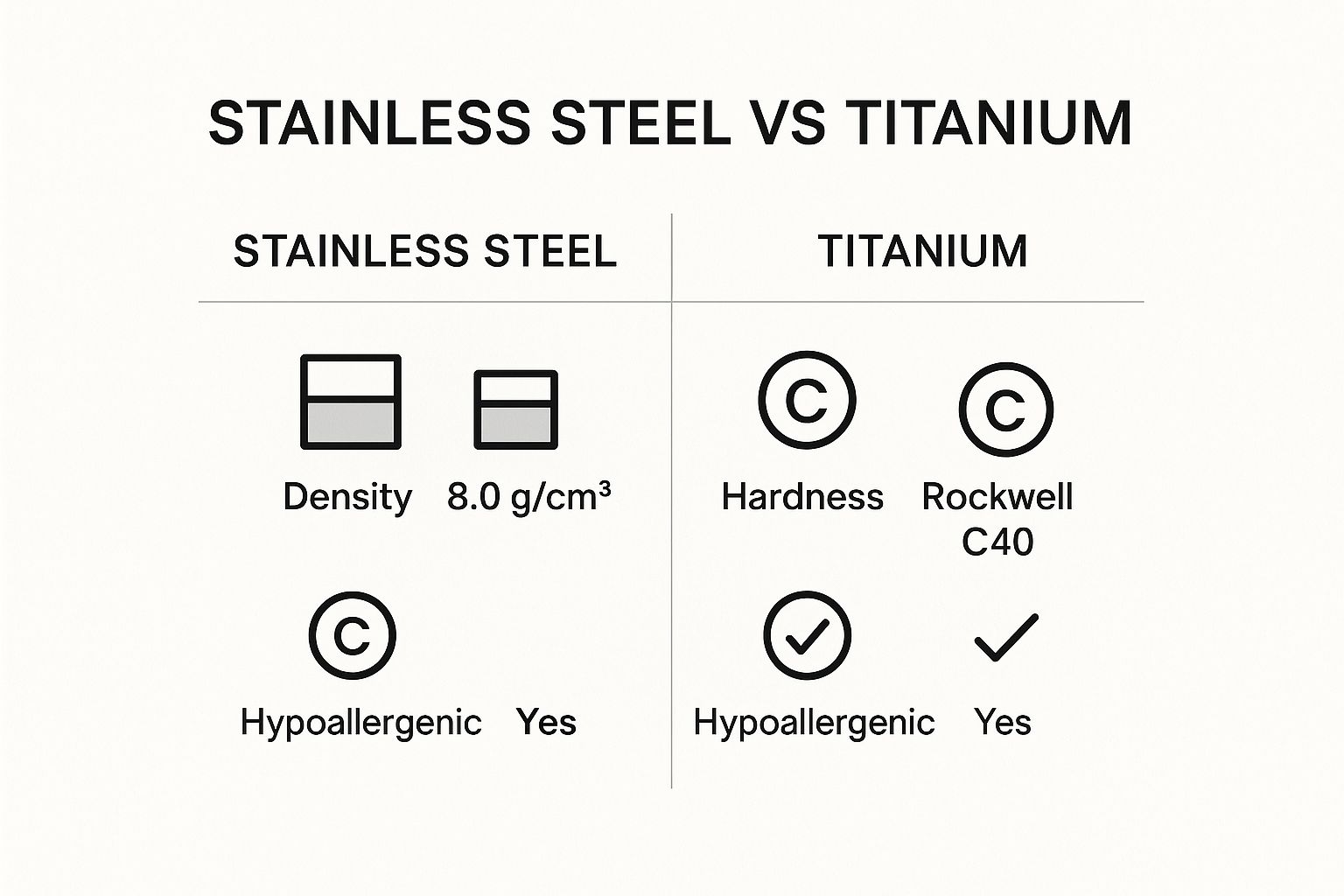
As you can see, while both are incredibly tough, their fundamental makeup translates into very different experiences when it comes to weight and how they stand up to dings and scratches.
Let's break down the most important characteristics in a quick-reference table.
Material Properties At a Glance
This table provides a side-by-side summary to help you quickly see how these two popular metals stack up.
| Attribute | Stainless Steel Rings | Titanium Rings |
|---|---|---|
| Weight | Heavier, substantial feel | Extremely lightweight, comfortable |
| Hardness | Very hard, highly scratch-resistant | Strong but softer, can show surface scuffs |
| Hypoallergenic | Generally safe (Grade 316L), but contains trace nickel | 100% biocompatible and nickel-free |
| Corrosion | Excellent resistance to rust and tarnish | Completely immune to rust and corrosion |
| Color | Bright, silvery-white | Natural gunmetal gray, can be anodized |
| Price | Very affordable | Moderately priced, more than steel |
This at-a-glance comparison makes the core differences clear, but let's explore what these properties actually mean for you day-to-day.
Durability and Scratch Resistance
Both of these metals are tough—there's no question about that. But they handle the rigors of daily life in very different ways.
Stainless steel is inherently harder and denser, which is a huge plus when it comes to fending off deep scratches and dings. If you're someone who works with your hands or your ring is likely to get knocked around, the sheer resilience of steel is a major selling point.
Titanium, despite having incredible overall strength (it's tough to break), is actually a softer metal on the surface. This means it can pick up superficial scuffs and light scratches more easily. The good news? These marks are often just on the surface and can usually be buffed out. A deep gouge in steel, however, is pretty much there to stay.
Actionable Insight: Choose stainless steel if you're concerned about deep gouges from impacts, like in a workshop setting. Opt for titanium if you prioritize fracture resistance and don't mind occasional surface scuffs that can often be polished away.
Hypoallergenic Qualities and Skin Sensitivity
This is a non-negotiable for a lot of people. Titanium is 100% biocompatible. That means it’s completely nickel-free and is guaranteed not to cause skin irritation or allergic reactions. It’s the same pure material used in surgical implants, so if you have sensitive skin, it offers total peace of mind.
Most quality stainless steel jewelry is made from Grade 316L, also known as "surgical steel." And while it’s considered hypoallergenic and is perfectly fine for most wearers, it does contain a tiny amount of nickel. For anyone with a severe nickel allergy, even this small trace can be enough to cause a reaction.
- Actionable Advice: If you have known metal allergies or have ever reacted to costume jewelry, choose titanium. It's the only way to guarantee a reaction-free experience. If you've never had skin sensitivity issues, Grade 316L stainless steel is a perfectly safe and affordable option.
Corrosion and Tarnish Resistance
On this front, it’s pretty much a tie—both metals are absolute champions. They are incredibly resistant to rust, corrosion, and tarnish, even when exposed to daily moisture, sweat, or saltwater. This set-it-and-forget-it quality is a huge part of why they're so popular in modern jewelry.
You can confidently wear either metal to the gym, in the shower, or even swimming in the ocean without worrying about it losing its shine or changing color. If you're curious about the long-term performance of steel, you can get the full story on whether stainless steel rings tarnish in our detailed guide. For an active lifestyle, you can't go wrong with either one.
Global Market Trends and Style Appeal
It’s not just about the physical specs. When you’re weighing stainless steel against titanium, you’re also tapping into major global market forces and what’s currently hot in the world of fashion. Both metals are incredibly popular, but they appeal to different tastes and trends bubbling up in different corners of the globe. Knowing a little about these movements can help you figure out which metal really speaks to your personal style.
Titanium is having a serious moment, especially in North America and Europe. Why? It's all tied to a bigger consumer shift. People are looking for jewelry that's not only stylish but also ethical, sustainable, and tough enough for an active life. Titanium's feather-light feel and hypoallergenic properties are a perfect match for today's health-conscious buyer who puts a premium on comfort.
The Rise of Titanium in Modern Design
Aesthetically, titanium just clicks with the minimalist and industrial-inspired designs dominating Western fashion. Its signature gunmetal gray color and its ability to rock a matte or brushed finish give it an understated, modern vibe—a world away from the high-shine look of traditional precious metals.
The numbers back this up. The global titanium jewelry market hit $1.5 billion USD in 2024, and rings make up a huge 38.83% of that pie. It’s not stopping there; projections show the market could nearly double to $3.2 billion USD by 2033. This isn't just a fleeting trend; it’s a clear signal that titanium is the metal of the future for many consumers.
This rapid growth is also thanks to its "wear-it-and-forget-it" practicality. People want accessories that are as strong as they are stylish, and titanium's legendary durability delivers exactly that.
Stainless Steel's Enduring Global Dominance
While titanium is the darling of the modern, minimalist crowd, stainless steel is the undisputed global workhorse. Its worldwide reign comes down to two simple things: it's incredibly affordable and produced on a massive scale, especially in the Asia-Pacific region. This makes it the go-to choice for a huge international audience.
Actionable Insight: To align your choice with current fashion, consider your regional style. In Europe and North America, a brushed titanium ring perfectly captures the prevailing minimalist and industrial aesthetic. In the Asia-Pacific market, a polished stainless steel band remains a timeless and popular choice that offers maximum versatility.
The real magic of stainless steel is its versatility. You can polish it to a mirror-like shine that mimics silver or give it a brushed finish for a more low-key look. It effortlessly adapts to any style, from chunky, bold statement pieces to simple, timeless bands. This adaptability is why it remains a fixture in both fast-fashion and classic jewelry collections. To see how it fits into today's styles, check out our guide on jewelry trends for 2024. This broad appeal ensures it stays a top-seller year after year.
Finishes and Customization: Where a Ring Gets Its Personality
The real character of a ring shines through in its finish and personalized details. While both stainless steel and titanium have a clean, modern vibe, they part ways when it comes to customization. This is where you can really tailor a piece to reflect your personal style.
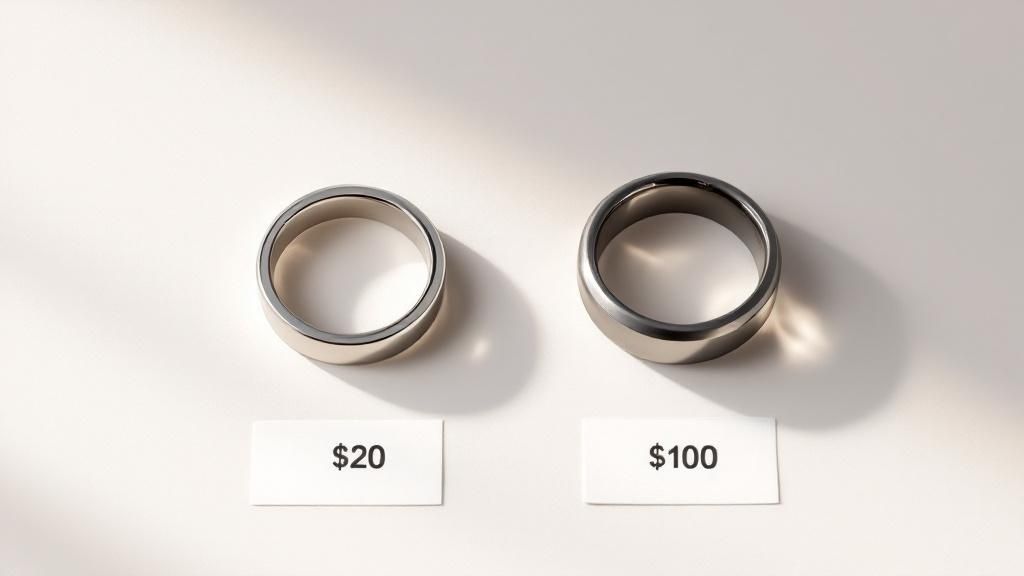
Stainless steel has that classic, bright silvery-white color that just works with everything. Jewelers can give it a variety of finishes, each with its own unique feel.
Classic Textures and Finishes
Both metals look great with different textures, but the end result is subtly different. A high-polish stainless steel ring, for instance, has a brilliant, mirror-like shine that can easily be mistaken for more expensive metals like platinum. On the other hand, a brushed or matte finish gives the steel a more understated, industrial edge that’s very popular in modern design.
Titanium, which naturally has a deeper gunmetal gray tone, also takes well to these classic finishes. A polished titanium ring has a darker, moodier gleam, while a brushed finish really leans into that modern, tech-forward aesthetic. For a more rugged, handcrafted look, a hammered finish gives either metal a distinctly artisanal character.
Actionable Advice: To express your personality, choose titanium if you want bold color options through anodization (like blues and purples). Select stainless steel if you prefer a classic silver-like backdrop that's perfect for showcasing unique inlays like wood or carbon fiber.
Making It Your Own with Engraving and Inlays
When you're ready to add those personal touches, both metals are up to the task. Engraving names, dates, or meaningful symbols is a popular option, and both materials hold fine details beautifully.
But the real creative magic happens with inlays. This is where you can combine the base metal with other materials to create something truly one-of-a-kind. The contrast between sleek metal and a natural element creates a look that’s impossible to ignore.
Some of the most popular inlay materials include:
- Exotic Woods: Things like koa or ebony wood add a natural warmth and an earthy vibe.
- Carbon Fiber: A strip of black or patterned carbon fiber gives the ring a high-tech, masculine feel that pairs perfectly with titanium.
- Precious Metals: A thin inlay of gold or silver adds a touch of classic luxury.
- Crushed Gemstones: For a pop of color and unique texture, inlays made from materials like turquoise or opal are becoming very popular.
So, when it comes to the stainless steel vs titanium rings decision, it often boils down to your aesthetic vision. If you're drawn to bold, built-in color, titanium's ability to be anodized makes it the obvious choice. But if you love that classic silver tone as a backdrop for unique inlays, both metals offer incredible potential to create a ring that’s all you.
Which Metal Best Fits Your Lifestyle?
So, how do you actually choose between stainless steel and titanium? Forget a sterile list of pros and cons. The real answer lies in your day-to-day life. The right ring is the one that feels like a natural extension of you, whether you're climbing a mountain, closing a deal, or just navigating your daily routine. Your job, hobbies, and personal style are the only guides you need.
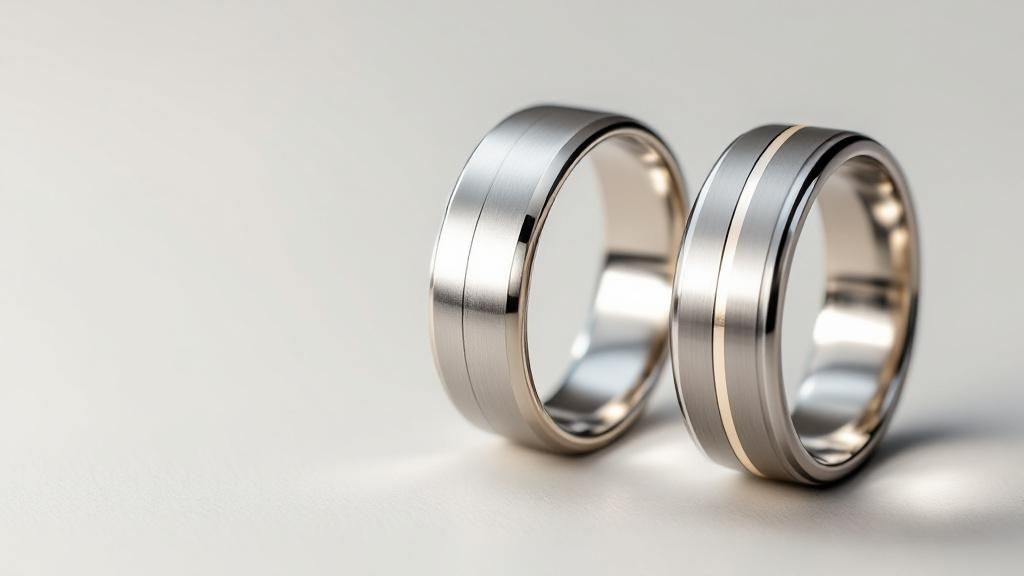
This choice isn't just a personal one; it reflects a huge shift in the jewelry world. The market for men's wedding bands in the U.S. has decisively moved toward practical, alternative metals. This segment was valued at a staggering USD 1.05 billion in 2022 and is expected to keep growing through 2030. Titanium, in particular, is riding a wave of popularity, mostly because it's just so comfortable to wear. You can dig into the numbers in this U.S. men's wedding bands market report.
The Outdoor Adventurer and Active Professional
If your life is in constant motion, titanium is your clear winner. Think about it: for hikers, athletes, or anyone with a physically demanding job, a ring should never get in the way. Titanium is so light you’ll genuinely forget you’re wearing it, whether you're at the gym, on a trail, or swimming laps.
It’s also the go-to for healthcare professionals and anyone working in sterile environments. Being 100% hypoallergenic, titanium offers total peace of mind. Its biocompatible nature means no skin reactions, even after a long, grueling shift.
The Style-Savvy Urbanite on a Budget
For the city dweller who appreciates a classic look but is also smart about money, stainless steel is a fantastic choice. It has that satisfying, substantial weight and brilliant shine you’d expect from platinum, but for a tiny fraction of the cost. A polished stainless steel ring looks sharp and sophisticated, easily transitioning from the boardroom to a weekend brunch.
Actionable Recommendation: If you want a ring that feels traditional and looks expensive—without the sticker shock—go with stainless steel. It’s a durable, stylish workhorse for the modern professional.
Stainless steel’s incredible resistance to deep scratches makes it perfect for the daily grind of commuting, typing, and city life. To understand what makes it so tough, check out our guide on what 316L means on jewelry.
Matching Your Ring to Your Reality
Let’s boil it down even further. Think about your personal needs and see which metal lines up.
- You want maximum comfort: If you can’t stand the feeling of heavy jewelry or you’re a first-time ring wearer, titanium’s weightlessness will be a revelation.
- You prefer a classic, heavy feel: If you like a ring with a noticeable, traditional heft that serves as a constant reminder, stainless steel is your best bet.
- You do rough, hands-on work: If your ring is going to take a beating, stainless steel holds up better against deep gouges and dents.
- You have sensitive skin: If you’ve ever had a reaction to metal, don’t even think twice. Titanium is the only guaranteed worry-free choice.
In the end, the stainless steel vs. titanium debate isn't about which metal is "better"—it's about which one is better for you. Just look at your hands and think about your schedule. When you match the metal's properties to your lifestyle, you'll find a ring that's more than an accessory; it’s a perfect fit.
Frequently Asked Questions About Ring Metals
When you're trying to decide between stainless steel and titanium, the final choice often boils down to a few practical, real-world questions. Let's tackle the most common ones I hear from buyers to help you lock in your decision with total confidence.
Which Metal Is More Scratch-Resistant?
This is a great question because while both are tough, they handle wear and tear differently. Think of it like this: stainless steel is incredibly hard and dense, which gives it a slight edge in resisting those everyday dings and deeper scratches. If you're tough on your hands or work in a job where your ring might knock against hard surfaces, steel will likely keep its smooth finish a bit longer.
Titanium, on the other hand, is unbelievably strong—it won’t bend or break—but its surface is actually a little softer than steel's. This means it can pick up more minor, superficial scuffs over time. The upside? A jeweler can often buff out those light marks on titanium, whereas a deep gouge in a steel ring is pretty much there to stay.
The Takeaway: For fending off deep scratches, stainless steel has a slight advantage. For pure strength and resistance to cracking or bending, titanium is the clear winner, even if it shows more surface scuffs.
Can You Resize Stainless Steel or Titanium Rings?
Here’s a crucial point you absolutely need to know: resizing is a huge limitation for both of these metals. Stainless steel is so hard and is made in a way that makes resizing it virtually impossible. Honestly, most jewelers won't even try.
Titanium is in a similar boat. Its massive strength makes it incredibly difficult to work with. Some specialists with high-tech gear like laser welders might be able to make a tiny adjustment, but it's a rare and costly service. For either metal, you have to get the sizing right from the get-go. If your finger size changes down the road, your only real option is to buy a new ring.
How Do You Clean and Maintain These Rings?
One of the best things about both stainless steel and titanium is how ridiculously easy they are to care for. You don't need any special chemicals or fancy polishing cloths to keep them looking great.
Keeping them clean is a breeze. Just follow these simple steps:
- Add a few drops of mild dish soap to a bowl of warm water.
- Gently scrub the ring with a soft cloth or an old, soft-bristled toothbrush.
- Rinse it well under clean water to get all the soap off.
- Pat it dry with a soft, lint-free cloth, and you're done.
Just be sure to stay away from harsh chemicals, abrasive cleaners, or ultrasonic machines, especially if your ring has any inlays or special finishes. Both metals are champs when it comes to resisting corrosion, so you’ll never have to worry about tarnish. They’re truly built for no-fuss, everyday wear.
Ready to find the perfect ring that matches your style and budget? As a leading B2B wholesale platform, JewelryBuyDirect offers an extensive collection of both stainless steel and titanium rings at direct-from-factory prices. Explore our catalog and discover unbeatable value at https://www.jewelrybuydirect.com.