






Arthur Lynch | Sun Aug 24 2025
Pendants for Jewellery Making: Your Ultimate Guide
When you’re making a necklace, the pendant is everything. It’s the star of the show, the one piece that catches the eye and sets the entire mood. Think of it as the focal point of your design—it’s what turns a simple chain into a piece of art with a story to tell. Picking the right one is the first, most important step toward creating jewelry that looks truly professional.
Your Guide to Choosing the Right Pendants
Welcome to the world of jewelry design, where one small component can completely change the game. Whether you're just starting out or you’ve been crafting for years, getting a handle on pendants is non-negotiable. This guide isn't just about definitions; it's a practical roadmap to help you make smart, creative choices from the very beginning.
A pendant is more than just a charm; it's the heart of your creation. Its material, style, and shape all send a message. A sleek, polished sterling silver pendant whispers minimalist elegance, while a chunky, raw gemstone shouts bohemian and free-spirited. The choice you make here will ripple through your entire design, dictating the chain you use and any beads you might add.
Understanding the Core Elements
So, what makes a pendant work in a design? Let's break it down. A few key things will guide your search and help you create pieces that just feel right.
- Material: What the pendant is made of—metal, stone, glass, wood—affects its weight, how it wears over time, and its overall vibe.
- Style: This is all about the aesthetic. Are you going for modern and geometric, or something more vintage and ornate? This is how you tap into different fashion trends.
- Form and Scale: The size and shape of the pendant have to work in harmony with the chain. It’s all about balance.
Once you get a feel for these fundamentals, you'll start looking at pendants with a true designer's eye. You'll have the confidence to create stunning, professional-quality jewelry that not only looks incredible but also shows off your unique artistic voice.
Understanding Popular Pendant Materials
The material you choose is the very soul of your pendant. It dictates not just the look and feel, but also the durability, value, and story you’re trying to tell. Think of it as the foundation of your design—every other choice you make will build upon it. Getting this right is a skill every jewelry maker hones, blending a bit of artistic flair with some solid, practical knowledge of what works.
We’re going to walk through the materials that makers turn to time and time again, from classic metals that whisper luxury to modern alternatives that shout creativity. Understanding what makes each one tick will give you the confidence to source and design like a seasoned pro.
This chart gives you a bird's-eye view of what's popular out there. As you can see, charms, lockets, and gemstone pieces are the real power players in the market.
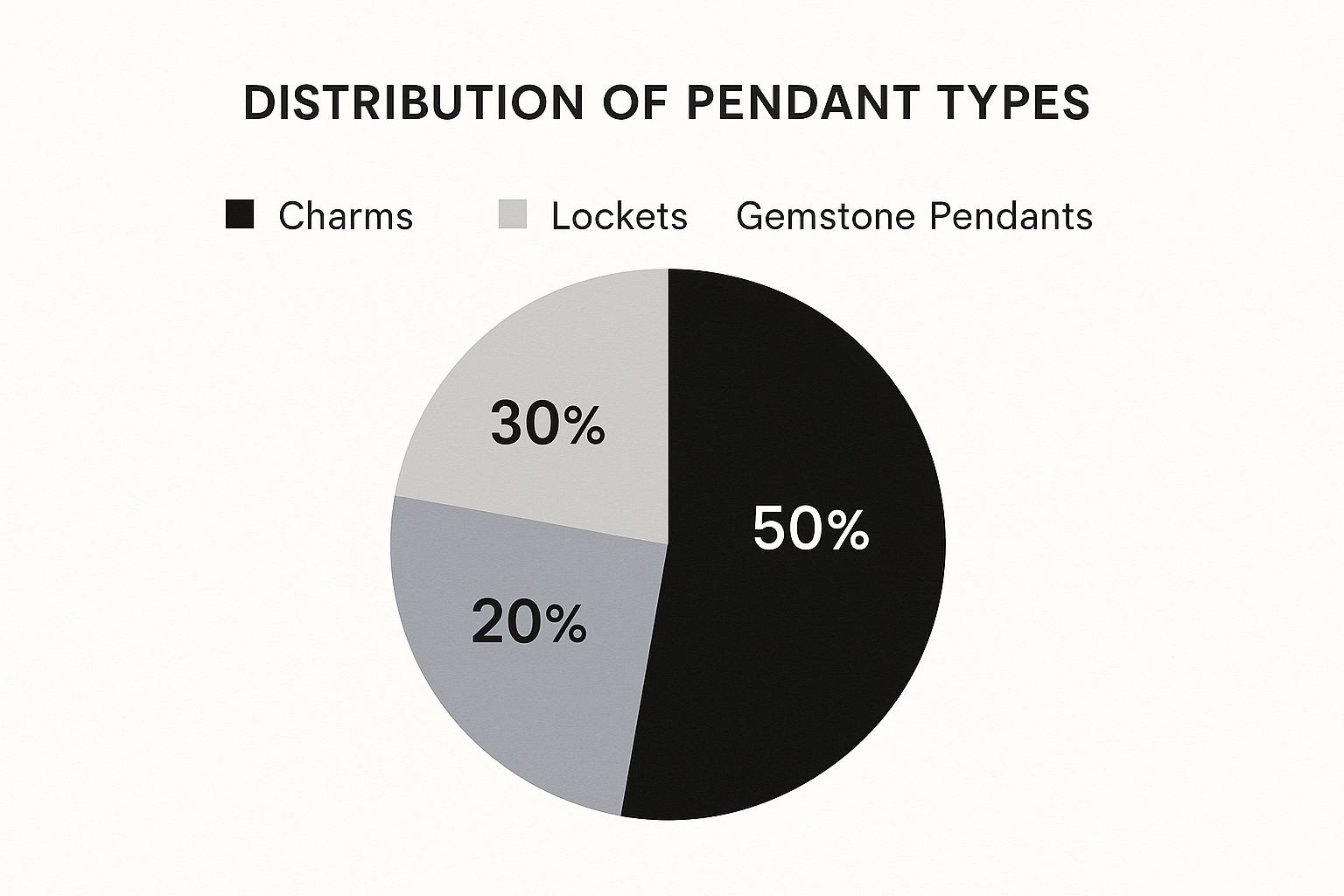
The data speaks for itself: charms account for 50% of the entire pendant market. This really drives home how much people love jewelry they can personalize and collect over time.
To help you navigate these options, I've put together a quick-reference table. It’s a simple way to compare the most common materials at a glance.
Pendant Material Comparison Guide
| Material | Average Cost | Durability | Common Aesthetic | Best For |
|---|---|---|---|---|
| Gold | High | High (Varies by Karat) | Luxurious, Classic, Warm | Fine jewelry, heirlooms, investment pieces. |
| Sterling Silver | Moderate | Medium (Tarnishes) | Bright, Cool, Versatile | Everyday wear, intricate designs, modern styles. |
| Stainless Steel | Low | Very High | Modern, Industrial, Sleek | Durable everyday pieces, hypoallergenic designs. |
| Gemstones | Varies Widely | Varies (Mohs Scale) | Colorful, Natural, Symbolic | Focal points, birthstone jewelry, adding meaning. |
| Resin | Low | Medium | Creative, Modern, Custom | Encapsulating objects, large statement pieces. |
| Wood/Shell | Low | Low-Medium | Earthy, Bohemian, Natural | Eco-conscious designs, organic-inspired styles. |
This chart is a great starting point, but let's dig a little deeper into what makes each of these materials special for makers creating pendants for jewellery making.
The Timeless Allure of Precious Metals
There's a reason precious metals are the bedrock of fine jewelry. They offer a perfect trifecta of beauty, workability, and value that's tough to beat.
Gold is the undisputed king. It comes in different karats and beautiful shades like yellow, white, and rose, and it just screams luxury. Remember, higher karats mean more pure gold, but also a softer, more delicate metal. For pendants meant for daily life, 14k gold is the sweet spot, giving you that rich color without sacrificing strength.
Sterling silver, which is 92.5% pure silver, is a maker's favorite. It has a bright, cool shine that’s incredibly versatile and much easier on the wallet. It looks just as good in a sleek, minimalist design as it does in a detailed, antique-style piece. Its only real quirk is that it needs a good polish now and then to keep tarnish away.
Actionable Insight: Always check for hallmarks or stamps when you buy your metals (like "925" for sterling silver). This little mark proves authenticity, adds serious value, and builds crucial trust with your customers.
For anyone needing something tough and hypoallergenic, look no further than stainless steel or titanium. These metals have a cool, contemporary vibe, are super resistant to scratches, and won't break the bank. Perfect for modern, everyday pieces.
The Vibrant World of Gemstones
Gemstones are where you inject personality and color into your work. A single, show-stopping stone or a delicate cluster of smaller gems can turn a simple design into a true work of art.
Every gemstone has its own personality. A deep purple amethyst can feel regal and calming, while a bright blue turquoise has a free-spirited, bohemian energy. When you're picking stones, think about their story.
Here's what to keep in mind:
- Cut: This is all about how the stone is faceted to catch the light. A brilliant cut delivers maximum sparkle, while a smooth, rounded cabochon cut is perfect for showing off a stone's internal color and patterns.
- Clarity: This refers to the tiny inclusions inside a stone. While perfectly "clean" stones are prized, some inclusions add incredible character—think of the golden threads in rutilated quartz or the mossy landscapes in moss agate.
- Hardness: We measure this on the Mohs scale, which tells you how well a stone resists scratches. Diamonds are a solid 10, but softer stones like opal (around a 6) need to be set in more protective designs.
Lately, raw, uncut gemstones have become wildly popular. Their organic, one-of-a-kind shapes really appeal to people looking for something unique and handcrafted.
Creative Alternatives for Modern Makers
Don't feel boxed in by traditional metals and stones! There’s a whole universe of alternative materials that can unlock incredible creative freedom. They’re often more affordable and let you play with textures and forms you just can't get otherwise.
Resin is a fantastic example. It’s a blank canvas that lets you embed things like dried flowers, shimmering glitter, or even tiny photographs. Because it's so light, you can create huge, dramatic statement pendants that are still comfortable to wear all day.
Wood and shell offer a direct connection to nature. A pendant carved from dark ebony wood or one that shimmers with iridescent abalone shell brings an earthy, organic feel to your jewelry, perfect for bohemian or eco-conscious collections.
Finally, there’s enamel. This ancient technique of fusing powdered glass to metal lets you add pops of vibrant, glossy color that last forever. You can create everything from simple, bold surfaces to incredibly detailed patterns. Playing with these materials is one of the best ways to find your unique voice and create a style that’s all your own.
Mastering Pendant Styles and Global Trends
If a pendant's material is its body, then its style is its soul. Style is the visual story that makes your design click with a wearer, connecting it to their personality and the bigger picture of fashion. For anyone creating pendants for jewellery making, getting a handle on different styles isn’t just about art—it’s smart business.
When you tune into specific styles, you can build entire collections that speak directly to certain people. A sleek, minimalist pendant and a bold, bohemian one are worlds apart, and so are their customers. Mastering these visual languages lets you design with purpose, creating pieces that truly resonate.
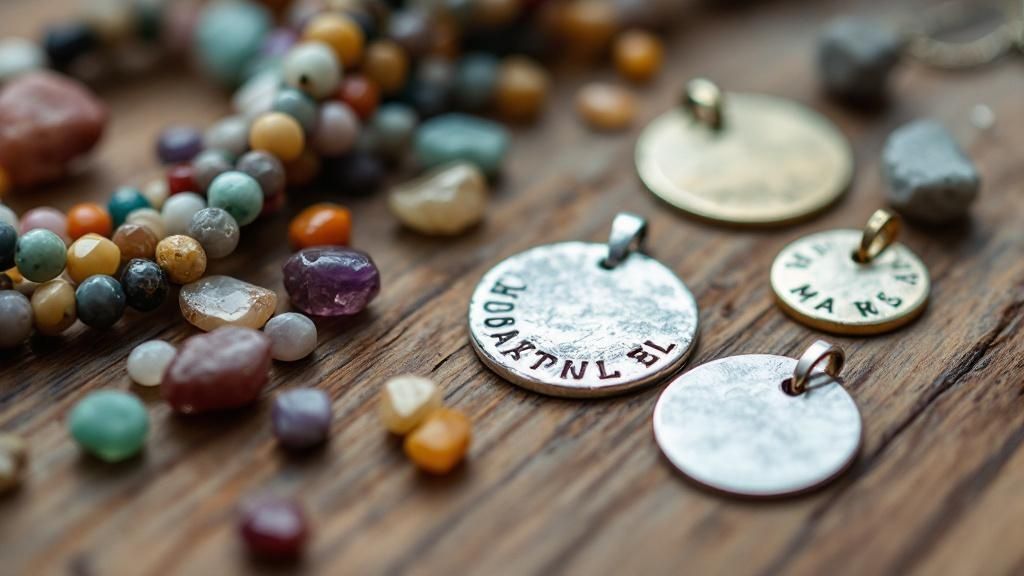
Let's break down the defining styles in jewelry today and, more importantly, see how they plug into the global fashion trends you need to know about. This isn't just theory; it's about making your designs beautiful, relevant, and ready to sell.
Core Pendant Styles for Every Maker
Every jewelry designer really ought to have a few core styles in their back pocket. Think of these as the foundational aesthetics that are always in style, each one a different playground for your creativity.
- Minimalist: This is all about clean lines, simple geometric shapes like circles and bars, and a "less is more" philosophy. It's quiet elegance. Picture a single, delicate silver bar or a tiny gold disc hanging from a barely-there chain.
- Statement: The complete opposite of minimalist. Statement pendants are made to be seen. They're big, they're dramatic, and they're the undeniable centerpiece of any outfit, often featuring vibrant colors or intricate designs.
- Bohemian (Boho): Drawing its vibe from nature, art, and a free-spirited lifestyle, boho pendants often feel very organic. You'll see a lot of raw gemstones, feathers, tassels, and hammered metals that give them an earthy, handmade feel.
- Vintage and Antique: This style is a nod to the past, pulling inspiration from the ornate details of the Victorian era or the sharp, geometric patterns of the Art Deco movement. Lockets, cameos, and delicate filigree work are classics here, giving off a sense of romance and history.
Playing with these core styles is how you start to develop your own unique look. You might even discover your niche by blending them—think of a minimalist bar pendant with a subtle, vintage-style engraving.
Tapping Into Global and Regional Fashion Trends
To really make a mark, you have to look beyond your own workbench and see what's happening in the wider world. Jewelry trends don't just appear out of nowhere; they're a reflection of cultural shifts and what people value. Aligning your designs with these bigger movements can give your work a serious advantage.
And make no mistake, the demand is there. The global market for necklace pendants is set to hit $2,425 million by 2025, a huge jump from $1,900.67 million in 2021. That kind of growth tells us that people's tastes are evolving, and there's a real hunger for fresh designs. You can dig deeper into these numbers over at CognitiveMarketResearch.com.
Of course, this growth isn't the same everywhere. Different parts of the world have their own distinct tastes, and knowing these little nuances is what helps you create pendants that people actually buy.
Actionable Insight: Don't just follow trends—interpret them. Instead of just copying a popular design, ask why it's popular. Is it the symbolism? The color? The material? The answer to that question is where you'll find inspiration for original work that still feels perfectly on-point.
Western Markets: The Power of Personalization
In North America and Europe, one trend rules them all: personalization. People are moving away from mass-produced accessories and are actively looking for pieces that tell their own story. This has opened up a huge market for a few specific types of pendants.
- Initial and Name Pendants: Simple, elegant letters let people carry the initials of their kids, their partner, or themselves.
- Birthstone Pendants: This is a timeless bestseller, especially for gifts. It's personal, colorful, and always meaningful.
- Engravable Pendants: Blank discs, bars, and lockets are essentially blank canvases for custom messages, important dates, or even the coordinates of a special place.
- Symbolic and Talismanic Pendants: Pieces with zodiac signs, spiritual symbols like the evil eye or Hamsa, or other meaningful charms are flying off the shelves. They're more than jewelry; they're personal talismans.
If you're aiming for these markets, offering customization isn't just a nice little extra—it should be a central part of your strategy.
Asia Pacific Markets: A Blend of Tradition and Modernity
The Asia Pacific region is an absolute powerhouse, expected to make up nearly 28.70% of the global necklace pendant market by 2025. What's fascinating here is the blend of ancient traditions with super-modern style.
In places like China, Japan, and India, there's a deep, long-standing appreciation for incredible craftsmanship and culturally rich designs.
- Traditional Motifs: Pendants with dragons, phoenixes, lotus flowers, or auspicious symbols are always in demand because they carry profound cultural weight.
- Precious Materials: There's a strong cultural preference for high-karat gold and precious gems like jade and ruby, which are seen as symbols of good fortune and status.
- Delicate and Layerable Designs: At the same time, especially among younger buyers, there’s a huge wave of interest in delicate, K-pop-inspired pendants that are perfect for layering to create a chic, modern look.
For makers hoping to connect with this market, the key is to focus on high-quality materials and designs that respect cultural heritage while feeling fresh and current. Understanding these global tastes will help you create pendants that you’re not only proud of but that also find a happy home.
How to Source High-Quality Pendants
Finding the right suppliers is one of those behind-the-scenes secrets that can truly make or break a jewelry business. A brilliant design falls flat without high-quality components, and learning where to find exceptional pendants for jewellery making is a skill that directly shapes your final product’s quality, longevity, and overall value. Sourcing isn’t just about making a purchase; it's about building relationships with partners you can trust.
So, let's pull back the curtain on how to source pendants with confidence. We'll walk through the best places to look, from online giants to hidden local gems, and cover how to properly vet suppliers. We'll also touch on why ethical sourcing is becoming non-negotiable for modern brands.
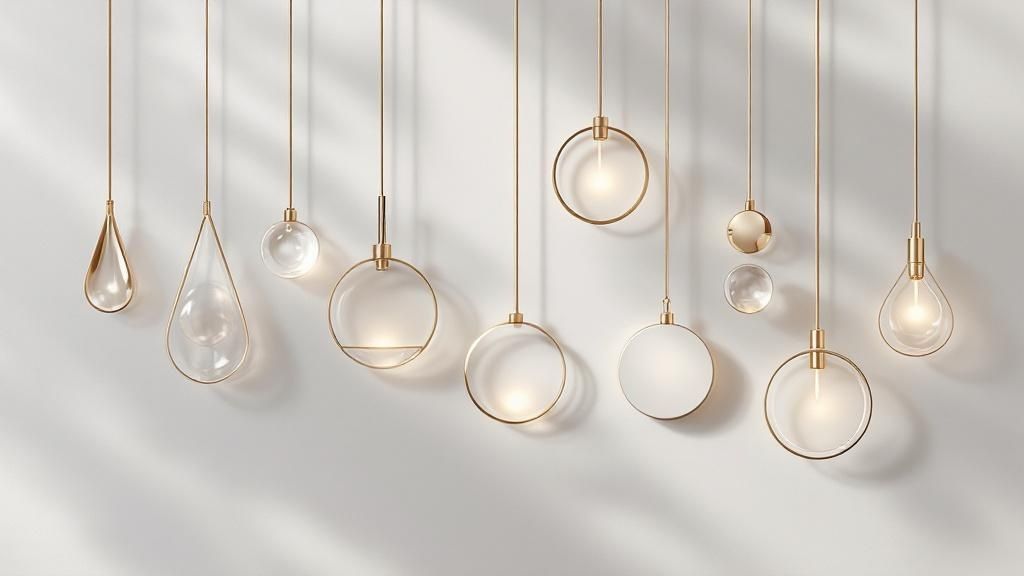
Exploring Your Sourcing Channels
First things first: you need to know where to even start looking. Every sourcing channel has its own personality and perks, whether you’re after bulk pricing, one-of-a-kind designs, or the chance to support another small business. Understanding these options helps you create a sourcing strategy that’s both flexible and reliable.
Here’s a quick rundown of the most popular places to find top-notch pendants:
- Online Wholesalers: These are your go-to for buying in volume. They offer massive catalogs and competitive pricing, which is a lifesaver when you're trying to scale your business and keep your profit margins healthy. This is the perfect channel for essentials like classic sterling silver settings or popular gemstone cuts.
- Artisan Marketplaces: Think of sites like Etsy as a treasure hunt for unique, handcrafted pendants. Buying from fellow artists is an amazing way to find those special focal pieces that make your own jewelry pop. Plus, it adds a great story of craftsmanship to your work.
- Local Bead Shops: Never underestimate the power of a brick-and-mortar shop. You can actually see and hold the pendants, which takes all the guesswork out of quality. Building a real-life relationship with local suppliers can also open doors to special orders and a first look at new arrivals.
A Checklist for Vetting Suppliers
Once you have a list of potential suppliers, the real homework begins. Taking the time to properly vet them is how you protect your business, your brand’s reputation, and ultimately, your customers. A great partner delivers more than just materials—they provide consistency and peace of mind.
Before you even think about placing a big order, run through this simple checklist. Treat it like you're interviewing someone for an important role in your business, because that's exactly what it is.
- Request Samples: Never, ever place a bulk order without seeing the product firsthand. You need to check the quality, weight, finish, and material authenticity for yourself. Any supplier worth their salt will be happy to provide samples.
- Inquire About Production: Don’t be shy about asking where their pendants are made and what their manufacturing process involves. This gives you a sense of their quality control and ethical standards.
- Clarify Lead Times: How long will it take to get your order? Unpredictable shipping can bring your entire production to a screeching halt, so look for clear, dependable timelines.
- Review Return Policies: What’s the plan if you receive damaged items or the wrong order? A fair and easy-to-understand return policy is a hallmark of a professional, confident supplier. For a deeper dive, our guide on sourcing wholesale jewelry for boutiques offers more great strategies.
Actionable Insight: Always start small with a new supplier. Place a modest test order to see how everything goes—not just the product quality, but the whole experience from communication to packaging and shipping speed. It's a low-risk way to build trust before you commit to a larger investment.
The Growing Importance of Ethical Sourcing
Modern shoppers are savvy. They care about where their products come from and want to know that their money is supporting ethical and sustainable practices. In fact, one recent study found that 66% of consumers will pay more for sustainable goods, and that number climbs to 73% for millennials.
This isn’t a fleeting trend—it’s a real shift in what people value. Making ethically sourced pendants a cornerstone of your collection can be a powerful way to set your brand apart.
Here’s what to focus on:
- Conflict-Free Materials: Make sure your gemstones and metals come from regions free from conflict and human exploitation.
- Fair Labor Practices: Work with suppliers who ensure safe working conditions and pay fair wages to their workers and artisans.
- Recycled Metals: Choosing recycled gold and silver is a fantastic way to lower your environmental footprint and connect with eco-conscious customers.
Being transparent about your commitment to ethical sourcing in your marketing and product descriptions builds a genuine connection with your audience. It tells them that your beautiful jewelry is backed by beautiful values—and that’s a brand story people are proud to get behind.
Design Principles for Creating Cohesive Jewelry
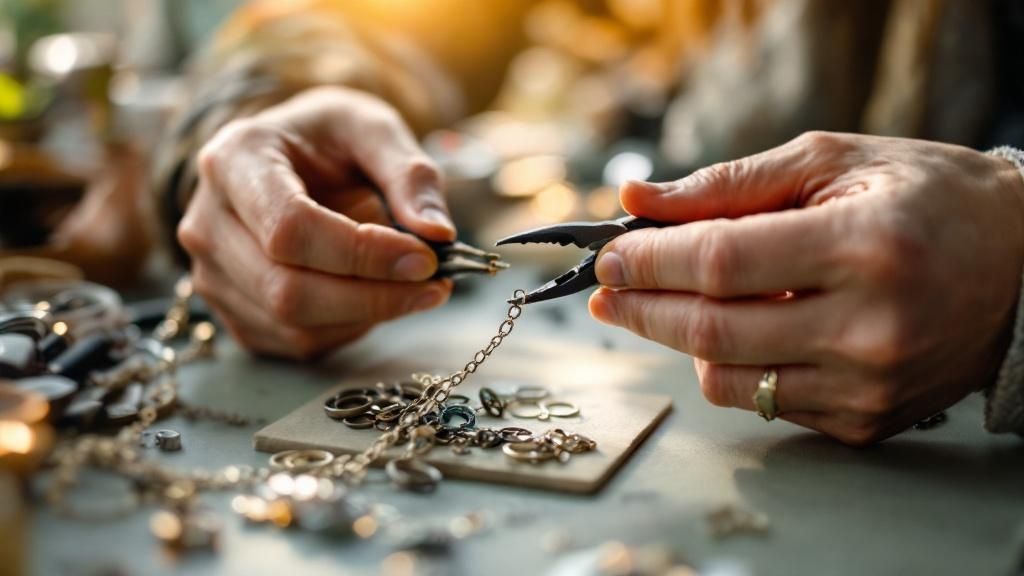
Having the right materials and popular styles is a great start, but it's design that really brings a piece of jewelry to life. Think of it as the soul of your work—the way you arrange each element to turn a handful of components into something truly special. This is where your unique touch as a maker shines through.
To make your pendants for jewelry making the star of the show, it helps to get a feel for a few core principles. This isn't about memorizing rigid rules; it's about developing an instinct for what just looks right. Once you get a handle on balance, proportion, and color, you'll find yourself creating pieces that have that polished, professional feel every single time.
This intuitive design sense is more important than ever. The global necklace market, valued at around $52.32 billion in 2025, is expected to swell to $75.85 billion by 2032. That growth is all about buyers looking for unique, personalized pieces, which puts well-designed pendants right at the center of a booming industry. You can dig into more of the data on this trend over at Fortune Business Insights.
Mastering Balance, Proportion, and Scale
Balance is all about the visual weight of your design. A piece feels balanced when everything is distributed in a way that’s pleasing to the eye, giving it a sense of stability. It’s what makes a necklace feel complete and harmonious, rather than clumsy or lopsided.
A classic challenge every maker faces is pairing a pendant with the right chain. This is all about proportion and scale. A big, hefty gemstone pendant is going to completely overwhelm a delicate, whisper-thin chain—it'll look off, and it might even break! On the flip side, a tiny, minimalist charm can get totally lost on a thick, chunky cord.
Here’s a quick guide to getting it right:
- For heavy pendants: Go for sturdy chains that can handle the weight and match the pendant's presence. Think box chains, wheat chains, or rope chains.
- For delicate pendants: Choose something that complements their subtlety. Fine cable, snake, or trace chains are perfect for letting the little details shine.
- Don't forget the bail: The loop connecting the pendant to the chain needs to be in proportion, too. A tiny bail on a large pendant looks strange and creates a weak spot.
Actionable Insight: The “rule of thirds” isn’t just for photography. Try imagining your necklace design divided into a 3x3 grid. Placing your focal point—the pendant—at one of the intersecting lines often creates a more dynamic and visually engaging piece than just sticking it dead center.
Harnessing the Power of Color Theory
Color is what gives your jewelry its mood. It can make a piece feel energetic, calm, luxurious, or playful. A little bit of color theory goes a long way in helping you pair pendants with beads, metals, and cords for a look that feels thoughtful and complete.
You don't need an art degree to master this. Just start with a basic color wheel and play around with these classic combinations:
- Complementary Colors: These are opposites on the wheel (like purple and yellow). This duo creates a high-contrast look that really makes your pendant pop. An amethyst set in yellow gold is a perfect example.
- Analogous Colors: These colors are neighbors on the wheel (like blue and green). This creates a more soothing, unified vibe. Picture a turquoise pendant accented with smaller apatite and peridot beads.
- Monochromatic Colors: This is all about using different shades of a single color. It's a chic and sophisticated approach that always looks elegant.
Even metals have their own color temperature. Cool-toned metals like sterling silver and platinum look fantastic with blue and purple gemstones. Meanwhile, warm-toned metals like yellow and rose gold beautifully amplify the fire in red, orange, and yellow stones. When you start seeing these relationships, you'll realize every element is working together to tell a single, compelling story.
Turning Your Pendant Designs Into a Business
So, you’ve got a passion for creating beautiful pendants and are wondering if you can turn it into a real business. Let me tell you, it's an exciting thought, and the market is more welcoming to skilled artisans than ever before. Thanks to e-commerce and a huge appetite for handcrafted goods, small makers like us have a straight shot at finding customers who truly appreciate quality and creativity.
The first step is realizing just how big the pond is that you're jumping into. The demand for pendants for jewellery making is tied to the global jewelry market, which hit around $348 billion in 2025. And it's not slowing down—projections show it could reach $450 billion by 2030. That growth is fueled by people all over the world looking for unique accessories. You can get a better sense of these trends over at CaratTrade.com.
Setting the Right Price for Your Pendants
Figuring out what to charge for your work is probably one of the toughest parts of starting out. It feels like a mix of art and science, doesn't it? A good pricing strategy has to do more than just cover your expenses; it needs to pay you for your skill and feel right for the market.
Here’s a simple formula I've always found helpful:
Material Costs + Your Time + Business Overhead = Base Price
Once you have that number, do a little homework. See what other makers with a similar style and quality are charging. This helps you find that perfect price point—one that reflects your hard work but also makes sense to a potential buyer. And please, don't sell yourself short. Your creativity is the most valuable part of the piece.
Actionable Insight: For your next few projects, track your time like a hawk. Seriously. Knowing exactly how long it takes to design, create, and polish a piece is the only way to make sure you're paying yourself a fair wage that keeps your business going.
Choosing Your Sales Channels
Where you decide to sell your jewelry is just as critical as what you make. Different venues attract different crowds, so it often pays to have a presence in a few places. Think of it as casting a wider net.
- Your Own Online Store: Using a platform like Shopify or Squarespace is like opening your own boutique. You control everything, from the branding to the customer experience.
- Artisan Marketplaces: Websites like Etsy are incredible for getting in front of a huge audience that's already looking for handmade pieces. They take care of the tech, so you can just focus on your craft.
- Local Artisan Markets: There’s nothing quite like selling in person. You get to meet your customers, see their reactions, and get instant feedback. That face-to-face connection is how you build a loyal local following.
If you want to dive deeper into the business mechanics, our guide on how to start a reselling business has some great tips that are just as relevant for makers.
Marketing Your Masterpieces
Okay, you've made something beautiful. Now, how do you get people to see it? Great marketing is how you bridge that gap. First things first: your photos have to be stunning. This is non-negotiable. Your pictures need to show off every detail, the true color, and the texture of your pendants. My best tip? Use natural light against a simple, clean background. Let the jewelry be the star.
Visual platforms like Instagram and Pinterest are a jewelry maker's best friend. Don't just post pictures of the finished product. Share your process! A little peek behind the curtain helps build a story around your work, creating a genuine connection that turns followers into loyal customers.
Common Questions About Pendants for Jewellery Making
As you dive deeper into the world of pendants for jewellery making, you're bound to run into a few common questions. It happens to everyone, whether you're just starting out or a seasoned pro looking to scale your business. Getting straight answers can make all the difference.
Think of this section as your quick-reference guide. We'll tackle some of the most frequent hurdles makers face, from proper care to picking the right components, giving you practical tips you can use right away.
How Should I Care for Different Pendant Materials?
Keeping your creations looking beautiful for the long haul comes down to proper care, and that all depends on the material you've used. Each one has its own quirks.
Precious metals like sterling silver, for example, will inevitably tarnish over time. A good quality polishing cloth is your best friend here—it gently lifts the tarnish without scratching the surface. For gold, a much simpler approach works wonders: just a soft cloth with a touch of mild soap and water.
Gemstone pendants require a bit more caution. You'll want to avoid harsh chemicals at all costs, especially with porous stones like turquoise or pearls, which can easily absorb them and become damaged. For more resilient materials like resin or wood, a quick wipe with a soft, damp cloth is usually all you need.
Actionable Insight: The single best piece of advice you can give your customers is to store their pendants separately in a soft pouch. It’s a simple habit that works wonders to prevent scratches and keeps delicate pieces looking brand new.
What Is the Difference Between a Pendant and a Charm?
This one trips a lot of people up! While they seem similar, the main difference really comes down to their role in a piece of jewelry.
A pendant is the star of the show. It’s typically a larger, central focal point meant to be worn on its own on a necklace. It's designed to draw the eye and make a statement.
A charm, on the other hand, is usually smaller and meant to be part of a group. Think of a charm bracelet loaded with meaningful little pieces. Charms are team players, while a pendant is a soloist. Of course, the lines can blur—a tiny pendant could absolutely work as a charm—but that's the general rule of thumb.
What Pendant Styles Are Most in Demand?
Right now, it's all about personalization. Pendants that tell a story—think initials, birthstones, or custom engravings—are flying off the shelves. People love pieces that feel uniquely theirs, which is great for you because it often allows for higher price points. If you want to dive deeper into that, our article on how to price jewelry for profit is a fantastic resource.
Another huge trend is the move toward natural and ethical designs. Pendants with raw, uncut gemstones and materials that are consciously sourced are really resonating with today's buyers. Instead of trying to do it all, picking a lane and owning it—like minimalist geometric shapes or bold bohemian styles—is often a much more successful strategy.
Ready to find the perfect pendants for your next collection? Explore thousands of high-quality, on-trend designs at JewelryBuyDirect. With factory-direct pricing and no minimum order, we make it easy for you to create more and save more. Start sourcing with JewelryBuyDirect today!