






Arthur Lynch | Thu Oct 30 2025
How to Source a Natural Stone Necklace Collection for Your Business
A natural stone necklace isn't just another piece of jewelry. It's a slice of the earth, a tangible connection to nature's beauty that resonates with today's consumers. For business owners, this is where the opportunity lies. You're not just selling an accessory; you're offering a product that taps into the growing desire for authenticity, wellness, and mindful fashion. Adding high-quality, affordable natural stone necklaces to your product lineup is one of the smartest inventory decisions you can make.
Why Natural Stone Necklaces Are a Smart Retail Investment
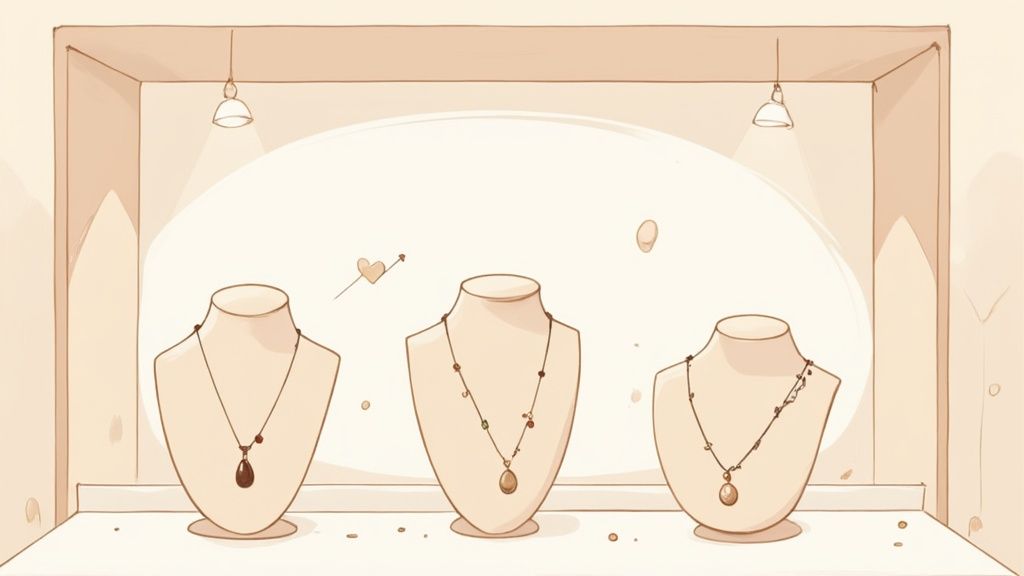
If you're in the business of sourcing jewelry and fashion accessories, you know trends come and go. Natural stone necklaces are different. They have a staying power that mass-produced items just can't match, thanks to their unique beauty and the market shift toward more meaningful purchases.
Consider this guide your inside track for sourcing. We'll walk through exactly what you need to know to build out a collection of natural stone jewelry that not only looks great but sells consistently. It’s your blueprint for turning these beautiful stones into a thriving part of your business.
Building a Profitable Collection
Sourcing success really boils down to getting a few key things right. Nail these, and you'll create a supply chain you can count on and offer pieces your customers will genuinely love, driving repeat business.
- Know Your Stones: The first step is understanding what’s popular and profitable. Are your target customers looking for the soothing energy of Amethyst or the bold, earthy vibe of Turquoise? Knowing the top sellers is crucial for inventory planning.
- Focus on Quality: You must be able to differentiate genuine articles from imitations. Learning to spot authentic stones and solid craftsmanship is how you build a reputation as a trusted source and protect your margins.
- Find Your Sourcing Partners: This is non-negotiable. You need reliable suppliers who provide consistent quality at wholesale prices. They are the backbone of your entire operation.
The real opportunity isn't just in the product itself, but in the story behind each stone. Today's consumers aren't just buying an object; they're investing in something that reflects their personal brand.
Get these pieces of the puzzle right, and you’ll be able to source with confidence. You'll build a collection that not only drives sales but also earns you loyal, repeat customers.
What's Driving the Natural Stone Necklace Trend?
To successfully source and sell natural stone necklaces, you have to understand what’s making them so popular. This isn't just a fleeting fashion moment; it's a solid, growing market backed by significant shifts in consumer behavior and values.
Let's look at the numbers. The global necklace market, where natural stones are a huge player, was valued at around USD 50.03 billion. It's on track to hit USD 75.85 billion by 2032. That’s a steady compound annual growth rate (CAGR) of 5.45%, which indicates consistent consumer demand that businesses can rely on.
This growth is fueled by increased disposable income and, more importantly, a growing desire for jewelry that feels personal and meaningful.
The Forces Behind the Boom
So, what's turning these beautiful stones into must-have accessories? A few key factors are creating the perfect storm for retailers and wholesalers.
- The Power of Social Media: Platforms like Instagram and TikTok are visual-first. The vibrant colors and one-of-a-kind textures of a natural stone necklace are perfect for catching a potential customer's eye. A single influencer post can drive demand for a specific stone overnight.
- Shopping Without Borders: E-commerce has completely changed the game. An online retail presence lets businesses reach customers globally who are hunting for a specific gemstone or a unique design they can't find locally.
- A Hunger for Authenticity: Shoppers are tired of cookie-cutter, mass-produced items. They're looking for products that feel real and handcrafted, and a natural stone necklace—each with its own unique story and imperfections—ticks all the right boxes for this consumer segment.
A key market to watch is the Asia-Pacific region. It's the biggest piece of the pie, holding a massive 40.9% of the market share. This area isn't just a production powerhouse; it's also packed with eager buyers, making it a critical hub for sourcing.
How to Ride the Wave
For a business owner, these trends point to clear sourcing opportunities. The market's obsession with authenticity is your best marketing tool. Highlighting that no two stones are exactly alike can create a powerful value proposition for your customers.
This growth also fits perfectly with what's happening in the wider fashion world. To see how these pieces fit into the bigger style picture, take a look at our guide on the top jewelry trends for 2024. By getting a handle on these market forces, you can stock the exact natural stone necklaces your customers are already searching for.
Choosing Stones That Sell: A Retailer's Guide
Selecting the right natural stone necklaces for your business is about strategic inventory management. It’s about looking past what’s simply pretty and focusing on what is marketable and profitable.
Some stones are timeless classics, each with a solid market identity. Amethyst, with its deep purple tones, has a huge following in the wellness community for its association with calmness. Then you have Rose Quartz. Its gentle pink hue makes it a top seller for markets built around love and self-care, with sales often peaking around Valentine's Day and Mother's Day.
This data shows just how much demand there is for natural stone necklaces, highlighting significant market growth and key regions for sourcing and sales.
As you can see, the market is expanding at a healthy clip, with the Asia-Pacific region acting as a major hub for both production and sales, offering significant opportunities for sourcing.
Aligning Stones With Target Audiences
To build a profitable collection, you must match the stone to the customer. Not every natural stone appeals to the same demographic, and understanding these nuances is key to maximizing sales.
Think about Turquoise. Its bright, earthy blue-greens are a staple of bohemian and festival fashion, drawing in a free-spirited customer base. Sales for these pieces often spike during the spring and summer. On the flip side, Moonstone and its ethereal glow appeal to a different crowd—those interested in mysticism and feminine energy, making it a reliable seller all year long.
Knowing which gems hold up best in jewelry is crucial for quality control. To get a better handle on durability, value, and beauty, this guide to the best gemstones for jewelry is a great resource for deepening your product knowledge.
To help you get started with sourcing, here’s a quick-reference table that breaks down some of the most popular stones for retail.
Top Natural Stones for Retail Necklaces
| Stone Type | Primary Colors | Key Market Appeal | Wholesale Price Tier (Low/Mid/High) |
|---|---|---|---|
| Amethyst | Shades of purple | Wellness, spirituality, February birthstone | Low |
| Rose Quartz | Pale to deep pink | Love, self-care, romance, Valentine's Day | Low |
| Turquoise | Blue, green, brown matrix | Bohemian, festival style, Southwestern fashion | Mid |
| Moonstone | White, blue sheen | Mysticism, feminine energy, intuition | Mid |
| Lapis Lazuli | Deep blue, gold flecks | Royalty, wisdom, luxury, artistic appeal | Mid |
| Clear Quartz | Colorless, transparent | Healing, clarity, versatile for any style | Low |
| Labradorite | Gray-green, blue/gold flash | Magic, transformation, unique & eye-catching | Mid |
This table is a starting point, but it shows how you can build a versatile inventory that speaks to different customer profiles and purchasing triggers.
By curating a selection that includes these popular stones, you're not just selling a product; you're offering an accessory that aligns with your customer's identity, lifestyle, and values, which drives higher conversion rates.
Stocking a thoughtful mix of these proven winners gives you a solid foundation for your natural stone necklace category, turning it into a reliable and profitable part of your business.
How to Spot Quality and Authenticity in Gemstones
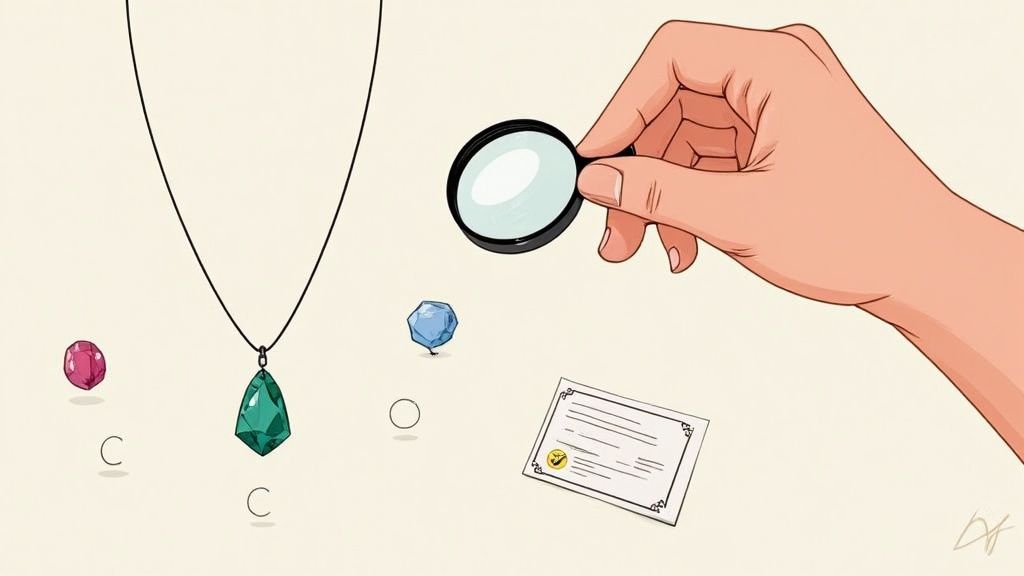
When sourcing natural stone necklaces, your business's reputation rides on your ability to tell the real deal from a convincing fake. It's a skill that protects your investment from costly mistakes and ensures your customers get the genuine value they’re paying for.
A great place to start is the "4 Cs." While most people associate this framework with diamonds, it’s a fantastic guide for evaluating the quality of almost any gemstone.
Mastering the Four Cs
Think of the 4 Cs as your quality control checklist. Each "C" plays a part in a stone's appearance and overall value, giving you a solid, reliable way to assess potential inventory.
- Color: Look for richness and consistency. Is the hue deep and even, or is it pale and patchy? A top-quality stone boasts a vibrant, saturated color that's distributed evenly.
- Clarity: This refers to internal characteristics, or inclusions. Most natural stones have them—it's part of their unique fingerprint. But too many can make a stone look cloudy or dull, reducing its value.
- Cut: The cut is what brings a stone to life. A masterful cut will maximize the gem's brilliance by reflecting light, while a poor cut can make even the most stunning stone look flat and lifeless.
- Carat: This simply refers to the stone's weight. While a bigger carat weight usually means a higher price, remember that the other three Cs have a much greater impact on a stone's true beauty and sell-through potential.
Here's a pro tip for sourcing: authenticity often shows up in the imperfections. If a supplier offers a perfectly flawless, intensely colored stone for a rock-bottom price, that’s a massive red flag. It’s likely synthetic or colored glass.
It's also worth noting how ethical sourcing is changing the game. While natural gems still dominate, the market for synthetic stones is growing at a 7.8% CAGR, driven by customers wanting conflict-free and sustainable jewelry. This shift makes supplier transparency and proper certifications more critical than ever.
You can dive deeper into these trends on platforms like Mordor Intelligence. Arming yourself with this knowledge is the first step to making smarter buying decisions, which we cover in our guide on all things natural stone necklaces.
Finding Affordable and Reliable Wholesale Suppliers
Once you've identified which stones to carry, you hit the most critical step: finding the right partners to supply them. This is the foundation of your business. Success means finding that sweet spot where reliability and affordability meet, which ultimately determines your profit margins and your brand's reputation.
Sourcing isn't just a race to the bottom on price. It's about building a stable, dependable supply chain you can count on for consistent quality and fulfillment.
The market for natural gemstones is huge—it makes up about 75.3% of the entire global gemstone market. We're talking about a market valued at USD 101.73 billion and still growing, so the demand for quality sourcing is intense. Much of that growth is happening in the Asia-Pacific region, which has become a major hub for finding excellent suppliers.
Exploring Sourcing Channels
Your search for the perfect supplier can take you down a few different avenues, and each one has its own strategic advantages.
Many of the most successful retailers find their best partners by attending major international trade shows. For example, you can explore opportunities at the Canton Fair, a massive sourcing event in China where you can meet countless manufacturers face-to-face, negotiate terms, and inspect products firsthand.
Of course, you can also find a treasure trove of options online. B2B marketplaces like Alibaba and JewelTree put a vast global selection at your fingertips. These platforms are fantastic for discovering new artisans and factories. For a more curated list of trusted partners, we've put together our top picks for the best wholesale jewelry suppliers for small businesses.
A supplier is more than a vendor; they are a business partner. Prioritize clear communication, transparency about production, and a willingness to provide samples before you commit to a large order. This initial vetting process saves significant time and money down the line.
No matter where you look, due diligence is non-negotiable. Always request samples to assess quality firsthand. It's also smart to verify their business credentials and ask about their production capacity to ensure they can scale with your business.
Finally, have a frank conversation about their Minimum Order Quantities (MOQs). You need to find a partner whose requirements align with your budget and inventory strategy.
A Few Common Questions About Sourcing Necklaces
When you're first diving into sourcing natural stone necklaces for your business, many practical questions arise. Getting clear answers is the best way to move forward with confidence and build a profitable collection. Let’s tackle some of the most common hurdles business owners face.
The single biggest mistake new buyers make is chasing the absolute lowest price. While cost management is critical, sourcing cheap, low-grade, or fake stones can destroy your brand’s reputation. The goal is to find the optimal balance between affordability and genuine quality that protects your margins and satisfies customers.
Think of it this way: a reliable supplier who provides consistent quality at a fair price is a long-term business asset. It's an investment. Always take the time to vet them by requesting samples, checking business credentials, and looking for reviews from other business buyers.
How Can I Be Sure the Stones Are Real?
This is a critical question for any business. How do you verify a wholesale supplier’s stones are authentic? It comes down to a few practical checks. First, just ask them. A reputable supplier will be transparent about where their stones come from and provide any certifications they have, especially for higher-value gems.
Once you have samples, you can perform simple tests yourself.
- The Touch Test: Real stones usually feel cool to the touch.
- The Eye Test: Look closely for tiny, natural flaws called inclusions. Perfectly flawless stones are extremely rare and a common red flag for synthetics.
- The Weight Test: Genuine stones almost always feel heavier than their glass or plastic counterparts.
Ultimately, a supplier worth partnering with will be transparent and open to questions. For a significant order, consider getting a sample professionally appraised by a gemologist. That small upfront investment can provide major peace of mind and protect your capital.
What About Online Wholesale Marketplaces?
So, are online B2B marketplaces like Alibaba, Faire, or JewelTree good sourcing channels? Absolutely, they can be fantastic resources. The key is to do your homework. Focus on suppliers who have an established history on the platform, numerous positive reviews, and verified business credentials.
My best piece of advice is this: before you ever commit to a big inventory purchase online, place a small sample order first. It's the only way to truly gauge the quality of the necklaces, see how long shipping actually takes, and get a feel for the supplier's communication.
These platforms provide access to a huge variety of products, but a methodical vetting process is essential to find the true gems (pun intended).
Ready to source high-quality, affordable natural stone necklaces with confidence? Explore the extensive collection at JewelryBuyDirect, where you'll find thousands of on-trend styles with no minimum order, factory-direct pricing, and reliable global shipping. Start building your profitable jewelry collection today at https://www.jewelrybuydirect.com.