






Arthur Lynch | Sun Dec 28 2025
Mood Ring Colors Meanings: A Guide for Your Business
The color you see on a mood ring is a direct reflection of your body temperature, which often changes right along with your emotions. A warm finger might trigger a passionate purple, while a cooler touch could shift the stone to a calm blue. It's a fun, visual hint at what's going on inside—and a proven bestseller for businesses.
Your Instant Guide to Mood Ring Colors
Mood rings aren't just a quirky throwback; they represent a fascinating blend of science, style, and personal feeling. After first exploding in popularity back in the 1970s, these color-changing accessories are staging a serious comeback. This revival is fueled by a love for all things retro and a growing interest in mindful self-expression. For anyone in the fashion or accessory business, this trend is a golden opportunity.
What’s the secret to their lasting appeal? It’s the simple, captivating magic. People love the interactive part—watching the colors shift and then trying to figure out what each hue means for their current mood. It’s this unique quality that transforms a piece of jewelry into a conversation piece and a personal experience, making it an incredibly easy and profitable item to keep in stock.
The Simple Science Behind the Magic
The "magic" inside every mood ring comes down to something called thermochromic liquid crystals. You can think of these crystals as microscopic, heat-sensitive prisms. When your body temperature shifts in response to an emotion—for example, excitement can increase blood flow and warm up your skin—these tiny crystals literally twist.
This twisting movement changes their molecular structure, which in turn alters the wavelengths of light they reflect. The result? The color you see on the ring changes. So, it's not reading your mind, but it is reacting to real physiological changes in your body.
This visual breaks down how your body heat powers the color-changing effect.
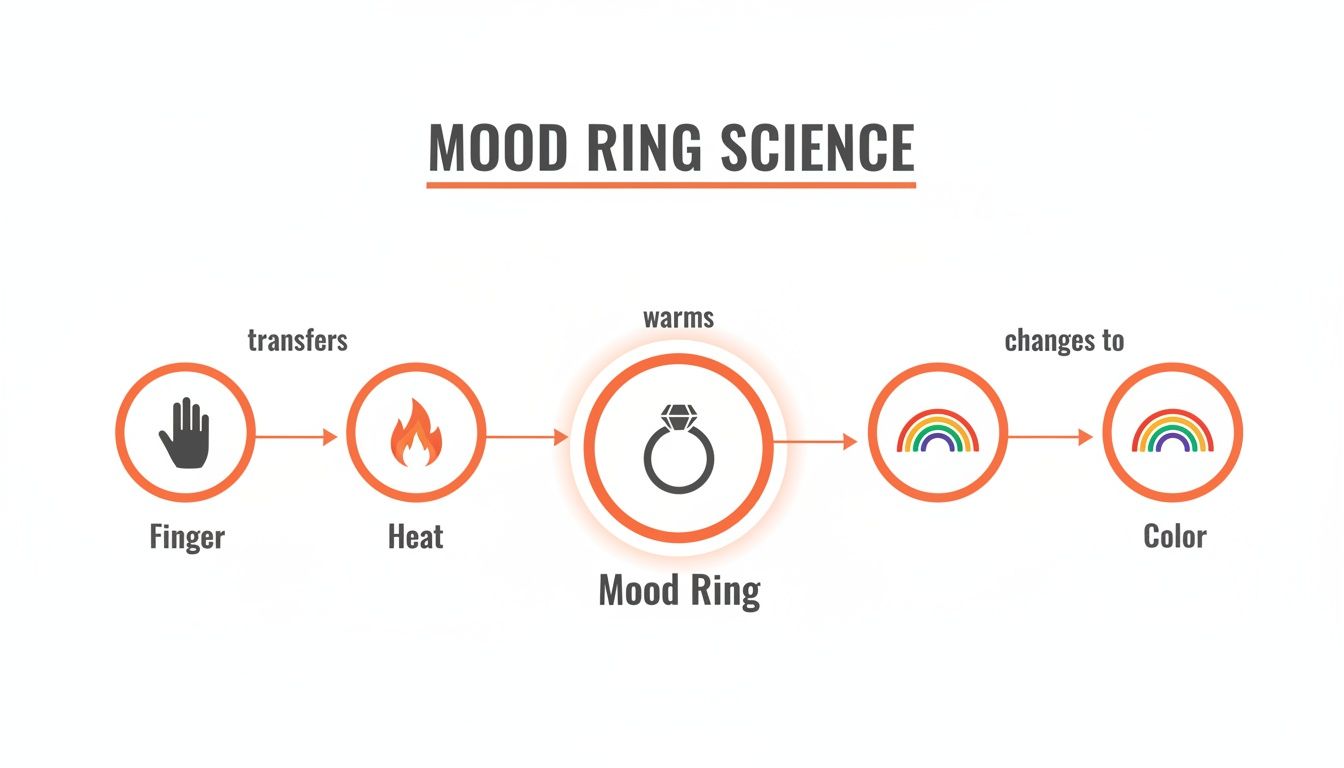
As the infographic shows, it’s a straightforward process: the warmth from your finger transfers to the ring, causing the liquid crystals to react and display a different color.
Grasping this simple science is a game-changer for retailers. It lets you explain the product confidently, pulling back the curtain on the "magic" and giving it a layer of credibility that shoppers find fascinating. This knowledge elevates a novelty item into an interesting piece of wearable tech.
For a quick reference, here's a rundown of the most common colors and what they're generally thought to mean.
Quick Guide to Mood Ring Color Meanings
| Color | Associated Emotion | Common Temperature State |
|---|---|---|
| Black | Stressed, Tense, Overworked | Cold |
| Gray | Anxious, Nervous, Worried | Cool |
| Amber | Unsettled, Mixed Emotions | Slightly Cool |
| Green | Neutral, Calm, Average | Normal Body Temp |
| Blue | Relaxed, Peaceful, At Ease | Warm |
| Purple | Passionate, Excited, Romantic | Hot |
This table serves as a handy cheat sheet, perfect for sharing with customers who are curious about what their ring is telling them.
Ultimately, by stocking mood rings, you're not just selling another piece of jewelry. You're offering a fun, interactive experience that's grounded in real science. That unique selling point is a powerful way to draw in customers and drive sales.
For any business owner, jumping on this trend is all about finding a reliable wholesale partner. Getting access to high-quality, affordable mood rings means you can meet the demand without squeezing your profit margins. It's about turning a timeless fad into a tangible business advantage, one color-shifting ring at a time.
The Story Behind the Original Viral Accessory
Long before TikTok dances and trending hashtags, there was the mood ring. It was the original viral sensation, a simple piece of jewelry that perfectly captured the spirit of the 1970s. That era, often called the "Me Decade," was all about self-discovery and getting in touch with your emotions. The mood ring wasn't just another accessory; it was a tiny window into your inner world.
People were completely captivated by the idea that a ring could magically reveal their feelings. It was an instant conversation starter, tapping right into the '70s fascination with biofeedback and personal psychology. This little ring became the must-have item for millions, turning a novelty into a full-blown global phenomenon.
From Fad to Fortune
The mood ring’s rise to fame was explosive. It hit the market in 1975, and within just a few months, it was one of the biggest fads of the decade. The secret was its thermochromic liquid crystals, which reacted to tiny shifts in your skin temperature between 32–38°C (90–100°F).
The sales numbers were staggering. By December of 1975, the craze had generated $15 million in sales—that's over $85 million in today's money. You can read more about the original mood ring craze and its technology to see just how big it was. This wasn't some niche product; it was a cultural touchstone that proved an accessory could connect with people on a deeply personal level.
Why Nostalgia Is a Retailer's Best Friend
That initial success story is far from over. As we all know, fashion moves in cycles, and the pull of nostalgia is a powerful force in retail today. The same hunger for self-expression that made the mood ring a hit in the '70s is just as strong now, which gives this product a built-in, ready-made audience.
For any modern boutique or online shop, that history is a compelling business case. Mood rings aren't some unproven trend you have to take a gamble on. They're a classic with decades of proven appeal, and their story is a fantastic sales tool.
When you stock mood rings, you're not just selling an accessory—you're offering customers a piece of pop culture history. That nostalgic connection triggers an emotional purchase, leading to better customer engagement and, ultimately, more sales.
Capitalizing on a Proven Winner
The legacy of the mood ring is a clear lesson for any retailer. It shows that accessories with a personal, interactive element have incredible staying power. Its history of mass appeal translates directly to profitability in a market that loves retro trends and personalized items.
By sourcing quality, affordable mood rings, you can tap into this recurring fashion cycle. They're a perfect product for driving sales.
- Impulse Buys: Their low price and fun, interactive nature make them a perfect item to have at the checkout counter.
- Gift Items: The idea of "reading someone's mood" makes them a unique and thoughtful gift.
- Up-Selling: They’re an easy and fun add-on to a larger purchase, boosting your average order value.
At its core, the mood ring's story is one of commercial success driven by human connection. For business owners, it's a great reminder that some trends never really die—they just wait for their moment to come back around.
Decoding the Full Spectrum of Emotions
A quick-reference chart is great, but really understanding why a mood ring changes color is where the magic lies. Each hue isn't just a random assignment. It's directly tied to the subtle ways our bodies respond to our feelings, telling a story about your inner world by reading the most honest indicator there is—your body heat.
As we dive into the full spectrum, you'll see how each color family, from cool blues to fiery purples, paints a surprisingly accurate picture of your current state. For anyone selling these fascinating accessories, this deeper knowledge is invaluable. It lets you move beyond selling a simple novelty and instead offer a fun, intuitive reflection of personal feeling.
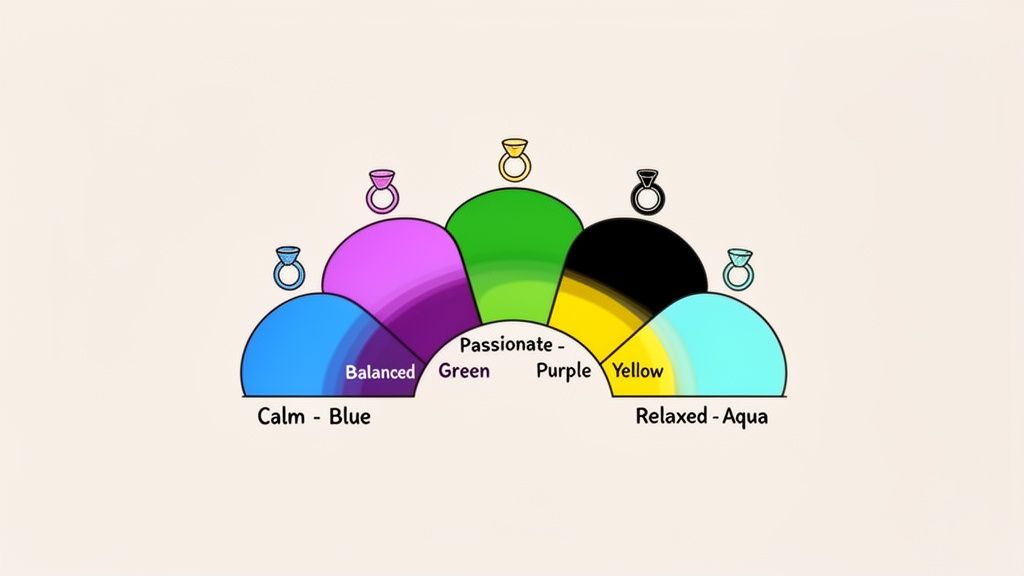
The Cool Tones: Blues and Greens
When your mood ring shows a cool, calm blue, it's usually a sign that you're feeling relaxed and at peace. Physiologically, this makes perfect sense. When you're tranquil, your heart rate is steady and your circulation is normal, keeping your skin at a comfortable, even temperature. That relaxed state is what lets the liquid crystals settle into a formation that reflects a peaceful blue.
Green is the emotional center of the mood ring world. It represents balance, neutrality—that "just right" feeling. It’s the color of an average, stress-free moment where you’re not particularly excited or anxious. Think of it as your emotional baseline: calm, alert, and ready for whatever comes next.
- Sky Blue: A lighter blue often points to a serene mindset, perfect for quiet contemplation.
- Deep Royal Blue: This richer shade suggests a deep state of relaxation and contentment.
- Emerald Green: This is the default "all is well" color, signifying emotional equilibrium.
The Warm Tones: Purples and Pinks
When your emotions heat up, so does your body. That’s when you'll see the warm tones appear. A vibrant purple or a rosy pink is the classic sign of passion, excitement, or romance. These heightened feelings cause the tiny blood vessels in your fingers to expand, bringing more warm blood to the surface of your skin.
This little surge in temperature is what makes the crystals twist and shift, reflecting those intense, beautiful colors. It’s the ring’s way of showing that your heart is fluttering, whether from love, a spark of creativity, or pure joy.
A purple hue on a mood ring is a direct signal of heightened emotional and physiological activity. It’s the color of passion because passion literally warms you up, and the ring is simply reporting that fascinating fact.
The In-Between Hues: Yellows and Ambers
Sitting right between the calm greens and the intense purples are the transitional colors: yellow and amber. These shades often pop up when you're in a state of flux or feeling a mix of emotions. An amber or orange color can suggest you're feeling a bit unsettled or your mind is racing.
Yellow, on the other hand, can point toward creativity and focus. It’s an alert state, but not necessarily a stressed one. Think of these hues as the mind in motion—processing, analyzing, and creating. They signal a state that's more active than calm green but less intense than passionate purple.
The Darkest Shades: Grays and Blacks
At the coldest end of the spectrum, you’ll find the dark, muted colors of gray and black. When a mood ring turns black, it means your skin temperature has dropped significantly. This usually happens for two reasons: you’re either physically cold, or you’re feeling intense stress, fear, or anger.
These powerful negative emotions can trigger the body’s "fight or flight" response. This response pulls blood away from your fingers and toes and sends it to your major organs. This reaction cools your fingers down fast, causing the liquid crystals to go dormant and appear black. Gray often acts as a warning sign, indicating nervousness or anxiety is just starting to lower your skin temperature.
Of course, beyond the science, many people connect these colors to deeper spiritual meanings. If you're curious about that perspective, you might enjoy learning about the spiritual significance of colors and chakras.
Ultimately, decoding a mood ring is about connecting an emotional state to a physical reaction. By understanding what each color truly signifies, you can share a richer, more engaging story with your customers. It transforms a simple piece of jewelry into a personal experience.
The Science Behind the Shifting Colors
Ever wonder how a mood ring actually works? It’s not magic, but it’s still pretty incredible. The secret isn't mind-reading; it’s a clever bit of chemistry that turns your body's subtle temperature changes into a beautiful, ever-shifting display of color.
At the heart of every mood ring are thermochromic liquid crystals. These are microscopic, temperature-sensitive crystals suspended in a clear liquid, all sealed inside the ring’s glass or quartz "stone." Think of them as tiny, heat-activated prisms.
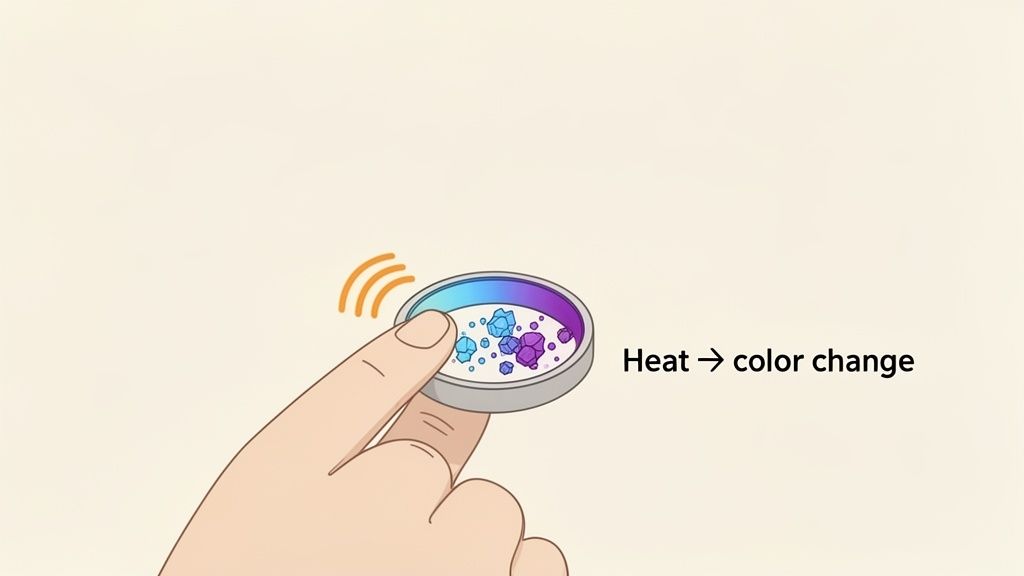
It’s All About Body Heat
These little crystals are constantly in motion. As your body temperature shifts, even slightly, they twist and turn. This twisting changes their molecular structure, altering which wavelengths of light they absorb and which they reflect.
The color you see on the ring is just the light that’s being bounced back to your eye at that very moment. A cooler temperature makes the crystals huddle in a way that reflects darker tones, while warmer temperatures cause them to loosen up and show off brighter hues.
How Feelings Fuel the Color Change
So where do emotions come in? While the ring can't read your thoughts, it can read your body's physical reaction to them. It’s a crucial link that makes the whole thing work.
Your emotional state causes real, measurable physiological changes.
- Excitement or Passion: When you feel a rush of passion or happiness, your heart often beats a little faster. This sends more warm blood to the surface of your skin, including your fingers, warming up the ring and shifting the crystals toward vibrant blues and purples.
- Stress or Anxiety: Feeling nervous? Your body's "fight or flight" response kicks in, pulling blood away from your extremities and toward your core organs. This makes your fingers cooler, causing the ring's crystals to shift into darker, murkier shades like gray or even black.
A mood ring is basically a wearable thermometer. It translates the unspoken language of your body's temperature into a visual spectrum, giving you a colorful clue about your underlying physiological state.
By explaining this, you can bust the myth that mood rings are psychic. They're simply responding to the very real connection between our emotions and our body temperature. It's science, not sorcery.
The Color-Change Process in a Nutshell
Breaking it down, the constant color-shifting of a mood ring follows a simple, three-step cycle. This is what's happening every second you have it on.
- Heat Transfer: Your body heat warms the ring, transferring energy directly to the liquid crystals inside the stone.
- Crystal Reaction: In response to the change in temperature, the crystals twist and realign their structure.
- Light Reflection: This new alignment changes how the crystals interact with light, causing a new color to be reflected back at you.
This rapid, continuous cycle is what creates the fluid, mesmerizing dance of color that has fascinated people for generations.
Sourcing Mood Rings for Maximum Profit
It’s one thing to know the science behind mood rings, but it's another to turn that knowledge into a profitable business. For any retailer, the real secret isn’t just about stocking any mood ring; it's about finding a supply chain that directly pads your bottom line. You have to look beyond the product itself and find a wholesale partner who’s genuinely invested in your growth.
A great supplier is more than just a vendor—they're a partner. Look for one that offers factory-direct pricing. This is huge. It often means you can get your inventory for 15–30% below the typical market rate because you're cutting out the middlemen. Those savings go straight to your profit margin on every single ring you sell.
Flexibility is just as critical. A supplier with no minimum order quantity (MOQ) completely changes the game, especially for small businesses. A pop-up shop can test the waters with a new design without a scary upfront investment. At the same time, a larger boutique can quickly restock a bestseller without being forced to buy in bulk. It’s a win-win.
Build an Inventory That Sells Itself
A smart sourcing strategy is all about variety. You need to offer a range that speaks to different types of customers, from the impulse buyer at the checkout counter to someone looking for a special gift. This approach ensures you’re not leaving money on the table.
Think about building a tiered collection:
- Affordable Alloy Rings: These are your bread and butter for impulse buys. They’re perfect for younger customers or as a fun, low-cost add-on that can boost a sale right at the register.
- Premium 925 Sterling Silver: For your boutique shoppers or anyone looking for a more durable, high-quality gift, sterling silver elevates your entire collection. It allows you to cater to a more discerning crowd and justifies a higher price.
By offering both, you make sure every customer finds something that fits their budget and taste. And the demand is definitely there. A quick look at Amazon shows over 500,000 units sold annually, and Etsy has seen a 45% increase in vintage mood ring resales since the pandemic. For retailers, suppliers with no MOQ make it possible to tap into this market risk-free. Plus, data shows that adding mood jewelry can lift average cart values by 20%, especially in social commerce settings.
Keep Up With Trends Before They Go Viral
The world of fashion and accessories moves incredibly fast, with trends blowing up overnight on platforms like TikTok. Your best defense against falling behind is a nimble supply chain. A wholesaler that offers daily new arrivals gives you a massive advantage.
This constant flow of new products means you can:
- Jump on trends instantly: See a design going viral? Add it to your store right away.
- Keep things fresh: Give loyal customers a reason to keep coming back to see what's new.
- Experiment without risk: Test out a quirky new style without having to commit to a huge order.
In retail today, agility is profit. A supply chain that delivers fresh, on-trend products every day isn't a luxury—it's essential for grabbing market share and getting the best return on your investment.
Ultimately, sourcing isn't just about the product; it's about the partnership. When you find a wholesale supplier that offers factory-direct pricing, no MOQ, and a steady stream of new designs, you're building a foundation for a resilient, profitable business. As you continue to explore the fascinating mood ring colors meanings in our guide, just remember that the right sourcing strategy is what turns customer curiosity into consistent sales.
Essential Care for Mood Jewelry Longevity
Think of a mood ring as a tiny, wearable thermometer. Those mesmerizing color shifts are powered by delicate liquid crystals sealed inside the "stone," and they need a little TLC to keep the magic alive.
Sharing a few simple care tips with your customers isn't just good service—it's how you build trust and show you're an expert. When they know how to protect their new treasure, they'll enjoy it for years to come and remember where they got it. The main goal is to keep that sealed stone safe from anything that could throw off its temperature-sensing powers.
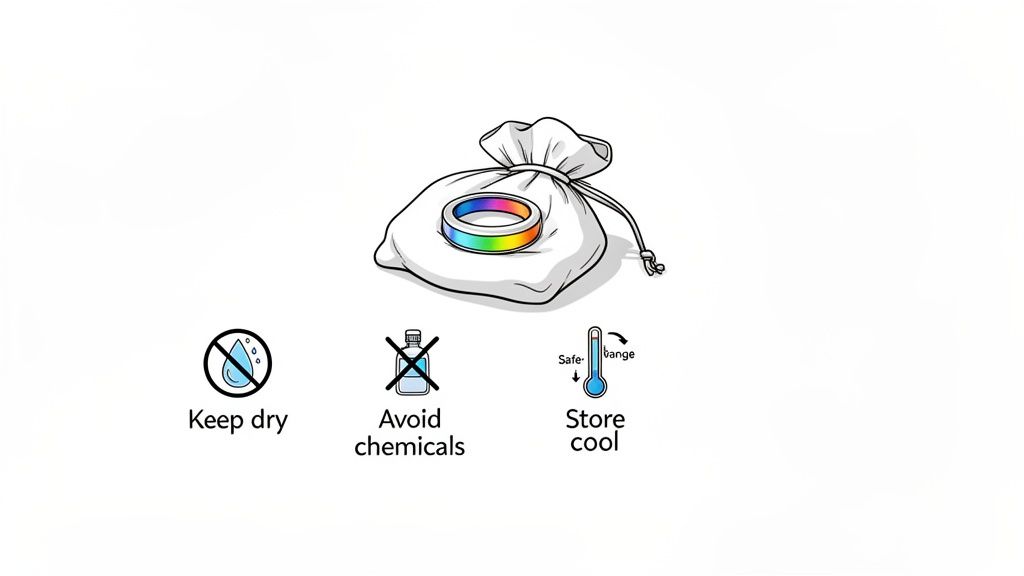
Key Care Recommendations
To keep mood jewelry vibrant, pass these three golden rules on to your customers. Following them will prevent the kind of irreversible damage that stops the color-shifting fun in its tracks.
-
Keep It Dry: This is the big one. Always take a mood ring off before washing hands, showering, or hopping in the pool. Water has a sneaky way of seeping under the stone's setting, and once it hits those liquid crystals, the ring can turn permanently black.
-
Avoid Harsh Chemicals: Perfumes, lotions, and especially cleaning products are the enemy of a mood ring. These chemicals can eat away at the stone's protective seal and tarnish the band. If the metal parts need a polish, you can learn more about safe methods in our guide on how to clean tarnished jewelry.
-
Protect It From Extreme Temperatures: Never leave a mood ring on a sunny dashboard or out in the freezing cold. Extreme heat or cold can shock the crystals, causing them to get "stuck" on a single color forever. A jewelry box in a cool, dry spot is the perfect home for it.
Educating your customers on how to care for their jewelry adds value that goes way beyond the price tag. It shows you genuinely care about their happiness with the product, which is a fantastic way to build loyalty and keep them coming back.
Of course, many of these principles apply to all kinds of accessories. For a broader look at maintaining a whole collection, these comprehensive jewelry care tips are a great resource for keeping every piece looking its best.
Your Top Mood Ring Questions Answered
If you carry mood rings in your shop, you've probably heard these questions a thousand times. Having great answers ready to go doesn't just help your customers—it shows you know your stuff and builds serious trust. Let's walk through the most common questions you'll get.
Are the Color Meanings for Real?
This is the big one. The short answer? Yes, but not in a magical, mind-reading way. Mood rings are based on real science.
Their colors change in response to temperature, and our body temperature often shifts with our emotions. When you're excited or passionate, blood flows closer to the skin's surface, warming it up and turning the ring a vibrant blue or purple. Feeling stressed? Your body might divert blood flow inward, cooling your fingers and making the ring turn a darker, murky color.
So, you can tell customers with confidence that a mood ring is a fun, wearable reflection of their body's real-time physical responses. It's not a medical device, but it's a fascinating piece of body-aware tech.
Why Is My Mood Ring Stuck on One Color?
This is a classic troubleshooting question. If a mood ring is stuck on black, it usually means one of two things: it's either just really cold, or the liquid crystal inside has been damaged by water or extreme heat.
If it's always stuck on a deep blue, that's actually a good sign! It typically just means the wearer is feeling calm and relaxed and has consistently good circulation.
This is a perfect chance to talk about quality. When you source from a reliable supplier, you know the thermochromic crystals are properly sealed and responsive. This cuts down on duds and ensures every customer gets that amazing, color-shifting experience they're looking for.
What's the Best Material for Mood Rings?
Honestly, the "best" material depends entirely on who you're selling to. The smartest move is to offer a few different options to cover all your bases.
- Affordable Alloys: These are your bread and butter. They're perfect for impulse buys at the counter, younger shoppers, and hitting a low price point.
- Durable Stainless Steel: A fantastic middle-ground. It’s tough, long-lasting, and offers a step up in quality without a huge jump in price.
- Hypoallergenic 925 Sterling Silver: This is your premium choice for boutique customers or anyone with sensitive skin. For more on this, check out our guide on jewelry for nickel allergies.
Finding a wholesale partner with a diverse catalog means you can test what sells best for your specific audience without having to place huge, risky orders.
How Do I Actually Market These Things?
Marketing mood rings is all about tapping into nostalgia and telling a great story. They are perfect for social media—short videos showing the colors changing in real-time are incredibly shareable.
Lean into the '70s retro vibe and tie them into modern ideas of mindfulness and self-discovery.
Always, always, always include a mood ring color chart with your displays and in your online product descriptions. Play up the fact that they're a great conversation starter and make for a truly personal and unique gift.
At JewelryBuyDirect, we give retailers factory-direct pricing on a massive, on-trend selection of high-quality mood rings and other fashion accessories. With no minimum orders and new items dropping daily, we make it simple to keep your store stocked with winners. See what's new and build a more profitable inventory today at https://www.jewelrybuydirect.com.