






Arthur Lynch | Sun Dec 14 2025
Jewelry for Pearls Wholesale: A Business Owner's Guide to Smart Sourcing
Sourcing pearl jewelry wholesale is a strategic move for any business aiming to build a profitable, high-quality collection of fashion accessories. The key to success is finding beautiful, affordable jewelry that will delight your customers and boost your bottom line. This guide is your roadmap to sourcing for your business—we'll cover everything from assessing pearl quality to finding trustworthy global suppliers and negotiating deals that maximize your profitability.
Your Blueprint for Sourcing High-Quality, Affordable Pearl Jewelry
Entering the world of wholesale pearls can seem complex, but for a business owner, the goal is simple: find stunning, well-priced jewelry and fashion accessories that your customers will love. This means moving beyond generic advice to master the hands-on skills needed to curate a collection that stands out. Think of this as your playbook for making smart purchasing decisions that will build your brand's reputation for quality and value.
Of course, before you can dive into the finer points of pearl grading, you need to know where to look. The very first step is getting a handle on how to find wholesale suppliers. Mastering this is the foundation for everything that follows, from evaluating quality to building lasting partnerships that support your business.
The Growing Demand for Pearl Jewelry
The classic appeal of pearls is as strong as ever. Customer demand is not just holding steady—it's booming. This creates a huge opportunity for businesses that know how to source intelligently. What was once a simple buying task is now a major strategic advantage for any fashion accessories retailer.
The global pearl jewelry market was already valued between USD 13.1–13.8 billion in the mid-2020s, and the growth forecasts are staggering. Some analysts are predicting a compound annual growth rate (CAGR) as high as 11–13.4%, which could double the market's value by the early 2030s. This isn't just a trend; it's a tidal wave of opportunity for businesses ready to expand their inventory with high-quality, affordable pieces. You can dig deeper into these market reports over at researchandmarkets.com.
Core Pillars of a Successful Sourcing Strategy
To capitalize on this growth, your business needs a solid sourcing strategy. A good plan isn't just about finding pretty things; it’s about building a profitable and resilient business.
- Quality Assessment: You must learn to evaluate pearls like an expert, quickly distinguishing high-value gems from lower-grade stock to ensure you're paying the right price.
- Supplier Vetting: It's critical to have a system for finding and building relationships with trustworthy suppliers who offer both quality and affordability.
- Strategic Negotiation: Get comfortable talking numbers. This means negotiating prices, minimum order quantities (MOQs), and payment terms that protect your cash flow.
- Assortment Curation: Your collection needs a profitable mix. Combine timeless classics with on-trend fashion accessories to appeal to the widest possible audience and maximize sales.
By mastering these four areas, you’re not just buying jewelry. You’re building a systematic, sustainable supply chain that will support your brand's growth and profitability for years to come.
Decoding Pearl Quality Like a Seasoned Buyer
Sourcing high-quality jewelry for pearls wholesale starts with one crucial skill: learning to see the difference between a brilliant pearl and a lackluster one. To an untrained eye, two pearls might look identical, but subtle variations in quality create a massive gap in their value—and in your brand's reputation.
Getting this right is about developing a practical eye for detail. Once you master the seven core factors that determine a pearl's worth, you'll be able to inspect samples and bulk orders with confidence, ensuring you pay the right price for the right quality every single time.
Think of the sourcing process as a clear path for your business. It begins with understanding quality, which then informs who you buy from and how you negotiate the deal.
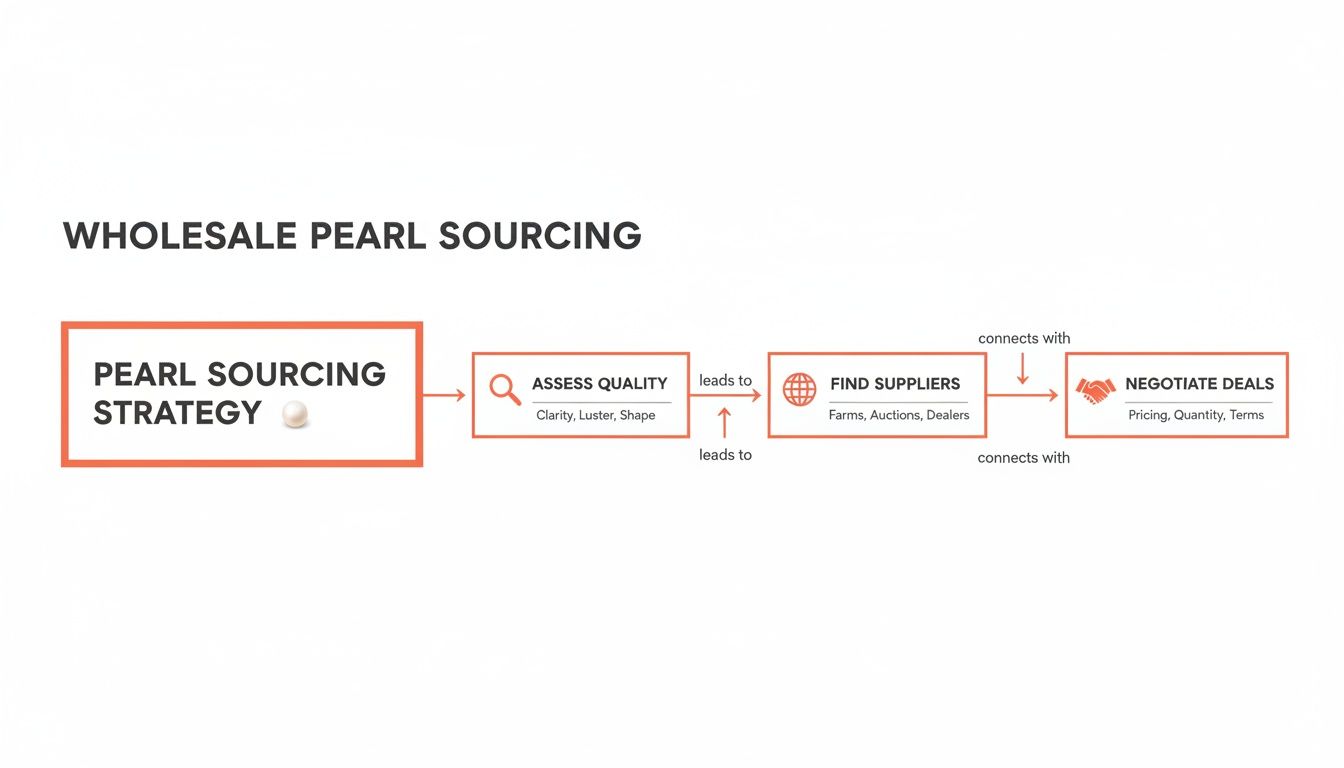
As you can see, quality assessment isn't just a step; it's the foundation for a profitable sourcing strategy.
The Seven Pillars of Pearl Value
When you're inspecting a pearl, you're looking at a combination of seven distinct traits. Each one contributes to its beauty and market price. Knowing them inside and out gives you a serious advantage when sourcing for your business.
- Luster: The sharp, bright reflection that bounces off the pearl’s surface.
- Nacre Thickness: The durable, iridescent layers that create the pearl's glow.
- Surface Quality: The degree of perfection, meaning the absence of blemishes.
- Shape: From perfectly round spheres to unique, free-form baroque shapes.
- Color: The pearl's primary bodycolor, overtone, and any iridescent orient.
- Size: Measured in millimeters, size has a huge impact on price.
- Matching: The uniformity of all these factors in a pair or strand.
Think of these seven factors as a pearl’s report card. A pearl that scores an 'A' in luster but a 'C' in shape will have a completely different value proposition for your business than one with average scores across the board.
To make this easier to digest, here's a quick cheat sheet for grading pearl quality on the fly.
Pearl Quality Grading At a Glance
This table is a quick reference guide comparing the key quality factors for evaluating wholesale pearls, helping business owners make informed purchasing decisions.
| Quality Factor | What to Look For (High Quality) | What to Avoid (Low Quality) | Impact on Price |
|---|---|---|---|
| Luster | Sharp, crisp reflections; a bright inner glow. | Chalky, milky, or dull appearance. | Very High. Luster is the #1 value driver. |
| Nacre | Thick, even layers (visible at drill hole). | Thin, translucent coating; potential for chipping. | High. Thicker nacre means more luster and durability. |
| Surface | Clean, smooth surface with minimal or no blemishes. | Obvious pits, bumps, cracks, or spots. | High. Flawless pearls are exceptionally rare and valuable. |
| Shape | Perfectly round (for classic styles) or unique, symmetrical shapes. | Misshapen or lopsided forms (unless intentionally baroque). | High. Round is the most valuable, followed by symmetrical shapes. |
| Color | Deep, even bodycolor with desirable overtones. | Splotchy, uneven color; dull or muddy tones. | Moderate. Depends on market demand for specific colors. |
| Size | Larger millimeter measurements for the pearl type. | Smaller, less substantial sizes. | Very High. Price increases exponentially with size. |
| Matching | Uniform size, shape, color, and luster across a strand. | Noticeable variations between adjacent pearls. | Moderate to High. Excellent matching requires sorting thousands of pearls. |
Using this table during an inspection will help you quickly categorize the quality of a pearl lot and determine if the price is fair for your business.
Demystifying Luster and Nacre
If you only focus on one thing, make it luster. This is the intense, deep glow that seems to radiate from within the pearl. A high-luster pearl will give you a sharp, clear reflection, while a low-luster one will look milky or chalky.
The engine behind that beautiful luster is nacre thickness. Nacre is the substance the mollusk secretes to create the pearl. A thick nacre produces deep luster and makes the pearl far more durable—essential for fashion accessories meant to last. Thin nacre not only looks dull but is also prone to chipping, which can lead to customer returns.
Assessing Surface Blemishes and Shape
Next up is surface quality. Since pearls are organic gems, a perfectly flawless one is rare. Most will have minor imperfections. Your goal is to find pearls where blemishes are few, small, and not distracting. When evaluating jewelry for pearls wholesale, a pro tip for your business is to look for blemishes that can be hidden by a drill hole or jewelry setting, maximizing the value of your purchase.
Shape gives a pearl its character—and determines a big chunk of its price.
- Round: The classic, spherical shape. These are the rarest and most sought-after, commanding higher retail prices.
- Near-Round: Slightly off-round, but still presenting as spherical to the casual observer. A great value option.
- Oval and Button: Symmetrical shapes perfect for earrings and pendants.
- Baroque and Circled: Irregular shapes celebrated for their unique beauty in modern fashion jewelry. These are often more affordable and appeal to trend-conscious customers.
Remember, a strand of perfectly round pearls will always have a higher wholesale cost than a baroque strand of the same quality. The right choice depends on your brand's aesthetic and your target price point.
The Nuances of Color, Size, and Matching
Pearl color is complex, combining bodycolor, overtone, and sometimes an orient (a rainbow-like effect). While classic white is timeless, there's huge demand for natural colors like lavender, pink, and gold in today's fashion accessories market.
Size, measured in millimeters, has an exponential effect on cost. A pearl's price can jump dramatically with every millimeter increase.
Finally, for any jewelry with more than one pearl, matching is critical. This is the art of assembling pearls that are uniform in size, shape, color, and luster. A well-matched strand looks professional and is always worth more than a poorly matched one, reflecting well on your business's quality standards.
Where in the World Do Pearls Come From?
Knowing how to grade a pearl is one thing, but understanding its journey is another. The global pearl supply chain directly impacts the cost, quality, and availability of the pearls you buy for your business.
When you know the unique character of pearls from different corners of the world, you can build a smarter inventory, anticipate price shifts, and create a more reliable supply chain for your fashion accessories business.
The Major Pearl Capitals of the World
A handful of regions are the powerhouses of the industry. Each is famous for a specific type of pearl, giving you distinct options for your collection.
- China: The undisputed king of freshwater pearls. If you're looking for beautiful, high-quality, and affordable pearls for your business, China is your go-to source. Their massive production volume makes them a critical partner for any business focused on value and variety.
- Japan: The historic home of the classic Akoya pearl. Japanese farms are known for producing incredibly lustrous and perfectly round pearls, representing the premium end of the market.
- Australia, Indonesia, & the Philippines: This trio is the heartland of the luxurious South Sea pearl—large, valuable gems with incredible white, silver, and golden colors.
- French Polynesia: The only source for the Tahitian pearl. Known for their dramatic, naturally dark colors, these pearls are a staple in modern, high-end fashion jewelry.
Knowing these hubs is your first step. For many businesses, especially those needing volume and affordability, the network of jewelry wholesalers in China for jewelry is the natural place to start due to their enormous production and manufacturing scale.
Keeping an Eye on Market Prices and Trends
The pearl market is constantly moving, reacting to everything from environmental factors to new fashion trends. A poor harvest can squeeze supply and send prices climbing.
A smart business owner doesn’t just purchase pearls—they watch the market. By keeping up with harvest reports, economic news, and fashion trends, you’ll have a huge advantage when sourcing high-quality, affordable jewelry at the right price.
This is especially true when one country dominates supply. For example, China's city of Zhuji is projected to produce around 600 tonnes of freshwater pearls in 2024, roughly 70% of the world's supply. Any hiccup there can affect your costs and inventory. You can dive deeper into these trends in the full Pearl Report on JewelleryNet.com.
Why You Shouldn't Put All Your Pearls in One Basket
Relying on a single supplier or country is a risky business strategy. What happens if they have a bad harvest or if new trade tariffs are introduced? The best defense is to diversify your sourcing.
By building relationships with suppliers in different regions, you protect your business from disruption and enhance your collection. You can offer customers a richer variety of fashion accessories, from affordable Freshwater styles to elegant Akoyas. It’s a strategy that turns risk into an opportunity for growth.
How to Vet and Select Trustworthy Pearl Suppliers
Finding a great wholesale pearl supplier is like finding a long-term business partner. Get it right, and you'll have consistent quality, fair pricing, and reliable inventory. Get it wrong, and you risk inventory headaches and a damaged brand reputation. A structured vetting process is the only way to source high-quality, affordable jewelry for pearls wholesale and build a supply chain you can count on.
Think of it as hiring for your team. You wouldn’t bring someone on without checking their credentials. The goal is to verify a supplier's legitimacy, reliability, and commitment to quality.

This process protects your investment and ensures the fashion accessories you sell live up to your customers' expectations.
Your Initial Vetting Checklist
Before placing an order, it’s time for some due diligence. This first pass filters out questionable operators so you can focus on professional suppliers who can deliver.
- Business Verification: Confirm they are a legally registered business. Ask for their business license or registration number. A legitimate company will provide this readily.
- Industry Certifications: Look for credentials from respected bodies. Certifications from organizations like the Gemological Institute of America (GIA) signal that they take quality standards seriously.
- Online Presence and Reputation: Scrutinize their website and social media. Does it look professional? More importantly, what are other businesses saying about them? Dig for online reviews, testimonials, and industry feedback.
A supplier’s digital footprint is a modern-day reference check. A slick website is a nice start, but authentic, positive feedback from other business buyers tells you far more about their real-world performance.
Communication and Transparency Are Non-Negotiable
Once a supplier passes your initial checks, evaluate their communication. The way they interact with you now is a preview of the service you’ll get after you've paid.
Pay attention to responsiveness. Do they answer questions clearly and promptly? Or are their replies vague and slow? Transparency is just as critical. A trustworthy partner will be open about their sourcing and pricing. If they are evasive about where their pearls come from or how they're graded, consider it a red flag. For a closer look at what separates the best from the rest, this guide to the best wholesale jewelry suppliers offers great insights.
The Sample Process Proves Everything
Never commit to a large order without getting a sample first. This is the most important step, turning promises into physical proof. A sample order is your chance to assess the real-world quality of their pearls and jewelry settings.
When the sample arrives, here’s what your business should do:
- Grade the Pearls Yourself: Using the quality factors we've discussed (luster, nacre, surface, etc.), inspect every pearl. Do they match the grade and description the supplier gave you?
- Check for Consistency: Is the quality consistent from piece to piece? Big differences in luster or shape signal poor quality control.
- Assess the Jewelry Components: Examine the clasps, settings, and other metal parts. Are they well-made and sturdy? Cheap findings can ruin an otherwise beautiful piece of fashion jewelry.
- Evaluate Packaging and Shipping: Proper packaging is vital for protecting delicate pearls. The care they take here speaks to their overall professionalism.
If the sample lives up to their claims, you may have found a partner to help you build a profitable collection. If it doesn't, you've saved your business from a costly mistake.
Mastering Wholesale Negotiation and Purchasing Logistics
Getting a great per-piece price for your jewelry for pearls wholesale is a good start, but it's just one part of the deal. A truly profitable agreement comes from negotiating the entire package—the terms that directly affect your business's cash flow, inventory, and operations.
A fantastic unit cost means nothing if it’s wiped out by terrible payment terms or high shipping fees. Your objective is to build a win-win partnership that sets the stage for a long-term relationship that helps your business grow.
Negotiating Beyond the Price Tag
The best negotiations are collaborative. Your supplier has margins to manage, so the goal is to find common ground on terms that bring your business value.
A perfect place to start is with Minimum Order Quantities (MOQs). If an MOQ is too high for a new product, propose a smaller initial "test run" order, committing to a larger purchase if the items sell well. This shows you're serious and lowers your initial risk.
Payment terms are another huge piece of the puzzle. While many suppliers ask for full payment upfront, this can strain your cash flow. Propose a split, like 50% upfront and the remaining 50% on shipment. As you build trust, you can often negotiate for Net 30 or Net 60 terms, which allows you to sell inventory before the bill is due. To master this, it's worth learning how to negotiate with suppliers effectively by understanding their business needs.
Leveraging Volume and Logistics for Better Deals
Once you have a working relationship, use your order volume as leverage. Bulk discounts are standard in wholesale, but you usually have to ask for them.
A savvy business move is to bundle your purchases. Instead of placing several small orders, consolidate them into one large order. This often pushes you into a higher discount bracket and can drastically lower your per-unit shipping costs.
Shipping and logistics are also prime areas for negotiation. Get total clarity on who pays for shipping, insurance, and customs duties. Ask about cheaper, slower shipping options for non-urgent orders or if they can combine shipments to cut costs. Ironing out these details early prevents surprise fees from eating into your profits. You can find more tips on managing these steps in this general guide on how to buy wholesale jewelry.
Implementing Your Purchasing and QA Process
Once the terms are set, your quality assurance (QA) process is your safety net. You can't inspect every single piece in a large order, so you need a reliable system.
A globally recognized standard is Acceptable Quality Limit (AQL) sampling. It’s a statistical method where you inspect a random portion of your order to get an accurate picture of the entire batch's quality.
Here’s how it works for your business:
- Define Your Standards: Write down exactly what you consider a "defect" (e.g., a visible blemish, dull luster, weak clasp).
- Select a Sample Size: Use a standard AQL chart to determine how many pieces to inspect based on your total order size.
- Inspect the Sample: Meticulously check each piece in the sample against your quality standards.
- Make a Decision: If the defect count is below your AQL threshold, the shipment passes. If it’s higher, you have solid grounds to reject the order or renegotiate.
Finally, always get the supplier’s return and remake policy in writing. A professional supplier will have a clear process for handling returns or faulty items, ensuring your business isn't stuck with unsellable inventory.
Building a Profitable and Desirable Pearl Collection
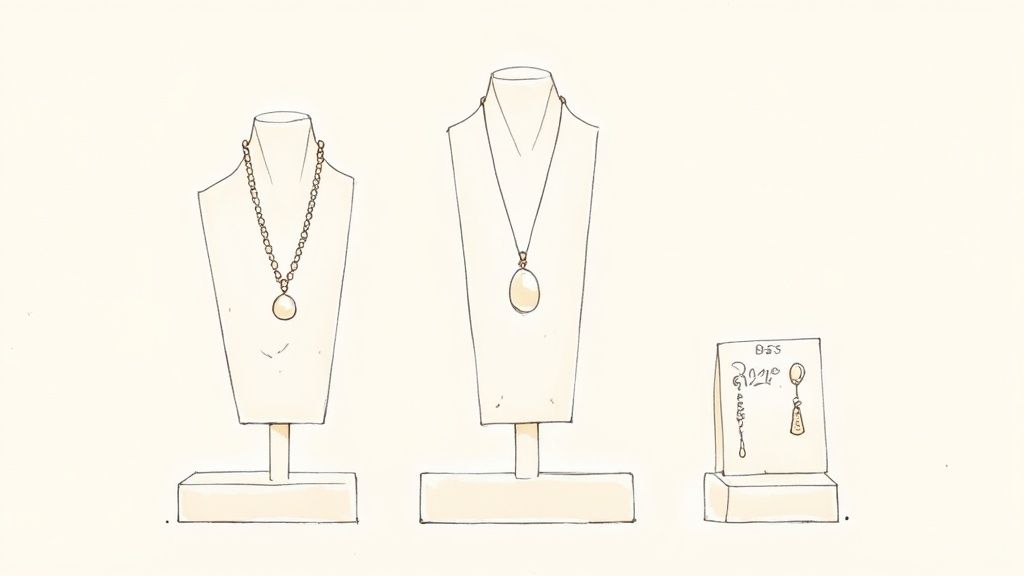
After sourcing your jewelry for pearls wholesale, it all comes down to building a collection that sells. This is where your knowledge of pearl grading, supplier vetting, and negotiation transforms inventory into profit.
The secret is building a balanced inventory that resonates with your target audience. Think like a portfolio manager: you need reliable bestsellers and on-trend pieces that capture current demand. Getting that mix right ensures steady sales and attracts new customers.
Striking the Perfect Assortment Balance
A great collection balances classic staples with contemporary, on-trend designs. Your core inventory should be built on essentials that never go out of style, providing consistent revenue for your business.
- Timeless Bestsellers: These are your non-negotiables. Think classic white pearl strands, simple stud earrings, and elegant pendants. They are the bedrock of any solid jewelry collection.
- Fashion-Forward Pieces: To generate buzz and command higher margins, bring in pieces that feel current. This could include baroque pearl drop earrings, layered necklaces, or modern pearl-accented chain bracelets. These are the fashion accessories that reflect today's styles.
By blending these two categories, you appeal to a wider customer base, from traditional gift-givers to trend-savvy shoppers, boosting your sales potential.
Smart Pricing for Healthy Margins
Effective pricing begins with a firm grasp of your landed cost—the total cost to get an item from your supplier to your business. This includes the unit price, shipping, customs duties, insurance, and any payment fees. Overlooking these costs is a quick way to erase your profits.
Once you know your true cost, you can set a retail price that ensures a healthy margin. A common starting point is keystone pricing (doubling your landed cost), but be prepared to adjust. High-quality or unique fashion accessories can command a higher markup based on their perceived value.
The global wholesale jewelry market is a massive playground, estimated to be worth around USD 134–163 billion. In a market this large, businesses that tell a compelling story about their products' origin and quality often secure better margins. Customers value transparency, and sharing that information has become a powerful sales tool. You can learn more about the jewelry wholesale market size from Kentley Insights.
In the end, your pricing and assortment strategies are two sides of the same coin. Your timeless pieces will keep the cash flowing, while your trend-driven items drive profitability. Together, they create a resilient and successful business model.
Your Wholesale Pearl Sourcing Questions, Answered
Stepping into the world of wholesale pearl sourcing can feel overwhelming. You're balancing quality, cost, and logistics. Let's tackle some of the most common questions from business owners.
What's The Best Way To Store My Bulk Pearl Inventory?
This is a fantastic question, and getting it right is crucial for protecting your investment. Pearls are organic gems and more sensitive than other stones.
The biggest mistake is sealing them in airtight plastic bags for long periods. Instead:
- Lay Them Flat: Always store pearl strands flat in trays with soft, fabric-lined compartments or individual cloth pouches. This prevents the silk thread from stretching.
- Use Soft Materials: A pearl's surface can scratch easily. Stick to storage containers lined with velvet, satin, or other soft fabrics.
- Control the Climate: Extreme dryness can make the nacre brittle. A stable environment with moderate humidity is perfect for preserving their luster.
Do I Really Need Certifications For Wholesale Pearls?
The short answer is: it depends, but they are almost always a good business decision. For high-value pearls like South Sea or Tahitian, a certificate from a respected lab like the GIA is non-negotiable. It justifies a premium price and gives customers confidence.
For more affordable freshwater pearls, you'll typically get an in-house grading report from your supplier. This is usually sufficient, but for very large orders, it's smart to request third-party verification to protect your business.
Think of a certification as a pearl's passport. It verifies its origin, authenticity, and quality, making it easier for you to market and for your customers to trust their purchase.
How Can I Make Sure Quality Is Consistent Across Huge Orders?
Consistency is key to building a great brand. When dealing with hundreds or thousands of pieces, inspecting every single one is impractical. This is where a professional quality control process is essential for your business.
The industry standard is a method called Acceptable Quality Limit (AQL) sampling.
Instead of a piece-by-piece inspection, you pull a random, statistically significant sample from the shipment. You inspect that smaller batch and count any defects. If the number of flawed pieces is below a pre-agreed limit, you can confidently accept the entire order. It's a massive time-saver and provides a reliable benchmark for your supplier's quality.
Ready to build a stunning and profitable pearl collection with a partner you can trust? At JewelryBuyDirect, we offer a massive selection of high-quality, factory-direct pearl jewelry with no minimum order. Explore our catalog and get 15% off your first three orders at https://www.jewelrybuydirect.com.