






Arthur Lynch | Mon Oct 20 2025
A Guide to Buying Jewelry Chain in Bulk
For any jewelry designer or retailer, buying chain in bulk is one of the smartest moves you can make. It’s the single best way to slash your per-unit costs and seriously boost your profit margins. But the benefits go way beyond just saving money—this is about building a rock-solid foundation for your business through design consistency, getting your hands on exclusive chain styles, and creating an inventory system that doesn't buckle under pressure.
The Strategic Edge of Bulk Jewelry Chain Sourcing
Think of sourcing bulk chain less as a simple purchase and more as a core business strategy. It’s what gives you a real competitive advantage. I like to compare it to a master chef stocking their pantry; having a consistent, high-quality supply of your go-to ingredients is fundamental to both creativity and commercial success. When you have the right components ready to go, you can crank out orders faster, dream up new designs on the fly, and pivot with market trends without missing a beat.
This simple shift turns your supply chain from a potential headache into one of your greatest assets. You're no longer scrambling with small, frequent orders that leave you vulnerable to stockouts and sudden price hikes. Instead, you gain stability and control.
The infographic below really breaks down the key advantages you get when you buy jewelry chain in bulk, showing how it impacts your costs, consistency, and bottom line.
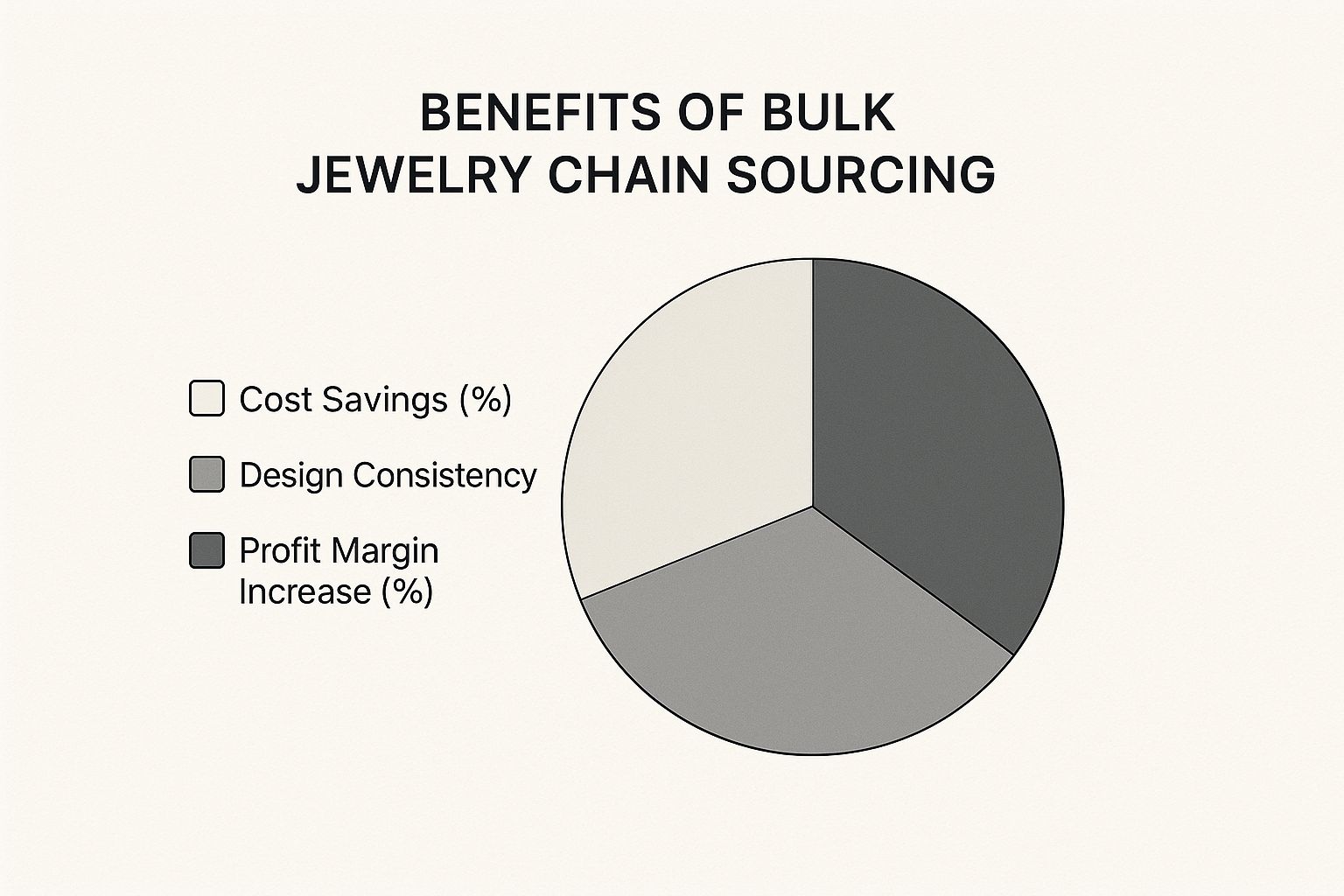
As you can see, the financial upside is huge, but don't overlook how crucial things like design consistency and better margins are for long-term, sustainable growth.
Beyond Price: A Competitive Advantage
While the lower cost is the most obvious win, the real magic of bulk sourcing is how it strengthens your entire operation. Having a reliable stock of your core chains—whether it's classic Figaro or simple cable—means every piece you make has the same high-quality look and feel. That kind of consistency is what builds brand trust and keeps customers coming back.
Plus, when you commit to larger orders, suppliers see you as a serious partner. This often opens the door to a whole new world of options. You might get access to unique, custom-made chains that smaller buyers can't get, giving your brand that special something that makes you stand out in a crowded market.
When you master bulk purchasing, you aren't just buying materials. You're investing in a more efficient business, a stronger brand, and the ability to scale up as your demand grows.
Aligning Inventory with Market Trends
Sourcing strategically is also about looking ahead and predicting what your customers will be craving next. Buying jewelry chain in bulk lets you stock up on styles that are perfectly aligned with what’s hot in fashion, both globally and locally. For example, if chunky, bold chains are dominating the runways in Milan and New York, a smart bulk order ensures you’re ready to meet that demand head-on in Western markets.
On the flip side, if delicate, layered looks and pieces featuring pearls or colored gemstones are trending in Seoul or Tokyo, you can adjust your purchasing to match. This forward-thinking approach to inventory means you're setting trends, not just following them. It guarantees you have the right product at the right time, which ultimately leads to more sales and a stronger position in the market.
Choosing the Right Bulk Chain Materials and Finishes
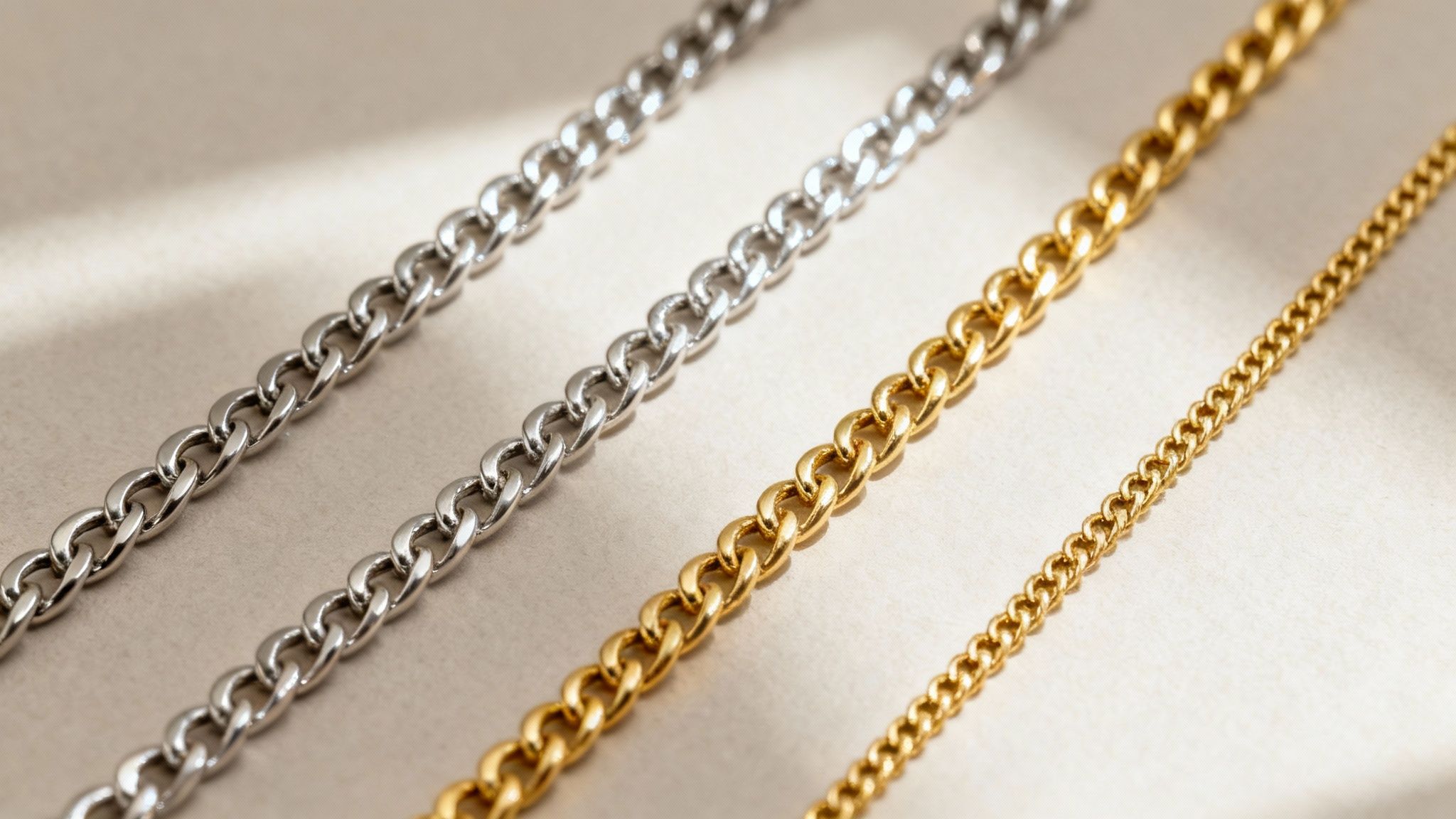
The metal you choose for your jewelry isn't just a component—it’s the heart of your brand's identity. It dictates the price point, the perceived value, and ultimately, the customer you attract. Getting this right is about aligning your materials with your brand promise, which is the secret to building a loyal following in this crowded market.
And it is a crowded market, but a growing one. The global jewelry industry, valued at around $232.94 billion, is on track to hit $343.90 billion by 2032. That's a steady 5.10% annual growth rate. To claim your piece of that pie, you need to make smart, informed decisions right from the start, and that begins with the foundation of your products: the chains.
Think of it like a spectrum. On one end, you have tough, accessible metals perfect for trendy, everyday pieces. On the other, you have precious, high-value metals that signal heirloom quality and serious investment. Deciding where your brand fits on this spectrum will shape every choice you make when buying jewelry chain in bulk.
Core Materials for Bulk Chain Sourcing
When you start looking at bulk chain, you'll find a handful of go-to materials, each with its own personality and purpose. Understanding the ins and outs of each one is the first step toward making a strategic investment that actually works for your business.
To make this easier, let's break down the most common options you'll encounter. This table gives you a quick, at-a-glance comparison to help you weigh the pros and cons based on what matters most for your designs and your customers.
Bulk Chain Material Comparison Guide
| Material | Best For | Avg. Bulk Cost | Durability/Longevity | Hypoallergenic? | Key Considerations |
|---|---|---|---|---|---|
| Stainless Steel | Trendy fashion, everyday wear, men's jewelry | $ | Excellent | Yes | Virtually tarnish-proof and incredibly strong. Limited to silver, gold, and black tones. |
| Sterling Silver (.925) | Demi-fine, classic designs, artisan jewelry | $$ | Good | Mostly | Offers higher perceived value. Will tarnish over time and requires polishing/care. |
| Gold-Filled | Mid-range, keepsake, and permanent jewelry | $$$ | Very Good | Yes | A thick layer of real gold bonded to a base. Looks like solid gold but is much more affordable. |
| Solid Gold (10K-18K) | Fine jewelry, luxury collections, investment pieces | $$$$ | Excellent | Yes | The premium choice. Karat (K) affects both price and hardness (10K is tougher than 18K). |
Ultimately, your material choice is a direct message to your customer. Stainless steel says "durable and stylish," while solid gold communicates "timeless luxury and investment." Make sure that message aligns perfectly with your brand's voice.
For many brands focused on modern, resilient jewelry, stainless steel offers an unbeatable mix of price and performance. You can dig deeper into why wholesale stainless steel chains are such a smart move for so many designers.
The Impact of Modern Finishes
The base metal is just the beginning. The finish is what gives your chain its final color, shine, and a crucial layer of protection. Modern finishing techniques can completely transform a piece, boosting its appeal and its lifespan.
Here are a couple of key finishes to know:
- PVD (Physical Vapor Deposition): Think of this as high-tech plating. In a vacuum chamber, a thin layer of metal (like gold or titanium) is bonded to the base chain. PVD is worlds more durable and scratch-resistant than traditional plating, making it the top choice for long-lasting color on stainless steel.
- E-Coating (Electrophoretic Coating): This process applies a clear, super-thin protective layer over the entire chain. It’s a fantastic way to seal metals like sterling silver or brass, preventing tarnish and keeping the piece looking bright and new for much longer.
When you're deciding on a finish, it's worth understanding what you're promising your customer. For instance, knowing the typical durability of rhodium plating helps you set realistic expectations for wear and tear.
Choosing the right materials and finishes is a balancing act between your budget, your brand's aesthetic, and the story you want to tell. By carefully thinking about your target audience and what they value, you can confidently source bulk chain that elevates your designs and solidifies your place in the market.
How to Vet Suppliers for Consistent Quality
Your supplier is more than just a vendor; they're one of your most critical business partners. The quality of every piece you sell is directly tied to their manufacturing standards. This makes the vetting process one of the most important steps you'll ever take.
Picking the right partner for your jewelry chain in bulk orders is about building a foundation for your brand. It ensures consistency, protects your reputation, and saves you from a world of headaches and costly mistakes down the road.
Think of it like hiring a key employee. You wouldn't bring someone onto your team without checking their references and seeing their work, right? The same logic applies here. A great supplier relationship is built on trust and proven performance, not just marketing promises. Rushing this stage can lead to inconsistent finishes, weak clasps, and incorrect materials—problems that can sink your brand before it even gets going.
Start with Comprehensive Sample Kits
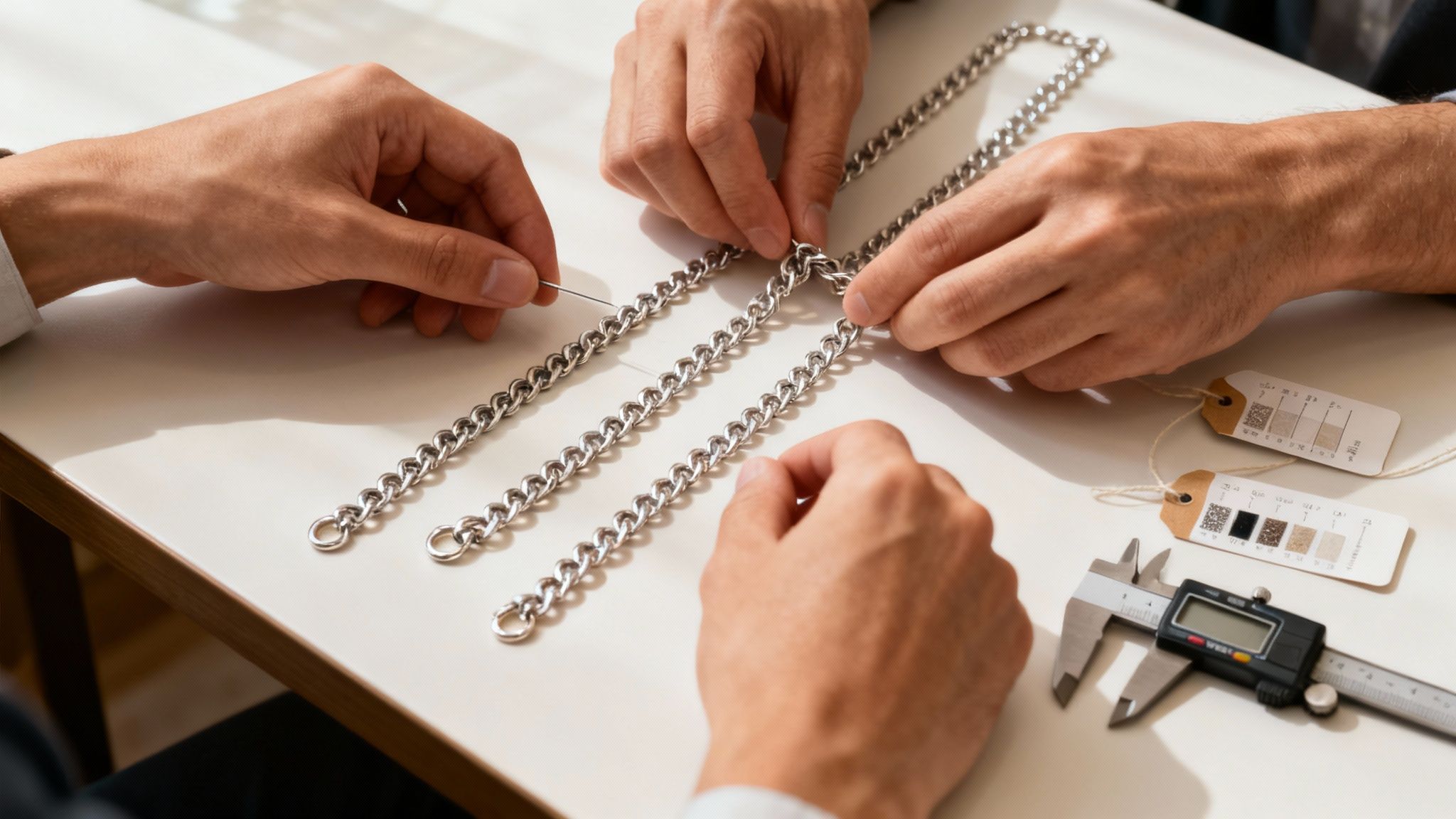
The single best way to gauge a supplier’s quality is to get your hands on their actual products. Don't just ask for one or two popular styles. Request a comprehensive sample kit that shows off a wide range of their offerings. This is your first real test.
Once the samples arrive, it's time to put on your detective hat. You need to scrutinize every single detail with a critical eye.
- Link Consistency: Are the links uniform in size, shape, and solder quality? Any inconsistencies are a huge red flag for sloppy manufacturing.
- Finish and Plating: Is the color totally even across the entire chain? Look for subtle streaks, discoloration, or thin spots, especially around the clasps and jump rings.
- Clasp Integrity: Test every single clasp. Does it open and close smoothly but feel secure? A flimsy or sticky clasp is a common failure point and a guaranteed source of customer complaints.
- Weight and Feel: Does the chain feel right for the material it's supposed to be? A chain that feels unusually light might mean a cheaper base metal was used or the links are hollow when they shouldn't be.
A sample isn't just a product; it's a promise. If a supplier sends you a subpar sample, they're showing you the baseline for what they consider acceptable. Treat it as a clear signal of what you can expect.
Verify Materials and Manufacturing Tolerances
After you’ve assessed the physical samples, it’s time to dig into the technical specs. This is where the professionals separate themselves from the amateurs. A reputable supplier should be able to give you clear, detailed information about their materials and processes. Don't be shy about asking direct, technical questions.
A key area to ask about is manufacturing tolerance. This term just refers to the acceptable amount of variation they allow in production. For example, what's their tolerance for link dimensions or plating thickness in microns? A good supplier has tight tolerances, which means a chain you order today will be virtually identical to one you order six months from now.
You should also get a clear picture of their internal quality control. Ask them to walk you through their process. How do they check for defects? Do they perform stress tests on clasps? Crucially, can they provide a material composition report to verify their sterling silver is actually .925 or that their gold-filled chain meets industry standards? A supplier who is confident in their quality will have zero problem answering these questions.
You can learn more about what to look for by exploring our guide on the best wholesale jewelry suppliers, which offers more insight into what top-tier partners provide.
Watch for Communication Red Flags
Finally, pay close attention to how a potential supplier communicates. Their responsiveness, clarity, and professionalism during this early stage are strong indicators of what the long-term relationship will be like.
Keep an eye out for these common red flags:
- Vague or Evasive Answers: If they can't give you a straight answer about their materials, lead times, or quality control, it's a major concern.
- Slow Response Times: A supplier who takes days to reply to a potential new client will likely be even slower once they have your money.
- Resistance to Sending Samples: Any hesitation or pushback on providing a full sample kit should be viewed with extreme suspicion. What are they hiding?
Your ultimate goal is to build a strong, trustworthy partnership. By taking the time to thoroughly vet your suppliers, you aren’t just buying jewelry chain in bulk; you're investing in the long-term health and success of your brand.
Aligning Your Orders with Global Jewelry Trends
Sourcing smart is about more than just finding a good supplier—it’s about buying what people actually want. Stocking chains that tap into current fashion trends is the difference between a quick sale and dead stock gathering dust on a shelf. When you order jewelry chain in bulk, you’re making a serious investment. Understanding the market is how you make sure that investment pays off.
Think of yourself as a fashion buyer for a major retailer. You wouldn't fill the floor with clothes without first knowing what’s coming off the runways and what’s blowing up on social media. The exact same logic applies here. Diving into global and regional jewelry trends lets you predict demand, reduce your financial risk, and position your brand as the place to go for what's new and exciting.
This isn't just about buying inventory; it's a strategic move that can dramatically boost your sell-through rates and cement your brand's relevance in a market that changes in a heartbeat.
Tapping into Regional Style Preferences
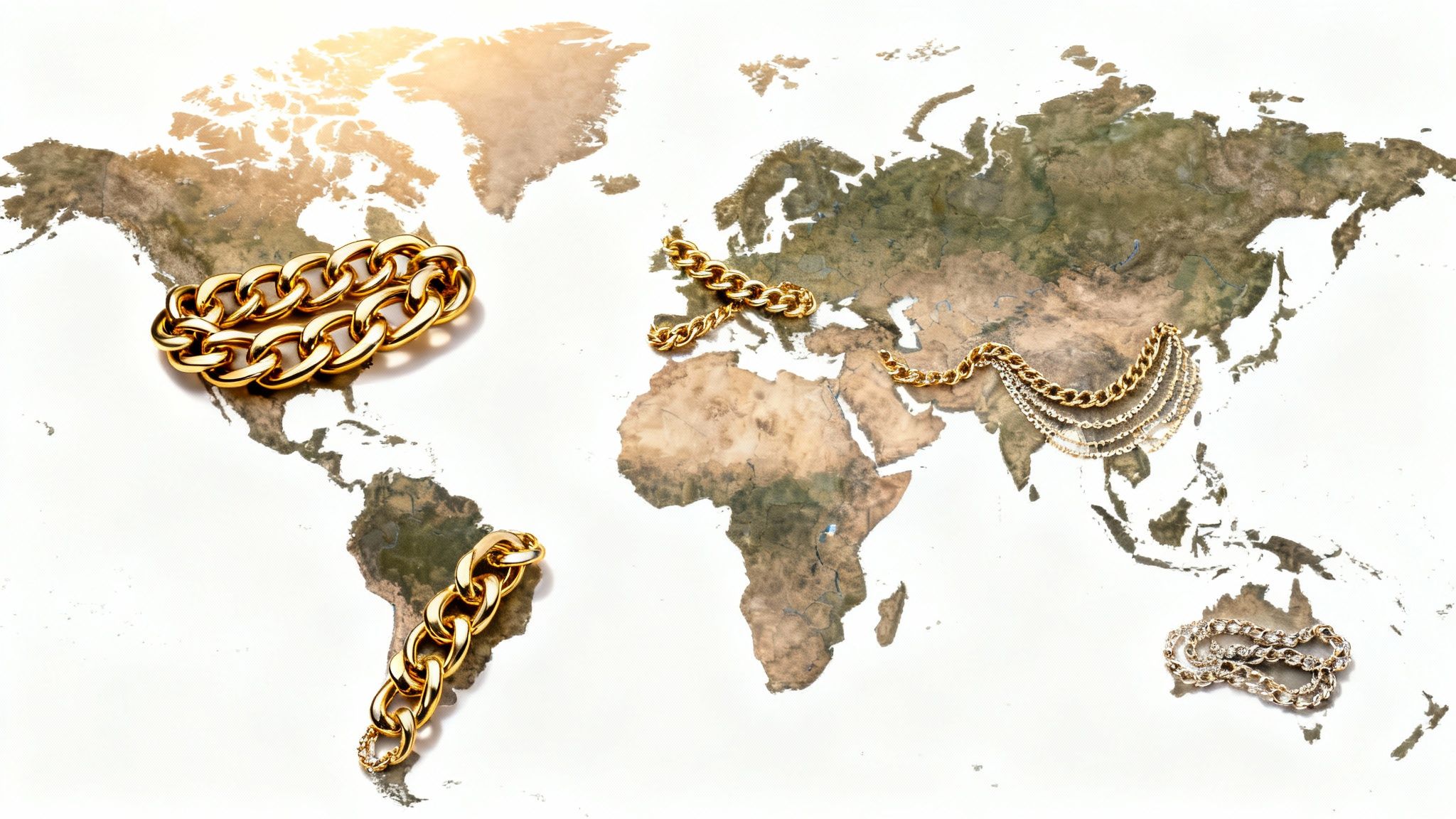
What sells like crazy in North America might be a complete flop in Asia. Jewelry trends are far from one-size-fits-all, and recognizing these regional quirks is crucial for placing bulk orders that actually hit the mark.
For example, Western markets in the US and Europe are still loving bold, statement-making pieces. We're talking thick, chunky curb chains, oversized paperclip links, and heavy Figaro chains that stand on their own. It’s all about confident, visible accessorizing.
On the other hand, many East Asian markets have a completely different vibe, often favoring delicate and intricate designs. The go-to look is layering multiple fine, lightweight chains—like whisper-thin cable or box chains—to create a more subtle and personalized style. Knowing these nuances helps you tailor your bulk order to serve your specific audience or even test the waters in a new market.
Key Global Chain Trends to Watch
Staying ahead of the curve means keeping your finger on the pulse of what's catching everyone's eye. By weaving these trending styles into your jewelry chain in bulk orders, you keep your inventory feeling fresh and desirable.
Here are a few of the big hitters shaping the market right now:
- The Chunky Chain Revival: Big, bold chains aren't going anywhere. This includes classics like Cuban and curb links, but the current focus is on heavier gauges and super high-polish finishes.
- Layering and Personalization: People love making a look their own. Offering a mix of delicate chains in different lengths and textures, like snake and rope chains, gives customers the tools to build their unique stacks.
- Gender-Fluid Designs: The old rules are out. Simple, timeless chain styles like the Figaro or Mariner link have a universal appeal that’s resonating with everyone, regardless of gender.
- Vintage-Inspired Links: Chains with an old-world feel are gaining serious traction. Look for intricate Byzantine links or Victorian-style book chains that add a touch of history and texture.
A smart strategy is to stock a balanced mix of bold statement pieces and versatile layering chains. This not only appeals to a wider range of customers but also nudges up your average order value when shoppers grab multiple pieces to create their perfect look.
To get a more in-depth forecast of the styles you should be watching, check out our guide to the latest jewelry trends for 2024 before placing your next big order.
The Growing Demand for Sustainable and Ethical Sourcing
Today’s shoppers care about where their products come from—now more than ever. In the jewelry world, questions about ethical labor and where materials are sourced from are no longer side notes; they're becoming central to the buying decision. This isn't just a small trend; it's a major market force you can't afford to ignore.
Using recycled metals or partnering with suppliers who are transparent about their supply chain isn't just a "nice-to-have" anymore. For a huge and growing number of consumers, it's a deal-breaker. Making your commitment to sustainability clear can be a powerful way to set your brand apart, building deep trust and loyalty.
This movement is especially strong in the luxury space. The global luxury jewelry market is on track to hit $57.13 billion, up from $49.1 billion, and is projected to more than double to a staggering $109.2 billion by 2032. As this high-end market grows, so does the demand for ethical practices. You can get more details on this incredible growth from market analysis by platforms like Luxury Abode.
By making sure your bulk sourcing aligns with these values, you aren't just following a trend—you're future-proofing your business for the next generation of conscious jewelry lovers.
Mastering Bulk Order Negotiation and Logistics
Alright, you've pinpointed the perfect suppliers and have a solid grasp on the chain styles that will fly off your shelves. Now comes the part where your business savvy really shines. This is where you move from planning to action, turning a promising connection with a supplier into a real, profitable partnership.
Successfully negotiating your bulk order and untangling the web of international shipping are the final hurdles. Think of it like the last leg of a long journey—you need to navigate it carefully to protect your budget and get your inventory safely home. Rushing this part can wipe out all the savings you've worked so hard to find.
Negotiating MOQs and Tiered Pricing
One of the first terms you'll bump into is the Minimum Order Quantity (MOQ). This is simply the smallest order a factory is willing to produce for you. It might sound like a hard-and-fast rule, but I've found it's often more of a starting point for a good conversation, especially when you're looking to build a long-term relationship.
A great approach is to negotiate based on your total potential business, not just this one order. You could propose a smaller initial "test" order, with a clear promise of a much larger purchase once you've confirmed the quality is up to snuff. It shows you're serious and minimizes your own risk right out of the gate.
Another area ripe for discussion is tiered pricing. The concept is beautifully simple: the more you buy, the less you pay per piece. Always ask a supplier if they have a tiered pricing sheet. It usually looks something like this:
- Tier 1: The standard price for meeting the basic MOQ.
- Tier 2: A nice discount for a larger order (say, 5,000 units instead of 1,000).
- Tier 3: Their best price, typically reserved for huge volumes.
Knowing these tiers helps you plan your inventory strategically. You might discover that bumping your order up by just 20% pushes you into the next price bracket, saving you a significant amount of money over time.
Your real goal in any negotiation isn't just to get the lowest price today. It's to build a win-win partnership. When you frame your requests around mutual growth, suppliers see you as a valuable partner for the future, not just a one-time customer, and are far more willing to be flexible.
Demystifying International Logistics and Landed Costs
Getting your jewelry chain in bulk from a factory overseas to your workshop involves a lot more than just slapping a shipping label on a box. Getting a handle on international logistics is absolutely essential if you want to manage your budget and avoid nasty surprises when your shipment hits customs.
The single most important number to understand is your landed cost. This isn't just the price per chain; it's the total cost to get that product into your hands. This includes the unit cost, shipping fees, insurance, customs duties, and any import taxes. Focusing only on the supplier's price is a classic rookie mistake that can absolutely demolish your profit margins.
A huge part of this process is learning some smart tips to reduce shipping costs without sacrificing reliability. This often means getting quotes from different carriers, consolidating shipments when possible, and choosing the right shipping terms from the get-go.
Understanding Key Shipping Terms
You're going to see a lot of acronyms, specifically Incoterms, which are globally recognized terms that spell out who is responsible for what during the shipping process. Knowing the big ones is crucial.
- EXW (Ex Works): With this one, you're on the hook for everything. You have to arrange for the goods to be picked up from the factory floor and handle every single step of the shipping and customs process. It gives you total control, but also total responsibility.
- FOB (Free On Board): Here, the supplier handles getting your order to the port in their country and loaded onto the ship. Once it's on board, you take over. You're responsible for the ocean freight, insurance, and all the import logistics.
For most businesses just starting to import, FOB strikes a great balance. It leaves the local export details to the supplier (who knows their own country's logistics best) while giving you control over the main international leg of the journey.
Answering Your Top Questions on Sourcing Bulk Jewelry Chain
Diving into the world of bulk chain can feel a little overwhelming at first, but once you get a handle on a few key concepts, it all clicks into place. Think of this as the FAQ section where we tackle the questions I hear most often from designers and retailers just starting out.
Let's clear up these common hurdles so you can buy with confidence.
Where Do I Even Start Looking for Good Suppliers?
Finding a great supplier is everything. Your brand's quality is literally in their hands. The trick is to not put all your eggs in one basket; cast a wide net to find the real gems.
A great starting point is a major B2B platform like Alibaba. But don’t just search and click. You need to be a detective. Look for suppliers who have been around for years, have a ton of positive reviews, and hold a "Verified" or "Gold Supplier" status. Those little badges mean something.
But don't stop there. Nothing beats seeing the product and meeting the people in person. If you can, get yourself to industry trade shows like JCK Las Vegas or the Hong Kong International Jewellery Show. You'll learn more in an hour of handling chains and talking to reps than you will in a week of emailing.
Finally, tap into the community. Jump into jewelry-focused forums or Facebook groups. Designers are incredibly generous with sharing their experiences—both good and bad. It's the kind of honest feedback you just can't find anywhere else. No matter who you find, always vet a few different options and get samples before you even think about placing a big order.
What's the Real Deal: Gold-Plated vs. Gold-Filled?
This is a big one, and it goes way beyond just the technical specs. The choice you make here directly impacts your brand's reputation. It all comes down to how the gold is applied and how much is used, which determines how long the piece will last.
- Gold-Plated: Imagine a super-thin coat of gold paint sprayed onto a base metal (like brass). It’s an electroplating process, and while it keeps costs down for fast-fashion pieces, that thin layer can wear off pretty quickly with regular wear.
- Gold-Filled: This is a whole different ballgame. A much, much thicker layer of gold is heat- and pressure-bonded to the base metal core. It’s a mechanical process, not a chemical one, creating a durable piece that won't tarnish or rub off. It looks and feels like solid gold, but for a fraction of the price.
Bottom line? If you're building a brand focused on demi-fine jewelry that people will cherish, gold-filled is the only way to go. It's the key to happy customers who come back again and again.
How Can I Check Quality When My Supplier Is Half a World Away?
You don’t have to be physically on the factory floor to keep standards high. The secret to good remote quality control is being ridiculously clear in your communication from day one.
Start by creating a detailed "spec sheet" for your supplier. I’m talking exact link dimensions, the precise metal composition, plating thickness (specify it in microns), and even the type of clasp you want. Leave nothing to interpretation. Always, always have them send a pre-production sample for you to approve before they start the full run. If it doesn't match your spec sheet perfectly, you send it back.
For larger, more expensive orders, it’s worth hiring a third-party inspection service in the supplier’s country. They can go in and check the goods before they're shipped, which can save you a world of headaches later on.
A rookie mistake is getting fixated on the per-unit price. You have to think in terms of "landed cost." That’s the total cost to get the product to your door—including the item price, shipping, customs duties, and any taxes. This is your true cost and the only number that matters for pricing your jewelry correctly.
Another common pitfall is going all-in on one trendy chain style for your first big order. That's a huge risk. A much smarter move is to spread your budget across a few timeless best-sellers, like a classic cable or Figaro chain, to test the waters and see what your customers really love.
Ready to source like a pro? JewelryBuyDirect gives you direct-from-factory pricing on over 120,000 styles with no minimum order requirements. It’s the perfect way to build out your collection with quality pieces, without the massive upfront investment. Explore our huge collection of high-quality bulk chains today at https://www.jewelrybuydirect.com.