






Jennifer Lopez | Thu Oct 22 2026
Hypoallergenic Helix Earrings: What Retailers Must Know
Nickel allergy affects 11.4% of people across populations studied in Europe, North America, and China, making material verification more than a packaging detail for retailers. For helix jewelry, a reassuring label is a starting point, not proof: buyers need to know what each skin-contact component is made from and whether its nickel release has been tested.
Why Hypoallergenic Matters for Helix Earrings
A North American analysis of more than 44,000 patch-tested patients found 17.5% nickel sensitivity, with 55.5% of positive reactions classed as clinically relevant; in the same systematic review, piercing history carried an odds ratio of 5.9 for nickel allergy (5,333 participants, 95% CI 3.6 to 9.4) and testing found critical nickel release in 11.3% of European earrings, 34.5% of earrings from Asia, and 31.1% from North America (systematic review and nickel-sensitivity analysis).
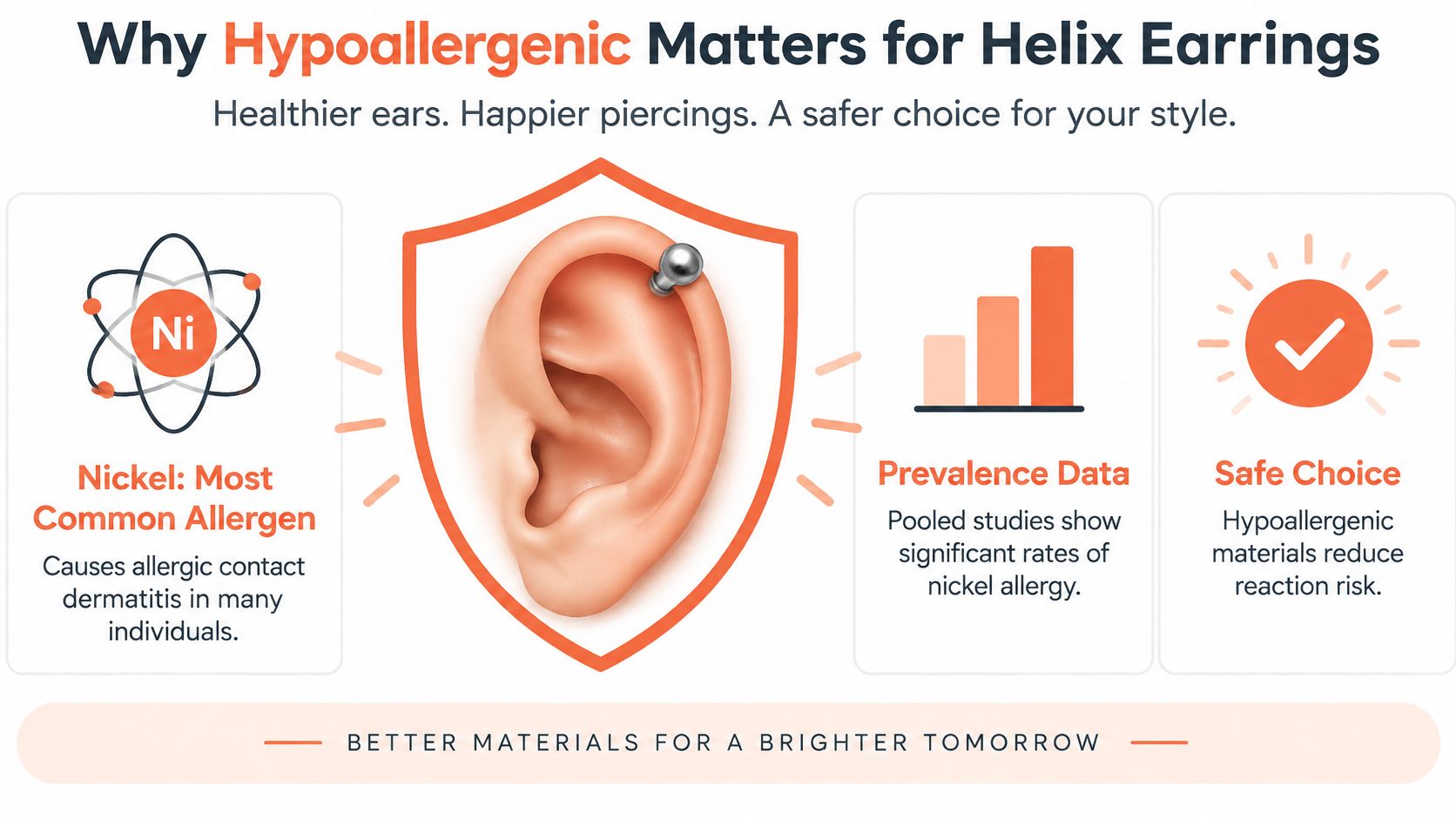
Helix jewelry sits in cartilage for months, so the window for irritation runs longer than a lobe hole that settles quickly. I treat that as a buying issue: if a customer keeps a post pressed against healing tissue through sleep, phone calls, hats, and hair catching on the backing, small material problems get repeat exposure. A smooth finish and correct fit help, and alloy choice still decides how much nickel can reach skin every day.
For retail listings, “hypoallergenic” should trigger a document request rather than close the sale. Ask which part touches the piercing channel, whether the post, backing, and decorative front use the same alloy, and what evidence supports the claim: a nickel-release result, a biocompatibility statement, or a named alloy with matching components. If a supplier answers with a slogan, the risk lands in your return bin.
The commercial gap is simple. Customers buy a promise of comfort, while labs, regulators, and insurers read material names and release results. Listings that state the verified alloy and keep components consistent give a shopper something checkable, and they give staff an answer when a red helix becomes a complaint instead of assuming every sore ear is routine healing.
Understanding Nickel Allergy and Cartilage Healing
Nickel allergy is a delayed immune reaction. Once a person becomes sensitized, skin contact can produce an itchy, inflamed rash wherever the metal rests, and sensitization itself can build over years of exposure to jewelry, watch backs, and clothing hardware. The difficulty at the counter is that a red helix has several possible causes. Pressure from a tight backing, friction from hair and phones, a post that is too short, or infection can produce symptoms that overlap with allergy, so a sore ear neither proves nor rules one out.
Cartilage raises the stakes on that distinction. In a clinical study of auricular infections, the helix was the infection epicenter in 107 cases, or 49.3% of the sample, the tragus accounted for 8 cases, or 3.7%, a complicated disease course occurred in 64 patients, or 29.5%, and abscess formation was associated with complicated outcomes in 60.9% of cases versus 5.2% without an abscess (clinical findings on auricular infections and complications).
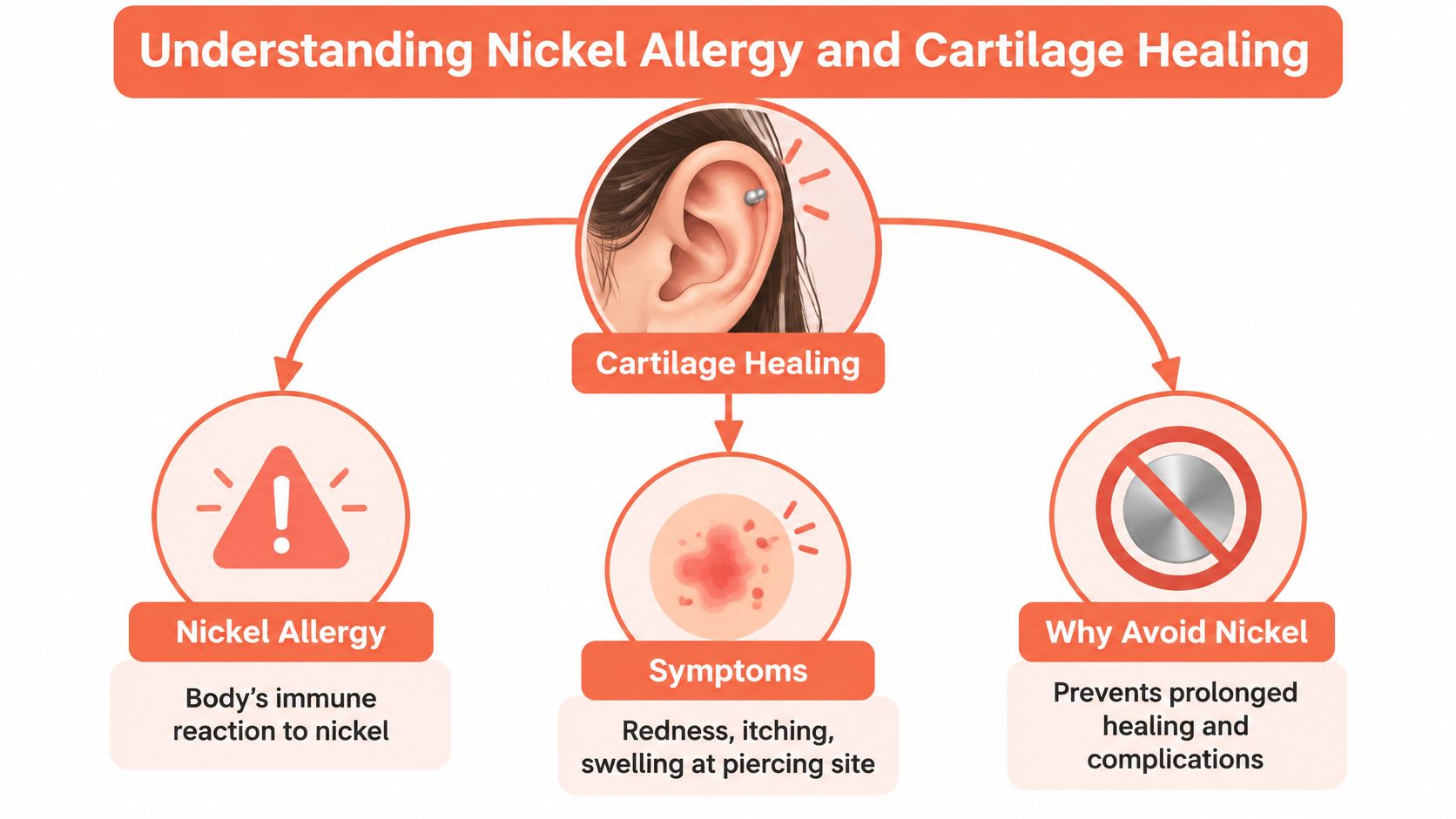
Read those numbers as a severity argument for careful product selection. Medical guidance also recognizes embedded earrings, keloids, hypertrophic scars, and skin hypersensitivity among possible post-piercing complications. Material choice is the one input a retailer fully controls; fit, finish, piercing technique, and aftercare sit outside your hands.
Verify with release testing
European nickel restrictions give the word "hypoallergenic" a measurable stand-in: a component inserted into a piercing must release less than 0.2 micrograms of nickel per square centimeter per week, other parts in prolonged skin contact are limited to 0.5 micrograms, and the EN 1811 method behind those limits immerses the piece in artificial sweat for one week and measures what migrates out (Danish guidance on nickel restrictions and testing).
Buyer's rule: Ask for the EN 1811 report on the finished earring, not a certificate for the raw bar stock. Plated fronts and base-metal backs can behave very differently from the post.
Check that the report names the tested item, the lab, and the result per component. For customers who want background on how nickel sensitivity develops, share this guide to nickel allergy and jewelry, and train staff to present product facts while leaving symptom diagnosis to a doctor.
Comparing Safe Metals for Helix Earrings
For a fresh or still-healing helix piercing, documented implant-grade titanium is the clearest starting point among the options considered here. ASTM F136 titanium is generally nickel-free and highly corrosion-resistant. By contrast, “surgical steel” doesn't identify a specific alloy or prove low nickel release. The material name may sound reassuring, but without a grade or test report it leaves the buyer with unanswered questions.
| Metal | Nickel risk | Corrosion resistance | Best for |
|---|---|---|---|
| Implant-grade titanium | Generally nickel-free when the grade is documented | High | Fresh or healing cartilage when the jewelry is appropriately designed |
| Stainless or surgical steel | Depends on the specific alloy and release results | Depends on the grade and finish | Products with clear alloy details and relevant testing |
| Sterling silver | Depends on alloy and all skin-contact parts | Can tarnish | Consideration for some healed piercings, not a default choice for initial wear |
| Gold | Depends on the alloy and construction | Depends on composition | Products with disclosed alloy and post materials |
| Plated alloy | The underlying metal may become exposed as plating wears | Coating durability varies | Fashion use where the base metal and coating are disclosed, not an assumed permanent barrier |
Professional guidance recommends traceable implant-certified materials, including titanium meeting ASTM F136, ASTM F67, ASTM F1295, or ISO 5832-3. It also emphasizes polished surfaces without nicks, burrs, scratches, sharp edges, or polishing residue. (Association of Professional Piercers guidance on jewelry for initial piercings)
Match construction to the piercing
A useful specification for healing cartilage is a polished titanium post or labret without exposed plating, enough length to accommodate initial swelling, and a low-profile, secure closure. The post shouldn't compress the ear, and the finish should be smooth where it contacts tissue. Helix healing can take roughly 6–12 months, so the jewelry needs to remain suitable throughout a lengthy healing period. (Material and design considerations for helix jewelry)
If you're comparing style categories, the Bohemian Style Evil Eye Geometric Titanium Steel Earrings for Women with Enamel Finish are listed as women's drop earrings with an evil-eye pattern and Bohemian, Vintage, and Minimalist style descriptors. That catalog description doesn't establish an implant-grade specification or suitability for a healing helix piercing. For a separate overview of titanium earring styles, see this guide to titanium earrings.
Sourcing and Supplier Verification for Retailers
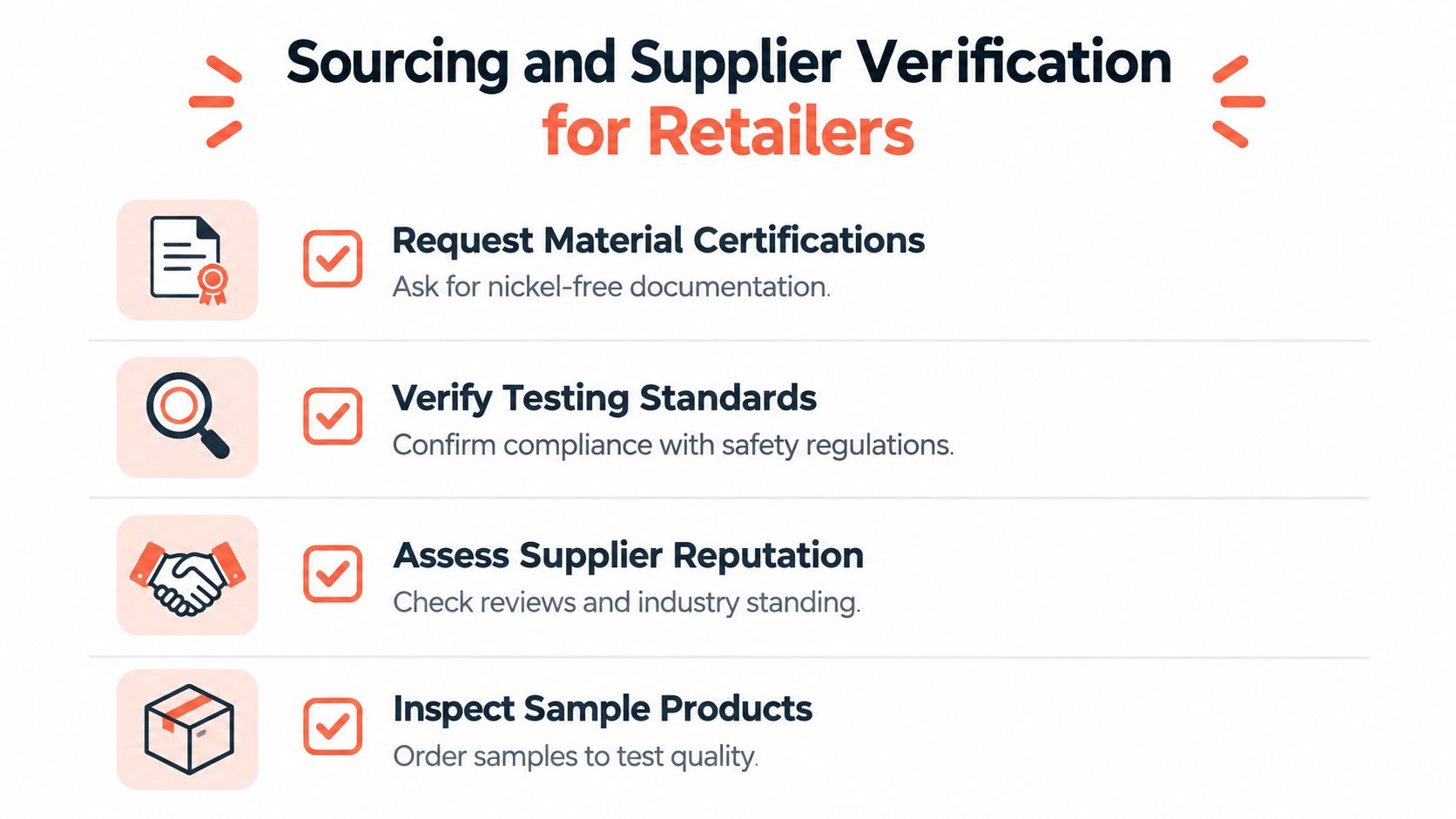
A certificate stamped "hypoallergenic" describes a marketing position. The question buyers learn to ask after a few rounds of supplier vetting is simpler: where is the document? Build purchasing decisions around files that identify the finished product and every skin-contact component, so your listings, buyer answers, and complaint responses all rest on evidence rather than adjectives.
Ask for the product-level evidence
Request a material specification covering the post, decorative front, backing or closure, and any coating. If the supplier claims implant-grade titanium, ask for the grade designation in writing. If the supplier offers steel, ask for its exact composition and nickel-release results instead of accepting "surgical" as a quality grade.
For products sold under European nickel requirements, screen each component against the release limits described in the nickel-allergy section. A supplier who can't say whether a sample passed the applicable threshold hasn't given you evidence. They've given you vocabulary.
Check the assembly and any coating
Confirm that any release test report covers the complete earring assembly, not just a sample of the raw metal. A front piece, post, and closure can come from different alloys, and a report for one component leaves the rest unverified. File the report against the exact configuration you purchase, including revision and batch details where the supplier provides them.
Coatings deserve a harder look. A plated or barrier layer can reduce initial exposure, yet friction eventually wears it through, and then the base metal decides what touches the skin. European rules only permit a coating-based claim when the layer holds releases within the limit through a sustained period of normal wear, so record the supplier's coating specifications and any durability testing alongside the rest of the product file.
A supplier who can name the alloy, produce a test report for the complete configuration, and explain the coating has answered the questions a marketing adjective cannot.
Care and Aftercare for Helix Piercings
A customer who reports irritation needs a calm, practical response, not an immediate declaration that the metal is the cause. Nickel allergy may produce itching and a rash where jewelry touches the skin. Pressure, poor sizing, rough finishing, trauma, and infection can also cause discomfort, and those problems call for different responses.
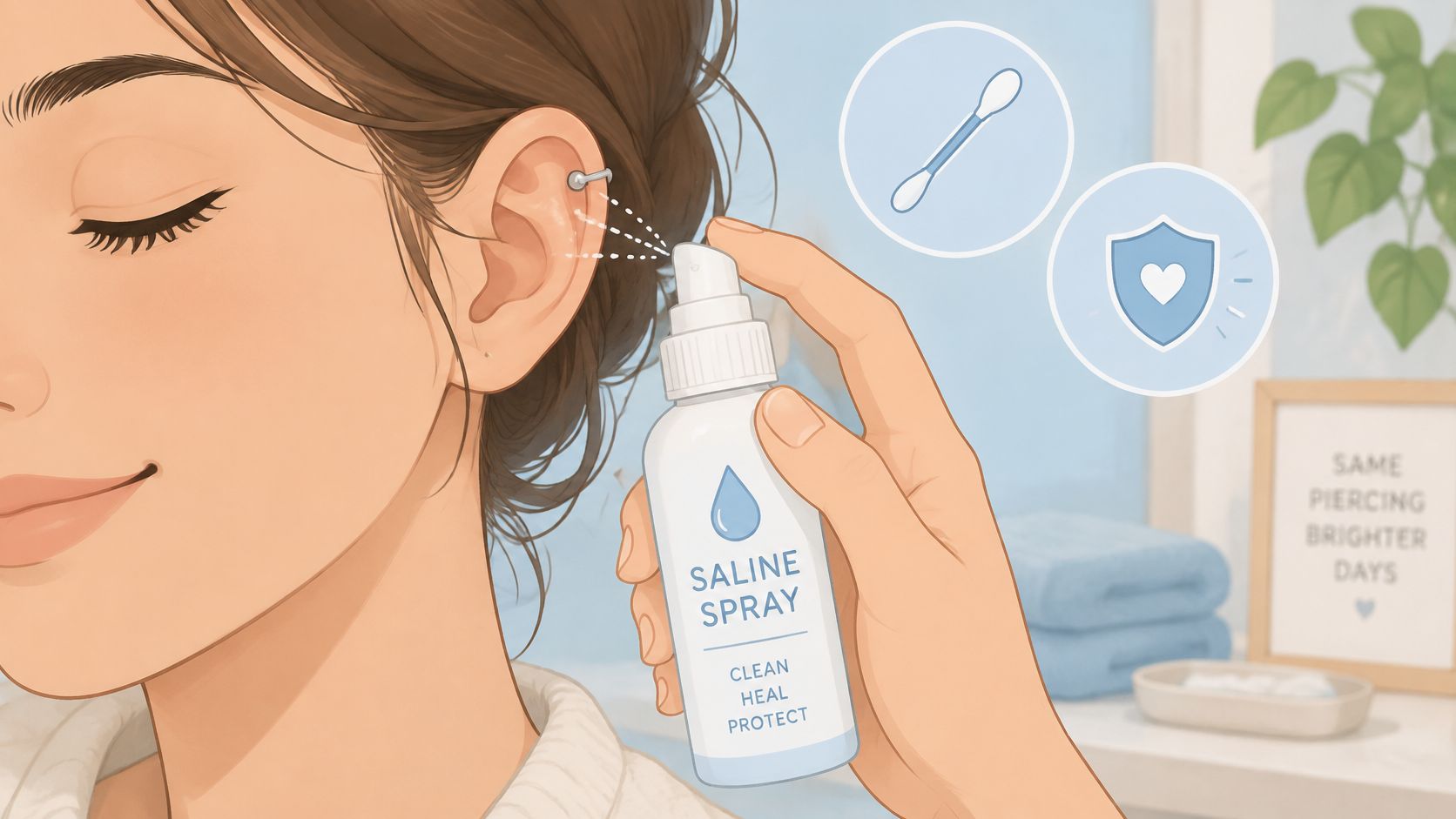
Advise customers with a healing piercing to follow their professional piercer's care instructions and avoid unnecessary handling. They should watch for pressure from a tight backing, snagging from hair or clothing, and irritation from sleeping directly on the piercing. A piece that sits comfortably in a healed lobe isn't automatically an appropriate fit for cartilage.
For retailers, useful aftercare communication is specific without pretending to diagnose. Encourage customers to check whether jewelry feels compressed or catches, and to ask a qualified piercer about fit and construction. Don't promise that a product is universally allergy-proof: individual sensitivities vary, and even a suitable material can't rule out mechanical irritation.
The warning signs deserve clear escalation. Increasing pain, spreading redness, pus, fever, embedding, or visible deformity should prompt medical or professional-piercer evaluation rather than repeated product swaps or self-treatment. Medical literature recognizes infection, embedded jewelry, and hypertrophic scarring among post-piercing concerns, alongside cutaneous hypersensitivity. (Medical evidence on nickel dermatitis and piercing-related complications)
This video can support a customer-facing care discussion, but it shouldn't replace personalized advice from a qualified professional.
Compliance, Labeling, and Listing Requirements
A defensible listing brings product evidence and customer-facing language together. Name the material precisely, identify which components it applies to, and describe the test documentation you hold. If a supplier only says “hypoallergenic,” don't convert that into an absolute guarantee in your own product copy.
European rules distinguish between a component inserted into a piercing and other surfaces that stay in contact with skin. The piercing post has the stricter nickel-release limit, while other prolonged-contact components have their own threshold. The regulation also requires a nickel-free coating to maintain the applicable release rate for at least two years of normal use before the relevant jewelry can be marketed under that provision. (EU nickel restrictions for jewelry and piercing components)
For each product, keep a file with the material specification, post and closure details, applicable laboratory results, and any coating documentation. Use those records to make precise claims, such as a named titanium grade or a documented nickel-release result, rather than implying that a vague label guarantees every wearer's response.
Listing presentation is a separate requirement from safety. For product imagery, prepare the source image at a 383:204 ratio, approximately 1.877:1, so earrings, backs, packaging, and lifestyle details aren't cropped unpredictably in catalog cards or collection grids. Keep image consistency in your merchandising workflow, but don't confuse an image-ratio specification with material compliance.
Merchandising and Marketing Hypoallergenic Earrings
Material transparency can distinguish a considered assortment from a page of interchangeable “sensitive-skin” claims. Organize products by verified material, and make it easy for shoppers to see what the post, backing, and decorative component are made from. Where documentation supports it, include the relevant titanium grade or nickel-release test standard in the product details.
Train staff and customer-service teams to answer the questions buyers ask: Is the post the same material as the front? Is the piece suitable for an unhealed piercing? What evidence supports the nickel claim? Clear answers reduce avoidable confusion and help customers choose based on both material and fit.
Use educational content to support social and marketplace listings. A practical resource such as Pin Generator's guide to pin optimization can help retailers think about how product information and visuals work together on Pinterest. Keep the content grounded in what the product documentation proves, and avoid language that promises every customer will be reaction-free.
A dedicated collection can group verified titanium options separately from fashion styles with less complete material information. That distinction doesn't diminish the latter; it helps shoppers understand what they're buying and lets your team market each product with full transparency.
Building a Hypoallergenic Helix Collection
Start with a focused assortment and a clear evidence standard. For fresh or healing cartilage, prioritize documented implant-grade titanium and appropriate construction. For other products, require complete material disclosure and test results that apply to the finished earring. Don't treat a familiar label, attractive finish, or supplier assurance as a substitute for that file.
Before adding a style, confirm the material of every skin-contact component, the surface finish, the post or hoop dimensions, and the closure design. Request samples when you need to assess workmanship and fit, then use the supplier's documentation to determine which claims belong in the listing. Price for your margin without relaxing the evidence standard that protects customer trust.
Keep the collection useful across channels. Product pages should state verifiable materials and dimensions; staff should know how to explain the difference between a material claim and a guarantee; and images should be prepared consistently for your catalog. Revisit supplier records when a product's construction or coating changes, rather than assuming an earlier report covers a new configuration.
A well-sourced assortment doesn't rely on one magic label. It gives customers a realistic choice, gives staff accurate answers, and gives the business a consistent basis for purchasing and merchandising.
JewelryBuyDirect offers wholesale jewelry and fashion accessories across categories including earrings, body jewelry, and components, with no minimum order quantity for testing styles before expanding an assortment. Explore JewelryBuyDirect to compare sourcing options and build a helix collection around clear material information and supplier documentation.