






Arthur Lynch | Sun Sep 07 2025
How to Start a Jewelry Business Online Successfully
To kickstart a successful online jewelry business, you need more than just beautiful products. You've got to define a specific niche, build a collection that speaks to that niche, and create a brand people trust. The real secret sauce is identifying your target audience from the get-go and figuring out what makes you different from everyone else.
Finding Your Niche in the Global Jewelry Market
Before you even think about sketching a design or contacting a supplier, your first job is to carve out your own corner in the jewelry world. It’s a huge market—projected to hit $375 billion by 2025—which means there's a ton of opportunity, but also a ton of competition.
Simply launching a store that sells "jewelry" is a recipe for getting lost in the noise. You need a focus. This initial stage is all about asking some tough questions. Who are you actually selling to? What’s the story behind your pieces? Nailing down these answers helps you build a brand that connects with a specific group of people, which makes your marketing infinitely more effective (and cheaper).
Get a Feel for Global and Regional Jewelry Trends
Your niche doesn't exist in a bubble; it's shaped by what's happening in fashion and culture. Tapping into current trends can give your business instant relevance and a built-in audience. The key is to find a style that you're passionate about but that also has proven demand.
Think about some of the big trends out there right now as a starting point:
- Global Minimalism & Scandinavian Design: This evergreen trend focuses on clean lines, simple shapes, and an understated vibe. It’s for customers who want that touch of everyday luxury without being flashy. Think delicate chains, simple gold bands, and sleek silver cuffs. This trend has strong appeal in Western Europe and North America.
- Bold Statement Pieces & "Dopamine Dressing": Straight from the fashion runways of Milan and New York, this niche is for people who want to be seen. Think oversized earrings, chunky chain necklaces, and bright, eye-catching gemstones. In Latin American markets, vibrant colors and bold designs are particularly popular.
- Sustainable & Ethical Jewelry: This is a huge and growing movement, especially among Millennial and Gen Z consumers in North America and Europe. It's for the conscious consumer who cares where their products come from. The focus is on recycled metals, lab-grown or conflict-free stones, and transparent production.
- Y2K & Nostalgia Revival: Globally, there's a huge resurgence of late '90s and early 2000s styles. This translates to charm bracelets, beaded necklaces, and playful, colorful enamel pieces. This trend is especially powerful on platforms like TikTok.
- Traditional & Heritage-Inspired Designs: In markets like India and the Middle East, there's a strong and consistent demand for intricate, traditional designs (e.g., Kundan, Polki). Modern interpretations of these classic styles are a massive opportunity for global brands.
Actionable Insight: Don't just guess. Use free tools like Google Trends and Pinterest Trends to see what people are actually searching for. Compare terms like "sustainable engagement rings" vs. "chunky gold hoops" and filter by region to see where demand is highest. This data-backed approach is far more reliable than a gut feeling.
Zero in on Your Ideal Customer
Once you've landed on a general style, it's time to get specific about your customer. You need to create a crystal-clear picture of who you're selling to. This "customer persona" will become your north star, guiding everything from product photos to the tone of your emails.
Don't settle for "women aged 20-35." That’s way too broad. Dig deeper.
Let's say you're going with the sustainable niche. Your ideal customer might be: "Meet Sarah, a 32-year-old graphic designer in Austin. She loves shopping at farmers' markets, follows ethical fashion bloggers on Instagram, and will gladly pay more for something that aligns with her values. She's looking for a one-of-a-kind engagement ring with a story, not a generic diamond from a mall store." See how much easier it is to market to Sarah than to a vague demographic?
Nail Down Your Unique Selling Proposition
Your Unique Selling Proposition (USP) is the heart and soul of your brand. It's the short, punchy answer to the question, "Why should I buy from you?" A great USP is easy to remember and highlights a clear benefit that your competitors don't offer.
Let's look at how this plays out in the real world:
- For a minimalist brand: "Effortless, everyday luxury. Our 14k gold-filled pieces are made to be lived in for years, without the fine jewelry markup."
- For a statement piece brand: "Bold, wearable art. Every piece is handcrafted in small batches, so you know you're wearing something truly unique."
- For a sustainable brand: "Beautiful jewelry with a clear conscience. We use 100% recycled silver and give back 5% of every sale to clean water initiatives."
Getting this foundational work done—finding your trend, defining your customer, and crafting your USP—is what separates a hobby from a real business. It gives you a clear identity and a roadmap for everything that comes next.
Bringing Your Brand and Collection to Life
Once you've carved out your niche, it's time to give it a soul. This is where your brand identity—your story—and your product collection come together. Your brand is more than just a logo; it's the feeling people get when they think of you. Your collection is the tangible proof of that promise.
A truly memorable brand is built on a clear narrative. What’s the core message behind your jewelry? Maybe you're creating minimalist designs for the modern professional, telling a story of "quiet confidence." Or perhaps you're selling bold, artisanal pieces that celebrate "wearable art for the individual." This central story will become your north star, guiding every decision you make, from logo design to packaging.
Developing Your Brand Identity
Your visual identity is what makes you instantly recognizable. In the world of e-commerce, where there’s no physical storefront, your digital presence has to work twice as hard to make an impression.
Let's break down the key elements:
- Logo Design: Your logo needs to be simple, memorable, and versatile. It has to look sharp whether it’s a tiny favicon in a browser tab or printed on your shipping boxes. Steer clear of overly complicated designs that are tough to read at a glance.
- Color Palette: Colors are a shortcut to emotion. A palette of soft neutrals might suggest sophistication and calm, perfect for a fine jewelry line. On the other hand, bright, vibrant colors can capture the fun, trendy energy of a fashion jewelry brand.
- Typography: The fonts you pick also set a distinct tone. A classic serif font can feel elegant and timeless, while a clean sans-serif font often comes across as more modern and approachable.
When these elements work in harmony, they create a cohesive brand that feels professional and trustworthy right from the start.
Sourcing Your Collection
With your brand story set, you need to find the products that bring it to life. How you source your jewelry is a huge decision, one that directly impacts your quality, profit margins, and creative freedom. For a deeper dive into the sales side of things, our guide on how to sell jewelry online offers a more complete strategy.
Now, let's look at how you can build that first collection.
Comparing Jewelry Sourcing Models
Choosing your sourcing method is one of the most foundational decisions for your new business. It influences everything from your startup costs to your day-to-day operations. Below is a quick comparison of the most common models to help you figure out which path is the right fit for your brand and budget.
| Sourcing Model | Upfront Cost | Creative Control | Best For |
|---|---|---|---|
| Handcrafting Your Designs | Low to Medium | Maximum | Artists and designers focused on unique, one-of-a-kind pieces. |
| Partnering with Artisans | Medium | High | Brands wanting a handmade feel without personal production. |
| Curating from Wholesalers | Low to High | Varies | Entrepreneurs focused on scalability and market trends. |
| Dropshipping | Very Low | Low | Beginners testing the market with minimal financial risk. |
Each model has its place, and the best choice really depends on your long-term goals. If you're all about unique artistry, handcrafting is a natural fit. If you're aiming for rapid growth and a wide product selection, wholesale might be your best bet.
Actionable Insight: When sourcing from wholesalers, reliability is everything. Request samples from multiple suppliers and compare quality side-by-side. Look for partners who are transparent about their supply chain and offer robust quality assurance. This protects your brand's reputation and makes sure your customers get the quality they expect.
The global jewelry industry is massive, projected to be worth around $348 billion in 2025. Fine jewelry accounts for about 68% of that market, signaling a strong consumer appetite for quality, whether it's handmade or sourced from top-tier suppliers.
This infographic breaks down some of the key differences between sourcing from local versus overseas suppliers.
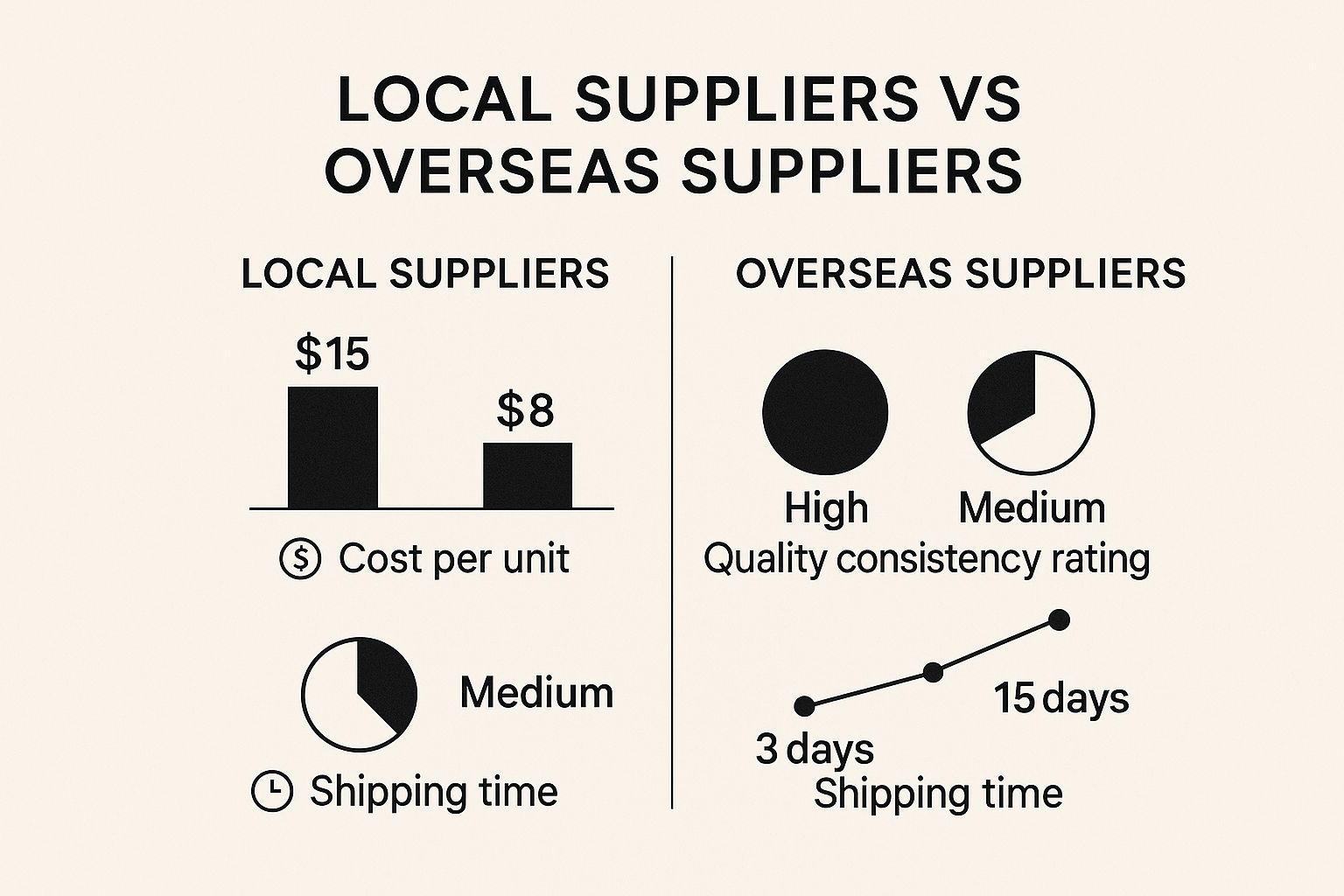
As you can see, there's a trade-off. Overseas suppliers might offer lower per-unit costs, but local partners often provide faster shipping and more hands-on quality control.
No matter which path you take, strict quality control is non-negotiable. Always order samples before you commit to a big inventory purchase. Check the materials, test the clasps, and inspect the overall finish. A single bad batch can lead to a flood of negative reviews and destroy the trust you’ve worked so hard to build.
Building Your E-commerce Storefront
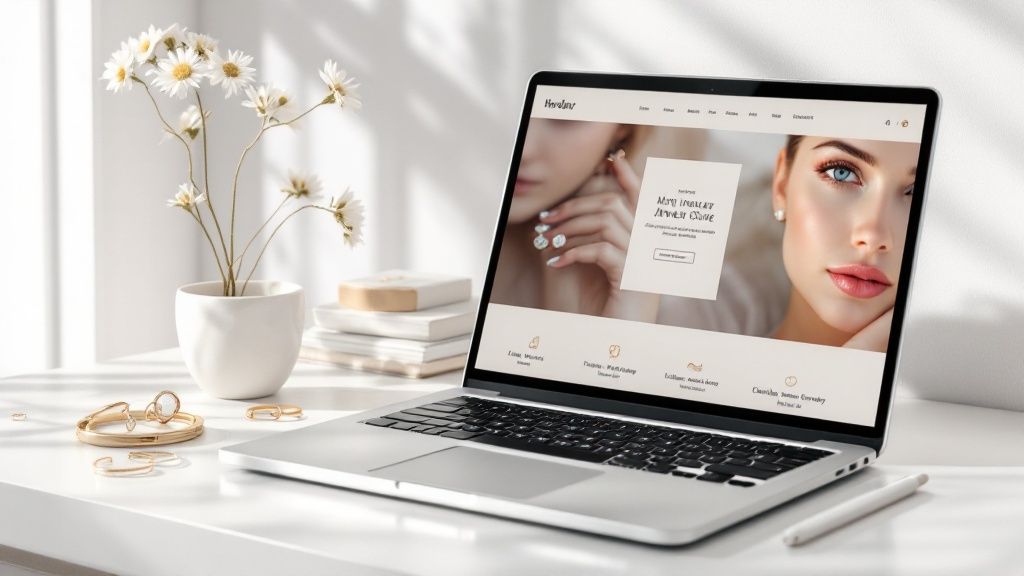
Think of your website as your digital showroom. In the world of online jewelry, that first impression is everything. It's the place where your brand story, your beautiful products, and your customers' trust all come together. Creating a site that feels both luxurious and completely reliable isn't just a technical task—it's the heart of your brand experience.
The platform you build on is the foundation for your entire online business. There are plenty of options out there, but they aren't all created equal, especially for showcasing the fine details and visual magic of jewelry.
Choosing the Right E-commerce Platform
The goal isn't to find the "best" platform, but the one that's right for your business. When you're selling jewelry, you have specific needs. High-quality image handling is non-negotiable. So is mobile responsiveness—remember, over 60% of e-commerce traffic now comes from phones. You'll also want a system that plays nicely with essential apps.
Here’s a quick rundown of the top contenders for anyone just starting out:
- Shopify: This is the go-to for a reason. It's incredibly user-friendly and has an enormous app store. Shopify handles high-resolution images beautifully and offers apps for things like custom engraving or even virtual try-ons.
- BigCommerce: If you're planning a massive inventory right out of the gate, BigCommerce is a powerhouse. It comes with a lot of robust features built-in, which means you might spend less on paid apps down the road.
- WooCommerce: Already comfortable with WordPress? WooCommerce gives you ultimate control. It’s an open-source plugin, so you can customize everything, but be prepared for a bit more hands-on technical management.
For most new jewelry entrepreneurs, I find that Shopify hits the sweet spot. It strikes the perfect balance of simplicity, power, and scalability, letting you worry less about the website and more about your products.
Designing a Store That Builds Trust
A beautiful design is important, but a trustworthy one is what actually makes the sale. From the moment someone lands on your homepage, your site needs to scream professionalism and security. This is achieved through a combination of clean design choices and transparent, customer-first policies.
Your job is to erase any hesitation a customer might have. For a more in-depth look at this entire process, you can check out our complete guide on how to start an online jewelry store.
Actionable Insight: Your online storefront must do more than just display products; it must tell a story. Every product description, every "About Us" page, and every policy should reinforce your brand's promise and build an emotional connection with the shopper. Don't hide your return policy; feature it prominently to reduce purchase anxiety.
Non-Negotiable Elements for Your Jewelry Website
Okay, so you've picked a platform. Now what? There are a few key elements that can turn a basic website into a high-converting machine. These are the details that truly matter.
Breathtaking Product Photography
Your photos are your best salesperson. Period. Since customers can't physically touch the jewelry, your images have to do all the work.
- Actionable Tip: Invest in a simple lightbox and use your smartphone's portrait mode for crisp, clean product shots. Shoot photos on a plain white background, lifestyle shots on a model, and a short video showing the piece in motion to catch the light. This trifecta covers all the bases.
Compelling Product Descriptions
Don't just list the specs. Tell the story behind each piece.
- Actionable Tip: Use a template for consistency. Start with an emotional, one-sentence hook. Follow with bullet points detailing materials (e.g., "14k gold-plated sterling silver"), dimensions, and weight. End with a short sentence on how to style the piece or what it represents.
Secure Payments and Clear Policies
Finally, the checkout process needs to be seamless and secure. Offer multiple payment options, including all major credit cards and trusted gateways like PayPal or Shop Pay.
Just as important are your shipping and return policies. Don't hide them. A straightforward, fair return policy can dramatically reduce a buyer's anxiety. It shows you're confident in your jewelry, and it's often the final nudge someone needs to click "buy."
Marketing Your Jewelry to Find Your First Customers
You’ve built your digital showroom and your collection is ready to go. Now for the hard part: getting people to actually see it. A beautiful website is like a silent gallery until you open the doors and invite people in. Marketing isn't just about shouting into the void; it's about telling your story on the right channels to the people who are genuinely excited to listen.
Jewelry is deeply personal and incredibly visual, so your marketing has to match that energy. This means jumping into the platforms where your aesthetic can truly shine and tell a compelling story.
Master Visual Social Media Platforms
Let's be clear: Instagram, TikTok, and Pinterest aren't just for fun. For a jewelry brand, they are your most powerful discovery tools. Success here isn't about just posting pretty pictures; it’s about creating content that stops someone mid-scroll and makes them feel something.
- Show, Don't Just Tell: Film short, captivating videos. A necklace catching the sunlight, the satisfying snap of a gift box closing, or a quick tour of your workspace—this is the stuff that builds a real connection. Behind-the-scenes content, especially on TikTok, makes your brand feel authentic and human.
- Let Your Customers Be Your Models: Encourage people to share photos of themselves wearing your pieces. When you reshare this user-generated content (UGC), it acts as instant social proof. It shows potential buyers how your jewelry looks on real people, in the real world—not just on a professional model.
- Teach and Inspire: Don't just sell a ring; sell a "stack." Create simple style guides or "lookbooks" showing customers how to layer necklaces or combine different rings. This does more than just showcase your products; it positions you as an expert and can seriously boost your average order value.
And remember, each platform has its own vibe. Pinterest is fantastic for creating aspirational mood boards that link directly back to your product pages. Instagram Stories, on the other hand, are perfect for quick Q&As, polls, and making your followers feel involved.
Partner with Micro-Influencers
Influencer marketing can be a game-changer, but I'm not talking about chasing big-name celebrities. The real gold is with micro-influencers. These are creators with smaller, super-engaged followings (think 10,000 to 100,000 followers) who have built a foundation of trust with their audience.
A recommendation from a micro-influencer whose style is a perfect match for your brand feels less like a paid ad and more like a genuine tip from a cool friend.
Actionable Insight: When you reach out, make it personal. Don't send a generic template. Tell them why you think their specific aesthetic is a perfect fit for your collection. Offering a gifted piece in exchange for an honest post can be an incredibly cost-effective way to get stunning, authentic content in front of a perfectly targeted audience. Search relevant hashtags (e.g., #minimaliststyle, #ethicalfashion) to find them.
Use Targeted Social Ads
Organic reach is a long, slow climb. If you want to get your first paying customers sooner rather than later, you'll need to put some money behind targeted social media ads. The targeting options on platforms like Facebook and Instagram are so detailed it's almost scary—in a good way.
You can get your ads in front of people based on:
- Demographics: Age, gender, and location.
- Interests: Users who follow certain fashion magazines, other jewelry brands, or have shown interest in terms like "sustainable fashion" or "minimalist jewelry."
- Behaviors: People who have recently made online purchases or engaged with ads from similar brands.
Start small. Test a few different ad designs and audiences with a modest budget. The best place to start? Look at your organic posts. If a particular photo or video got a ton of comments and shares, that's a huge clue it will probably perform well as an ad.
Nurture Relationships with Email Marketing
Think of it this way: social media is where you meet, but email is where you build the relationship. Your email list is one of the most valuable things you'll build because you own it. No algorithm change can take away that direct line to your most loyal followers.
Start collecting emails from day one. A simple pop-up on your site offering 10% off their first purchase in exchange for an email address is a classic for a reason—it works.
Once you have subscribers, treat them like insiders. Send them the story behind a new collection, give them early access to sales, or share practical tips on how to care for their jewelry. This is how you build a community, not just a customer list, and turn one-time buyers into people who will rave about your brand.
Lay the Groundwork with SEO
Finally, don’t sleep on Search Engine Optimization (SEO). It’s definitely a long game, but the work you do now will pay off for years. SEO is all about making it easy for search engines to find you when people are looking for the exact things you sell.
Start with the basics: write product titles and descriptions that use the words real people would search for, like "delicate gold layering necklace" or "ethically sourced gemstone ring." A blog is also an incredibly powerful SEO tool. Write articles about topics your ideal customer is already searching for, like "How to Choose the Perfect Everyday Hoops" or "The Rise of Sustainable Jewelry."
This strategy positions you as an expert and helps you show up in search results. The opportunity is massive; the global online jewelry market hit a valuation of roughly $46.1 billion by the end of 2024 and is projected to nearly triple by 2032. If you want to dive deeper, you can explore these online jewelry market insights to understand the growth ahead.
Scaling Operations for Long-Term Success
Getting that launch off the ground is a huge win, but let's be honest—that's just the starting line. The real test of a brand's staying power is what comes next: handling the day-to-day grind and building a foundation that won't crack under the pressure of growth. Lasting success is all about creating smooth, repeatable systems that keep your customers coming back and your business healthy.
This is where you shift from just making sales to mastering logistics, customer care, and smart, data-driven expansion. It's not the most glamorous part of the job, but this is where you build real, long-term profitability.
Mastering Order Fulfillment and Shipping
Your customer's experience doesn't end when they click "buy." In many ways, it's just getting started. That gap between their purchase and the moment they unbox their new piece is a crucial touchpoint for your brand.
A seamless fulfillment process is your secret weapon. You need a rock-solid system for picking, packing, and shipping orders that feels efficient on your end and looks incredible to your customer.
The unboxing experience itself is a massive marketing opportunity. Don't just toss a beautiful necklace into a plain mailer.
- Branded Packaging: A custom-stamped box or a simple velvet pouch with your logo instantly elevates the perceived value of what's inside.
- A Personal Touch: A short, handwritten thank-you note can make a customer feel genuinely seen and appreciated, turning a one-time buyer into a loyal fan.
- Clear Instructions: Pop in a small card with jewelry care tips. It shows you care about the longevity of your work and builds a ton of trust.
Nurturing Loyalty Through Exceptional Customer Service
In e-commerce, your customer service is your storefront. One fantastic interaction can create a vocal advocate for your brand, while a single bad one can spread like wildfire online. The goal is simple: handle every single inquiry with empathy and speed.
Set up a dedicated business email for customer questions and make a personal commitment to responding within 24 hours. When things go wrong—and they will, like a delayed package or a damaged item—don't see it as a crisis. See it as a golden opportunity to show how much you care.
Actionable Insight: A prompt, generous solution to a problem often leaves a stronger positive impression than a flawless transaction. A customer who feels heard and taken care of is far more likely to come back and recommend your brand to their friends. Create a "make it right" fund in your budget for this purpose.
Scaling Your Business with Intention
Growth is exciting, but unplanned expansion can quickly sink your operations. Smart scaling is about making calculated moves based on cold, hard data, not just jumping at every new shiny object. This is a critical lesson for anyone learning how to start a jewelry business online that they want to see last for years.
Once sales start to climb, it’s time to get strategic about what comes next.
Use Sales Data to Guide Your Decisions
Your sales analytics are a goldmine. Seriously, dig into those reports to find your best-sellers and figure out what your customers are really loving.
- Which pieces are constantly selling out?
- Are people frequently buying certain items together?
- What styles or materials get the most buzz on social media?
Use these insights to double down on what’s working. Reinvest in your most popular designs—maybe by offering them in new materials or with different gemstone options.
Thoughtfully Expand Your Product Lines
Once you have a core collection of proven winners, you can start to branch out. But don't just add new products for the sake of it. Make sure every new piece fits perfectly into your brand's story and aesthetic.
For example, if your runaway best-seller is a minimalist silver necklace, a logical next step might be a pair of matching minimalist earrings or a delicate bracelet, not a completely different, over-the-top statement piece.
Test New Marketing Channels and Prepare for Global Reach
The strategy that got you your first 100 customers probably won't get you to 1,000. As you grow, start experimenting with new marketing channels. If you've got Instagram dialed in, maybe it's time to explore targeted Pinterest ads or collaborate with a well-aligned influencer.
Finally, get ready to ship internationally. The demand for unique jewelry is global, and you don’t want to leave money on the table. Research international shipping carriers and be crystal clear on your website about costs and potential customs fees. This opens up a massive new customer base.
Online jewelry sales have doubled in recent years, with about 16.7% of all purchases now happening online. That represents a global market of nearly $60 billion. You can learn more about these jewelry e-commerce trends to fully grasp the scale of the opportunity in front of you.
Common Questions About Starting a Jewelry Business
Diving into the online jewelry world is an incredible journey, but it’s totally normal to have a ton of questions. Getting straight answers from the get-go helps you build momentum and sidestep the little hurdles that trip up so many new entrepreneurs. Let's walk through some of the most common questions I hear.
How Much Money Do I Need to Start?
Honestly, this is the biggest "it depends" question. You could technically get a handmade collection up on a marketplace for a few hundred dollars to cover your first batch of materials and listing fees. But if you're thinking about a full-fledged brand with custom designs and a healthy inventory, you could easily be looking at tens of thousands.
My best advice? Start lean. Seriously. Pour your initial budget into the things that actually move the needle:
- Your Online Store: A solid e-commerce platform like Shopify or BigCommerce will probably run you $30 to $300 a month.
- Initial Inventory: Don’t go wide and deep. Start with a small, curated selection of pieces you truly believe in. You can always expand later.
- Photography: This is not the place to cut corners. Great photos sell jewelry. Period.
- Packaging: Think about the unboxing experience. Nice boxes, a simple thank you note—these small touches make a huge difference.
- Marketing: You don't need a massive budget, but setting aside a little cash for social media ads can help you find those crucial first customers.
What Are the Legal Requirements?
Yes, you'll almost certainly need to make things official. The exact rules change depending on where you live, but a few documents are pretty standard across the board. For a deeper look, our guide on starting a jewelry business breaks down these foundational steps in more detail.
Generally, you'll need a business license to operate legally in your city or state. On top of that, you'll likely need a seller's permit (sometimes called a resale certificate). This is key because it lets you buy wholesale supplies without paying sales tax and is required for you to collect sales tax from your own customers. Make sure you research the specific rules for your area before you make your first sale.
How Should I Price My Jewelry for Profit?
Figuring out pricing is a delicate dance between your costs, your brand's perceived value, and what your target customer is willing to pay. A common rookie mistake is just doubling the cost of materials—that's a fast track to losing money because it ignores your time, overhead, and other hidden costs.
Here’s a classic industry formula that gives you a solid starting point:
- (Cost of Materials + Your Labor Costs) x 2 = Wholesale Price
- Wholesale Price x 2 = Retail Price
This simple 4x markup on your core costs builds in enough margin to cover everything else—website fees, marketing, packaging, transaction fees—and still leaves room for a wholesale program down the line. Always, always scope out what competitors in your niche are charging for similar quality. That'll tell you if you're in the right ballpark.
Your price tag says a lot about your brand. Don't be afraid to price your pieces to reflect their real value, especially if you're offering unique designs, high-quality materials, or a story people want to be a part of.
What Jewelry Styles Are Most Profitable?
Profit isn't about finding one magic product; it's about finding your specific audience and serving them better than anyone else. That said, some categories consistently have strong demand and can offer better margins.
Right now, these areas are on fire:
- Personalized Jewelry: Think engraved necklaces, initial charms, and birthstone rings. These pieces carry deep emotional value, and customers are always looking for them. This trend is popular globally, from Mother's Day gifts in the US to personalized wedding jewelry in Asia.
- Demi-Fine Jewelry: This is the sweet spot between fashion and fine jewelry. Gold-plated sterling silver (vermeil) gives customers that high-end look without the shocking price tag, tapping into the "affordable luxury" trend.
- Ethically Sourced & Lab-Grown Pieces: A growing number of shoppers really care where their jewelry comes from. Pieces made with recycled metals or lab-grown diamonds resonate deeply with this conscious consumer base, particularly in Western markets.
Ultimately, the most profitable path is finding a niche you're genuinely excited about. That passion is contagious, and it will shine through in everything you do, attracting the kind of loyal customers every business owner dreams of.
Ready to source a stunning collection with confidence? At JewelryBuyDirect, we offer direct-from-factory pricing on over 120,000 styles, with no minimum order requirements. Explore our wholesale catalog today and build the jewelry business of your dreams.