






Arthur Lynch | Wed Dec 03 2025
7 Essential flea market selling tips for Jewelry Vendors
Welcome to the ultimate guide for aspiring flea market magnates specializing in jewelry and fashion accessories. The hum of a bustling market offers a unique opportunity, but success requires more than just a table and a cash box. It demands a sharp eye for sourcing high-quality, affordable pieces and a strategic approach to selling them. This article provides seven essential flea market selling tips designed specifically for entrepreneurs looking to build a thriving business from the ground up.
We'll move beyond generic advice and dive deep into actionable tactics. You'll learn how to master wholesale sourcing from platforms that offer factory-direct pricing on thousands of styles, allowing you to secure premium inventory without minimum order quantities. This guide also details how to create an irresistible booth that converts casual browsers into loyal, repeat customers. To truly unlock profit, it's crucial to understand market demand; you can also discover what sells best at flea markets to ensure your inventory is aligned with current trends.
Whether you're an established online retailer testing a physical sales channel or a brand-new vendor making your first sale, these strategies will equip you to source smarter, sell faster, and maximize your profits. Let's explore the practical steps you can take to transform your flea market stall into a profitable fashion destination, covering everything from competitive pricing and eye-catching displays to effective pre-event marketing and superior customer engagement.
1. Master the Art of Sourcing High-Quality, Affordable Inventory
The foundation of a profitable flea market business is built long before you set up your booth. Your ability to consistently source high-quality, on-trend jewelry and fashion accessories at low costs directly dictates your profit margins and customer satisfaction. This is one of the most crucial flea market selling tips for vendors aiming for long-term success. It means moving beyond sporadic thrift store finds and developing a reliable, strategic sourcing plan.

The key is to partner with B2B wholesale platforms that offer factory-direct pricing. This approach eliminates the multiple middlemen common in traditional supply chains, allowing you to maximize your markup potential. A diverse, high-quality inventory sourced this way attracts serious buyers and builds your reputation for value, turning your booth into a must-visit destination.
Why Strategic Sourcing Matters
A strategic approach ensures you have a consistent supply of desirable items that can be priced both competitively and profitably. This method is ideal for vendors who want to establish a brand identity, cater to specific niches, and maintain healthy profit margins without relying on luck. By controlling your inventory source, you control your business's potential.
Key Insight: Your profit is made when you buy, not just when you sell. Sourcing directly from wholesalers at low costs gives you the flexibility to offer attractive prices to customers while securing a significant return on your investment.
Actionable Sourcing Strategies
To implement this strategy effectively, focus on finding reliable wholesale partners and optimizing your purchasing process.
- Example 1: Niche Curation. A vendor decides to target the festival-goer demographic. They source a curated collection of trendy gold-plated necklaces and stainless steel body jewelry from a single B2B supplier. Buying in bulk lowers the per-item cost, enabling them to create attractive multi-buy deals at the flea market.
- Example 2: High-Margin Staples. Another seller focuses on classic pieces. They source sterling silver rings from a platform like JewelryBuyDirect for $3 each and confidently sell them for $15 to $20, achieving a markup of over 400% while still offering customers a great deal. For more details on this approach, you can find a wide selection of wholesale jewelry online.
Pro Tips for Wholesale Buying
- Test Before Committing: Start with a small, diverse order to test the quality and gauge customer interest. This helps you understand sell-through rates before investing in larger quantities.
- Leverage Platform Perks: Look for wholesalers offering new user discounts, like 15% off your first few orders. Maximize savings by taking advantage of free shipping thresholds (e.g., on orders over $150).
- Manage Your Cash Flow: Use buy-now-pay-later options if available. This allows you to stock up on inventory for the busy season without a large upfront capital outlay.
- Stay Ahead of Trends: Check your supplier’s "new arrivals" section daily. Keeping your inventory fresh with the latest styles ensures repeat business from trend-conscious shoppers.
2. Create an Attractive and Organized Display
The visual presentation of your booth is your most powerful sales tool. Before a customer even looks at a specific item, they judge your entire setup. An organized, aesthetically pleasing display with clear signage and eye-catching elements draws shoppers in, builds trust in your products, and encourages them to spend more time (and money) at your booth. This is one of the most impactful flea market selling tips because it transforms a simple table of goods into an inviting shopping experience.

A well-merchandised booth communicates professionalism and suggests that the items for sale are valuable. For vendors selling high-quality jewelry and accessories, the display must reflect the quality of the inventory. By creating an attractive, easy-to-navigate space, you make the shopping process enjoyable and significantly increase your chances of making a sale.
Why Strategic Display Matters
A strategic display guides the customer's eye, tells a story about your brand, and makes your products seem more desirable. It prevents your booth from looking like a cluttered garage sale, instead presenting it as a curated boutique. This approach is essential for vendors who want to command higher prices, build a recognizable brand, and create a memorable presence that draws repeat customers.
Key Insight: Your display is a silent salesperson. It can attract customers from across the aisle, highlight your best items, and make your merchandise feel more valuable, all without you saying a word.
Actionable Display Strategies
To implement this strategy effectively, focus on creating hierarchy, flow, and brand consistency in your booth setup.
- Example 1: The Boutique Experience. A jewelry vendor uses velvet busts for necklaces, tiered wooden risers for rings, and a large mirror for try-ons. They use a consistent color scheme (e.g., black velvet and natural wood) that makes their high-quality stainless steel and sterling silver pieces pop, creating a sophisticated, high-end feel.
- Example 2: The Themed Collection. A seller specializing in bohemian-style accessories uses props like driftwood, macrame hangings, and small potted plants to create a cohesive theme. They group items by style (e.g., beaded bracelets together, turquoise necklaces in one section), making it easy for shoppers to find what they're looking for.
Pro Tips for Booth Merchandising
- Vary Your Heights: Use crates, shelves, and risers to create different levels. This makes your display more dynamic and allows you to place your most profitable or eye-catching items at eye level.
- Create Clear Pathways: Ensure customers can easily enter and move around your space, even if it's small. A cramped, inaccessible booth will deter shoppers from stopping to browse.
- Use Effective Lighting: Don't rely solely on overhead venue lighting. Battery-powered LED lights can be used to spotlight your best jewelry pieces, making them sparkle and grab attention.
- Incorporate Mirrors: Mirrors not only allow customers to try on jewelry but also make your booth feel larger, brighter, and more open.
3. Arrive Early and Secure the Best Booth Location
The old real estate adage "location, location, location" applies just as much to flea markets as it does to property. Your booth's placement can be the deciding factor between a day of high foot traffic and constant sales or one spent watching potential customers walk by without a glance. Arriving early to secure a prime spot is one of the most impactful flea market selling tips you can implement, directly boosting your visibility and sales potential.
A well-placed booth acts as a natural magnet, drawing in browsers from main walkways and high-traffic intersections. This strategic positioning ensures that your carefully sourced jewelry and accessories are seen by the maximum number of people, increasing the odds of turning passersby into paying customers. It's about working smarter, not just harder, by letting the market's natural flow do the advertising for you.
Why Strategic Location Matters
Your booth's location determines its exposure. A spot near the main entrance, a popular food vendor, or at the end of a busy aisle guarantees a steady stream of potential buyers. This high visibility is especially critical for vendors selling visually appealing items like fashion accessories, where an eye-catching display can stop shoppers in their tracks. A visually attractive display is crucial, and to further enhance your booth's appeal, learn how to take compelling product photographs that can be used for signage or online promotion.
Key Insight: The first few hours of a flea market are often the busiest. Securing a prime location ensures you capitalize on this peak traffic, maximizing your sales potential before the crowds thin out.
Actionable Location Strategies
To leverage this strategy, you need to be proactive and plan ahead. Being one of the first vendors to arrive gives you the best selection of available spots.
- Example 1: The Early-Bird Specialist. A vendor who sells vintage-inspired jewelry knows that serious collectors arrive at dawn. They get to the flea market at 4 AM to secure a corner booth right near the main entrance, ensuring every early buyer walks past their curated collection first.
- Example 2: The Food Court Parasite. A seller specializing in trendy, impulse-buy accessories strategically sets up near the food court. They benefit from the constant flow of people taking a break, who are more likely to browse and make a spontaneous purchase while eating or waiting for friends.
Pro Tips for Securing Your Spot
- Scout in Advance: If possible, visit the market as a customer a week or two before you sell. Take note of the flow of traffic, which aisles are busiest, and where the most successful-looking vendors are located.
- Build Organizer Relationships: Be friendly with the market organizers. A good relationship can sometimes lead to tips on the best spots or the ability to reserve a preferred location in advance.
- Arrive Before the Gates Open: Don't just arrive on time; arrive early. Plan to be there at least one to two hours before the official setup time begins to get in line and claim your spot.
- Request Consistency: Once you find a location that works well for your business, try to book the same spot for every event. Repeat customers will learn where to find you, building brand recognition and loyalty.
4. Offer Excellent Customer Service and Build Relationships
In a crowded marketplace, superior customer service is the secret weapon that transforms one-time shoppers into loyal regulars. Your high-quality inventory attracts them, but how you treat them is what makes them come back. This approach focuses on creating a welcoming, helpful, and memorable shopping experience that fosters trust and encourages word-of-mouth referrals, making it one of the most impactful flea market selling tips you can implement.
While great products are essential, the human connection is your true competitive advantage. Being approachable, knowledgeable about your items, and genuinely interested in helping customers find the perfect piece turns your booth from a simple point of sale into a trusted destination. This relationship-building strategy is what creates brand advocates who will seek you out at every event.
Why Strategic Customer Service Matters
A strategic approach to service ensures that every interaction reinforces your brand's value and builds goodwill. In an environment where shoppers have endless choices, making them feel seen and valued is what differentiates a forgettable booth from a favorite vendor. This method is ideal for sellers who want to build a sustainable business with a dedicated customer base, reducing the constant need to attract new buyers.
Key Insight: People buy from people they like and trust. A friendly smile, a helpful suggestion, or a bit of shared knowledge about a product can be more persuasive than any sales pitch. Excellent service turns transactions into relationships.
Actionable Customer Service Strategies
To implement this strategy effectively, focus on making every visitor feel welcome and being a helpful resource rather than just a salesperson.
- Example 1: The Knowledgeable Curator. A vendor specializing in vintage-inspired jewelry doesn't just sell necklaces; they share the story behind the styles. When a customer shows interest in an Art Deco-style piece, the vendor explains the design's historical context, making the item more special and justifying its price.
- Example 2: The Relationship Builder. Another seller keeps a small notebook or phone log of regular customers and their preferences. When a new shipment of sterling silver rings arrives, she texts a photo to a client who she knows loves that style, effectively preselling the item and making the customer feel valued.
Pro Tips for Building Relationships
- Acknowledge Everyone: Greet every person who walks by or enters your booth with a warm, genuine smile and a simple "hello." This small gesture makes your space feel inviting and approachable.
- Be a Resource, Not a Salesperson: Ask open-ended questions like, "What kind of styles are you drawn to today?" instead of "Can I help you?" This opens a conversation and helps you understand their needs.
- Practice Radical Honesty: Be upfront about the materials and quality of your pieces. This transparency builds immense trust and shows you respect the customer.
- Offer Small Perks: For repeat customers or those making a large purchase, offer a small discount, a free polishing cloth, or a simple gift. These unexpected kindnesses create lasting loyalty. For more ideas on enhancing the customer journey, you can learn about customer service best practices on JewelryBuyDirect.com.
5. Bring Adequate Change and Multiple Payment Methods
In the fast-paced flea market environment, a seamless transaction is just as important as a compelling product. Failing to have enough cash on hand or limiting payment options creates unnecessary friction, often leading to lost sales at the final moment. This is one of the most practical flea market selling tips because it directly addresses the customer's ability to pay, ensuring you can close a deal with anyone who shows interest in your carefully sourced jewelry.
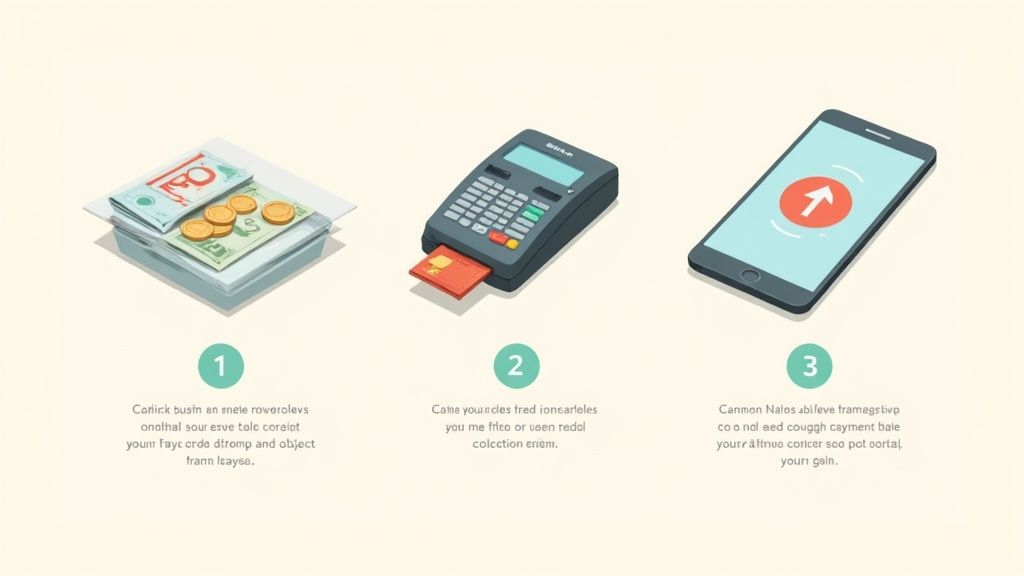
Being transaction-ready means anticipating your customers' needs. Shoppers arrive with various payment preferences, from cash to cards to mobile apps. Accommodating these options removes purchase barriers and projects an image of a professional, customer-friendly business, making shoppers more comfortable and willing to spend at your booth.
Why Payment Flexibility Matters
A flexible payment strategy ensures that no sale is lost due to logistical issues. In an era where fewer people carry large amounts of cash, accepting digital payments can significantly increase your potential revenue. It allows for impulse buys on higher-priced items and caters to a broader, tech-savvy demographic, ultimately maximizing your sales potential for every person who stops to look at your high-quality accessories.
Key Insight: The easier you make it for someone to pay, the more likely they are to buy. Removing payment friction is a simple yet powerful way to boost your daily revenue and improve the overall customer experience.
Actionable Payment Strategies
To implement this, prepare both your cash float and digital payment systems well before market day. A dual approach covers all bases and keeps sales flowing smoothly.
- Example 1: The Cash-Ready Veteran. An established vendor starts every flea market with a locked cash box containing $300 in assorted bills and coins. They organize it with at least twenty $1 bills, ten $5 bills, and ten $10 bills, plus rolls of quarters, ensuring they can make change for any purchase, from a $5 ring to a $50 necklace, without hesitation.
- Example 2: The Modern Tech-Savvy Seller. A pop-up vendor specializing in trendy fashion accessories uses a Square reader connected to their smartphone. They display clear signage for accepted payments, including Venmo and PayPal QR codes. This allows them to easily manage transactions, track sales data, and cater to younger customers who rarely carry cash.
Pro Tips for Managing Transactions
- Prepare Your Cash Float: Start the day with a specific breakdown of small bills and coins. A good starting point is $200-300, including plenty of ones, fives, and tens.
- Secure Your Money: Use a locking cash box or a wearable money belt/apron to keep your earnings secure and out of sight. Never leave cash unattended.
- Embrace Mobile Payments: Research services like Square, Stripe, or PayPal. Compare their transaction fees and choose one that integrates easily with your smartphone or tablet.
- Test Your Tech: Always test your card reader and payment apps before the event begins. Ensure your phone and any backup battery packs are fully charged.
- Display Clear Signage: Create a visible sign that clearly shows all accepted payment methods (e.g., Visa, Mastercard, Venmo, Cash). This informs customers upfront and can prevent last-minute issues.
6. Curate Your Niche with Quality and Consistency
The most memorable flea market booths are not the ones with piles of generic goods, but those with a distinct point of view. Curating a high-quality, unique inventory is what separates a casual seller from a destination vendor. Instead of competing on price with low-grade items, this strategy focuses on offering a carefully selected mix of merchandise that tells a story and attracts discerning shoppers. This is one of the most impactful flea market selling tips for building a loyal customer base.
This approach is about becoming a specialist. Whether you focus on high-quality fashion accessories, vintage-inspired jewelry, or a specific aesthetic like minimalist chic, curation establishes your booth as a place for discovery. Shoppers looking for unique pieces are willing to spend more for items they can't find elsewhere, increasing your average transaction value and building your reputation for quality.
Why Strategic Curation Matters
A curated inventory transforms your booth from a simple stall into a boutique experience. It creates a brand identity, making your space instantly recognizable and memorable to repeat customers. By developing expertise in a specific category, you build trust and become a go-to source for style-conscious shoppers, allowing you to command higher prices and foster a dedicated following.
Key Insight: Don't try to be everything to everyone. A focused, well-curated collection of quality items creates more perceived value and attracts serious buyers more effectively than a booth overflowing with miscellaneous, low-margin products.
Actionable Curation Strategies
To implement this strategy, you must become an expert in your chosen niche and develop reliable sourcing channels that provide a steady stream of unique finds.
- Example 1: Niche Jewelry Specialization. A vendor decides to specialize in Art Deco-inspired and Victorian-style jewelry. They build a reputation by sourcing high-quality reproductions from wholesale suppliers, documenting the historical inspiration of each item on its tag. Customers come specifically to them for unique, affordable historical accessories.
- Example 2: Trend-Focused Fashion Accessories. Another seller focuses on a specific modern trend, like minimalist stainless steel and sterling silver jewelry. They source high-quality, on-trend pieces from wholesale suppliers, curating a cohesive collection that appeals to style-conscious shoppers looking for affordable, durable fashion accessories.
Pro Tips for Curating Inventory
- Develop Deep Expertise: Immerse yourself in your chosen category. Follow fashion blogs, understand different materials, and learn to identify quality craftsmanship. This knowledge is your greatest asset.
- Research Demand and Pricing: Use platforms like eBay's "Sold" listings or market trends to research the value and demand for specific styles. This ensures you're buying smart and pricing profitably.
- Establish Reliable Sourcing: Don't rely on random finds. For fashion accessories, partner with reliable B2B wholesale platforms to secure consistent quality and stay ahead of trends.
- Rotate Your Stock: Keep your booth looking fresh for repeat visitors. Hold back some of your best finds to introduce new inventory at each market, creating a sense of urgency and discovery.
7. Use Strategic Signage and Marketing Before the Event
Effective selling doesn't start when the first customer walks by; it begins with building anticipation and guiding them directly to you. Creating eye-catching signage for your booth and promoting your presence before the event transforms you from just another vendor into a destination. This proactive approach is one of the most impactful flea market selling tips for modern sellers who want to attract targeted buyers, not just random foot traffic.
This strategy combines clear, professional on-site branding with digital marketing efforts like social media posts, vendor listings, and email newsletters. By announcing your participation and showcasing sneak peeks of your high-quality jewelry and accessories, you generate excitement and ensure that dedicated followers and serious shoppers know exactly where to find you on market day.
Why Strategic Marketing Matters
Without a marketing plan, you rely entirely on luck and location. A strategic approach builds a loyal following, differentiates your booth from the competition, and drives pre-qualified customers who are already interested in your products. It allows you to start making sales the moment the market opens, giving you a significant advantage over vendors who simply show up and hope for the best.
Key Insight: Don't just be a vendor at the flea market; be an anticipated event. Promoting your booth beforehand ensures that your ideal customers add you to their "must-visit" list before they even arrive.
Actionable Marketing Strategies
To implement this, integrate both physical and digital marketing tactics into your pre-market preparation routine.
-
Example 1: The Social Media Savvy Seller. A vendor specializing in trendy, affordable stainless steel rings and gold-plated necklaces posts high-quality photos and videos to Instagram a week before the event. They use relevant hashtags like
#fleamarketfindsand#vintagejewelry, share their booth number, and run a poll asking followers which pieces they're most excited to see. - Example 2: The Professional Brand Builder. Another seller invests in a professionally printed vinyl banner with their brand name and logo, making their booth visible from across the aisle. They also have business cards with their social media handles and a QR code linking to their online shop, encouraging repeat business long after the market ends.
Pro Tips for Booth Promotion
- Create Clear, Bold Signage: Design a simple, readable banner with your business name. Use additional signs to highlight pricing, special deals (e.g., "3 for $25"), or product categories.
- Leverage Social Media: Post on Instagram and Facebook 1-2 weeks before the event. Share your booth location, hours, and sneak peeks of your best inventory. Use stories on market day to show your setup and create urgency.
- Build an Email List: Keep a sign-up sheet at your booth. Email your subscribers a few days before a market to give them a preview of new arrivals or offer a small "subscriber-only" discount.
- Get Listed: Ensure you are included in the flea market's official vendor map or online directory if they have one. Post in local Facebook groups or online community calendars about your participation.
7-Point Flea Market Selling Tips Comparison
| Tip | Implementation complexity | Resource requirements | Expected outcomes | Ideal use cases | Key advantages |
|---|---|---|---|---|---|
| Master the Art of Sourcing | High — needs research and supplier vetting | Medium–High — investment in quality inventory | Higher profit margins, better product quality, consistent supply | Jewelry & accessory vendors, sellers aiming for brand building | Controls costs, ensures quality, enables niche specialization |
| Create an Attractive Display | Medium — planning and setup time | Medium — tables, risers, covers, lighting | Increased foot traffic, higher perceived value, longer browsing | Visual items (jewelry, fashion), premium or curated booths | Strong first impression, easier navigation, justifies higher prices |
| Secure the Best Booth Location | Low–Medium — logistics and timing discipline | Low–Medium — time, possible higher booth fees | Significantly increased visibility, higher sales potential | Markets with first-come spots or heavy foot traffic | Greater exposure, benefits from natural customer flow, repeat-location benefits |
| Offer Excellent Customer Service | Medium–High — sustained attention and interpersonal skill | Low — staff time, product knowledge, positive attitude | More repeat customers, referrals, higher customer lifetime value | Niche vendors, sellers in competitive categories, regular markets | Builds loyalty and trust, enables upsells, improves reputation |
| Accept Multiple Payment Methods | Low–Medium — setup of cash system and payment tech | Medium — cash float, card reader, battery backups | Fewer lost sales, higher conversion, smoother transactions | High-volume stalls, higher-priced items, impulse purchases | Accommodates all customers, professional appearance, reduces friction |
| Curate Your Niche | High — sourcing expertise and market knowledge | Medium–High — sourcing costs, time, research | Higher margins, attracts serious buyers, strong differentiation | Specialty jewelry dealers, trend-focused accessory vendors | Commands premium prices, builds brand identity, reduces competition |
| Use Pre-Event Marketing | Medium — content creation and scheduling | Medium — signage production, social media time | Targeted foot traffic, pre-event buzz, increased sales on event day | Sellers with online presence, specialty inventory, competitive events | Pre-event reach, brand recognition, measurable engagement |
From Market Stall to Thriving Enterprise: Your Next Steps
You've navigated the essential strategies, from the pre-dawn setup to the final sale of the day. The journey from a simple market stall to a thriving enterprise isn't about a single secret trick; it's about the consistent application of smart, strategic practices. The seven core pillars we've explored serve as your roadmap. They represent a holistic approach that transforms a hobby into a profitable, scalable business.
Mastering these flea market selling tips is what separates the casual seller from the serious entrepreneur. It’s the difference between hoping for a good day and engineering one. Each element, from strategic sourcing and clear displays to proactive customer engagement and modern payment options, works in synergy. Neglecting one can weaken the others. A beautiful display won't matter if your inventory is overpriced, and great products won't attract anyone if your booth is hidden in a low-traffic corner.
Weaving the Threads of Success Together
Think of each tip as a foundational block. Your success is built by stacking them correctly and ensuring they are all strong.
- Sourcing as Your Foundation: The most crucial, overarching theme is your inventory. Sourcing high-quality, affordable jewelry and fashion accessories is non-negotiable. This is the bedrock of your business. Without desirable products at a price that allows for a healthy margin, even the best sales tactics will falter.
- Presentation as Your Magnet: Your booth's appearance, including your displays and signage, is what draws customers in from the bustling aisles. It’s your first impression and your silent salesperson, communicating professionalism and value before you even say a word.
- Pricing and Payments as Your Engine: This is the transactional core of your operation. Strategic pricing removes friction for the buyer, while offering multiple payment options ensures you never miss a sale. This is where your sourcing efforts translate directly into profit.
- Service as Your Glue: Excellent customer service is what creates repeat business and word-of-mouth marketing. Building relationships, offering a friendly smile, and being helpful turns a one-time buyer into a loyal fan. This human element is a powerful competitive advantage in a crowded market.
Actionable Next Steps: Putting Knowledge into Practice
Reading these tips is the first step; implementation is what drives results. Don't feel overwhelmed. Instead, focus on incremental improvements.
- Conduct a Sourcing Audit: Before your next market, critically evaluate your current inventory and supplier. Are you getting the best possible price for the quality? Is your selection on-trend and diverse enough to attract your target audience? This is the single most impactful area to focus on for immediate profit improvement.
- Redesign One Aspect of Your Booth: You don't need to overhaul everything at once. This week, focus on your signage. Next market, focus on creating vertical height in your display. Small, consistent upgrades will compound over time, creating a dramatically more effective selling environment.
- Script Your Customer Interactions: Think about common questions and practice your answers. Prepare a friendly opening line that goes beyond "Can I help you?" This simple preparation can boost your confidence and make your customer engagement far more effective.
The path to flea market success is a marathon, not a sprint. It demands preparation, passion, and a commitment to continuous improvement. By mastering the art of sourcing high-quality, affordable jewelry and accessories, and combining it with the proven sales and marketing strategies we've discussed, you are not just selling products. You are building a brand, a reputation, and a sustainable business that can flourish in any market environment. Embrace these flea market selling tips not as a static checklist, but as a dynamic blueprint for your entrepreneurial journey.
Ready to elevate your inventory and boost your profits? Sourcing is the first and most critical step, and JewelryBuyDirect gives you the ultimate competitive edge with factory-direct pricing on high-quality, on-trend jewelry and accessories. Explore thousands of no-MOQ products and build a collection that will have customers flocking to your booth at JewelryBuyDirect.