






Arthur Lynch | Mon Sep 01 2025
Your Guide to Cheap Stainless Steel Jewelry
Affordable doesn’t have to mean flimsy, and that’s precisely where cheap stainless steel jewelry shines. For independent retailers and designers, this material is a game-changer. It delivers the perfect mix of toughness, on-trend style, and a price point that makes sense for both your business and your customers. This guide provides actionable insights into sourcing quality pieces, tapping into global fashion trends, and navigating the world of wholesale to build a profitable collection.
Why Stainless Steel Jewelry Is Everywhere
Ever wondered how stainless steel quietly became the MVP of the affordable jewelry world? It wasn't by chance. This material hits the sweet spot for what today's shoppers and smart retailers want. It offers a clean, modern look that works with just about any aesthetic, from minimalist chains to chunky, statement pieces.
The market numbers back this up. The global stainless steel jewelry market hit a value of around USD 2.603 billion in 2024 and is on track to reach about USD 3.75 billion by 2034. A huge part of this boom comes down to price—it often sells for 30-60% less than pieces made from precious metals. Plus, it's hypoallergenic, a major selling point for the 42% of buyers under 35 with sensitive skin. You can dive deeper into the stainless steel jewelry market growth data to see just how big the opportunity is.
To give you a clearer picture, here's a quick rundown of why stainless steel is such a compelling option for any jewelry collection.
Stainless Steel Jewelry at a Glance
| Feature | Benefit for Retailers & Consumers |
|---|---|
| Durability & Corrosion Resistance | Pieces won't tarnish, rust, or scratch easily, leading to happier customers and fewer returns. |
| Hypoallergenic Properties | Safe for sensitive skin, broadening your potential customer base significantly. |
| Affordability | Lower wholesale costs mean better profit margins and competitive retail prices for your customers. |
| Versatility in Design | Easily plated and shaped, allowing for a huge variety of trendy and classic styles. |
| Low Maintenance | Customers love that it requires minimal care to stay looking new—a major practical advantage. |
This unique combination of features makes stainless steel an unbeatable foundation for any jewelry brand aiming for volume and customer loyalty.
The Power of Plated Finishes: Gold and Silver
While the natural silver tone of stainless steel is classic, the real versatility for retailers lies in plated options. Gold plated and silver plated stainless steel jewelry deliver the luxurious appearance of precious metals at a fraction of the cost, dramatically expanding your design potential and market appeal.
- Gold Plated Stainless Steel: Offering the warm, rich look of solid gold, this finish is perfect for tapping into trends like layered chains, chunky hoops, and classic signet rings. It allows you to provide customers with a high-end aesthetic that aligns with current fashion demands without the intimidating price tag.
- Silver Plated Stainless Steel: For a brighter, more brilliant shine that mimics sterling silver or even platinum, silver plating is the answer. It’s ideal for sleek, minimalist designs and intricate pieces where a cool-toned finish is desired, all while avoiding the tarnishing issues common with sterling silver.
Actionable Insight: Stocking both gold and silver plated stainless steel allows you to cater to diverse customer preferences and skin tones. This strategic variety ensures your collection is inclusive and can be styled with any wardrobe, maximizing your sales potential.
Meeting Modern Consumer Demands
The explosion in popularity of cheap stainless steel jewelry is a direct reflection of how people shop now. Today's consumers are smart—they're looking for value, durability, and style, all in one package.
They want jewelry they can live in, pieces they can wear every day without worrying about dings, rust, or skin reactions. Stainless steel delivers on all fronts. Its incredible resistance to tarnish and corrosion means it requires almost no upkeep, which is a massive selling point for anyone with a busy lifestyle. It’s this powerful combination of benefits that makes it an essential material for any growing jewelry business.
Finding Reliable Wholesale Jewelry Suppliers
Sourcing affordable stainless steel jewelry is one thing; finding a supplier you can actually count on is another game entirely. This is the bedrock of your business. A great partner gets you quality products on schedule, every time. A bad one? You're looking at frustrating delays, angry customers, and a warehouse full of inventory you can't sell. It's time to dig deeper than a simple Google search.
Your hunt should start on B2B platforms that live and breathe fashion and jewelry. General sourcing sites have their place, but the real gems are often found on niche platforms. These suppliers are dialed into the industry. They know the minimalist, gold-plated chains trending in Europe are different from the chunky, statement rings gaining ground in North America, and they stock accordingly.
Vetting Potential Partners
Okay, you've got a shortlist of suppliers. Now the real work starts. This isn't just about finding the lowest price—it's about finding a partner you can trust. Think reliability, quality control, and communication.
Pay close attention to how they respond to your initial inquiries. If it takes them three days to answer a basic question about materials, what’s it going to be like when there’s a real problem with a $5,000 order? Their responsiveness tells you a lot about how they do business.
To keep things organized, I always use a simple checklist. It might seem like extra work upfront, but it has saved me from countless headaches.
- Ask for Credentials: Don't be shy. Request their business license and any quality certifications (like ISO). A legitimate company will have this ready to go.
- Talk Production Capacity: What is their Minimum Order Quantity (MOQ)? What are the typical lead times? You need to know if they can handle your current order size and scale with you as you grow.
- Dig for Real Reviews: Go beyond the curated testimonials on their site. Look for candid reviews on industry forums or other B2B platform profiles. I always focus on comments about quality consistency, shipping issues, and how they handled problems.
A supplier's communication style is a direct reflection of their business practices. Prompt, clear, and professional communication is a non-negotiable trait for a long-term wholesale partner.
From Vetting to Verification
Before you even think about placing a large order, you need to verify everything with your own eyes. Get samples. Always get samples.
This is the single most important step. Photos can be incredibly misleading. You need to hold the jewelry in your hands to feel the weight, check the finish, and test the clasps. For gold or silver-plated pieces, look for an even coating with no weird discolorations, especially around the joints and clasps. This hands-on check is your best defense against ending up with a shipment of junk.
Building this foundation is crucial, especially when you're sourcing https://www.jewelrybuydirect.com/articles/wholesale-jewelry-for-boutiques. For a boutique, your supplier relationship is just as vital as the product itself. Finding that partner who gets your brand's vibe and quality standards is what will set you apart and lead to long-term success.
How to Judge Jewelry Quality on a Budget
Sourcing affordable jewelry doesn't mean you have to settle for flimsy products. When you're building a brand around stainless steel jewelry, quality is the one thing that will make you stand out. That first sample order from a new supplier? It's the moment of truth.
The good news is, you don’t need to be a master jeweler to tell a great piece from a dud. You just need to know what to look for. This hands-on inspection is your most critical quality control step, ensuring the pieces live up to the supplier's promises and are good enough for your customers. A few key checks can tell you everything about the craftsmanship and materials.
The image below gives a great high-level comparison of stainless steel against traditional precious metals, really driving home its value when it comes to cost, durability, and being hypoallergenic.
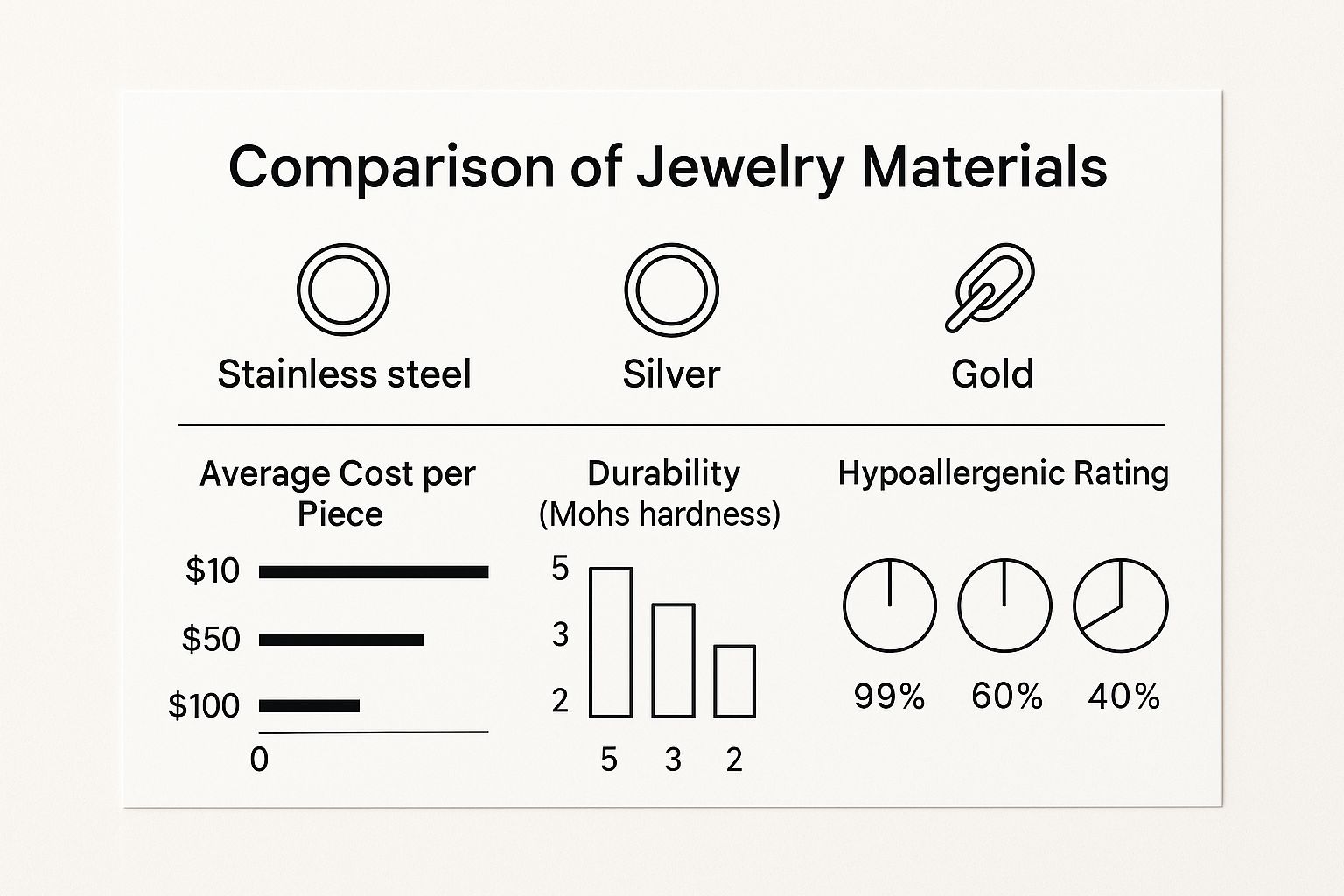
As you can see, stainless steel hits that sweet spot, giving you an ideal foundation for a profitable, high-quality jewelry line.
Checking the Foundation: The Steel Itself
Let's start with the basics: the steel. For top-notch, hypoallergenic jewelry, the industry standard is 316L stainless steel, sometimes called surgical grade. You'll see some suppliers offering 304 grade because it's cheaper, but it has a higher nickel content and is far less resistant to corrosion. Always, always confirm your supplier uses 316L.
Next, get your hands on the pieces and examine the finish. A well-made item will have a consistent, even polish. There should be no rough spots, especially around the edges or where links connect. Run your fingers over every surface—it should feel perfectly smooth. A poor polish is a huge red flag for sloppy manufacturing.
Finally, put every moving part to the test.
- Clasps: Open and close them over and over. A good clasp feels secure and snaps shut with a satisfying click. It shouldn't feel loose or fragile.
- Hinges: Check any hinges on hoop earrings or lockets. Do they move smoothly without sticking or grinding?
- Bails: Look closely at the loop that connects a pendant to its chain. Is it fully closed? There shouldn't be any gaps where a chain could slip through.
These little details are what separate a piece that falls apart in a month from one your customers will cherish for years.
A supplier that cuts corners on clasps and polishing is likely cutting corners everywhere else. Trust your hands—if a piece feels cheap, it probably is.
Inspecting Gold and Silver Plated Jewelry
When it comes to gold or silver plated stainless steel, your quality check becomes even more important. The durability of that plating directly affects how long the piece will last and, ultimately, how happy your customers will be. Your first question should always be about the plating method.
Physical Vapor Deposition (PVD) is the gold standard here. It's a modern process that creates a molecular bond between the plating and the steel itself. The result is a finish that's incredibly resistant to scratches, fading, and tarnish—far more so than traditional electroplating. A PVD-coated piece can keep its color for years.
Understanding the differences in plating techniques is crucial for sourcing durable gold and silver plated stainless steel jewelry.
Plating Methods Comparison: PVD vs. Standard Electroplating
| Feature | PVD (Physical Vapor Deposition) | Standard Electroplating |
|---|---|---|
| Durability | Extremely durable; 5-8 times more resistant to wear, scratches, and corrosion. | Less durable; prone to scratching, chipping, and fading over time. |
| Bonding | Forms a strong molecular bond with the stainless steel substrate. | A thin layer is deposited on the surface with a weaker bond. |
| Longevity | Can last for many years without tarnishing or losing its color. | Lifespan is much shorter; color can fade with regular wear. |
| Eco-Friendliness | An environmentally friendly, dry process with zero toxic discharge. | Involves harsh chemicals and produces hazardous waste. |
| Cost | Higher upfront cost due to the advanced technology involved. | Lower initial cost, making it a common choice for cheaper jewelry. |
| Appearance | Produces a smooth, even, and brilliant finish. | Finish can be inconsistent and may show imperfections. |
As the table shows, PVD is the clear winner for creating long-lasting, premium-quality plated jewelry.
Be ready to ask suppliers specific questions about their process:
- Plating Method: "Do you use PVD or standard electroplating for your gold-plated items?"
- Plating Thickness: "What is the thickness of the plating in microns?"
You're looking for a thickness somewhere between 0.5 and 2.5 microns. Anything less is just "flash plating" and will rub off in no time.
Once you’ve nailed down your quality standards, you can confidently set your prices. Getting this right is a crucial step, and you can learn more by checking out our guide on how to price jewelry for your business. Mastering these simple quality checks is the key to building a collection that delivers real value and keeps customers coming back.
Sourcing Designs That Actually Sell
Finding a reliable supplier is a huge win, but it's only half the job. The real key to driving sales is stocking your store with jewelry people are genuinely excited to buy. When you're working with cheap stainless steel jewelry, success comes from having a sharp eye for what's trending right now. This means looking beyond your local bubble and plugging into the global fashion conversation to find designs with proven appeal.
What's a bestseller in one corner of the world might completely flop in another, so your sourcing strategy needs to be smart about these differences. European markets, for instance, often gravitate towards minimalism—think delicate, gold-plated chains, simple geometric pendants, and sleek, stackable rings.
Jump over to North America, and you'll often see a preference for bolder, chunkier statement pieces. We’re talking oversized hoop earrings and thick curb-chain necklaces that demand attention. Meanwhile, many Asian markets prefer delicate and highly personalized styles, like intricate charms, layered bracelets, and subtle pieces that hold symbolic meaning. Knowing these regional tastes helps you build a collection that feels fresh, relevant, and in-the-know.
Tapping Into Trend Forecasting Tools
You don't need a crystal ball to figure out what's coming next. In fact, some of the best tools for the job are free. Platforms like Pinterest Trends and TikTok's Creative Center give you an incredible window into emerging styles. A quick search for terms like "jewelry trends 2025" or "gold layered necklaces" will show you exactly what's capturing people's attention in real-time.
- Pinterest Trends: This is my go-to for spotting visual trends before they go mainstream. Watch the upward curve of specific keywords to see what has momentum. If searches for "chunky silver rings" are up 150%, that's a pretty clear signal to start sourcing them.
- TikTok: Don't just scroll—search! See what pieces influencers and regular users are styling in their videos. A piece of jewelry going viral is often the birth of a micro-trend that can quickly become a bestseller for you.
Actionable Insight: Dedicate 30 minutes each week to trend research. Create a "trend board" on Pinterest or a saved collection on TikTok. When you spot a recurring style, search for it on wholesale platforms to see if suppliers are already producing it. This proactive approach ensures your inventory is always ahead of the curve.
The Power of Personalization
One of the biggest forces shaping the jewelry market today is the desire for customization. Shoppers want pieces that tell their story or reflect their identity, and this is where versatile, affordable stainless steel really shines. The demand for engraved pendants, initial charms, and birthstone-accented bracelets is absolutely booming.
By 2025, stainless steel is poised to become even more popular as an affordable and durable alternative to traditional precious metals. This growth is being supercharged by the demand for personalized pieces—think custom charm necklaces with birthstones or symbolic motifs like flowers. These details create an emotional connection and a sense of uniqueness for the buyer. Stainless steel is perfect for this, as it resists tarnishing, scratching, and corrosion while still allowing for intricate, cost-effective designs. You can find more insights on custom jewelry trend forecasts on lefengjewelry.com.
The sweet spot for your collection is a healthy mix of classic bestsellers and on-trend, customizable items. This two-pronged approach gives you reliable, everyday revenue drivers while also capturing the excitement of new styles, keeping your inventory dynamic and your customers coming back for more.
Alright, you've done the hard work of vetting suppliers and you have a good feeling about the designs that will resonate with your customers. Now it's time to actually place that first order. This is where the rubber meets the road—the point where you turn your research into tangible inventory and, ultimately, profit.
Getting your first international order right comes down to nailing a few key details. Let's walk through it.
Getting the Payment Right
First up, let's talk about money. While you might be used to clicking "Pay with PayPal," many established international suppliers operate a bit differently. The most common method you'll see is a Telegraphic Transfer (T/T), which is just a fancy name for an international bank wire.
A typical payment structure looks like this: 30% of the total cost upfront to get production started, with the remaining 70% due once the goods are finished but before they leave the factory. This 30/70 split is a fair, standard practice that protects both you and the supplier.
If you're feeling a little nervous about sending money overseas for the first time—which is completely normal—consider using a platform like Alibaba Trade Assurance. It works like an escrow service, holding your payment until you confirm that the jewelry you received is exactly what you ordered. It's a great safety net for your first few buys.
Who Handles the Shipping?
Once the payment plan is sorted, you need to be absolutely clear on the shipping arrangements. This is where you'll bump into a set of acronyms called Incoterms, which sound complicated but simply define who's responsible for the product at every step of its journey.
You’ll most likely encounter two main options:
- EXW (Ex Works): This puts almost all the responsibility on you. Your job starts the moment the jewelry is packaged and ready at the factory's door. You have to arrange for pickup, trucking to the port, ocean or air freight, insurance, customs clearance—everything. It offers total control but can be a logistical headache if you're new to importing.
- FOB (Free On Board): For most newcomers, this is the way to go. The supplier handles all the local legwork: getting your order from their factory to the port in their country and clearing it for export. Your responsibility kicks in only after the goods are loaded onto the ship or plane.
For your first few orders, I almost always recommend choosing FOB. It lets the supplier manage the complexities of their own country's logistics, which can be a minefield if you don't know the local system. This frees you up to focus on what happens when the shipment arrives in your country.
Don't Forget About Customs and Duties
This is the final hurdle, and it’s the one that trips up so many new business owners. The price you pay your supplier is not the final landed cost of your cheap stainless steel jewelry. You'll also have to pay import duties and taxes to your own government.
These fees are calculated based on your product's specific Harmonized System (HS) code and the total value of your shipment. You can look these codes and their corresponding duty rates up on your government's trade or customs website (for instance, the U.S. International Trade Commission has a tariff database).
As a rule of thumb, it's wise to budget an extra 10-20% of your total order value just for duties and customs fees. Getting a precise figure is always best, but this estimate will help you avoid nasty surprises that can eat away at your profit margins.
For a deeper dive into the whole process, our comprehensive guide on how to buy wholesale jewelry breaks down even more of the details you'll need.
Your Top Sourcing Questions, Answered
Jumping into the world of wholesale jewelry can feel like learning a new language. A few straight answers to the most common questions can make all the difference, helping you sidestep expensive mistakes and source with real confidence. Let's get into the nitty-gritty of what new retailers need to know.
First things first, let's talk materials. The right metal is the bedrock of a product your customers will love and wear for years. When you're balancing affordability with quality, there's a specific grade of steel you should have on your radar.
What’s the Best Grade of Stainless Steel for Jewelry?
Hands down, the industry benchmark for high-quality yet affordable jewelry is 316L stainless steel. You'll often hear it called 'surgical grade steel'—and for good reason. It’s incredibly resistant to corrosion and is hypoallergenic, which is a huge selling point for customers with sensitive skin.
Some suppliers might try to offer the cheaper 304 grade, but be warned: it contains more nickel and is much more likely to tarnish. Make it a non-negotiable point to confirm your supplier is using 316L grade steel. This one detail is a game-changer for customer satisfaction and building a brand known for quality.
How Can I Tell if Gold or Silver Plating Will Actually Last?
We’ve all seen cheap jewelry that turns green after a week. The secret to durable plating comes down to two things: how thick it is and how it’s applied.
- Thickness is Key: You’re looking for a plating thickness between 0.5 to 2.5 microns. Anything less is just "flash plating" and will rub off in no time.
- The PVD Method: Physical Vapor Deposition (PVD) is the gold standard. It's worlds better than traditional electroplating because it molecularly bonds the plating to the steel, creating a finish that’s tough, scratch-resistant, and won't corrode.
Always press your suppliers for specifics on their plating thickness and whether they use PVD. Of course, the only real way to know for sure is to get your hands on a sample.
Expert Tip: A supplier who proudly talks about their PVD process is a supplier who cares about quality. It’s a massive green flag that tells you they’re invested in the longevity of their products, which in turn protects your brand's reputation.
What Kind of Minimum Order Quantities Should I Expect?
Minimum Order Quantities (MOQs) are all over the map, and finding a supplier whose numbers work for your business is crucial. Huge manufacturers might demand MOQs of 100-200 pieces per design, which is often a non-starter for independent designers or small boutiques.
Don't get discouraged. Plenty of wholesalers, especially on platforms like Alibaba, are set up to work with smaller businesses. It's not uncommon to find MOQs as low as 10-50 pieces per style. Some will even let you mix and match styles to hit the minimum. Never hesitate to negotiate, especially if you plan on being a long-term partner.
Are There Hidden Costs I Should Know About When Importing?
Absolutely. The price on the invoice is just the starting line. To figure out your true "landed cost"—what each piece actually costs you by the time it's in your hands—you have to account for a few other expenses.
- Customs Duties & Import Taxes: Every country has its own rules. These fees are based on the value of your shipment. Check your government's customs website for the specific tariff codes and duty rates for jewelry so you know what to expect.
- Brokerage Fees: Using a customs broker to smooth out the import process is often a good idea, but they do charge for their services.
- Payment Processing Fees: Whether it's a wire transfer or a platform like PayPal, those transaction fees can add up.
Budget for these extras from day one. It will save you from nasty surprises and ensure you’re pricing your products for real profitability.
Ready to source trendy, high-quality stainless steel jewelry without the guesswork? At JewelryBuyDirect, we offer over 120,000 styles with no minimum order requirements, direct-from-factory pricing, and expert support to help your business grow. Explore our massive collection and see the difference.