






Arthur Lynch | Fri Feb 13 2026
Your Guide to Sourcing Wholesale Butterfly Ring Jewelry
Butterfly ring jewelry isn't just another pretty accessory that comes and goes with the seasons. It's a genuine retail powerhouse. These pieces tap into something deeper—transformation, hope, and beauty—making them a fantastic choice for any business wanting to sell products that customers truly connect with. For you, the retailer, that emotional connection translates directly into steady demand and healthy profits.
Why Butterfly Rings Are a Smart Bet for Your Business
Picking the right products to stock in the crowded accessories market can feel like a gamble. You're constantly trying to predict the next big thing. But every so often, you find a product that offers that rare mix of timeless appeal and on-trend relevance. Butterfly rings are one of those products, a reliable earner for retailers who get why they work so well.
What's the secret? It all comes down to the butterfly's powerful, universal symbolism. It’s a story of transformation, personal growth, and fresh starts. This isn't just a design; it's a narrative customers connect with on a deeply personal level. Whether they’re celebrating a graduation, starting a new job, or just embracing their own journey, that meaning turns a simple purchase into a significant one. That's how you build real customer loyalty.
A quick look at the numbers shows why adding butterfly rings to your inventory is such a solid move. They hit the sweet spot of market demand, customer appeal, and profit potential.
Why Butterfly Ring Jewelry Is a Smart Inventory Choice
| Key Driver | Impact for Your Business | Target Audience |
|---|---|---|
| Powerful Symbolism | Creates an emotional connection, turning a simple purchase into a meaningful one and fostering brand loyalty. | Self-purchasers, gift-givers celebrating milestones (graduations, new beginnings). |
| Strong Market Growth | You're stocking a product within the largest and fastest-growing segment of a multi-billion dollar industry. | Anyone buying jewelry; rings are the dominant market category. |
| Broad Demographic Appeal | Attracts a wide range of customers, from trend-focused Gen Z to shoppers looking for timeless, meaningful gifts. | Gen Z, Millennials, parents, partners, and friends looking for the perfect gift. |
| Versatile & On-Trend | Fits seamlessly into current trends (like Y2K nostalgia) while also being a classic motif that never goes out of style. | Fashion-forward shoppers and those seeking classic, enduring pieces. |
As you can see, this isn't about chasing a fleeting trend. It’s about investing in a product category with a proven track record and a built-in audience.
Tapping into a Growing Market
The demand for jewelry with a story behind it isn't just a hunch—the market data backs it up. The global jewelry market was valued at a staggering USD 381.54 billion in 2025 and is on track to hit USD 578.45 billion by 2033.
Here’s the really crucial part for your business: rings are the king of the jewelry world, making up 33.89% of all jewelry revenue in 2025. By stocking butterfly rings, you're placing your business right in the heart of the single largest segment of this booming market. You can dive deeper into the data on jewelry market trends to see just how big the opportunity is.
This isn't just a market that's stable; it's actively growing. Consumers are spending, and pieces that blend beautiful design with real meaning—like the butterfly ring—are exactly what they're looking for.
Broad Appeal Across Demographics
Another huge plus is the butterfly's incredible versatility. It speaks to everyone, regardless of age or personal style, making it a safe but exciting addition to any collection.
Think about who you can sell to:
- Gen Z and Younger Millennials: The butterfly is a massive trend right now, riding the wave of Y2K fashion nostalgia. It’s all over TikTok and Instagram, which keeps search traffic consistently high.
- Gifting Occasions: Thanks to its positive symbolism, it’s a go-to gift for birthdays, graduations, and anniversaries. It says so much more than a generic piece.
- Self-Purchasers: A lot of customers buy butterfly jewelry for themselves. It acts as a personal talisman, a small, daily reminder of their own strength and growth.
This wide appeal takes a lot of the risk out of inventory planning. Unlike a super-niche trend that only speaks to a tiny audience, butterfly jewelry connects with multiple customer groups at once. By offering a smart mix—from delicate, minimalist designs to big, bold statement rings—you can capture a much larger share of the market. If you're ready to get started, checking out a diverse collection of wholesale butterfly jewelry is a great first step into this profitable niche.
Choosing the Right Styles and Materials for Your Brand
So, you've decided to add butterfly rings to your lineup. That's a great first step, but now comes the part that really matters: picking the right collection that perfectly clicks with your customers and your brand’s personality.
Let's be real—not all butterfly rings are created equal, and your success depends on choosing wisely. The options out there are massive, from subtle, everyday designs to big, artistic pieces that command attention. Think of your collection as a story. Is your brand all about delicate, timeless jewelry, or are you the go-to for trend-setters who want something bold and unique? Knowing the answer is your roadmap to building an inventory that sells.
Defining Your Niche with Style
The term "butterfly ring" covers a huge range of aesthetics. A simple sterling silver band with a tiny, etched butterfly is going to catch a totally different eye than a massive, enamel-covered cocktail ring. The first is for someone who loves understated, versatile pieces, while the second is for the person who lets their accessories do the talking.
To nail down the perfect mix for your store, you need to understand the main style categories:
- Minimalist & Dainty: These are your bread and butter for everyday wear. Think small butterfly outlines on thin, delicate bands. They’re perfect for stacking and appeal to anyone who prefers a touch of elegance without the fuss.
- Statement & Cocktail: These are the showstoppers. Big, bold, and often exploding with color, these rings are meant to be the star of the show. Look for oversized butterflies, intricate metalwork, and plenty of crystals or enamel.
- Vintage & Antique-Inspired: For the customer with a romantic or bohemian streak, these designs are a perfect fit. They often use antiqued metals and detailed filigree to create a sense of timeless charm.
- Modern & Abstract: This is where the butterfly motif gets a contemporary twist. Clean lines, geometric shapes, and unconventional designs appeal to brands with an artistic, forward-thinking vibe.
Focus on the styles that truly reflect your brand's voice. Trying to please everyone usually ends up pleasing no one. Curate a collection that feels authentic to you.
Material Matters: Cost, Durability, and Perception
The metal you choose for your butterfly rings is just as critical as the design. It directly affects your wholesale cost, how long the piece will last, and, most importantly, how your customers will value it. Getting this balance right is the key to a profitable jewelry line.
Choosing the right materials is about more than just cost—it's about managing customer expectations. A low-price alloy ring is perfect for a trend-focused purchase, while a sterling silver piece is positioned as a lasting investment. Clarity in your product offerings builds trust and reduces returns.
Let’s break down the most common materials you'll find when sourcing wholesale butterfly rings. Each has its pros and cons and is targeted toward different customers.
Comparing Common Materials for Butterfly Rings
This table will help you quickly weigh your options when deciding which metals best fit your brand’s quality standards and price points.
| Material | Average Wholesale Cost | Durability & Tarnish Resistance | Hypoallergenic? | Best For |
|---|---|---|---|---|
| Sterling Silver (925) | $5 - $25+ | Good durability, but can tarnish over time. Requires regular polishing. | Yes | Mid-range to premium brands wanting timeless, lasting quality. |
| Stainless Steel | $2 - $10 | Excellent. Highly resistant to rust, tarnish, and scratches. | Yes | Everyday wear and fashion jewelry brands focused on durability. |
| Brass / Copper | $1 - $8 | Fair. Prone to tarnishing and can turn skin green without proper plating. | No (unless plated) | Costume and fast-fashion jewelry where price is the main driver. |
| Zinc Alloy | $0.50 - $5 | Low. Can break easily and tarnishes quickly. Not for long-term wear. | No | Budget-friendly, trendy pieces with a short fashion lifespan. |
As you can see, the material you select sends a clear message about your product's quality and intended customer.
If you’re still weighing whether this product category is a good fit, this simple decision-making flowchart can help put things in perspective.
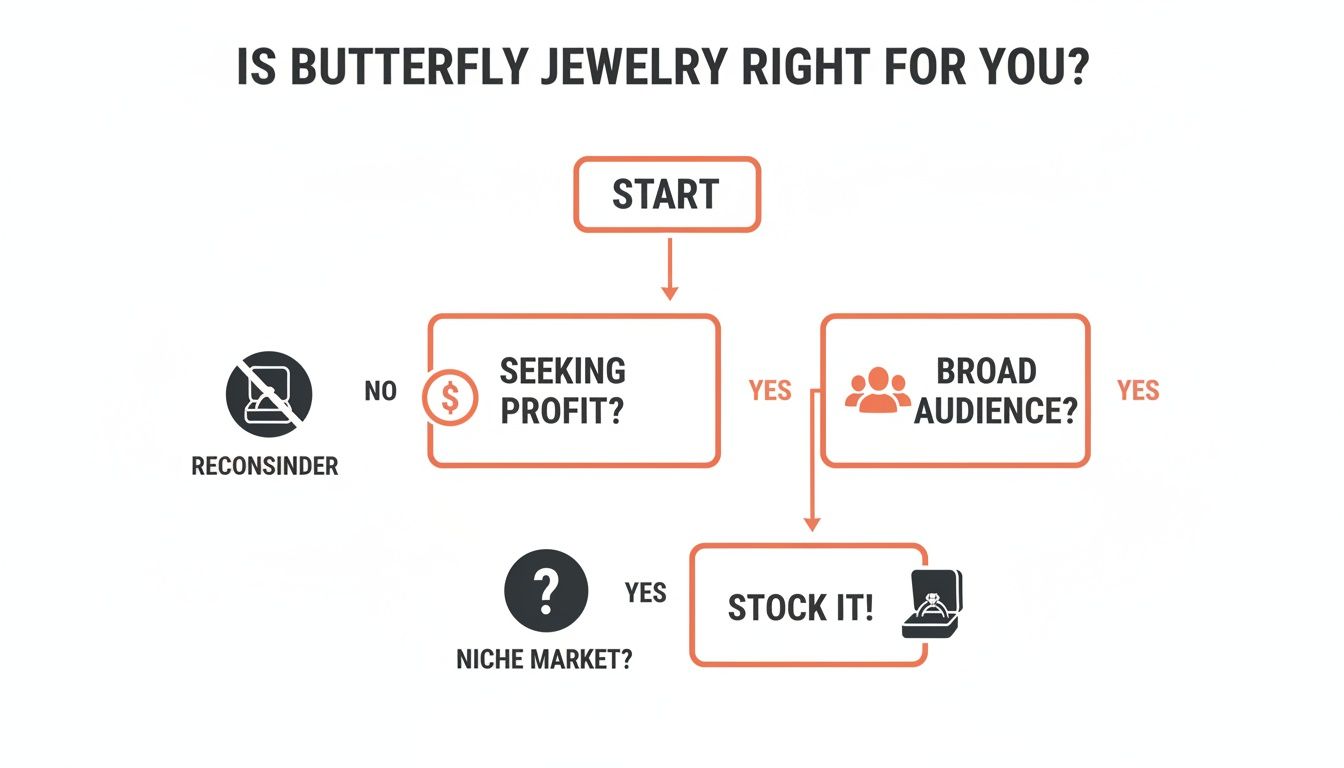
This visual guide confirms that for businesses seeking profit by tapping into a product with wide audience appeal, butterfly jewelry is a strategic choice.
Getting familiar with these materials will sharpen your sourcing strategy. Most successful collections offer a smart mix to hit various price points. The best way to start building your ideal inventory is to explore a diverse range of suppliers offering wholesale butterfly jewelry.
Sourcing Wholesale Butterfly Jewelry The Smart Way
Finding beautiful butterfly rings is the fun part. The real work—and where many retailers stumble—is finding the right wholesale partner to supply them. Sourcing smart is absolutely critical, especially if you're a small business or a growing boutique where every dollar and every decision matters. It’s about building a supply chain that actually helps you grow, not one that creates constant logistical nightmares.
Before diving in, you need to get comfortable with the language of the wholesale world. Two of the most important terms you'll hear over and over are Minimum Order Quantity (MOQ) and lead times. Honestly, these two factors alone will tell you whether a supplier is a good fit for your business.
Making Sense of MOQ and Lead Times
Minimum Order Quantity, or MOQ, is simply the smallest order a supplier will accept. Big factories often have MOQs in the hundreds or even thousands of pieces for a single style. That’s fine for a massive retailer, but it's a huge barrier for a boutique that needs a wide variety of styles, not a mountain of one design.
Lead time is how long it takes from the moment you place your order to when the box lands on your doorstep. This can be anything from a few days to several months, depending on where the factory is, their production schedule, and shipping. Long lead times make it impossible to jump on a hot trend or quickly restock a surprise bestseller.
For a small business, a high MOQ and a long lead time can be a recipe for disaster. It ties up your cash in slow-moving inventory and prevents you from being agile in a fast-paced market. This is why finding suppliers with flexible terms is so critical.
This is where suppliers offering no-MOQ policies become a total game-changer. They give you the freedom to test the waters with new butterfly ring designs without taking a huge financial risk. You can order just a handful of pieces, see what your customers love, and then double down on the winners. That kind of flexibility is priceless for building a curated, profitable collection.
How to Find and Vet the Right Supplier
The internet is flooded with wholesale options, so the trick is to find a partner who delivers on quality, variety, and business-friendly terms. A great supplier should feel like an extension of your own team—someone invested in your success.
Here's a practical checklist to use when you're evaluating potential partners:
- No Minimum Orders: This should be at the top of your list. Prioritize suppliers who don’t lock you into huge bulk orders. Freedom to experiment is key.
- Transparent Pricing: You want to see clear, factory-direct pricing without any surprise fees. The best partners can offer quality pieces at 15-30% below typical wholesale market rates.
- Quality You Can Trust: See if their manufacturing partners are certified by well-known organizations like SGS. It’s a solid sign that they're committed to consistent quality and ethical production.
- Smart Shipping: Look for perks like free shipping over a reasonable threshold (like $150). This makes a huge difference in your landed cost for each item.
Once you’ve narrowed it down, the next step is non-negotiable: order samples. Website photos can be polished to perfection, so you have to get the actual product in your hands. When the samples arrive, really inspect them. Look closely at the plating, check the stone settings, and feel the overall finish. This is your only real chance to judge the quality before placing a real order.
This collection of wholesale butterfly jewelry is a great example of the kind of variety to look for. Having a single source for everything from dainty, minimalist rings to bold, colorful statement pieces makes it so much easier to build out a collection that appeals to all your different customers.
Finally, don't forget about the final step: getting the products to your customers. As you plan your logistics, choosing your shipping partner is just as important as choosing your product supplier. A dependable courier ensures your inventory arrives safely and your customer orders go out on time.
By focusing on suppliers with flexible MOQs, clear policies, and a real commitment to quality, you can build a strong, resilient supply chain that will fuel your growth for years to come.
Setting Prices for Healthy Profit Margins
Sourcing beautiful butterfly rings is half the battle, but making your business thrive comes down to pricing. Let's talk numbers. Good pricing isn’t about pulling a number out of thin air; it’s a strategy that keeps your business healthy while giving your customers great value. It's the engine that powers your growth.
A common mistake is just doubling the wholesale price. While that seems easy, it’s a classic trap that ignores all the little costs that sneak in and chew away at your profits. To price your butterfly jewelry right, you first have to figure out your true landed cost.
Calculating Your True Landed Cost
Your landed cost is much more than what you paid the supplier for the ring. It’s the total, all-in cost to get that one butterfly ring from the factory floor into your hands, ready to sell to a happy customer.
To get this crucial number, you’ll need to add a few things together:
- Product Cost: The base price per ring from your supplier.
- Shipping Fees: What it costs to get the order to your door.
- Customs and Duties: Any import taxes or tariffs you had to pay.
- Payment Processing Fees: Those small percentage fees from your bank or payment service.
Once you have the total cost for the entire shipment, just divide that by the number of rings you bought. That final number is your landed cost per piece. This is your real starting point for any pricing decision, not the simple wholesale price tag.
Choosing the Right Pricing Strategy
Now that you have your landed cost, it's time to decide on a pricing strategy. There's no single right answer here—the best approach depends on the ring itself, from its material and design complexity to who you're selling it to.
Keystone Pricing (2x Landed Cost) This is the old standby of retail, and for good reason. It’s simple: you just double your landed cost. So, if a sterling silver butterfly ring has a landed cost of $15, you’d price it at $30.
- Best For: Your bread-and-butter items. Think classic, high-volume styles where customers have a pretty good idea of what they should cost. It’s a reliable way to lock in a 50% gross margin.
Value-Based Pricing This is where you move beyond a simple formula. Instead of just looking at your costs, you price the ring based on what your customer believes it's worth. A one-of-a-kind, hand-enameled butterfly ring feels a lot more valuable—and can be priced higher—than a simple, mass-produced alloy version.
- Best For: Those special, eye-catching pieces. Let's say you sourced a gorgeous, artisan-style ring with a landed cost of only $12. You could easily price it at $45 or more because its unique design and quality make it feel far more valuable to a buyer.
Pricing is both an art and a science. Keystone gives you a safe floor, but value-based pricing is how you make real money on your standout pieces. Don't be afraid to price a unique butterfly ring based on what it's worth, not just what it cost.
By knowing your true costs and picking the right strategy for each piece, you can set prices that ensure every sale actually builds your business. For a deeper dive into the numbers, you can learn more about how to use a wholesale profit margin calculator to really nail down your pricing. It’s the key to making sure you’re not just selling jewelry, but building a profitable business for the long haul.
How to Market Your Butterfly Jewelry Collection
Getting your hands on a beautiful collection of butterfly rings is a great first step. The real challenge, though, is getting those pieces to fly off your shelves—both digital and physical. Smart marketing isn't just about showing off a product; it’s about telling a story that resonates, turning a simple ring into a purchase that feels special.
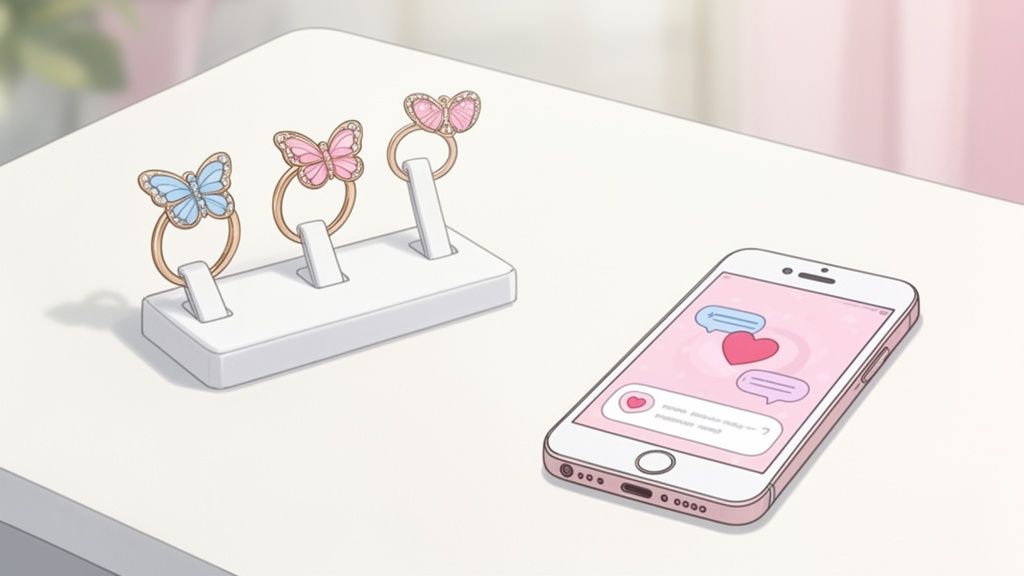
The butterfly's symbolism of transformation and hope is your secret weapon. You need to weave this narrative into everything you do, from the way you write product descriptions to how you arrange your in-store displays. This little shift in focus elevates the purchase from a simple transaction to a memorable customer experience.
Create an Unforgettable Visual Experience
When it comes to jewelry, what people see is what they buy. They need to see the sparkle and fall in love with the delicate details before they even consider pulling out their wallets. Your product photos and store displays are where you make that first critical impression.
-
In-Store Displays: Don't just place the rings in a case. Create a dedicated "Transformation" or "New Beginnings" section. Use natural elements like moss, small branches, or even some floral accents to build an enchanting world for your butterfly rings. It creates a destination within your store that draws people in.
-
Product Photography: Get close. Really close. Use macro shots to highlight the intricate metalwork on the wings or the tiny facets of a gemstone. Shoot against clean, simple backgrounds that let the jewelry be the star, and always include photos of the rings on a model. It’s the best way to show scale and give customers styling ideas.
Write Product Listings That Connect
Think of your online product pages as your digital storefront. To really sell your butterfly jewelry, you need to capture its magic with words. Go beyond just listing the specs.
Tell the story behind each ring. Is it a "dainty butterfly ring"? Describe it as "a delicate whisper of transformation, perfect for daily wear." Is it a bold, colorful piece? Call it "a vibrant statement of joyful change."
A great product description doesn’t just sell a ring; it sells a feeling. It helps the customer envision themselves wearing the piece and connects them to the powerful symbolism of the butterfly. This emotional hook is what turns browsers into buyers.
Remember to naturally weave in SEO-friendly keywords. Phrases like "sterling silver butterfly ring," "gold butterfly jewelry," and "adjustable butterfly ring" will help the right customers find you through search engines.
Put Social Media to Work
Platforms like Instagram and TikTok are visual playgrounds, making them perfect for showing off the beauty and meaning behind your butterfly rings. The goal is to create content that stops the scroll and tells a story.
-
Instagram Reels & TikToks: Make short, captivating videos that show the rings catching the light from every angle. Pair them with trending audio that taps into feelings of hope, growth, or even a bit of nostalgia. Something as simple as an unboxing or a "how I'd style this" video can get a surprising amount of attention.
-
User-Generated Content (UGC): This is gold. Encourage your customers to share photos of themselves wearing your rings by creating a unique hashtag. When you repost their content, it builds a genuine sense of community and acts as powerful social proof for potential new buyers.
This is also the perfect place to talk about what matters to today's shoppers. More and more, people are choosing brands that align with their values. Highlighting your commitment to quality materials and responsible partners can really set you apart. By sourcing a varied collection, you can effectively tap into this growing market. A great place to start is by exploring a diverse selection of wholesale butterfly jewelry.
Your Quality Control Checklist and Customer Care Guide
Making that first sale is just the beginning. If you want to build a brand that people trust and come back to, you have to deliver consistent quality and be a resource for your customers. This all comes down to the details—from the moment you unpack a new shipment of butterfly rings to the care advice you give the person who buys one.
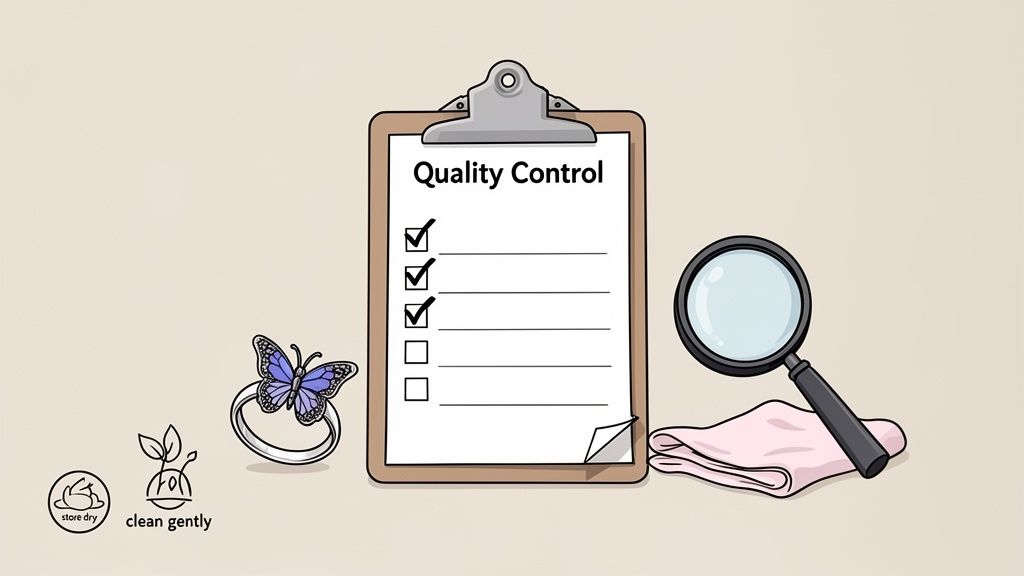
A solid quality control (QC) process is your first line of defense against unhappy customers. It’s your chance to spot any little flaws before they ever leave your shop. On the flip side, offering simple care instructions helps your buyers keep their new favorite piece looking great, which means fewer returns and more five-star reviews for you.
Your Essential Post-Shipment QC Checklist
Never assume every piece in your wholesale order is flawless. The moment a new shipment arrives, set aside time to inspect a sample from each butterfly ring style. A quick five-minute check now can save you a world of trouble later.
Here’s a practical checklist to run through:
- Inspect Stone Settings: Gently run a fingertip over any crystals or gems. Do they feel secure and snug? Keep an eye out for wobbly stones or any visible glue, which are dead giveaways of sloppy craftsmanship.
- Check the Plating and Finish: Get the ring under a good light source. You're looking for any scratches, inconsistent coloring, or patches where the plating looks thin. The finish should be uniform and smooth across the entire piece.
- Confirm Sizing Accuracy: If the rings come in specific sizes, grab a ring mandrel and check a few from the batch. Make sure they line up with what you ordered. For adjustable rings, gently work the mechanism to ensure it feels sturdy and not flimsy.
- Examine Delicate Details: The wings are the star of the show. Check for bent antennae, misshapen wing patterns, or any rough edges left behind from the casting mold.
Catching these issues early is how you protect your reputation for quality and make sure every customer gets a piece they'll absolutely adore.
A Simple Customer Care Guide
Your job isn't done once the transaction is complete. Slipping a small care card into each order or adding a care guide to your website shows customers you're committed to their long-term happiness. It’s a small touch that makes a huge difference.
"A well-cared-for piece of jewelry is a happy piece of jewelry. Empowering your customers with simple care instructions not only protects their purchase but also reinforces the value and quality of your brand."
Feel free to adapt this basic care guide for your own customers:
- Avoid Moisture: Remind them to take their butterfly ring off before showering, swimming, or even washing their hands. This helps protect both the metal and any delicate stones.
- Steer Clear of Chemicals: Perfumes, lotions, and harsh cleaning products can eat away at the finish. The best rule of thumb is to put jewelry on after all lotions and sprays have been applied.
- Store It Safely: Suggest keeping the ring in a soft pouch or its own compartment in a jewelry box. This prevents scratches and slows down tarnishing.
- Gentle Cleaning Only: For routine polishing, a soft, dry cloth works wonders. For a deeper clean on materials like sterling silver, a little mild soap and water followed by a thorough drying is all it needs.
These easy tips build customer confidence and show you stand behind your products. Great aftercare is a pillar of great service, and you can learn even more by exploring these customer service best practices that build loyalty.
Got Questions About Sourcing Butterfly Rings?
Diving into the wholesale world for a new product like butterfly rings can feel like a maze. It’s totally normal to have questions. Let's walk through some of the most common ones we hear from retailers to help you source confidently and build a collection that sells.
What’s the #1 Thing to Look for in a Supplier?
It’s tempting to laser-focus on price, but the real game-changer is flexibility. Specifically, you want to pay close attention to their Minimum Order Quantity, or MOQ.
Finding a supplier with a no-MOQ policy is a huge win. It means you can experiment with different butterfly ring styles without sinking a ton of cash into inventory you're not sure about yet. For a small business, this kind of agility is everything—it lets you test the waters, see what your customers love, and then double down on the winners.
Of course, quality is a close second. A good sign is when a supplier works with manufacturers certified by groups like SGS. These third-party certifications aren't just fancy badges; they're proof that the materials and workmanship are held to a high standard, which helps protect your brand's reputation down the line.
How Do I Really Know if the Jewelry Quality is Good?
You can’t. Not from a website photo, anyway. The only surefire way to know what you're getting is to order samples before you even think about placing a bulk order.
When those samples land on your desk, put on your most critical customer hat. Are the stones set securely? Is the plating smooth and even, with no weird blemishes? Does the ring feel solid, not flimsy? This hands-on check is your best line of defense against unhappy customers and costly returns.
Another tell-tale sign of a good partner is their return policy. A supplier who has a clear, fair process for handling damaged or defective items is one who believes in their product. It gives you peace of mind and a crucial safety net for your investment.
Which Materials Give Me the Best Bang for My Buck?
If you're looking for that sweet spot between quality, durability, and a price that makes sense, you can't go wrong with 925 sterling silver and stainless steel for your butterfly rings.
- Sterling Silver: This material has a classic, premium feel that customers instantly recognize and value. It lets you command a slightly higher price point with confidence.
- Stainless Steel: It's tough, hypoallergenic, and perfect for creating trendy, everyday pieces that are built to last.
Both options are a major step up from the cheap, mystery-metal alloys out there, but they don't come with the intimidating price tag of solid gold. This allows you to offer fantastic value to your customers while keeping your profit margins healthy.
Here at JewelryBuyDirect, we take the guesswork out of sourcing beautiful, well-made butterfly ring jewelry. We've built our entire collection with no MOQs, so you can easily find the perfect styles for your store. Check out our complete lineup of wholesale butterfly jewelry and get started today.