






Jennifer Lopez | Wed Oct 14 2026
Bulk Jump Rings: The Wholesale Sourcing Guide
The most common advice about bulk jump rings is also the most misleading: buy a larger ring if you need a stronger connector. Outside diameter alone tells you very little about how a finding will behave in a finished necklace, bracelet, earring, or charm assembly. Wire diameter, aspect ratio, alloy, temper, and seam design usually matter more than visual size.
A jump ring is inexpensive, but it can carry the load of an expensive pendant and determine whether a customer receives a durable product or a return request. Wholesale buyers should treat it as a structural component, not as a minor accessory added at the end of production. The right purchasing decision connects the ring's geometry and material to the component it must hold.
Rethinking Jump Ring Strength and Sizing
A larger outside diameter doesn't automatically mean a stronger connector. A wide ring made from thin wire may ovalize, gap, or allow a clasp to pull through more easily than a smaller ring made from thicker wire. Wire thickness, alloy, opening method, and whether the seam is closed can matter more than nominal diameter, so application-level guidance is essential for preventing component failure, as explained in this jump ring size guide.
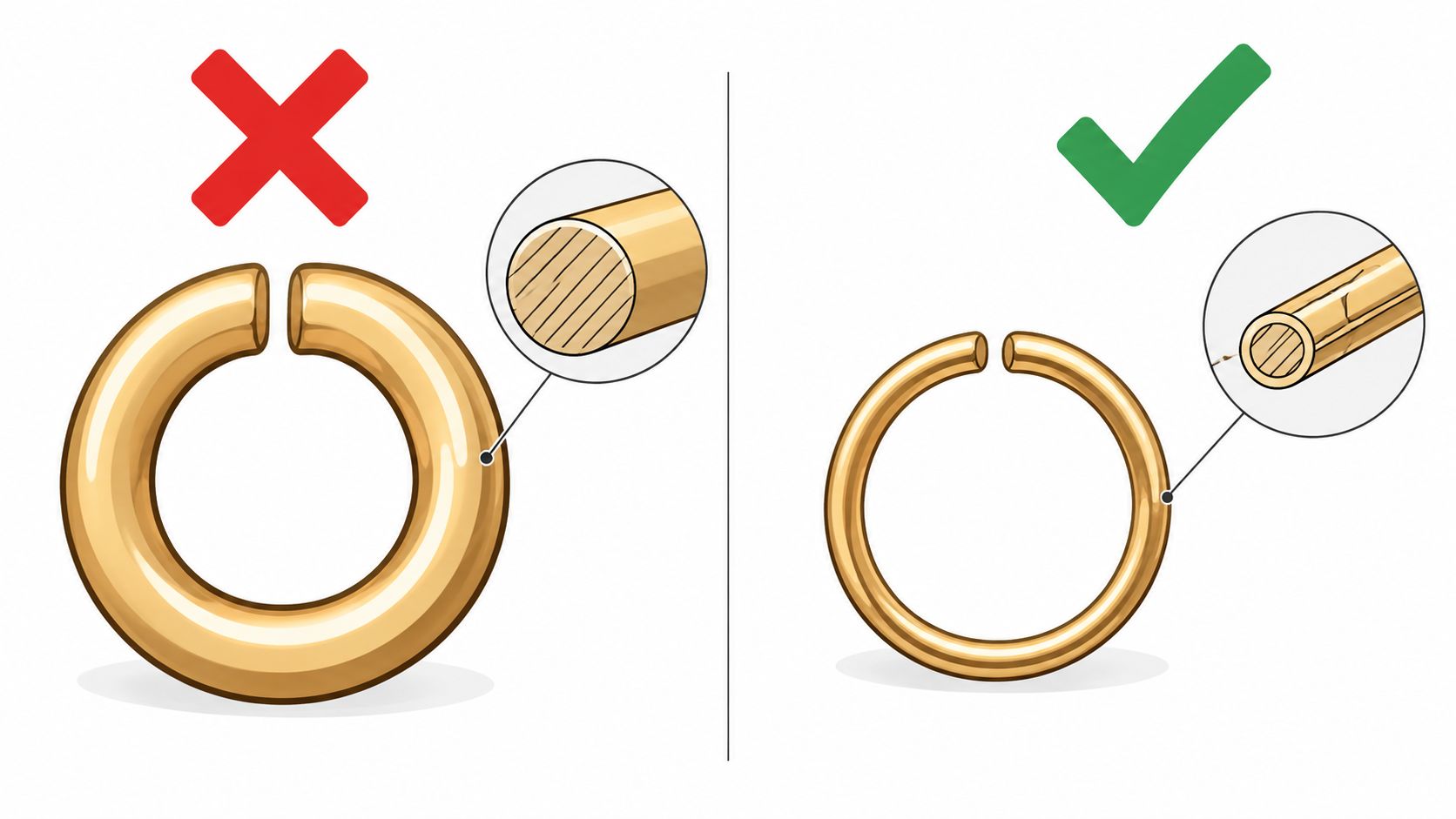
The failure usually starts at the seam. An open ring that has been twisted sideways instead of opened and closed correctly can lose its circular shape. A thin, dead-soft ring may be easy to assemble, but repeated movement from a clasp, pendant, or chain can permanently deform it. A heavier half-hard ring resists that deformation better, while a soldered seam removes the opening that often becomes the weak point.
The basic construction idea is older than modern jewelry findings. Archaeological evidence places surviving mail made from linked metal rings in the Carpathian Basin by the 3rd century BCE, with examples associated with Horný Jatov in present-day Slovakia and Ciumești in Romania, as documented in this history of chainmail. Modern jump rings are much smaller and are often left open for assembly, but they preserve the same mechanical principle, a metal loop joining separate elements.
Practical rule: Choose a jump ring for the load and connection geometry, not for the largest diameter that fits.
A production buyer should ask four questions before approving a case:
- What will the ring carry? A lightweight charm and a heavy statement pendant create different demands.
- How will it be opened? Repeatedly opened rings need more resistance to permanent deformation.
- Can the seam gap under movement? If yes, consider a soldered or split configuration.
- Does the ring fit the adjoining hardware? The opening must accept the clasp, chain link, or pendant loop without excessive clearance.
This guide to jewelry findings and components is useful when building a broader component specification, but the central purchasing decision remains mechanical. A visually substantial ring can still fail if its wire is too thin, its temper is too soft, or its seam isn't properly closed.
Here's the practical comparison in motion and assembly:
For boutique owners, this shift prevents a common margin problem. A low-cost finding that fails can damage the pendant, create a return, consume customer-service time, and undermine confidence in the entire collection. The ring is small, but its specification deserves the same care as the clasp or chain.
Decoding Aspect Ratios and Wire Gauges
A jump ring's nominal diameter cannot establish whether it will hold a finished piece. Record the inner diameter and wire diameter separately, then calculate the aspect ratio, or AR:
AR = inner diameter ÷ wire diameter
AR measures the opening against the metal cross-section. A higher AR produces a more open geometry, while a lower AR leaves a thicker wall around the opening. Under lateral force, that thicker wall generally offers greater stability and lowers the risk of ovalization or pull-through.
A direct comparison makes the trade-off clear. A 5 mm inner-diameter ring made from 1.02 mm, 18-gauge wire, has an AR of approximately 4.9. A second ring with the same 5 mm inner diameter, made from 1.29 mm, 16-gauge wire, has an AR of about 3.8. The lower-AR option provides greater lateral stability for heavier pendants, according to this technical necklace sizing reference.
| Wire Gauge (mm) | Inner Diameter | Aspect Ratio (AR) | Best Application |
|---|---|---|---|
| 20 gauge (0.81 mm) | Small to medium | Match to measured inner diameter | Lightweight jewelry and delicate charms |
| 18 gauge (1.02 mm) | 5 mm | Approximately 4.9 | Medium-weight pendants and general necklace assembly |
| 16 gauge (1.29 mm) | 5 mm | Approximately 3.8 | Heavier pendants and higher-load connector points |
Many structural applications fall around an AR of 3.5 to 4.5, based on the technical guidance cited above. A very high AR leaves a large opening relative to the wire cross-section, raising the chance of gapping, deformation, or a component slipping through during repeated loading. High-AR rings still have a place in light, low-movement designs. They are a poor choice for demanding connection points.
Gauge is only half the specification
Gauge tells you the wire thickness. It says nothing about how the wire behaves after work-hardening. Dead-soft wire bends easily, which can help with delicate assembly, decorative linking, and parts exposed to little movement. Half-hard wire has been work-hardened after annealing, so it resists permanent deformation more effectively when a ring is opened, closed, and loaded repeatedly.
Reported sterling-silver benchmarks show approximately 275 MPa tensile strength for 24-gauge, 0.51 mm wire, compared with about 390 MPa for 18-gauge, 1.02 mm wire. The heavier gauge is less bendable, as described in this wire gauge and temper guidance. These figures do not replace testing on the finished assembly, but they show why wire size affects both load capacity and the assembler's handling experience.
Application guidance commonly places 20-gauge, 0.81 mm half-hard rings in lightweight jewelry, 18-gauge rings with medium-weight pendants, and 16-gauge, 1.29 mm rings at heavier statement-piece connection points. Treat those categories as starting points. Clasp size, pendant-loop clearance, chain thickness, alloy, finish, and closure design can change the result.
A useful wholesale catalog should list:
- Inner diameter, allowing buyers to check clasp and loop compatibility.
- Wire diameter or gauge, showing the metal cross-section.
- AR, preventing open geometry from being mistaken for structural capacity.
- Temper, especially when the ring will be opened during assembly.
- Closure type, since open and soldered seams support different production requirements.
Test the completed assembly instead of inferring durability from gauge alone. A ring that looks suitable on paper can still twist if adjoining hardware places force on one side of the seam. That failure wastes components and labor, so compatibility belongs in the purchase specification alongside size and finish.
Choosing the Right Closure and Finish
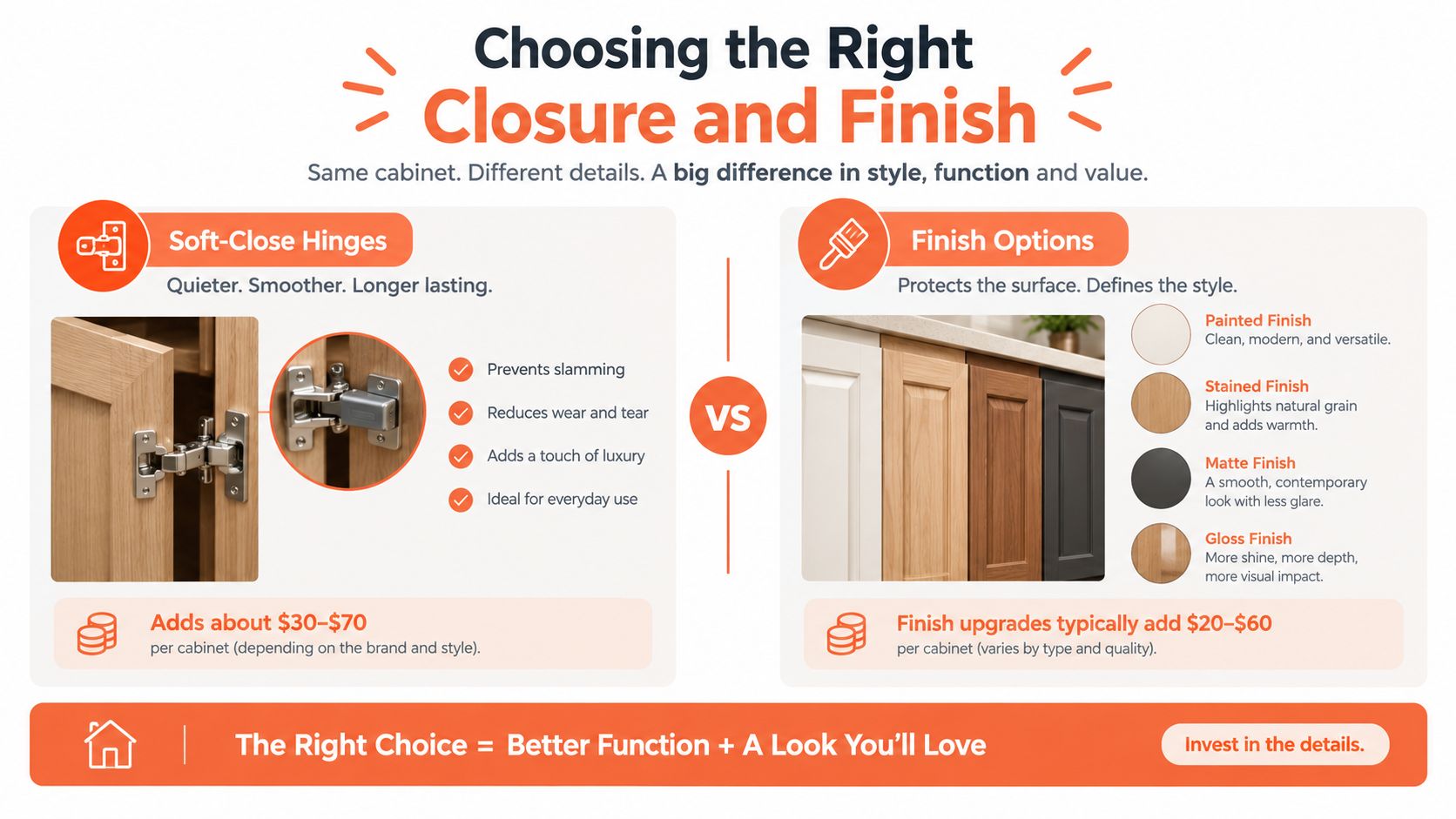
Closure choice determines how a bulk jump ring carries force after assembly. An open jump ring suits clasps, pendants, charms, and chain sections because an assembler can open it with pliers and close it again. That convenience creates a failure point. If the ends do not meet cleanly, movement can enlarge the gap and release the attached component.
A soldered ring eliminates that open seam in the completed connection. It fits heavier pendants, necklaces exposed to repeated wear, and attachment points that customers will not need to disassemble. The trade-off affects both cost and production time. Soldering may require additional preparation and careful finishing, while a fixed ring is less convenient when a maker needs to add or remove hardware.
Split rings function like miniature key rings. Their overlapping coil provides mechanical retention without depending on one open seam, which makes them useful for charms, keychain-style accessories, and parts pulled in different directions. They can look less refined and may be awkward to install beside delicate hardware, so they are not a universal substitute for a smooth jewelry ring.
Match the closure to the load path
Choose the closure by examining where force enters the finished piece and how often that connection will move:
- Open rings: Suitable for light charms, earrings, and routine assembly when the seam can be inspected and closed accurately.
- Soldered rings: Better for heavier pendants, fixed connector points, and products exposed to repeated movement.
- Split rings: Useful when retention matters more than a perfectly smooth jewelry profile.
Separate bulk inventory by alloy, temper, gauge, and closure type so assemblers do not substitute a convenient ring for a structurally suitable one. A thicker half-hard ring or a soldered option may be appropriate where vibration, pendant weight, or repeated wear could force an unsoldered seam open. The correct choice depends on the adjoining loop, clasp, and direction of pull, not diameter alone.
Finish adds another production decision. Gold, silver, rhodium, and colored plating can provide the intended appearance, but the base metal still affects mechanical behavior. A decorative coating will not make soft wire rigid, and a thin finish may wear where pliers contact the ring. Repeated opening can expose the base metal, particularly when the tool slips or the ring is twisted rather than rotated open.
Ask suppliers to identify the base alloy, plating or coating, temper, and closure process separately. A “gold tone” label tells you the color, but reveals nothing about the base alloy or plating thickness. “Stainless steel” identifies a material family, yet does not specify the exact alloy, finish durability, or skin-contact suitability.
For a fashion collection, use open rings where speed and flexibility justify the handling risk. Reserve soldered or split options for connection points carrying visible weight or repeated movement. This allocation controls material and labor costs while protecting the components customers are most likely to stress.
Navigating Global Compliance and Allergy Risks
A jump ring becomes a compliance concern as soon as it forms part of a necklace, bracelet, earring, or body-jewelry assembly that touches skin. Labels such as “nickel-free,” “hypoallergenic,” “stainless steel,” and “plated” describe appearance or marketing intent, not necessarily the material performance of the batch. Treat the ring as a structural and skin-contact component, then match its documentation to the finished product and sales market.
For articles intended for direct and prolonged skin contact, EU rules limit nickel release to 0.5 micrograms per square centimeter per week. Jewelry inserted into pierced body parts has a 0.2 microgram limit. The United States and Canada do not have equivalent specific legislation for ordinary jewelry, so domestic acceptance does not establish EU compliance. Relevant testing standards include EN 1811 and EN 12472, as described in this nickel policy and allergy reference.
A North American seller shipping into the EU needs evidence for the intended market, not assumptions based on local practice. Plating can reduce exposure at first, yet wear may occur at seams, contact points, and areas handled with pliers. If the ring opens under load, the exposed base metal and the failed connection create separate risks. Assess the finished jewelry, because customers wear that assembled product rather than an isolated loose finding.
Build a batch record before buying
Keep the supplier's batch reference beside the purchase record and SKU. Request the base alloy, every plating layer, coating thickness where documented, closure process, and any test report covering the relevant batch. A color description cannot identify the metal beneath the finish.
Use this purchasing record to answer five practical questions:
- Alloy disclosure: What base metal and plating layers make up the ring?
- Nickel evidence: Does the nickel-release test or certification apply to this product and batch?
- Lead and cadmium testing: Does the documentation cover the markets where the finished jewelry will be sold?
- Coating information: What finish is used, and how is its documented thickness recorded?
- Traceability: Can the supplier link the paperwork to the specific order and SKU?
Documentation costs less than an avoidable recall, refund cycle, marketplace restriction, or damaged customer trust. A wearer affected by irritation will not separate the inexpensive hidden ring from the pendant or clasp it connects.
For additional context, this guide to nickel allergy and jewelry explains why material claims need careful wording. Use a specific claim only when the records support it. Otherwise, describe the alloy and finish conservatively, and reserve “hypoallergenic” for evidence that supports the intended contact and market.
Executing a Rigorous Quality Verification Checklist
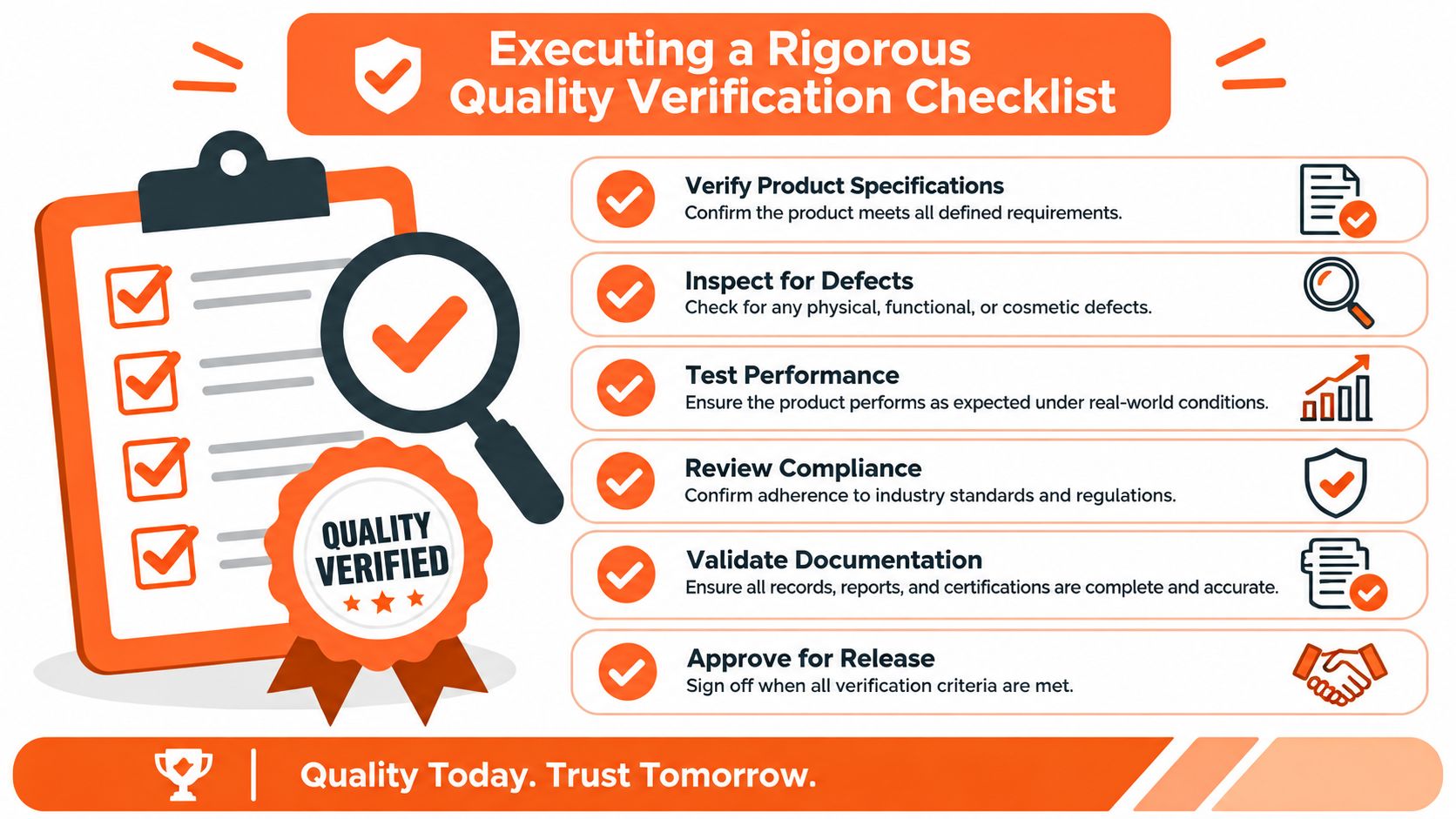
A supplier's product page is a starting point, not a quality inspection. Before committing to a large wholesale order, compare the physical rings with the declared dimensions, finish, closure, and material. The goal is to catch a repeatable manufacturing defect while the order is still a purchasing decision, not after the findings are assembled into finished jewelry.
Inspect the physical sample
Start with a representative sample from the supplied batch. Use a jeweler's loupe or a strong bench light to inspect the seam. The cut should be clean, the ends should meet without a visible step, and the ring should return to a circular shape after normal assembly. Ovalization, sharp burrs, inconsistent cuts, and visible gaps are warning signs.
Measure inner diameter and wire diameter with suitable calipers. Don't rely on outside diameter alone, because two rings with similar external dimensions can have very different internal openings and wire sections. Record the measurements by SKU, then compare them with the supplier's catalog specification.
Check how the rings behave in assembly:
- Seam consistency: Close several samples and look for repeatable alignment.
- Temper response: Open and close samples to see whether the wire springs back or stays distorted.
- Finish stability: Inspect the seam and tool-contact areas for flaking, discoloration, or exposed base metal.
- Compatibility: Pass the actual clasp, chain, and pendant loops through the opening before approving the SKU.
- Load behavior: Test the completed assembly with the intended component instead of testing an empty ring in isolation.
Quality verification should include documented plating thickness. Three microns is identified as a minimum benchmark for improved durability, alongside nickel-free certification and base-metal testing, according to this fashion jewelry sourcing guide. The benchmark doesn't eliminate the need for wear testing, but it gives buyers a concrete documentation request instead of accepting vague claims about “premium plating.”
Keep supplier checks practical
Ask for material certificates, coating details, and relevant safety testing before approving production. If a supplier won't identify the base metal or provide consistent specifications, treat that lack of transparency as a quality risk. A sourcing checklist such as how African Import Export Solution screens suppliers can help buyers organize questions about supplier reliability and documentation.
Quarantine any mixed or questionable batch rather than allowing the warehouse to distribute it across multiple finished products. Record the defect, photograph it, and send the supplier a clear comparison between the approved sample and the delivered goods. That paper trail protects the buyer during a replacement or credit discussion and makes future purchasing decisions more disciplined.
Optimizing Inventory Margins and Cash Flow
Bulk jump rings improve margins only when the assortment matches actual demand. A low unit price can still drain cash if stock sits in uncommon diameters, finishes, or closure types. Calculate the full cost of each option, including packaging, shipping, payment fees, marketplace charges, picking time, assembly labor, and the margin generated by the finished piece.
Use turnover and GMROI to test whether a purchase supports sales. An inventory turnover rate of 4.0 means average inventory is sold and replenished four times per year. A GMROI of 2.5 means each dollar held in average inventory produces $2.50 in annual gross-margin dollars, according to this fashion accessories inventory analysis. These measures become more useful when calculated by material, wire gauge, finish, and application rather than across the entire findings category.
Purchase deeper quantities for components that serve several product families. A ring used in necklaces, bracelets, charm sets, and repairs has more opportunities to sell than a finish reserved for one seasonal design. Keep unproven variations shallow until orders show repeat demand.
The cheapest factory quote can create the highest production cost. Inconsistent seams, distorted dimensions, or unsuitable wire gauge can add sorting, rework, scrap, and customer returns. A supplier with reliable geometry may justify a higher unit price by reducing those failures.
Build the buying decision around a cost sheet that records:
- Purchase cost: The exact alloy, wire gauge, finish, and closure configuration.
- Landed cost: Freight, applicable duties, packaging, and receiving labor.
- Production cost: Assembly time and replacement costs for defective components.
- Sales friction: Marketplace fees, shipping materials, refunds, and customer support.
- Stock exposure: Cash committed to slow-moving variants and excess pack quantities.
A small brand can reduce risk by testing a narrow assortment before placing a larger repeat order. JewelryBuyDirect offers wholesale jewelry-making components, including jump rings, with no minimum order quantity. Its bulk jewelry-making supplies category can also consolidate purchasing when one collection requires several findings.
External funding can support a planned replenishment cycle, but it cannot correct weak assortment decisions. This overview of loans for inventory can help frame that financing discussion. Match borrowing to documented demand, expected sell-through, and the cash required before the next payment is due.
The practical rule is straightforward: hold enough proven stock to protect availability, while keeping untested gauges, finishes, and sizes small enough to avoid tying up working capital.
Cataloging and Photographing Tiny Findings
Tiny findings create outsized catalog problems. A product photo can show a clean ring while hiding the package label, gauge, finish, or scale reference. A warehouse picker can also select the wrong SKU when several bags look identical but differ in wire diameter, temper, or alloy.
Start with a structured SKU. Encode the information your team needs to select the product, such as material, finish, wire gauge, inner diameter, temper, and closure. Keep the format consistent across jump rings, clasps, ear wires, and chain components, so a picker can understand the difference without opening every package.
A useful product record should include:
- Material and finish: Separate base alloy from plating or coating.
- Geometry: Store wire diameter, inner diameter, and AR where relevant.
- Construction: Identify open, soldered, or split configuration.
- Pack information: Record the quantity and packaging format without relying on bag color.
- Application note: State whether the SKU is intended for light charms, general assembly, or heavier connector points.
Photographs need the same discipline. Ecommerce image guidance recommends locking a master aspect ratio and keeping the product at roughly 80% to 85% of the frame, according to this ecommerce image cropping guide. For this website, the required display ratio is 383:204, approximately 1.88:1. Source images should leave enough space around the rings and package so automatic cropping doesn't remove the label or cut off the size reference.
Build the image around the buying decision
Use one clean primary image for the product presentation, then add supporting views that show packaging, scale, finish, and the seam. A close-up can reveal the actual closure, while a second image can show the ring beside the intended clasp or chain. Don't make the ring appear larger than it is without giving buyers a reliable scale reference.
For businesses creating launch pages or testing new assortments, resources covering how DTC brands build pre-sell pages can inform the presentation workflow. The same principle applies to findings: show the product clearly, state the specification plainly, and avoid letting a dramatic crop substitute for useful information.
Review the final image in the actual catalog layout before publishing. A file that looks correct in an editing window may crop differently in a collection grid, mobile view, or product recommendation module. Consistent framing protects the browsing experience and reduces questions from buyers who need to compare nearly identical bulk jump rings quickly.
JewelryBuyDirect offers wholesale jump rings and other jewelry-making components with no minimum order quantity, allowing boutiques and makers to test specifications before placing larger purchases. Visit JewelryBuyDirect to compare materials, finishes, gauges, and component options for durable, margin-conscious jewelry production.