






Arthur Lynch | Wed Oct 29 2025
Your Guide to Sourcing High-Quality, Affordable Bulk Chain Jewelry for Business
If you're building a jewelry business, sourcing a reliable supply of high-quality, affordable bulk chain jewelry is step one. It's the absolute foundation. This is all about buying large quantities of chains and fashion accessories directly from manufacturers and wholesalers, which is how you get your per-piece cost way down and keep your profit margins healthy. It's a non-negotiable strategy for any brand that wants to sell stylish, quality accessories at a competitive price point.
Build Your Business with Bulk Chain Jewelry
For any jewelry business looking to grow, how you source your materials can make or break you. It's the difference between just getting by and truly scaling up. Think of your supply chain as the engine of your business; a reliable, well-oiled engine lets you outpace the competition every time.
Sourcing bulk chain isn't just a simple inventory order. It's a strategic move that directly shapes your brand's quality, how you price your pieces, and what your customers ultimately think of you.
This guide is your roadmap. We’re going to skip the fluff and give you a clear, actionable plan for sourcing high-quality, affordable jewelry and fashion accessories with real confidence. My goal here is to arm you with the insider knowledge you need to find fantastic chains that are a perfect match for your brand’s unique vision and business goals.
Why Sourcing Matters More Than Ever
Let's be clear: people love accessories, and that demand isn't slowing down. The global jewelry market was pegged at around $348 billion in 2025, and it keeps climbing thanks to more spending money in people's pockets and the massive influence of online trends. You can dig into more of these global jewelry trends at CaratTrade.com. This booming market is a huge opportunity, but only for businesses that can deliver on both quality and price.
To win, you have to get sourcing right. Here’s what a smart bulk buying strategy does for your business:
- Bigger Profits: It's simple math. Buying in bulk drops your cost for each chain, which means more profit in your pocket from every single sale.
- Rock-Solid Quality: When you find a good supplier and build a relationship, you get consistency. Every piece of jewelry you sell will meet the same high standard, and that’s how you build real customer trust.
- Creative Freedom: Having access to a ton of different chains at a good price means you can play around. You can experiment with new designs and launch fresh collections without taking a huge financial gamble.
Sourcing isn't just about logistics; it's the first step in creating your brand's promise. The quality of the chain you pick is a direct message to your customer about the value you stand for.
Stick with me, and I’ll walk you through everything that matters, from understanding the different metals to properly vetting suppliers. By the time we're done, you'll have a solid game plan for making bulk chain the cornerstone of a successful accessories business.
Choosing Materials That Define Your Brand
The material you choose for your bulk chain jewelry is so much more than a line item on an invoice. It's the very foundation of your brand's story. It dictates the look, the feel, the durability, and, of course, the price point of every single piece you offer. Getting this right means you're perfectly aligning your product with what your customers actually want—whether that’s an affordable, on-trend piece or a timeless accessory built to last.
Think of it this way: your choice of metal speaks a language. Stainless steel, for instance, is the undisputed workhorse of the industry. It’s tough, hypoallergenic, and incredibly resistant to tarnish. It’s also affordable, making it the perfect choice for everyday jewelry that needs to stand up to real life. Choosing stainless steel tells your customers you value strength and longevity.
On the flip side, sterling silver whispers a message of classic, accessible luxury. It might need a bit more care to keep its shine, but its brilliant luster and higher perceived value hit the sweet spot for customers who want a premium feel without the solid gold price tag.
Base Metals And Plating Options
Going deeper, a solid understanding of base metals and plating is where savvy business owners really get an edge. You can build an entire, successful collection using cost-effective core materials that are elevated with high-quality finishes.
Some of the most common base metals you'll encounter are:
- Brass: A versatile and inexpensive alloy of copper and zinc, brass is a fantastic canvas for plating.
- Copper: Known for its warm, reddish hue, copper is another go-to affordable option that’s often used under a layer of plating.
- Zinc Alloys: You see these a lot in fashion jewelry because they're cheap and can be easily cast into detailed, intricate shapes.
Plating is simply the process of applying a razor-thin layer of a precious metal—like gold or rhodium—over one of these base metals. This is how you can offer the gorgeous look of gold at a much more accessible price point, a brilliant strategy for any trend-focused brand. If you want to dive deeper into how these choices affect your final product, take a look at our detailed guide on sourcing bulk necklace chains.
The infographic below really nails down the three pillars you need to build a profitable jewelry business.
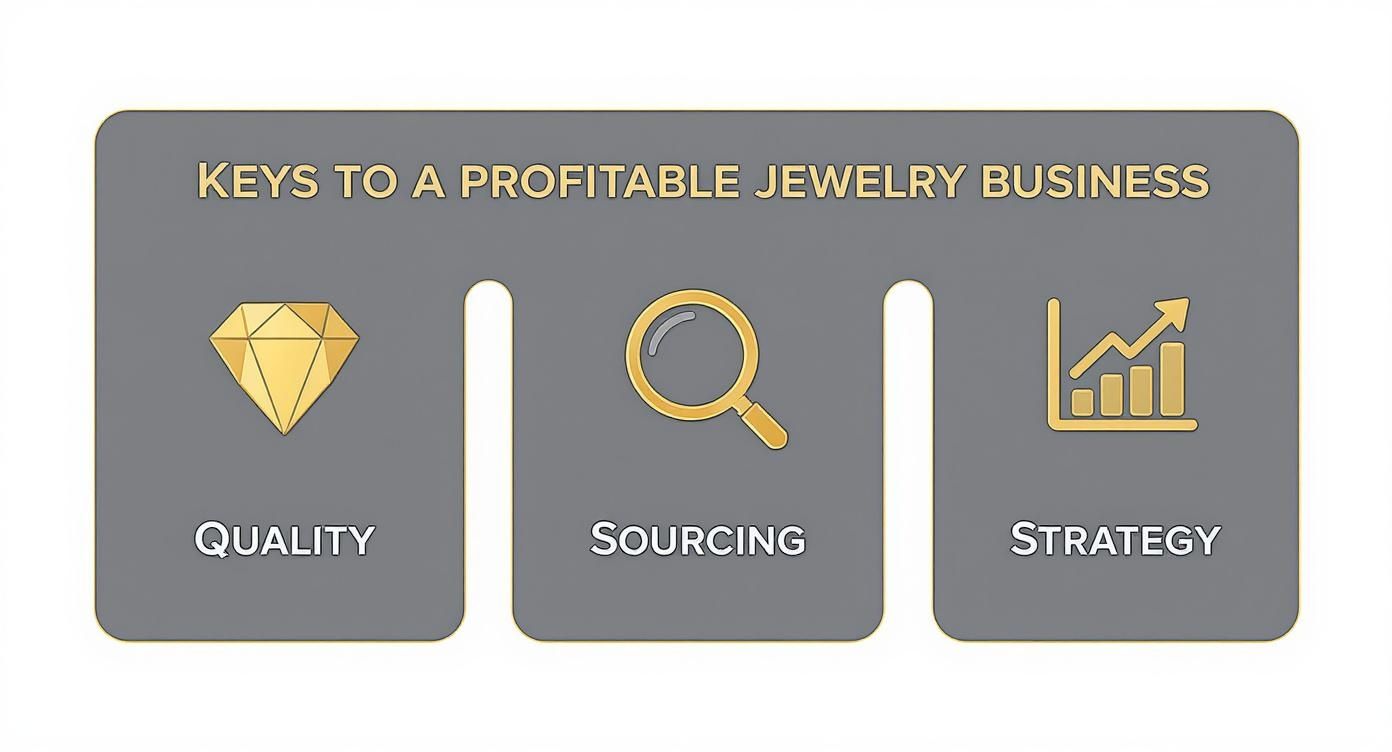
It’s a great reminder that success isn't about perfecting just one thing. It's about finding that strategic balance between quality materials, smart sourcing, and a rock-solid business plan.
Choosing a material isn't just a manufacturing decision; it's a marketing one. The metal you select should resonate with your target audience's lifestyle, budget, and values.
To help you navigate these choices, here's a quick comparison of the most common materials you'll be working with.
Comparing Common Bulk Chain Jewelry Materials
| Material | Typical Cost | Durability/Tarnish Resistance | Best For |
|---|---|---|---|
| Stainless Steel | Low to Moderate | Excellent. Highly resistant to rust, tarnish, and scratches. Hypoallergenic. | Everyday wear, men's jewelry, brands focused on durability and value. |
| Sterling Silver (.925) | Moderate to High | Good, but will tarnish over time. Requires regular polishing to maintain shine. | Mid-range to high-end brands, classic designs, customers seeking precious metals. |
| Brass (Plated) | Low. Very affordable base metal. | Depends entirely on plating quality. Can tarnish or wear off over time. | Trendy fashion jewelry, budget-conscious brands, short-term seasonal pieces. |
| Copper (Plated) | Low. Similar in cost to brass. | Fair. Plating quality is key. The copper itself will oxidize if exposed. | Costume jewelry, pieces where a warm undertone is desired under plating. |
| Zinc Alloy (Plated) | Very Low. The most budget-friendly option. | Low to Fair. Best for short-term wear; not meant for longevity. Prone to breaking. | Fast-fashion items, promotional giveaways, and pieces with intricate cast designs. |
Ultimately, picking your materials needs to be a deliberate business decision, not just a creative one. For a brand catering to budget-conscious trendsetters, a high-quality gold-plated brass chain strikes the perfect balance of style and affordability. But if you’re building a brand around "forever" pieces, investing in stainless steel or sterling silver is the only way to go.
When you carefully match your materials to your brand promise, you create a product line that feels cohesive and desirable—and that’s how you build customer trust that keeps them coming back.
Finding and Vetting Your Ideal Supplier
Your supplier isn't just a vendor—they're arguably the most important partner you'll have in your jewelry business. Finding the right one is like pouring the foundation for a house. It has to be solid, reliable, and built to last. This process means looking past a slick website to find a manufacturer who can consistently deliver the quality your brand needs to thrive.
Most businesses start their hunt for bulk chain suppliers on huge B2B platforms. Think Alibaba for overseas factories or Thomasnet for US-based options. These sites are great for casting a wide net, but treat them like a starting point, not a final answer. The real goal is to turn that massive list of possibilities into a handful of partners you can genuinely count on.
From Initial Search to Serious Vetting
Once you have a shortlist, the real work begins. Vetting is all about methodically checking a supplier's claims and capabilities before you spend a penny on inventory. It's how you protect your business from the headaches of bad quality, blown deadlines, and communication black holes that can sink a growing brand.
You need to start digging into each potential partner. Here's what to look for:
- Verify Business Credentials: Ask for business licenses and any relevant certifications (like SGS or BSCI). How many years have they been in business? A factory that’s been around for a while is often a good sign of stability and experience.
- Assess Production Capabilities: Do they actually specialize in the materials you need, like stainless steel or sterling silver? It’s completely fair to ask for photos or even a short video of their factory floor to get a feel for their operation's scale and cleanliness.
- Analyze Real-World Reviews: Go beyond the supplier’s website. Search for reviews and testimonials from other business owners. What are other brands saying about their quality, communication, and ability to hit deadlines?
Putting together a detailed Request for Quotation (RFQ) is your next critical move. This document is your best tool for eliminating confusion and getting pricing you can actually compare apples-to-apples.
Think of your RFQ as your first professional handshake with a potential supplier. When it’s clear and detailed, it shows you’re a serious buyer and sets a professional, transparent tone for the entire partnership.
Building a Strong Supplier Relationship
Your RFQ needs to be specific, leaving zero room for interpretation. Clearly lay out the materials, plating thickness, chain dimensions, clasp types, and the quantities you're looking to order. This level of detail forces suppliers to give you a precise quote instead of a vague, ballpark estimate.
After you've found and vetted your ideal manufacturer, building and maintaining a strong relationship is what will set you up for long-term success. It’s worth learning the essential vendor relationship management best practices to make sure these partnerships grow stronger over time.
Remember, finding a great supplier is only half the battle. Building a lasting, collaborative partnership is what really fuels sustainable growth. For anyone serious about sourcing quality products at a fair price, learning how to work directly with manufacturers is a game-changer. Our guide on the benefits of https://www.jewelrybuydirect.com/blog/factory-direct-jewelry?articleId=610685485142 offers more insights into this powerful strategy.
Understanding Pricing and Minimum Orders
Let's talk about the money side of things. Getting your head around the financial part of sourcing bulk chain jewelry can feel like a lot at first, but it really boils down to two things: how suppliers price their chains and their Minimum Order Quantities (MOQs). Get these two concepts down, and you'll be in a much better position to manage your budget and keep your business in the black.
Most suppliers use a pretty simple system that rewards you for buying more.
Tiered Pricing: The More You Buy, The More You Save
It’s often called tiered pricing, but you can just think of it as a bulk discount. It works just like shopping at a wholesale club: the more you buy, the cheaper each individual item gets. For instance, a supplier might quote you $3 per chain for an order of 100 pieces. But if you bump that order up to 500, the price could drop to $2.50 per chain.
This setup is a win-win. The factory gets a larger, more efficient production run, which saves them time and money. You get a lower cost per piece, which directly boosts your potential profit margin.
What Goes Into Your Final Cost?
The number of chains you order is just one piece of the pricing puzzle. A few other key factors will directly impact that final per-piece price. If you know what they are, you can tweak your designs and materials to hit your target budget without sacrificing your vision.
The biggest cost drivers are almost always:
- Material Weight: This one is straightforward. Heavier chains use more raw metal, so they cost more. A thick, chunky curb chain will always have a higher price tag than a delicate cable chain made from the same material and length.
- Plating Thickness: If you’re getting your chains plated in gold or rhodium, the thickness of that plating—measured in microns—is a huge cost factor. A thicker, more durable plate uses more precious metal and, you guessed it, costs more.
- Design Intricacy: Is your design complex? Does it need a special mold, detailed assembly, or a lot of hand-finishing? All that extra labor adds up and will be reflected in the price.
The price you're quoted is a direct reflection of your product's specifications. Being precise about materials, weight, and finishing isn't just a quality control measure; it's a fundamental part of managing your sourcing costs effectively.
Navigating Minimum Order Quantities
The Minimum Order Quantity (MOQ) is simply the smallest order a factory is willing to take on. For new brands, a high MOQ can feel like a massive hurdle, forcing you to tie up a ton of cash in inventory before you've even made your first sale.
And while it's true some huge factories might demand orders in the thousands, many suppliers are happy to work with smaller businesses. Don't be afraid to negotiate. If a supplier’s MOQ is 500 units but you can only realistically commit to 300, just ask! The worst they can do is say no.
You can also look for suppliers that specifically cater to small and medium-sized businesses; their MOQs are often much lower and more flexible from the start. Knowing your numbers is your best tool here. Before you place an order, run the figures using our guide to calculate your wholesale profit margin so you can make a truly informed decision.
It's an interesting side note that while rings bring in a massive chunk of jewelry revenue—accounting for 33.45% of revenue in 2024 according to Mordor Intelligence—the world of bulk chain jewelry really shines because of its affordability and adaptability. Success here is all about staying on top of fashion trends and hitting accessible price points, which makes smart sourcing your secret weapon.
Quality Control That Actually Works
In the world of fashion accessories, quality is everything. It's the silent promise that turns a first-time browser into a loyal customer. Think about it: a single broken clasp or a chain that tarnishes after one wear can wreck your brand's reputation in an instant. This is why having a rock-solid quality control (QC) process isn't just a good idea—it's absolutely essential.
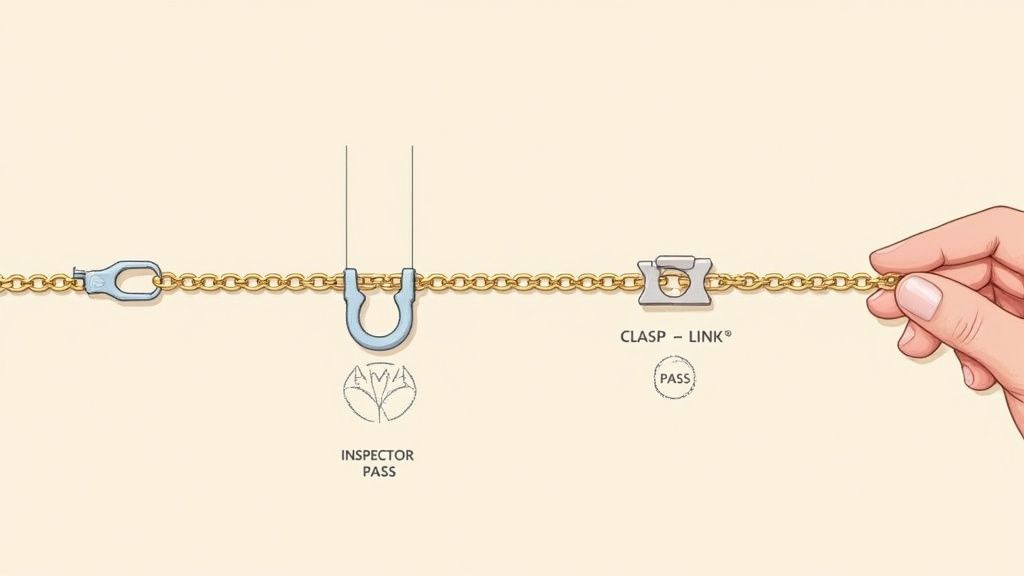
Your QC checklist isn't about micromanaging your supplier. It’s a simple, clear agreement on what "good" looks like before they start making thousands of pieces. Getting this right from the start protects everyone and makes sure the final product is a perfect match for the sample you fell in love with.
After all, you're not just selling chains; you're selling trust. A hands-on inspection is the only way to make sure you're delivering on that promise.
The Pre-Production Agreement: Your Blueprint for Quality
Before a single chain is manufactured, your supplier needs a crystal-clear Quality Standard Agreement. Don't overcomplicate it. This document should be your instruction manual, packed with photos and simple measurements that leave zero room for interpretation.
Here’s what it absolutely must define:
- Plating Standards: Show, don't just tell. Include photos of the exact gold or silver tone you approved. Specify the plating thickness in microns and make it clear that the finish has to be perfectly even—no dark spots, no blemishes.
- Clasp Functionality: This is a big one. State that 100% of clasps must open and close smoothly and securely. A flimsy clasp is one of the fastest ways to get a bad review.
- Link Integrity: Specify that all links must be fully closed, uniform, and sturdy. It’s also wise to include a basic "pull test" standard to ensure the chains can withstand normal wear and tear.
- Dimensional Accuracy: Get out the calipers. List the exact length, width, and weight of the chain, but allow for a tiny tolerance (e.g., +/- 1mm).
When your supplier signs off on these standards, you've created a shared understanding of what success looks like. This simple document is your best defense against costly mistakes and gives you a legitimate reason to reject any products that don't make the cut.
The Post-Production Inspection: Your Final Checkpoint
Once that big box of inventory lands on your doorstep, it’s go-time. Don't just give it a quick glance. You need to inspect a meaningful portion of the order—at least 10-15% of the total shipment—to catch any issues.
Establishing clear quality standards with your supplier isn't about mistrust. It's about creating a shared definition of success that protects your brand and ensures your customers receive the quality they expect, every single time.
Pull out your agreement and use this checklist as your guide:
- Color and Finish Match: Grab a handful of chains and hold them right next to your approved sample. Does the plating color look right under the light? Is the shine consistent across all the pieces?
- Clasp Stress Test: This is non-negotiable. Open and close the clasp on every single piece you inspect, at least 5-10 times. Does it feel stiff? Too loose? Does it lock securely?
- Link and Dimension Check: Use your calipers to confirm the dimensions are within the tolerance you set. Give the chain a gentle but firm pull to make sure it holds up.
- Count and Packaging: Lastly, do a quick spot-check on the count. Make sure you got what you paid for and confirm the chains are packaged correctly to prevent them from becoming a tangled mess in transit.
Following this systematic process ensures you're consistently selling beautiful, reliable jewelry. It’s how you build a brand that people trust and come back to again and again.
Selling Your Jewelry in a Digital World
So, you’ve sourced an incredible collection of bulk chain jewelry. That’s the hard part done, right? Well, that’s half the battle. Now it’s time to get that beautiful inventory in front of customers who will love it. The great news is that affordable, on-trend accessories are an absolute perfect fit for e-commerce, but you’ll need a sharp online marketing plan to really make it work.
First things first: your visuals have to be absolutely stunning. Forget just taking a quick picture; you need to create scroll-stopping content. Platforms like Instagram and TikTok are your new storefronts, and how your product looks is everything. Invest in high-quality, professional photos that show off every last detail, from the sturdy feel of the clasp to the brilliant shine on the plating. This is how you build trust and make someone need to have it.
Riding the Wave of Online Trends
To connect with your audience, you have to be where they are and speak their language. That means keeping a close eye on what’s happening online. Social media and influencer marketing are massive forces, especially for younger shoppers who find and validate new trends through the people they follow. The whole market is moving online, with new tech like AR/VR try-ons becoming more normal. Having a strong digital game is no longer optional; it's essential for growth.
A focused online sales strategy is your roadmap. Here are a few things that really move the needle:
- Work with Influencers: Find fashion influencers whose personal style genuinely lines up with your brand’s vibe. When they share your pieces, it feels like a real recommendation from a trusted friend, not a stuffy ad. This can get your jewelry in front of the exact right people.
- Show Off the Versatility: Don't just show the chain, show what it can do. Use short videos to demonstrate how to layer different pieces, how to style a necklace for a casual day versus a night out, or what outfits it pairs with. You’re not just selling a product; you’re selling inspiration.
- Get Smart with Ads: Use targeted social media ads on platforms like Facebook and Instagram to reach people based on their interests, age, and even their online shopping habits. It’s one of the fastest ways to find new customers.
In e-commerce, your product photos aren't just images; they are your primary sales tool. They must be compelling enough to convince a customer to click "add to cart" without ever touching the physical item.
At the end of the day, tapping into your business's full potential means mastering the right strategies to increase online sales. When you pair smart sourcing with fantastic digital marketing, you’re not just selling jewelry—you’re building a brand that grabs attention and keeps the sales coming.
Got Questions About Sourcing? Let's Get Them Answered.
Diving into the world of bulk jewelry sourcing can feel like a lot to take on. When you're just starting out, a hundred questions are probably running through your mind. The good news? You're not alone. Most new businesses hit the same hurdles, and I’ve seen them all.
Let's walk through some of the most common questions business owners ask. Think of this as a quick-start guide to help you sidestep those classic beginner mistakes and start sourcing with real confidence.
What's a Realistic Budget to Get Started?
For your first bulk order, a realistic starting point is somewhere between $500 and $2,000. That might sound like a big range, but it really depends on your supplier's Minimum Order Quantity (MOQ) and what materials you’re after. Stainless steel will keep you on the lower end, while sterling silver will push you toward the higher end.
Just remember, the cost of the chains themselves is only part of the equation. Always factor in extra for getting samples made, shipping costs, and any import duties you might have to pay.
How Do I Make Sure the Gold Plating Doesn't Rub Off in a Week?
This is a big one. You can't just ask for "gold plated" and hope for the best. To make sure your plating lasts, you need to get specific about the thickness, measured in microns.
For good quality fashion jewelry that holds up, aim for 0.5 to 1.0 micron thickness. If you want to offer a more premium, durable piece, I’d recommend pushing that up to 1.5 to 2.5 microns. It’s also a great idea to ask your supplier to add a protective e-coating on top—it acts like a clear shield against wear and tear.
No matter what you specify, always test your samples yourself. Wear them. See how they hold up. Don't approve the full production run until you're happy with the quality.
I’ve seen a lot of new buyers make costly mistakes. Here are the top three to avoid at all costs:
- Skipping Samples: Trying to save a bit of time or money here is a classic rookie error. It almost always backfires when the final product isn't what you expected.
- Being Vague: If you don't give your supplier crystal-clear specs, you're leaving way too much room for error. Be precise about everything.
- Chasing the Lowest Price: The cheapest quote is rarely the best deal. More often than not, a rock-bottom price means you're sacrificing quality, and your customers will notice.
The best way to protect your investment is through clear communication and doing your homework upfront. A little extra time spent being meticulous at the beginning will save you a world of trouble later on.
Ready to put this into practice? You can explore over 120,000 styles, from trendy to timeless, over at JewelryBuyDirect. They offer factory-direct pricing without minimum orders, making it a great place to find the quality pieces you need to grow your brand. Start building your collection today at https://www.jewelrybuydirect.com.